
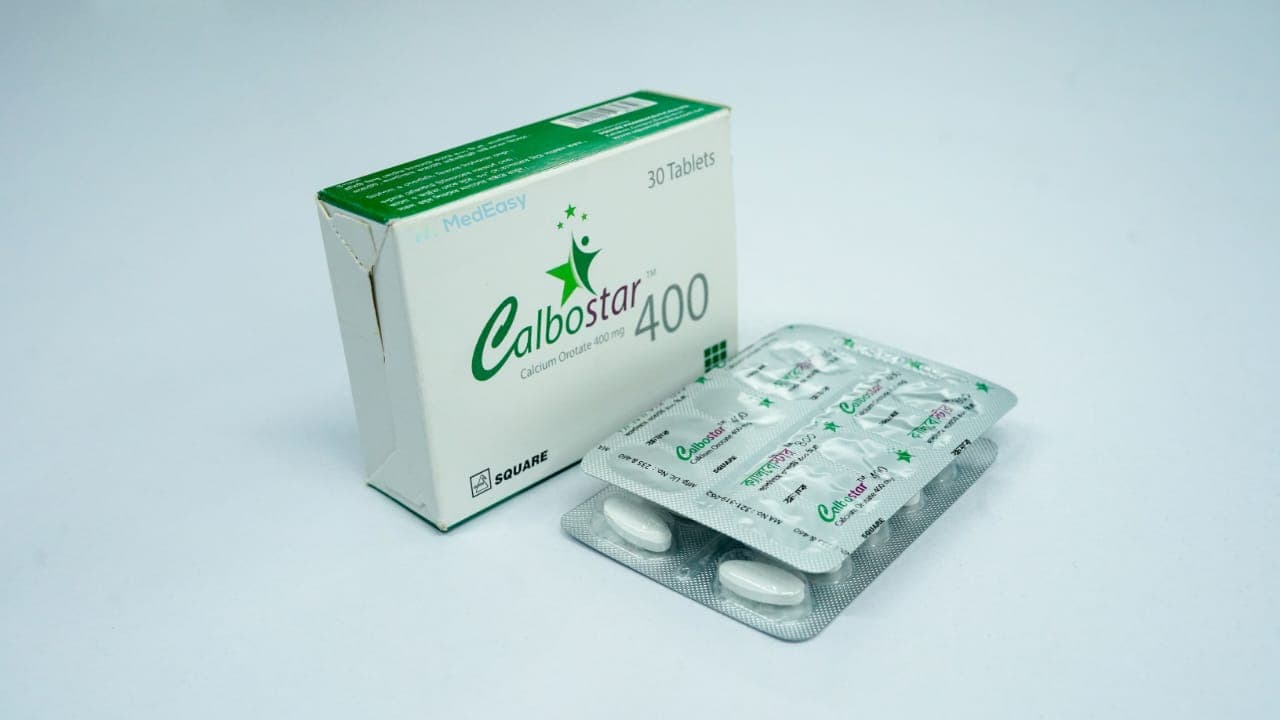

Medicine overview
Indications of Calbostar
Calbostar is a mineral supplement used to provide supplemental calcium in the following settings:
Established / commonly used indications
- Prevention and treatment of dietary calcium deficiency, when dietary intake alone is insufficient.
- As an adjunct to diet and, where prescribed, vitamin D and other agents, in the prevention and management of osteoporosis and low bone mineral density, particularly in postmenopausal women and the elderly.
- Supportive calcium supplementation during periods of increased calcium requirement, such as pregnancy and lactation, growth in children and adolescents, and in the elderly.
- Adjunctive management of hypocalcaemia (under medical supervision), usually alongside vitamin D and correction of the underlying cause.
Marketing claim (evidence-limited)
Calbostar is sometimes promoted as having superior absorption/bioavailability compared with other calcium salts (e.g., calcium carbonate or calcium citrate). This claim is not well substantiated by robust clinical evidence; Calbostar should be regarded as a calcium-delivery form with efficacy comparable to other calcium salts, used for the same core purpose of calcium supplementation.
Composition
Each unit (tablet/capsule) contains Calcium Orotate equivalent to a labelled amount of elemental calcium. The exact elemental calcium content varies by brand and strength; always check the product label/pack insert for the precise elemental calcium yield, as this determines the actual calcium dose delivered.
Description
Calbostar is the orotate salt of calcium, combining calcium with orotic acid. It is marketed as an oral mineral supplement intended to supply elemental calcium for skeletal health and general calcium homeostasis. Like other calcium salts (carbonate, citrate, gluconate, lactate), Calbostar functions primarily as a source of elemental calcium once absorbed; the orotate moiety itself has no established independent pharmacological indication in this context.
Therapeutic Class
Calbostar belongs to the therapeutic class of calcium supplements / minerals and electrolytes, used for prevention and treatment of calcium deficiency and as an adjunct in bone health.
Pharmacology
Calcium Orotate dissociates in the gastrointestinal tract to release calcium ions and orotate. Calcium is absorbed mainly in the duodenum and proximal jejunum by both active, vitamin D-dependent transport and passive paracellular diffusion; absorption efficiency depends on vitamin D status, gastric acidity, dietary factors, and the amount of elemental calcium ingested at one time.
Absorbed calcium is essential for bone mineralisation, neuromuscular transmission, cardiac contractility, blood coagulation, and enzyme activity. Excess calcium is excreted mainly via the kidneys, with renal tubular reabsorption regulated by parathyroid hormone and vitamin D.
Orotic acid is a naturally occurring intermediate of pyrimidine metabolism; at the doses present in Calcium Orotate supplements it is not considered to contribute a distinct pharmacological effect beyond acting as a carrier salt for calcium.
Dosage & Administration of Calbostar
Adult dose
| Indication | Typical adult dose (as elemental calcium) |
|---|---|
| Dietary calcium supplementation | 500–1000 mg elemental calcium daily, in divided doses, adjusted to diet |
| Adjunct in osteoporosis prevention/management | 1000–1200 mg elemental calcium daily (often combined with vitamin D), per physician's advice |
| Pregnancy/lactation supplementation | As advised by the treating physician, typically 1000–1300 mg elemental calcium daily from diet plus supplement combined |
Pediatric dose
Dosing in children is weight- and age-based and must be individualised by a physician according to recommended dietary calcium allowances for age; Calbostar is not typically first-line in infants without medical supervision.
Renal/hepatic impairment
Use with caution and under medical supervision in renal impairment, since calcium handling and excretion are altered (see Precautions). No well-established hepatic dose adjustment is required.
General administration advice
Calbostar is taken orally, generally with or after food to improve tolerability. If taking other oral medicines known to interact with calcium (see Interactions), separate dosing by at least 2–4 hours.
Administration of Calbostar
Calbostar tablets/capsules are usually swallowed whole with a glass of water, preferably with or after meals. Divide the total daily dose into two or more smaller doses if the elemental calcium amount per dose is high, to improve absorption and reduce gastrointestinal discomfort.
Interaction of Calbostar
Calcium supplied by Calbostar can reduce the absorption of several other minerals and medicines when taken at the same time:
- Tetracyclines and fluoroquinolone antibiotics (e.g., doxycycline, ciprofloxacin): calcium forms non-absorbable chelates, reducing antibiotic absorption and efficacy. Separate administration by at least 2–3 hours.
- Bisphosphonates (e.g., alendronate): calcium markedly reduces bisphosphonate absorption; bisphosphonates should be taken well before Calbostar, per product labelling.
- Levothyroxine: calcium can reduce absorption; separate dosing by at least 4 hours.
- Iron and zinc supplements: calcium can competitively reduce the absorption of iron and zinc; separate dosing where possible.
- Thiazide diuretics: concurrent use can increase risk of hypercalcaemia due to reduced renal calcium excretion.
- Digoxin: hypercalcaemia can increase the risk of digoxin toxicity and cardiac arrhythmia; caution with concurrent use.
Contraindications
Calcium Orotate is contraindicated in:
- Known hypersensitivity to calcium orotate or any component of the formulation.
- Hypercalcaemia (e.g., due to hyperparathyroidism, malignancy, sarcoidosis, or excess vitamin D).
- Hypercalciuria and conditions associated with a significant risk of calcium-containing kidney stones/nephrolithiasis, unless specifically directed by a physician.
- Severe hypercalcaemic conditions such as milk-alkali syndrome.
Side Effects of Calbostar
Side effects with Calbostar are generally mild and dose-related:
- Gastrointestinal: constipation, bloating, flatulence, mild abdominal discomfort, nausea.
- With excessive intake: symptoms of hypercalcaemia — fatigue, headache, dry mouth, increased thirst, polyuria, anorexia, nausea/vomiting (see Overdose).
- Rare: hypersensitivity reactions (rash, itching).
Pregnancy & Lactation
Calcium is an essential dietary mineral in pregnancy and lactation, and appropriate supplementation is often recommended by physicians when dietary intake is inadequate. However, Calbostar should be used in pregnancy and lactation only if clearly needed and the potential benefit justifies any potential risk, and only under medical advice regarding dose, since excessive total calcium intake (diet plus supplement) is not advisable in either pregnancy or lactation. Consult a physician before use in these situations.
Precautions & Warnings
Use Calbostar with caution in:
- Renal impairment: calcium handling and excretion are altered; accumulation and hypercalcaemia risk are increased. Use only under medical supervision, with monitoring of renal function and serum calcium.
- History of calcium-containing kidney stones: supplementation may increase recurrence risk; use only if advised by a physician, with adequate fluid intake.
- Avoid exceeding the recommended total daily calcium intake from all sources combined (diet plus supplement), as chronic excess intake raises the risk of hypercalcaemia, vascular/soft-tissue calcification, and kidney stones.
- Patients on interacting medicines (see Interactions) should separate dosing as advised.
- Periodic monitoring of serum calcium is advisable with prolonged use, especially in at-risk patients.
Overdose Effects of Calbostar
Overdose or chronic excessive intake of Calbostar can cause hypercalcaemia, with symptoms such as nausea, vomiting, constipation, abdominal pain, muscle weakness, confusion, excessive thirst, polyuria, and in severe cases cardiac arrhythmia or renal impairment. If overdose is suspected, seek immediate medical attention or contact a poison control centre/emergency services promptly; do not attempt specific home treatment.
Storage Conditions
Store at room temperature (below 30°C), away from light and moisture. Keep out of reach of children.
Use In Special Populations
Elderly: commonly used for age-related calcium deficiency and osteoporosis prevention; renal function should be considered when dosing.
Renal impairment: use with caution and medical supervision; see Precautions and Warnings.
Hepatic impairment: no well-established dose adjustment required; general caution advised.
Pediatric patients: use under medical guidance with weight/age-appropriate dosing; see Pediatric Uses.
Duration Of Treatment
Duration of Calbostar therapy depends on the indication and is determined by the prescribing physician — ranging from short-term correction of dietary deficiency to long-term maintenance therapy in chronic conditions such as osteoporosis. Periodic reassessment of calcium status is advisable during prolonged use.
Drug Classes
Calcium Orotate belongs to the class of calcium salts / mineral and electrolyte supplements.
Mode Of Action
Calcium Orotate acts by supplying elemental calcium, which is absorbed from the gastrointestinal tract to correct or prevent calcium deficiency, support bone mineralisation, and maintain normal neuromuscular, cardiac, and enzymatic function. The orotate salt form serves as a carrier for calcium delivery without a separate, distinct pharmacological mechanism of its own.
Pediatric Uses
Calbostar may be used in children and adolescents to prevent or treat dietary calcium deficiency and to support normal bone growth, under medical supervision, with dosing individualised according to age, weight, and recommended dietary calcium allowances. Safety and efficacy of specific commercial Calbostar products have not been separately established in infants, and use in this age group should only be under a physician's direction.
Frequently Asked Questions
Q: What is Calbostar 400 mg Tablet used for?
A: Calbostar 400 mg Tablet is a calcium mineral supplement used to prevent and treat dietary calcium deficiency and to support bone health, often as an adjunct in osteoporosis prevention, alongside diet and, where prescribed, vitamin D.
Q: Is Calbostar 400 mg Tablet better absorbed than other calcium supplements?
A: Calbostar 400 mg Tablet is sometimes marketed as having superior bioavailability, but robust clinical evidence supporting a meaningful advantage over other calcium salts such as calcium carbonate or calcium citrate is limited. It should be considered comparable in efficacy to other calcium supplements.
Q: Can I take Calbostar 400 mg Tablet during pregnancy or while breastfeeding?
A: Calbostar 400 mg Tablet should be used in pregnancy and lactation only if clearly needed and the potential benefit justifies any potential risk; total calcium intake from diet plus supplement should not exceed recommended levels. Always consult a physician before use.
Q: Who should not take Calbostar 400 mg Tablet?
A: Calbostar 400 mg Tablet should not be used by people with hypercalcaemia, hypercalciuria, a significant history of calcium-containing kidney stones (unless a physician specifically advises otherwise), or known hypersensitivity to the product.
Q: Can Calbostar 400 mg Tablet be taken with antibiotics or thyroid medicine?
A: Calbostar 400 mg Tablet can reduce absorption of tetracycline and fluoroquinolone antibiotics, levothyroxine, bisphosphonates, and iron or zinc supplements if taken together. These should be separated from Calbostar 400 mg Tablet by at least 2–4 hours, or as directed by a physician or pharmacist.
Q: What happens if I take too much Calbostar 400 mg Tablet?
A: Excessive or prolonged high-dose use of Calbostar 400 mg Tablet can cause hypercalcaemia, with symptoms such as nausea, vomiting, constipation, muscle weakness, confusion, and excessive thirst. If overdose is suspected, seek immediate medical attention or contact emergency services/poison control promptly.
Disclaimer
The information provided is accurate to the best of our knowledge, but it does not replace professional medical advice. We cannot guarantee its completeness or accuracy, and the absence of specific information about a drug should not be taken as an endorsement. We are not responsible for any consequences arising from this information, so please consult a healthcare professional for any concerns or questions.
