
10% Off
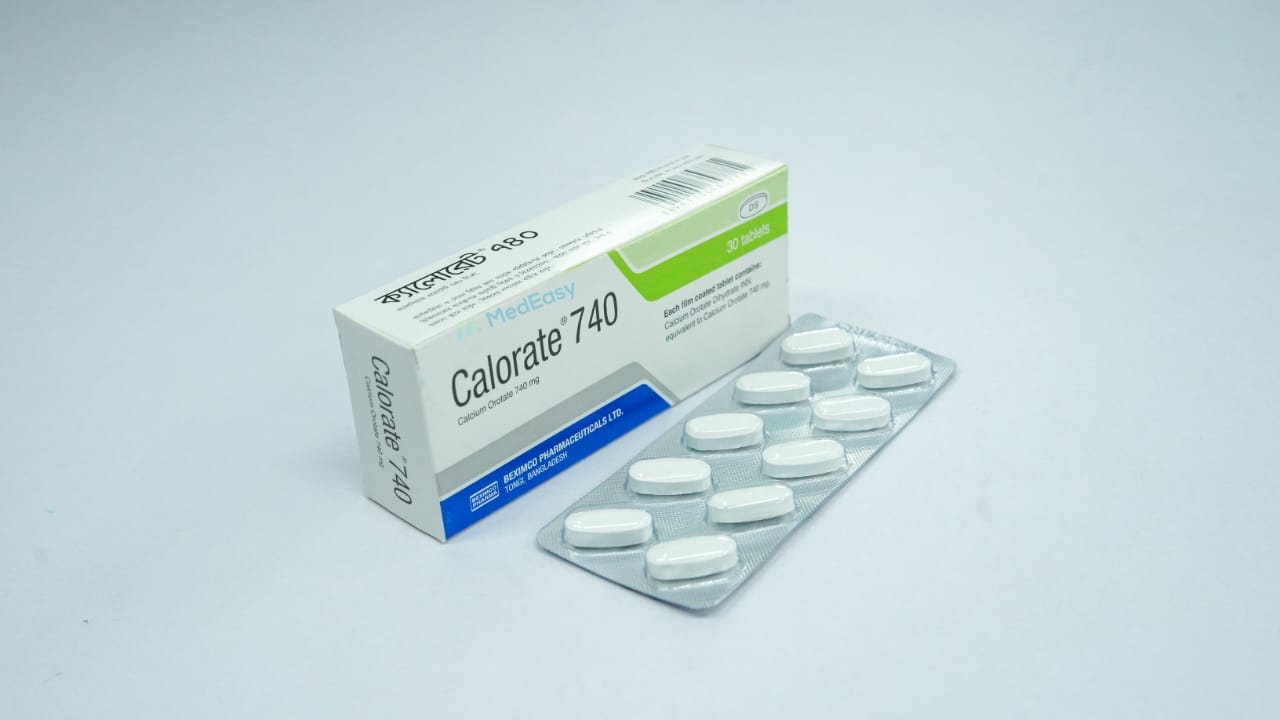
Calorate740 mg
Beximco Pharmaceuticals Ltd.
৳90.00
Add to cart
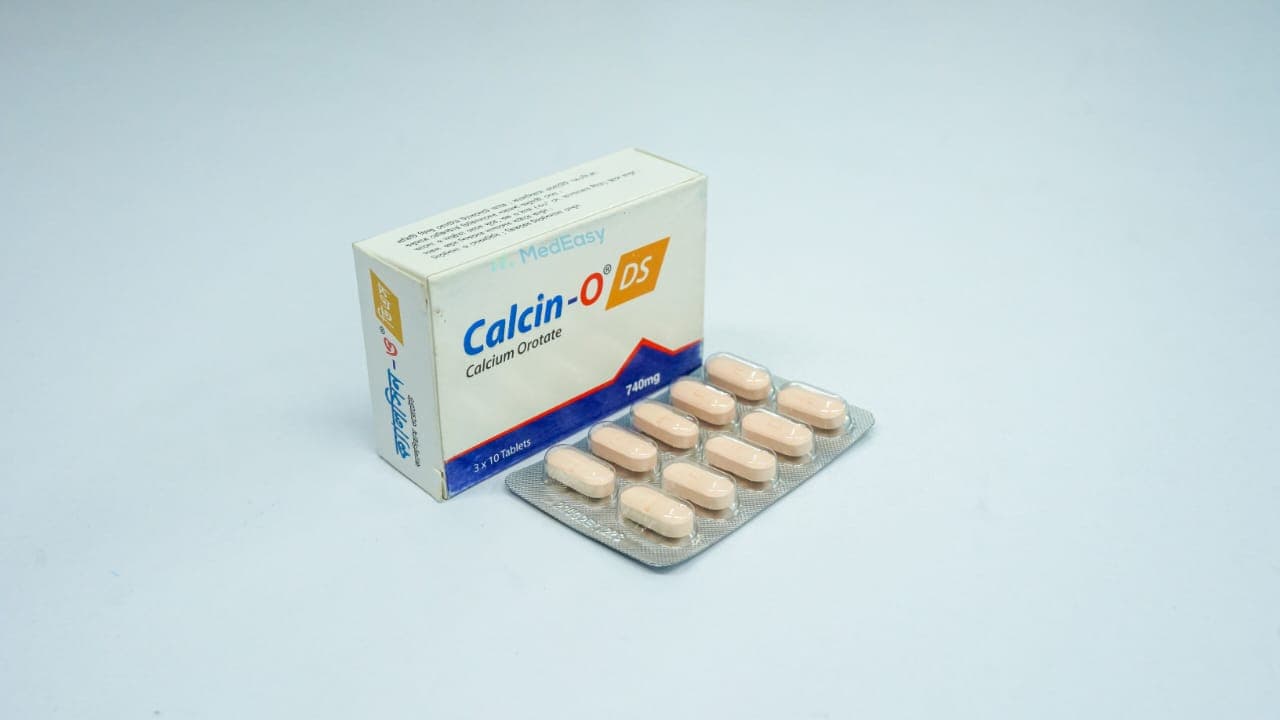

Calcin-O DS is a mineral (calcium) supplement, not a conventional therapeutic drug, and is primarily used to prevent or treat dietary calcium deficiency.
Calcin-O DS should be used for calcium supplementation as advised by a physician or nutritionist; it is not a substitute for treatment of underlying bone or endocrine disease.
Calcium Orotate Dihydrate contains calcium combined with orotic acid (as the dihydrate salt), providing elemental calcium as its active mineral component. Each tablet strength provides a defined amount of elemental calcium per tablet; check the product label for the exact elemental calcium content, as this varies by brand and formulation.
Calcin-O DS is the dihydrate salt form of calcium orotate, an organic calcium salt in which calcium is bound to orotic acid (a compound involved in pyrimidine nucleotide metabolism). It is marketed as an oral mineral supplement rather than a prescription therapeutic agent.
Calcin-O DS is available in Bangladesh as an oral tablet, typically taken with meals, used to supplement dietary calcium intake and support bone mineral health.
Mineral (Electrolyte) Supplement — Calcium Supplement
Calcium Orotate Dihydrate provides elemental calcium, an essential mineral required for bone mineralization, neuromuscular function, cardiac conduction, blood coagulation, and intracellular signaling. Orotic acid, the counter-ion, is a naturally occurring pyrimidine precursor that has been proposed (based on limited evidence) to facilitate calcium transport across cell membranes, though this mechanism is not conclusively established in humans.
Once absorbed (primarily in the small intestine, an active vitamin D–dependent process supplemented by passive diffusion at higher intakes), calcium from Calcium Orotate Dihydrate is distributed to bone (the major reservoir, ~99% of body calcium), with the remainder circulating in plasma in ionized, protein-bound, and complexed forms that are tightly regulated by parathyroid hormone, calcitonin, and vitamin D.
Dosage of Calcin-O DS should be individualized by a physician based on age, dietary calcium intake, and clinical indication. Typical adult formulations available in Bangladesh include 400 mg and 740 mg tablets (elemental calcium content varies by brand).
| Indication | Typical Adult Dose |
|---|---|
| Dietary calcium supplementation | 1–2 tablets (740 mg strength) or 2–3 tablets (400 mg strength) daily, in divided doses with meals, or as directed by the physician |
| Adjunct in osteopenia/osteoporosis management | As above, combined with vitamin D and prescribed osteoporosis-specific therapy, per physician's advice |
| Pregnancy/lactation (increased requirement) | As advised by physician based on dietary assessment; see Pregnancy and Lactation section |
Use in children should be guided by a pediatrician based on age-appropriate calcium requirements; Calcin-O DS is not routinely recommended for young children without medical advice (see Use in Special Populations).
No well-established dose-adjustment schedule exists for Calcin-O DS in renal or hepatic impairment; however, calcium supplementation should be used with caution and closer monitoring in patients with renal impairment (see Precautions and Warnings).
Calcin-O DS tablets should be taken orally with food to enhance absorption and reduce gastrointestinal discomfort. If more than one tablet is prescribed per day, doses should ideally be spaced through the day (e.g., with different meals) rather than taken all at once, to improve absorption efficiency. Swallow tablets whole with a glass of water unless the product is labeled as chewable.
Calcin-O DS can reduce the absorption of several medicines when taken together, and can itself be affected by other drugs and substances:
Calcium Orotate Dihydrate is contraindicated in patients with:
Calcin-O DS is generally well tolerated at recommended doses. Reported side effects include:
Calcium requirements increase during pregnancy and lactation, and adequate calcium intake (from diet supplemented by Calcin-O DS where needed) is generally recommended. However, Calcin-O DS should be used during pregnancy and breastfeeding only if clearly needed, at doses that do not exceed recommended daily allowances, and under the guidance of a physician — excessive supplemental calcium intake should be avoided as it may increase the risk of hypercalcemia. A physician should be consulted before starting or continuing Calcin-O DS during pregnancy or lactation to weigh potential benefit against potential risk.
Calcin-O DS should be used with caution in the following situations:
Calcin-O DS is a supplement and does not replace medical evaluation and treatment of underlying causes of calcium deficiency or bone disease.
Excessive intake of Calcin-O DS can lead to hypercalcemia. Symptoms of overdose/hypercalcemia may include nausea, vomiting, constipation, abdominal pain, excessive thirst, increased urination, confusion, muscle weakness, fatigue, and, in severe cases, cardiac arrhythmias or kidney impairment.
If overdose is suspected, seek immediate medical attention or contact a poison control center/emergency services. Do not attempt specific home treatment; management requires clinical assessment and may include measures directed by a physician to lower serum calcium.
Store at room temperature (below 30°C), away from light and moisture. Keep out of reach of children.
Use of Calcin-O DS in children should be guided by a pediatrician based on age-appropriate dietary reference intakes for calcium; safety and efficacy of specific Calcin-O DS tablet formulations have not been formally established in young children, and calcium-based dietary sources should be preferred where possible.
Older adults commonly have increased calcium requirements (e.g., for osteoporosis prevention) but may also have reduced renal calcium clearance; use Calcin-O DS at the lowest effective dose with periodic monitoring, particularly if other risk factors for hypercalcemia are present.
Use with caution and medical supervision; see Precautions and Warnings.
No specific dose adjustment is established; no significant hepatic metabolism is expected for Calcin-O DS given its mineral nature.
Duration of Calcin-O DS use depends on the indication and is determined by the prescribing physician — ranging from short-term supplementation during periods of increased need (e.g., pregnancy) to longer-term use in chronic calcium-deficient states or as an adjunct in bone health management. Periodic reassessment of ongoing need and serum calcium status is advisable with prolonged use.
Minerals and Electrolytes > Calcium Supplements
Calcium Orotate Dihydrate supplies elemental calcium, which is absorbed in the small intestine (via active, vitamin D-dependent transport and passive paracellular diffusion) and incorporated into hydroxyapatite crystals during bone mineralization. Calcium ions also serve as essential second messengers and cofactors in neuromuscular transmission, cardiac contractility, and the coagulation cascade. Orotic acid, the accompanying organic acid, is proposed to enhance cellular calcium uptake by facilitating transport across cell membranes, though this adjunct mechanism is not definitively established through robust clinical trials.
Calcin-O DS may be used in children and adolescents to supplement dietary calcium intake when guided by a pediatrician, particularly during periods of rapid growth. However, formal safety and efficacy data for specific Calcin-O DS tablet products in the pediatric population are limited, and dietary sources of calcium should generally be prioritized. When supplementation is used, dosing should follow age-appropriate calcium reference intakes and physician guidance; Calcin-O DS is not recommended for self-directed use in children without medical supervision.
Q: What is Calcin-O DS 740 mg Tablet used for?
A: Calcin-O DS 740 mg Tablet is a calcium mineral supplement used to prevent or treat calcium deficiency and to support bone health, often as an adjunct alongside vitamin D or prescribed osteoporosis therapy, as advised by a physician.
Q: Can I take Calcin-O DS 740 mg Tablet with antibiotics?
A: Calcin-O DS 740 mg Tablet can reduce the absorption of tetracycline and fluoroquinolone antibiotics if taken together. Separate the doses by at least 2–3 hours — take the antibiotic well before or several hours after Calcin-O DS 740 mg Tablet — and consult your physician or pharmacist for specific timing.
Q: Is Calcin-O DS 740 mg Tablet safe during pregnancy?
A: Calcium needs increase during pregnancy, but Calcin-O DS 740 mg Tablet should be used during pregnancy only if clearly needed and at doses that do not exceed recommended intake, under a physician's guidance, since excessive supplemental calcium can increase the risk of hypercalcemia. Always consult your physician before use in pregnancy.
Q: What happens if I take too much Calcin-O DS 740 mg Tablet?
A: Taking excessive amounts of Calcin-O DS 740 mg Tablet can cause hypercalcemia, with symptoms such as nausea, vomiting, constipation, excessive thirst, confusion, and muscle weakness. If overdose is suspected, seek immediate medical attention or contact emergency/poison control services rather than attempting home treatment.
Q: Who should not take Calcin-O DS 740 mg Tablet?
A: Calcin-O DS 740 mg Tablet is contraindicated in people with known hypersensitivity to it, hypercalcemia, hypercalciuria, conditions that predispose to high calcium levels (such as hyperparathyroidism or sarcoidosis), and active calcium-containing kidney stone disease. Discuss your full medical history with your physician before starting Calcin-O DS 740 mg Tablet.
Q: How should I take Calcin-O DS 740 mg Tablet for best absorption?
A: Calcin-O DS 740 mg Tablet should be taken with meals, and if more than one tablet is prescribed per day, doses should be spread across the day (for example, with different meals) rather than taken together, to improve absorption and reduce gastrointestinal discomfort.
Disclaimer
The information provided is accurate to the best of our knowledge, but it does not replace professional medical advice. We cannot guarantee its completeness or accuracy, and the absence of specific information about a drug should not be taken as an endorsement. We are not responsible for any consequences arising from this information, so please consult a healthcare professional for any concerns or questions.

