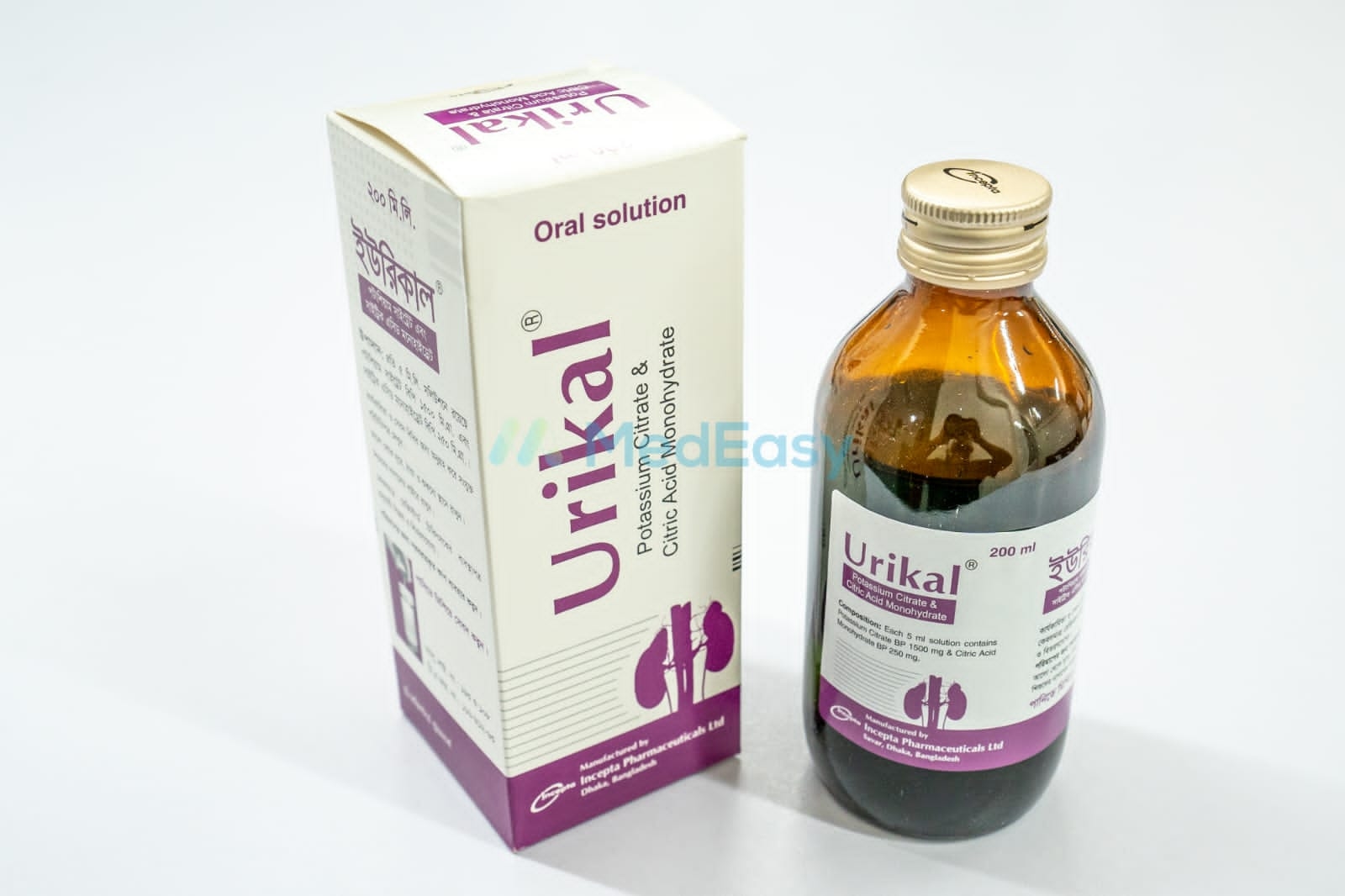
10% Off
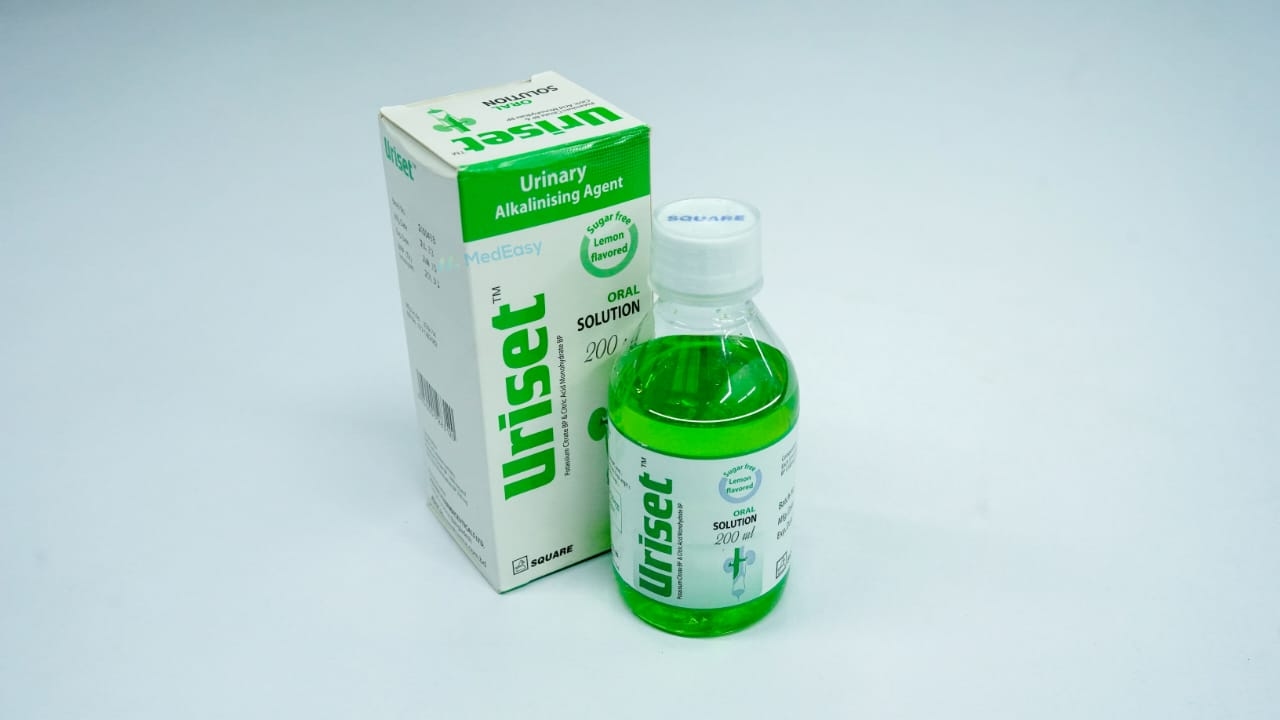
Uriset200 ml
Square Pharmaceuticals PLC.
৳180.00
Add to cart
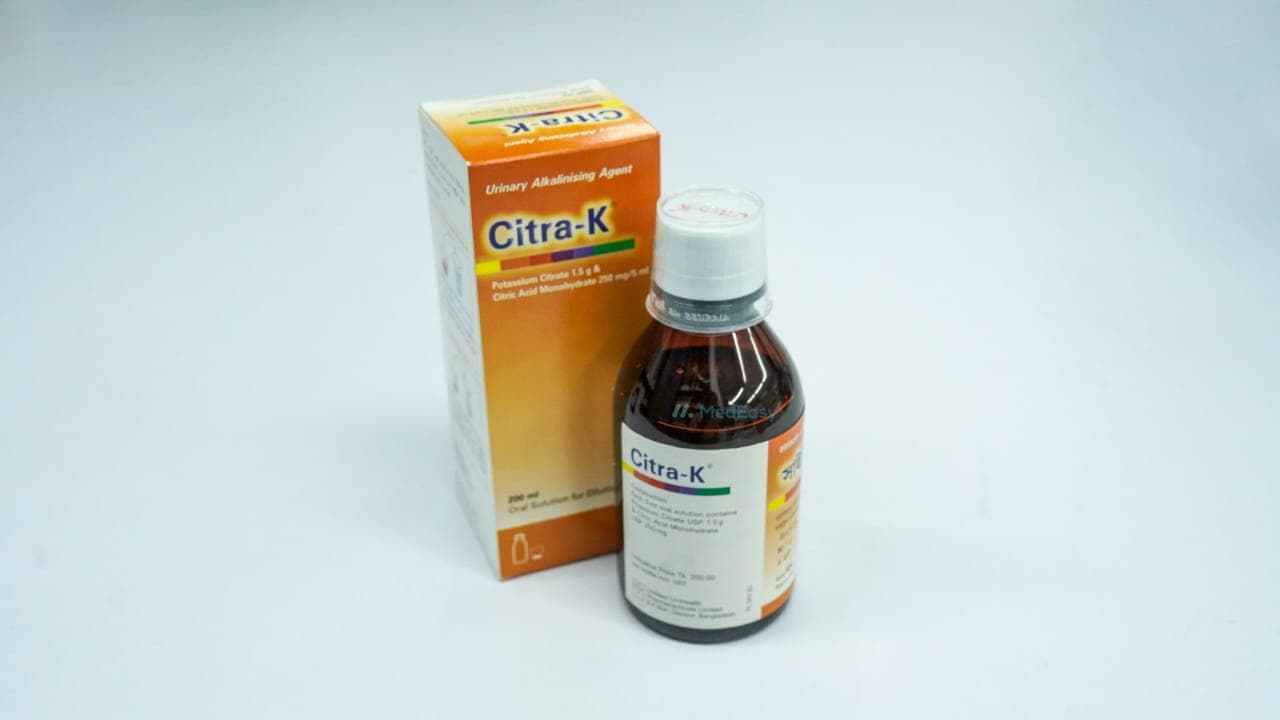

Citra-K is a urinary alkalinizer used to raise urinary and, to a lesser extent, systemic pH. Its accepted uses fall into a few categories of evidence:
Potassium Citrate + Citric Acid is formulated as an oral solution/syrup combining two citrate-based alkalinizing salts. A typical 5 mL dose provides potassium citrate (commonly in the range of about 1100 mg potassium citrate monohydrate) together with citric acid monohydrate (commonly around 300–350 mg), yielding roughly 2 mEq of potassium ion per mL as citrate/bicarbonate equivalents.
Exact strengths, excipients, and potassium content per mL vary between brands marketed in Bangladesh, so always check the specific product's label or package insert for the precise composition before dosing.
Citra-K is a sugar-free, non-alcoholic oral alkalinizing solution combining potassium citrate and citric acid. It is used chiefly to make the urine less acidic (more alkaline), which helps prevent certain types of kidney stones and corrects the acid-base disturbance seen in some kidney disorders.
Citra-K is available in Bangladesh under several brand names as an oral solution/syrup taken by mouth after dilution with water.
Urinary alkalinizer (potassium and citrate salt combination) – Citra-K belongs to the class of alkalinizing agents/electrolyte supplements used in urology and metabolic acid-base disorders.
After oral administration, the citrate component of Potassium Citrate + Citric Acid is absorbed and oxidized in the body to bicarbonate, acting as a systemic and urinary alkalinizer. At recommended doses this raises urinary pH toward 6.0–7.0 without producing clinically significant systemic alkalosis.
The resulting alkaline urine increases the solubility of uric acid and cystine, reducing their crystallization into stones, and the citrate ion itself binds urinary calcium and inhibits calcium oxalate/phosphate crystal growth and aggregation — the basis for Potassium Citrate + Citric Acid's role in calcium-stone prevention when hypocitraturia is present. The potassium component also supplies potassium bicarbonate equivalents, helping correct the metabolic acidosis of renal tubular acidosis.
Citra-K is normally taken by mouth after diluting the measured dose in a glass (or half-glass, for children) of water, and is best taken after meals and at bedtime to minimize gastrointestinal irritation and unpleasant taste.
| Indication | Adult dose | Pediatric dose |
|---|---|---|
| Symptomatic relief of uncomplicated UTI discomfort | 10 mL three times daily, diluted in a glass of water | Age 1–6 years: 5 mL three times daily, diluted in half a glass of water. Age 6 years and above: as adult dose. |
| Uric acid/cystine stone prevention, renal tubular acidosis, adjunct in gout, calcium-stone prevention with hypocitraturia | 10–15 mL (roughly 2–3 teaspoonfuls) four times daily, diluted in water, after meals and at bedtime | 5–10 mL four times daily, diluted in water, after meals and at bedtime |
The dose of Citra-K may be adjusted by the physician to maintain a urinary pH in the target range (commonly about 6.0–7.0), guided by periodic urine pH and serum potassium testing. See Contraindications and Precautions and Warnings for renal-impairment and monitoring guidance.
Measure the prescribed dose of Citra-K with the dosing device provided and dilute it in water (a full glass for adults, a half glass for young children) before drinking — do not take the concentrated solution undiluted.
Take Citra-K after meals and at bedtime, and remain upright (do not lie down immediately) after dosing to reduce the risk of local gastrointestinal irritation. If a dose is missed, take it as soon as remembered unless it is close to the next scheduled dose; do not double the dose.
The following interactions with Citra-K are clinically significant and well documented:
Potassium Citrate + Citric Acid is contraindicated in:
At recommended, properly diluted doses Citra-K is generally well tolerated. Reported side effects include:
Pregnancy: There are no well-controlled studies establishing the safety of Citra-K in human pregnancy. As a source of potassium and an alkalinizing agent it is not known to be a major teratogenic risk, but Citra-K should be used in pregnancy only if clearly needed and the potential benefit justifies the potential risk to the fetus, and only under a physician's supervision with periodic monitoring.
Lactation: It is not well established whether the citrate/potassium components of Citra-K pass into breast milk in clinically significant amounts. Because normal dietary potassium and citrate are already present in breast milk, occasional therapeutic use is generally not expected to pose a major risk to a nursing infant, but Citra-K should still be used during breastfeeding only on medical advice, with the infant observed for any unusual symptoms.
Renal function and potassium monitoring: Because Citra-K supplies potassium, serum potassium and renal function should be checked periodically during treatment, especially in patients with any degree of renal impairment, the elderly, or those on interacting drugs (see Interactions). Use with caution, and only under close monitoring, in mild-to-moderate renal impairment; it is contraindicated in severe renal impairment (see Contraindications).
Gastrointestinal irritation/ulceration: Solid (tablet) formulations of Citra-K that do not dissolve or transit the GI tract properly have been associated with mucosal ulceration. To reduce this risk: always dilute liquid doses fully, take Citra-K with food and with an adequate volume of fluid, and remain upright (avoid lying down) for a period after dosing.
Delayed gastrointestinal transit: Use Citra-K with caution in patients with peptic ulcer disease, esophageal compression (e.g., an enlarged left atrium), gastroparesis, or other conditions that delay passage through the GI tract, since prolonged mucosal contact increases irritation risk.
Cardiac disease: Use Citra-K cautiously in patients with cardiac disease, particularly those prone to atrioventricular block, because hyperkalemia can worsen cardiac conduction.
Overdose of Citra-K can cause hyperkalemia and, less commonly, systemic alkalosis. Warning signs include muscle weakness, paresthesia (tingling) of the extremities, listlessness, mental confusion, a sensation of heaviness in the legs, flaccid paralysis, and irregular heartbeat, which can progress to life-threatening cardiac arrhythmia or cardiac arrest if untreated.
Suspected overdose of Citra-K is a medical emergency: stop the medicine and seek immediate medical attention or contact emergency services/a poison control center right away. Do not attempt to manage a suspected overdose at home; treatment (which may include ECG monitoring, measures to lower serum potassium, and correction of acid-base status) must be carried out by medical professionals.
Store at room temperature (below 30°C), away from light and moisture. Keep the container tightly closed. Keep out of reach of children.
Renal impairment: Citra-K requires dose caution and close monitoring in mild-to-moderate renal impairment and is contraindicated in severe renal impairment (see Contraindications) because of the risk of dangerous hyperkalemia.
Hepatic impairment: No specific dose adjustment has been established; use with routine clinical caution.
Elderly: Older adults more often have reduced renal function and may be taking interacting drugs (e.g., ACE inhibitors, potassium-sparing diuretics), so serum potassium should be monitored more closely during Citra-K therapy.
Pediatric and geriatric use: see Pediatric Uses below for weight/age-based dosing considerations.
Duration of treatment with Citra-K depends on the indication: for symptomatic relief of uncomplicated UTI discomfort it is typically used short-term (a few days) alongside any prescribed antibiotic; for prevention of recurrent uric acid, cystine, or hypocitraturic calcium stones, and for renal tubular acidosis, it is often continued long-term under periodic monitoring of urinary pH and serum potassium, as directed by the physician.
Urinary alkalinizer; potassium/citrate electrolyte supplement
Potassium Citrate + Citric Acid is metabolized to bicarbonate, alkalinizing the urine and, to a lesser extent, the blood; the citrate ion also chelates urinary calcium and directly inhibits crystal formation and aggregation, together reducing the formation of uric acid, cystine, and hypocitraturic calcium stones while correcting the acidosis of renal tubular acidosis.
Citra-K is used in children under medical supervision, with doses adjusted by age: for symptomatic UTI-related discomfort, 5 mL three times daily (diluted in half a glass of water) for ages 1–6 years, and the adult dose (10 mL three times daily) from age 6 years upward; for stone prevention or renal tubular acidosis, 5–10 mL four times daily diluted in water. Safety and efficacy of Citra-K in infants under 1 year of age have not been well established, and use in this age group should be individualized and closely supervised by a pediatrician, with attention to serum potassium and renal function.
Q: What is Citra-K 200 ml Oral Solution used for?
A: Citra-K 200 ml Oral Solution is a urinary alkalinizer used mainly to help prevent uric acid and cystine kidney stones, to correct the acidosis of renal tubular acidosis, as an adjunct with uricosuric drugs in gout, and — in Bangladesh — commonly for symptomatic relief of uncomplicated urinary tract infection discomfort alongside prescribed antibiotics.
Q: How should I take Citra-K 200 ml Oral Solution?
A: Always dilute the measured dose of Citra-K 200 ml Oral Solution in a glass (or half-glass for a child) of water and take it after meals and at bedtime. Do not take it undiluted, and avoid lying down immediately after a dose.
Q: Who should not take Citra-K 200 ml Oral Solution?
A: Citra-K 200 ml Oral Solution should not be used by anyone with a known allergy to potassium citrate or citric acid, severe kidney impairment with reduced urine output, existing high blood potassium (hyperkalemia), untreated Addison's disease, acute dehydration, or severe heart muscle damage, because the kidneys or body cannot safely clear the extra potassium in these situations.
Q: Can Citra-K 200 ml Oral Solution be taken during pregnancy or while breastfeeding?
A: Citra-K 200 ml Oral Solution has not been formally studied in human pregnancy and should be used in pregnancy only if clearly needed, under a physician's guidance. Use while breastfeeding should also only be on medical advice, with the infant watched for any unusual symptoms; consult your doctor before use in either situation.
Q: What are the warning signs of taking too much Citra-K 200 ml Oral Solution?
A: Overdose of Citra-K 200 ml Oral Solution can raise blood potassium to dangerous levels, causing muscle weakness, tingling in the hands or feet, confusion, and an irregular heartbeat. If you suspect an overdose, stop the medicine and seek emergency medical care immediately.
Q: Can I take Citra-K 200 ml Oral Solution with other medicines?
A: Tell your doctor about all medicines you take, especially potassium-sparing diuretics (like spironolactone), ACE inhibitors or ARBs, other potassium supplements, digoxin, and aluminum-containing antacids, since combining these with Citra-K 200 ml Oral Solution can increase the risk of high blood potassium or other complications.
Disclaimer
The information provided is accurate to the best of our knowledge, but it does not replace professional medical advice. We cannot guarantee its completeness or accuracy, and the absence of specific information about a drug should not be taken as an endorsement. We are not responsible for any consequences arising from this information, so please consult a healthcare professional for any concerns or questions.