10% Off
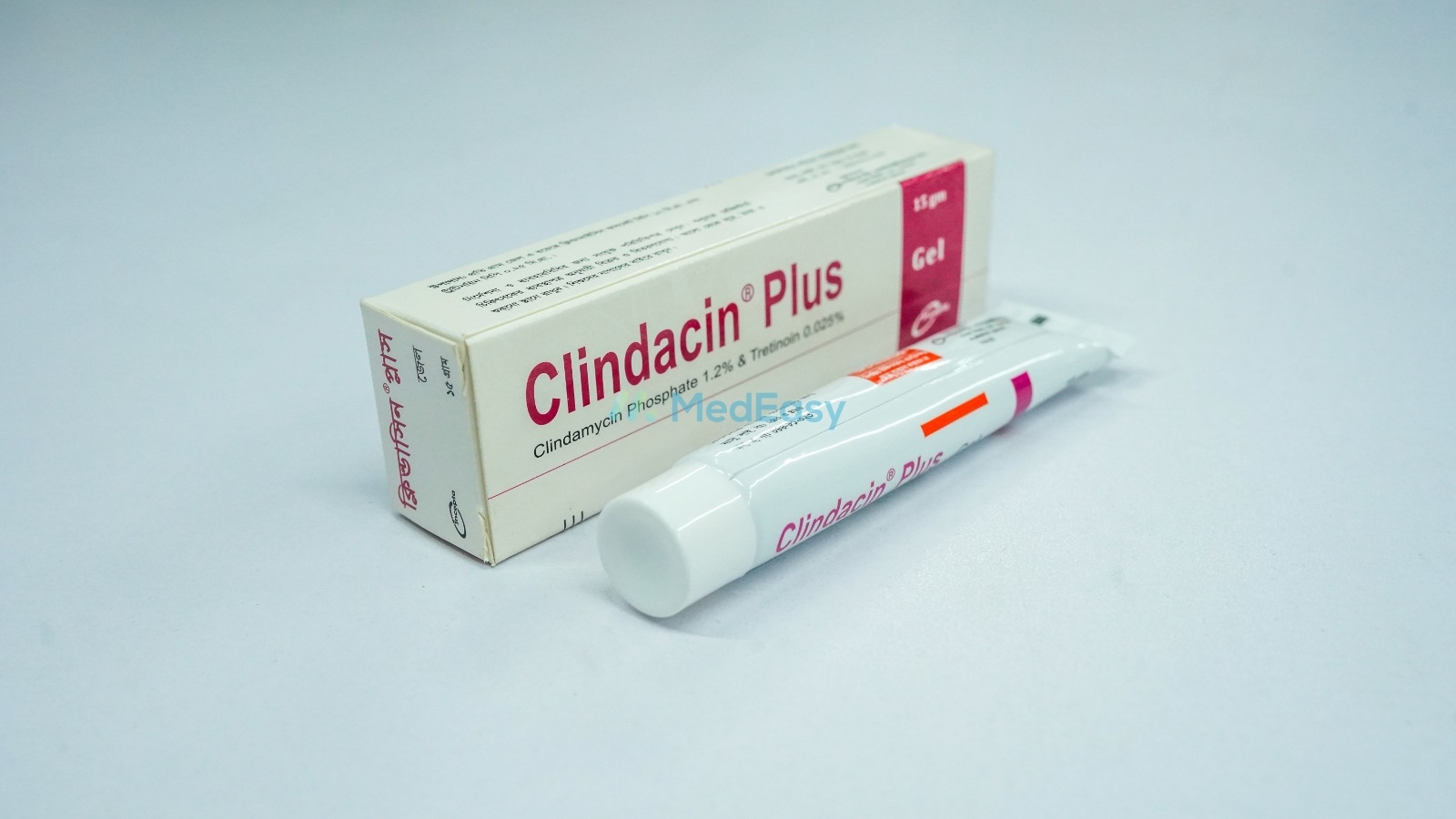
Clinex Plus1.2%+0.025
Aristopharma Ltd.
৳135.00
Add to cart


Dalacin Plus is a fixed-dose topical combination of a lincosamide antibiotic (clindamycin) and a retinoid (tretinoin) indicated for the treatment of acne vulgaris.
Dalacin Plus is not indicated for inflammatory conditions other than acne vulgaris (e.g., rosacea, perioral dermatitis) and is not intended for oral, ophthalmic, or intravaginal use. Use for any purpose other than topical acne treatment is off-label and not recommended without physician guidance.
Each gram of Clindamycin + Tretinoin topical gel typically contains clindamycin (as clindamycin phosphate) equivalent to 1.2% clindamycin base and tretinoin 0.025% (strengths of tretinoin may vary by brand, e.g. 0.025%, 0.05%, or 0.1%), in a gel base.
Inactive ingredients commonly include carbomer, methylparaben, edetate disodium, glycerin, and purified water; formulations may vary by manufacturer.
Dalacin Plus is a combination topical product that pairs clindamycin phosphate, a semi-synthetic lincosamide antibiotic, with tretinoin, a naturally occurring derivative of vitamin A (retinoic acid). It is formulated as a gel for once-daily application to the skin.
By combining an antibacterial/anti-inflammatory agent with a comedolytic retinoid, Dalacin Plus targets two of the main pathological processes in acne vulgaris: bacterial proliferation/inflammation and abnormal follicular keratinization that leads to comedone formation.
Dalacin Plus belongs to the therapeutic class of topical anti-acne combination preparations, specifically combining a lincosamide antibiotic (clindamycin) with a topical retinoid (tretinoin).
Clindamycin + Tretinoin exerts its therapeutic effect through two complementary mechanisms:
Together these actions reduce both inflammatory and non-inflammatory acne lesions. Systemic absorption of both components after topical application is minimal, but clinically relevant systemic exposure to clindamycin sufficient to cause colitis has rarely been reported.
| Indication | Dose/Application | Frequency |
|---|---|---|
| Acne vulgaris | Apply a pea-sized amount to cover the entire affected area (typically the face) in a thin layer | Once daily, at bedtime, on clean, dry skin |
Clinical improvement in acne is usually seen after several weeks of continuous use; treatment duration should be guided by a physician.
For external (topical) use on the skin only. Cleanse the area gently, allow the skin to dry completely, then apply a thin, even layer of Dalacin Plus gel, avoiding the eyes, mouth, nostrils, and mucous membranes. Wash hands thoroughly after use.
Dalacin Plus has limited potential for clinically significant drug interactions due to minimal systemic absorption when used topically as directed; however, the following should be noted:
Clindamycin + Tretinoin is contraindicated in patients with:
The most common adverse effects of Dalacin Plus are local skin reactions, which are usually mild to moderate and tend to peak within the first two weeks of treatment before improving:
Less common systemic effects reported include nasopharyngitis, pharyngolaryngeal pain, cough, and sinusitis, which may reflect background incidence rather than a direct drug effect.
Rare but serious: Diarrhea, bloody diarrhea, and colitis (including pseudomembranous colitis) have been reported with topical clindamycin due to limited systemic absorption. See Contraindications and Precautions for more detail; discontinue and seek medical attention if significant diarrhea occurs.
Pregnancy: Dalacin Plus contains tretinoin, a retinoid, and retinoids as a class carry teratogenicity concerns, although systemic absorption from topical use is low. There are no adequate and well-controlled studies of Dalacin Plus in pregnant women. Dalacin Plus should be used during pregnancy only if the potential benefit justifies the potential risk to the fetus; use is generally avoided unless clearly needed, and only under physician guidance.
Lactation: It is not known whether topically applied clindamycin or tretinoin is excreted in human breast milk in clinically significant amounts. Caution should be exercised, and a physician should be consulted before use while breastfeeding; avoid application to the chest/breast area to prevent inadvertent infant exposure.
Colitis risk: Clindamycin can be absorbed systemically to a small degree even with topical use, and rare cases of severe diarrhea and colitis (including pseudomembranous colitis) have been reported. If significant or persistent diarrhea, or bloody diarrhea, develops during Dalacin Plus use, discontinue the medicine and consult a physician promptly (see Contraindications).
Photosensitivity: Tretinoin increases skin sensitivity to sunlight and ultraviolet (UV) light. Patients should minimize sun exposure, avoid sunlamps/tanning beds, and use a broad-spectrum sunscreen (SPF 30 or higher) and protective clothing daily during treatment. Weather extremes (wind, cold) may also cause irritation.
Skin irritation: Dalacin Plus may cause significant local irritation, especially during the first few weeks of use. If irritation is severe, reduce frequency of application, use a moisturizer, or temporarily discontinue until skin tolerance improves; consult a physician if irritation persists.
Avoid concurrent irritants: Do not use other potentially irritating topical products (other retinoids, peeling agents, abrasive cleansers, products with high alcohol content) at the same time without physician advice, as this may increase irritation.
Flammability: Gel formulations may contain alcohol and are flammable; keep away from open flame, including while smoking, until the gel has dried.
Antibiotic stewardship: Take exactly as prescribed by your physician; do not stop, extend, skip doses, or share this medicine with others without medical advice.
Topical Dalacin Plus is intended for external use only in small amounts; excessive application does not speed clinical improvement and increases the risk of severe local irritation, redness, and peeling. Overapplication should be treated by discontinuing use until skin recovers.
If Dalacin Plus is accidentally ingested (swallowed), or if a large area of skin is exposed to an excessive amount, or if a child accidentally ingests the product, seek immediate medical attention or contact a poison control center/emergency services right away. Do not attempt to manage a significant accidental ingestion or reaction at home without medical advice.
Store at room temperature (below 30°C), away from light, heat, and moisture. Keep the tube tightly closed. Do not freeze. Keep out of reach of children. Formulation may be flammable; keep away from open flame.
Pediatric use: Safety and effectiveness of Dalacin Plus have been established in patients 12 years of age and older with acne vulgaris. Safety and efficacy in children under 12 years have not been established, and use in this age group is not recommended.
Geriatric use: Clinical studies of Dalacin Plus did not include sufficient numbers of patients aged 65 and over to determine whether they respond differently from younger patients. Acne vulgaris is uncommon in this age group; use with the same precautions as in adults.
Renal/hepatic impairment: No specific dose adjustment is established as systemic absorption from topical use is minimal; use with routine caution and physician guidance.
Pregnancy and lactation: See Pregnancy and Lactation section above.
Duration of treatment with Dalacin Plus varies by individual response but is typically continued for at least 8-12 weeks to assess efficacy, as visible improvement in acne lesions usually takes several weeks of consistent use. Many patients continue treatment for several months under physician supervision. Do not stop treatment abruptly without consulting a physician, and do not use for longer than advised.
Clindamycin + Tretinoin is classified as a topical antibiotic-retinoid combination, combining a lincosamide antibiotic (clindamycin) with a retinoid (tretinoin), used in the dermatological/anti-acne drug class.
Clindamycin + Tretinoin works through the dual mechanism of its two components: clindamycin inhibits bacterial protein synthesis at the 50S ribosomal subunit, suppressing Cutibacterium acnes and reducing associated inflammation, while tretinoin binds retinoic acid receptors in skin cells to normalize keratinocyte turnover and prevent the formation of microcomedones, the precursor lesions of acne. This combined action addresses both the bacterial/inflammatory and the follicular blockage components of acne vulgaris.
C (legacy FDA pregnancy category, applicable to the tretinoin component)
Dalacin Plus is approved for use in adolescents 12 years of age and older with acne vulgaris, with the same dosing and application instructions as adults (a pea-sized amount applied once daily at bedtime). Safety and efficacy have not been established in children below 12 years of age, and Dalacin Plus should not be used in this younger population unless specifically directed by a pediatrician or dermatologist.
Q: What is Dalacin Plus 1.2%+0.025% Topical Gel used for?
A: Dalacin Plus 1.2%+0.025% Topical Gel is a topical gel used to treat acne vulgaris. It combines an antibiotic (clindamycin) that reduces acne-causing bacteria and inflammation with a retinoid (tretinoin) that unclogs pores and normalizes skin cell turnover.
Q: How should I apply Dalacin Plus 1.2%+0.025% Topical Gel?
A: Apply a pea-sized amount of Dalacin Plus 1.2%+0.025% Topical Gel gel once daily at bedtime to clean, dry skin, covering the entire affected area in a thin layer. Avoid the eyes, mouth, and mucous membranes, and wash your hands after application.
Q: Can Dalacin Plus 1.2%+0.025% Topical Gel be used during pregnancy?
A: Dalacin Plus 1.2%+0.025% Topical Gel contains tretinoin, a retinoid, and retinoids carry teratogenicity concerns as a class. It should be used during pregnancy only if the potential benefit clearly justifies the potential risk to the fetus, and only under a physician's guidance. Discuss any pregnancy plans or pregnancy with your doctor before using Dalacin Plus 1.2%+0.025% Topical Gel.
Q: What side effects can occur with Dalacin Plus 1.2%+0.025% Topical Gel?
A: The most common side effects of Dalacin Plus 1.2%+0.025% Topical Gel are local skin reactions such as redness, dryness, peeling, burning, or itching, especially in the first couple of weeks of use. Rarely, topical clindamycin absorption can cause severe diarrhea or colitis; stop use and see a doctor promptly if this occurs.
Q: Who should not use Dalacin Plus 1.2%+0.025% Topical Gel?
A: Dalacin Plus 1.2%+0.025% Topical Gel should not be used by people who are hypersensitive to clindamycin, lincomycin, or tretinoin, or who have a history of regional enteritis (Crohn's disease), ulcerative colitis, or antibiotic-associated colitis.
Q: Do I need sun protection while using Dalacin Plus 1.2%+0.025% Topical Gel?
A: Yes. The tretinoin component of Dalacin Plus 1.2%+0.025% Topical Gel increases skin sensitivity to sunlight and UV light. Use a broad-spectrum sunscreen daily, wear protective clothing, and avoid excessive sun exposure or tanning beds while using this medicine.
Disclaimer
The information provided is accurate to the best of our knowledge, but it does not replace professional medical advice. We cannot guarantee its completeness or accuracy, and the absence of specific information about a drug should not be taken as an endorsement. We are not responsible for any consequences arising from this information, so please consult a healthcare professional for any concerns or questions.