10% Off
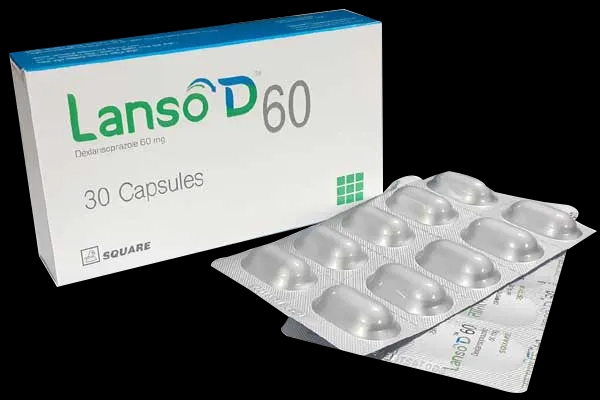
Lanso D60 mg
Square Pharmaceuticals PLC.
৳162.00
Add to cart
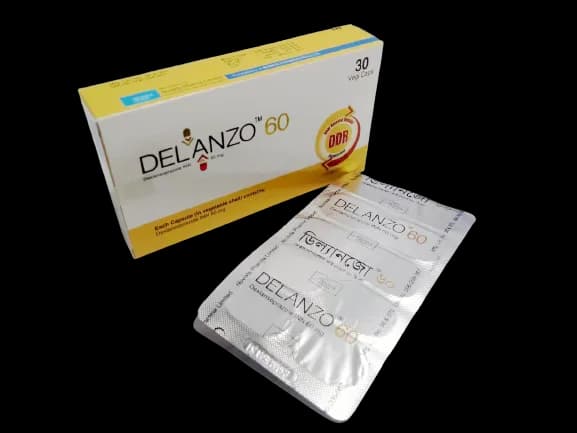

Delanzo 60 mg is a proton pump inhibitor (PPI) prescribed to reduce excessive stomach acid and to heal acid-related damage to the esophagus. It is clinically indicated for the following conditions:
Delanzo 60 mg helps relieve persistent heartburn, acid regurgitation, and discomfort linked to gastric acid, allowing damaged esophageal tissue to heal over time.
Delanzo 60 mg belongs to the therapeutic class of Proton Pump Inhibitors (PPIs), a group of medicines that reduce stomach acid production and are widely used to treat acid-related gastrointestinal disorders.
Delanzo 60 mg is a proton pump inhibitor (PPI) that suppresses gastric acid secretion by specifically inhibiting the (H+/K+)-ATPase enzyme system, commonly known as the "proton pump," located in the gastric parietal cells. By targeting this enzyme, Delanzo 60 mg blocks the final step of acid production, thereby reducing both basal and stimulated stomach acid output.
Delanzo 60 mg is the R-enantiomer of lansoprazole, which is itself a racemic mixture of the R- and S-enantiomers. This enantiomer-specific composition contributes to its distinct pharmacokinetic profile.
A key feature of Delanzo 60 mg is its Dual Delayed Release (DDR) formulation. Each capsule contains two types of enteric-coated granules that dissolve at different pH levels, producing a plasma concentration-time profile with two separate peaks. The first peak occurs approximately 1 to 2 hours after administration, followed by a second peak within 4 to 5 hours. This dual-release mechanism extends the duration of acid suppression compared with conventional single-release PPIs.
Following oral administration, the mean maximum plasma concentration (Cmax) and area under the curve (AUC) increase in an approximately dose-proportional manner. Delanzo 60 mg is extensively metabolized in the liver and is primarily excreted through the urine.
The recommended dosage of Delanzo 60 mg depends on the condition being treated and the formulation used. Always follow the prescription and advice of a registered physician.
Delanzo 60 mg can be taken with or without food. For best results, follow these guidelines:
Interaction with other medicines: Delanzo 60 mg may interact with certain drugs, potentially altering their effectiveness or increasing the risk of side effects. Caution is advised when it is used alongside the following:
Interaction with food & others: No specific data available. Inform your physician about all medicines, supplements, and herbal products you are taking before starting Delanzo 60 mg.
Delanzo 60 mg is contraindicated in patients with a known hypersensitivity or allergic reaction to Delanzo 60 mg or to any of the components in the formulation. Patients with a history of allergic reactions to proton pump inhibitors should inform their physician before use.
Like all medicines, Delanzo 60 mg may cause side effects, although not everyone experiences them. Most side effects are mild and gastrointestinal in nature.
Common side effects include:
If any side effect becomes severe or persistent, or if you experience an allergic reaction, seek medical advice promptly.
Pregnancy Category B. There are no adequate and well-controlled studies of Delanzo 60 mg in pregnant women. It should be used during pregnancy only if the potential benefit clearly justifies the potential risk to the fetus, and only under the guidance of a physician.
Lactation: There are no adequate and well-controlled studies of Delanzo 60 mg in breastfeeding mothers. Because it is not established whether the drug passes into human milk, caution should be exercised and a physician consulted before use during lactation.
Before and during treatment with Delanzo 60 mg, the following precautions should be considered:
There have been no reports of a significant overdose of Delanzo 60 mg. In clinical experience, multiple doses of 120 mg and a single dose of 300 mg did not result in death or other severe adverse effects. In the event of a suspected overdose, treatment should be symptomatic and supportive, and immediate medical attention should be sought.
Store Delanzo 60 mg below 30°C in a cool, dry place, protected from direct light and moisture. Keep the medicine in its original packaging and out of the reach of children. Do not use after the expiry date printed on the packaging.
Proton Pump Inhibitor
Delanzo 60 mg delayed-release capsule is a Proton Pump Inhibitor (PPI) which suppresses gastric acid secretion by specific inhibition of the (H+/K+)-ATPase in the gastric parietal cell. By acting specifically on the proton pump, Delanzo 60 mg blocks the final step of acid production. It is the R-enantiomer of lansoprazole (A racemic mixture of the R- and S-enantiomers). Delanzo 60 mg is supplied as a Dual Delayed Release (DDR) formulation in a capsule for oral administration. This capsule contains a mixture of two types of enteric coated granules with different pH-dependent dissolution profiles. The dual delayed release formulation in Delanzo 60 mg, plasma concentration-time profile with two distinct peaks; the first peak occurs 1 to 2 hours after administration, followed by a second peak within 4 to 5 hours. After oral administration, mean Cmax and AUC value of Delanzo 60 mg increased approximately dose proportionally. Delanzo 60 mg is extensively metabolized in the liver and excreated by urine.
Pregnancy Category B. There is no adequate and well-controlled studies with Delanzo 60 mg in pregnant women. There is no adequate and well-controlled studies with Delanzo 60 mg in Lactating mother.
Use in children & adolescents: Safety and effectiveness of Delanzo 60 mg in patients below 12 years age have not been established.Geriatric use: No dose adjustment is necessary for elderly patients.Renal impairment: No dose adjustment of Delanzo 60 mg is necessary for patients with renalimpairment.Hepatic impairment: No dose adjustment for Delanzo 60 mg is necessary for patients with mild hepatic impairment. A maximum daily dose of Delanzo 60 mg 30 mg should be considered for patients with moderate hepatic impairment.
What is Delanzo 60 mg used for?
Delanzo 60 mg is a proton pump inhibitor (PPI) prescribed to reduce excessive stomach acid and to heal acid-related damage to the esophagus. It is clinically indicated for the following conditions: Healing of Erosive Esophagitis (EE): Used to heal all grades of erosive esophagitis caused by acid reflux, for a treatment course of up to 8 weeks. Maintenance of Healed Erosive Esophagitis: Used to mai…
What is the dosage of Delanzo 60 mg?
The recommended dosage of Delanzo 60 mg depends on the condition being treated and the formulation used. Always follow the prescription and advice of a registered physician. Delanzo 60 mg Delayed-Release Capsule Dosing Indication Recommended Dose Duration Healing of Erosive Esophagitis 60 mg once daily Up to 8 weeks Maintenance of Healed Erosive Esophagitis & Heartburn Relief 30 mg once daily As a…
What are the side effects of Delanzo 60 mg?
Like all medicines, Delanzo 60 mg may cause side effects, although not everyone experiences them. Most side effects are mild and gastrointestinal in nature. Common side effects include: Diarrhea Abdominal pain Nausea Vomiting Flatulence (gas) If any side effect becomes severe or persistent, or if you experience an allergic reaction, seek medical advice promptly.
Who should not take Delanzo 60 mg?
Delanzo 60 mg is contraindicated in patients with a known hypersensitivity or allergic reaction to Delanzo 60 mg or to any of the components in the formulation. Patients with a history of allergic reactions to proton pump inhibitors should inform their physician before use.
What precautions should be taken with Delanzo 60 mg?
Before and during treatment with Delanzo 60 mg, the following precautions should be considered: Gastric Malignancy: Symptomatic relief does not rule out the presence of gastric cancer. If symptoms persist despite treatment, further investigation may be needed. Clostridium difficile–Associated Diarrhea: PPI therapy may increase the risk of this infection. Persistent diarrhea that does not improve s…
Is Delanzo 60 mg safe during pregnancy and breastfeeding?
Pregnancy Category B. There are no adequate and well-controlled studies of Delanzo 60 mg in pregnant women. It should be used during pregnancy only if the potential benefit clearly justifies the potential risk to the fetus, and only under the guidance of a physician. Lactation: There are no adequate and well-controlled studies of Delanzo 60 mg in breastfeeding mothers. Because it is not establishe…
The information provided is accurate to our best practices, but it does not replace professional medical advice. We cannot guarantee its completeness or accuracy. The absence of specific information about a drug should not be seen as an endorsement. We are not responsible for any consequences resulting from this information, so consult a healthcare professional for any concerns or questions.