8% Off
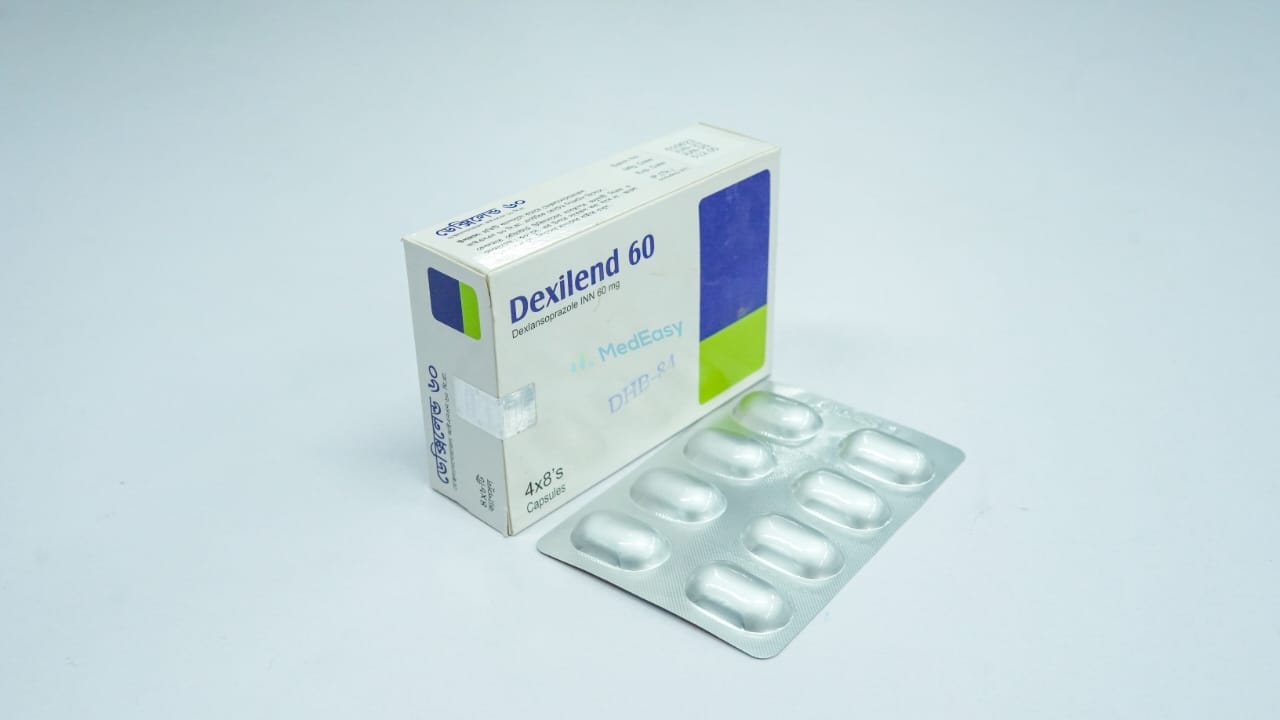
Dexilend60 mg
Ziska Pharmaceuticals Ltd.
৳117.76
Add to cart
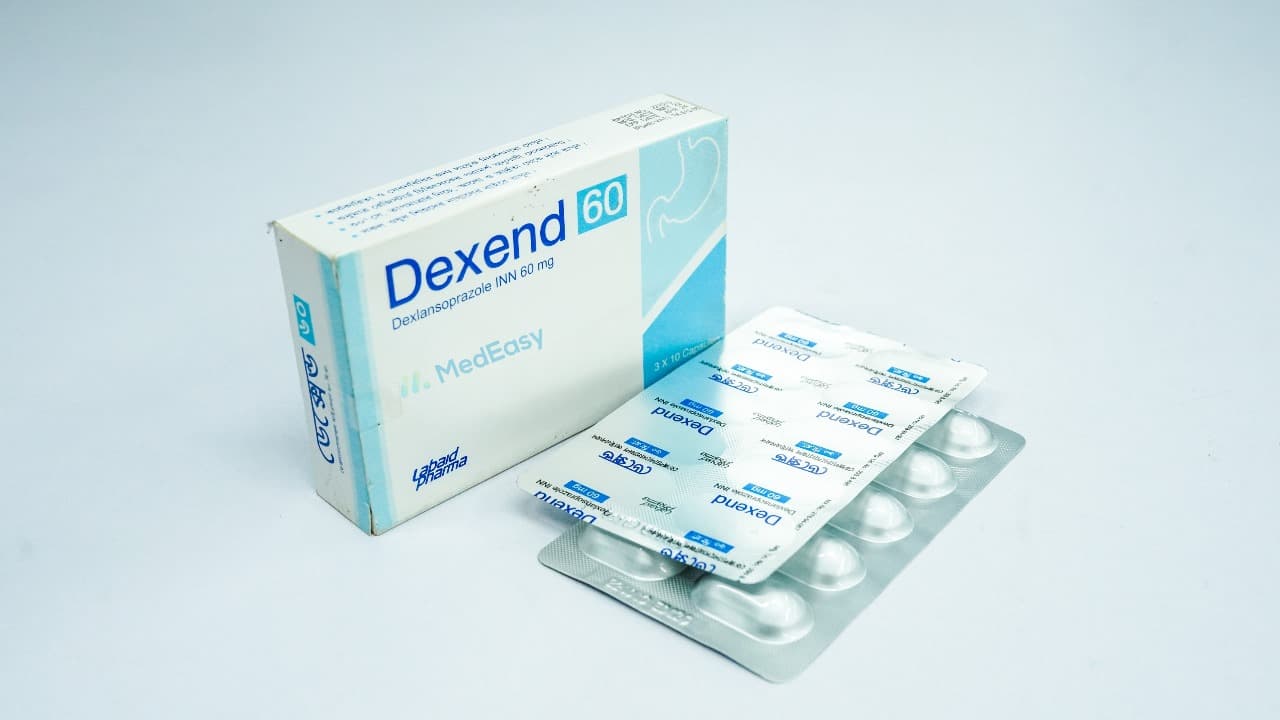
Dexend 60 mg Capsule is available on MedEasy for ৳18.00 per piece, with home delivery anywhere in Bangladesh. It is manufactured by Labaid Pharma Ltd. Its generic name is Dexlansoprazole.

Dexend is an established, FDA-approved indication for healing of all grades of erosive esophagitis for up to 8 weeks in adults and adolescents 12 years of age and older. Dexend is also indicated for maintenance of healed erosive esophagitis and relief of heartburn for up to 6 months in adults (up to 16 weeks in patients 12 to 17 years of age).
Dexend is an established indication for treatment of heartburn associated with symptomatic non-erosive GERD for 4 weeks in adults and adolescents 12 years of age and older.
Each Dexlansoprazole delayed-release capsule contains Dexlansoprazole 30 mg or Dexlansoprazole 60 mg as the active ingredient.
Dexend is a proton pump inhibitor (PPI) medicine used to reduce the amount of acid produced in the stomach. Dexend is commonly prescribed to heal acid-related damage to the food pipe (erosive esophagitis) and to relieve persistent heartburn caused by acid reflux (GERD). Dexend uses a special dual delayed-release capsule technology that releases Dexend in two stages, allowing once-daily dosing to control stomach acid over a longer period. Dexend is taken by mouth, usually once a day, with or without food, and the dose and length of treatment with Dexend depend on the condition being treated. As with all proton pump inhibitors, Dexend should be used at the lowest effective dose for the shortest duration appropriate for the condition.
Proton Pump Inhibitor (PPI)
Dexlansoprazole is the R-enantiomer of lansoprazole and works by irreversibly inhibiting the hydrogen-potassium ATPase (proton pump) enzyme system at the secretory surface of gastric parietal cells, blocking the final step of acid production. Dexlansoprazole is formulated as a Dual Delayed-Release (DDR) capsule containing two types of enteric-coated granules with different pH-dependent release profiles, producing two separate plasma concentration peaks (approximately 1-2 hours and 4-5 hours after dosing) and extending the duration of acid suppression compared with conventional single-release PPIs. Dexlansoprazole is extensively metabolized in the liver, mainly via the CYP2C19 and CYP3A4 enzyme pathways, and has an elimination half-life of approximately 1-2 hours.
The dose and duration of Dexend treatment depend on the specific condition being treated and must be determined by a qualified healthcare professional; the information below is general prescribing guidance and is not a substitute for individual medical advice.
Diarrhea, abdominal pain, nausea, upper respiratory tract infection, vomiting, and flatulence are the most commonly reported side effects of Dexend. In adolescents (12-17 years), headache, abdominal pain, diarrhea, nasopharyngitis, and oropharyngeal pain have also been reported with Dexend.
There are no adequate, well-controlled studies of Dexend use in pregnant women. Animal reproduction studies with Dexend showed effects on fetal/offspring bone development (reduced femur weight, femur length, and growth plate thickness) at maternal exposures around 1.8 times the recommended human dose. Dexend should be used during pregnancy only if the potential benefit justifies the potential risk to the fetus, and pregnant women should discuss the use of Dexend with their healthcare provider.
It is not known whether Dexend passes into human breast milk; related lansoprazole metabolites have been detected in the milk of lactating rats. The decision to use Dexend while breastfeeding should weigh the benefits of breastfeeding and the mother's clinical need for Dexend against any potential risk to the infant, and should be made in consultation with a healthcare professional.
There is limited experience with Dexend overdose, and no cases involving serious harm or death have been reported. If an overdose of Dexend is suspected, do not induce vomiting unless specifically directed to do so by a doctor or a poison control center. Seek immediate medical attention or contact an emergency or poison control service. Treatment of Dexend overdose is symptomatic and supportive; Dexend is not effectively removed by hemodialysis.
Store Dexend according to the instructions on the product label, and keep Dexend out of the reach of children.
The safety and effectiveness of Dexend have been established only in patients 12 years of age and older. Dexend is not recommended in children younger than 2 years of age because of a potential risk of heart valve (mitral valve) thickening observed in animal studies, and Dexend has not been shown to be effective for symptomatic GERD in infants 1 month to less than 1 year of age. Use of Dexend in children below 12 years of age should only occur under specialist guidance.
No overall differences in the safety or effectiveness of Dexend were observed between elderly and younger patients in clinical trials, although elimination of Dexend may be slower and drug exposure somewhat higher in older adults. No dose adjustment of Dexend is required based on age alone, but elderly patients using Dexend long-term should be monitored for bone, magnesium, and vitamin B12-related risks (see Precautions and Warnings).
No dosage adjustment of Dexend is required in patients with renal impairment, as Dexend is primarily eliminated through the liver rather than the kidneys.
No dose adjustment of Dexend is needed in mild hepatic impairment (Child-Pugh Class A). In moderate hepatic impairment (Child-Pugh Class B), the recommended dose of Dexend for healing erosive esophagitis is reduced to 30 mg once daily. Dexend is not recommended in patients with severe hepatic impairment (Child-Pugh Class C), as Dexend has not been studied in this population.
The duration of Dexend treatment depends on the indication: healing of erosive esophagitis is typically treated with Dexend for up to 8 weeks; maintenance therapy after healing, to keep the esophagitis healed and control heartburn, may continue with Dexend for up to 6 months in adults (up to 16 weeks in patients 12-17 years); and symptomatic non-erosive GERD is generally treated with Dexend for 4 weeks. Long-term or repeated courses of Dexend should be reviewed periodically by a healthcare professional, given the risks associated with prolonged PPI use (see Precautions and Warnings).
Proton Pump Inhibitor (PPI); Antisecretory / Antiulcer agent
Dexlansoprazole irreversibly binds to and inhibits the hydrogen-potassium ATPase (H+/K+-ATPase) enzyme, or proton pump, located on the surface of gastric parietal cells, thereby blocking the final step of gastric acid secretion regardless of the stimulus.
Dexend is approved for use only in patients 12 years of age and older for the labeled indications. The safety and effectiveness of Dexend have not been established in children below 12 years of age. Dexend is not recommended in children under 2 years of age because of a possible risk of heart valve thickening seen in animal studies, and studies have not shown Dexend (or its parent compound lansoprazole) to be effective for symptomatic GERD in infants aged 1 month to less than 1 year.
Q: What is Dexend 60 mg Capsule used for?
A: Dexend 60 mg Capsule is used to heal erosive esophagitis (acid-related damage to the food pipe), to maintain healing of erosive esophagitis and relieve heartburn, and to treat heartburn caused by symptomatic non-erosive gastroesophageal reflux disease (GERD).
Q: How should Dexend 60 mg Capsule be taken?
A: Dexend 60 mg Capsule is usually taken once daily, by mouth, with or without food, and the capsule should be swallowed whole. If the capsule cannot be swallowed whole, Dexend 60 mg Capsule can be opened and sprinkled on applesauce, as directed by a doctor.
Q: What is the usual dose of Dexend 60 mg Capsule?
A: The dose of Dexend 60 mg Capsule depends on the condition being treated - commonly Dexend 60 mg Capsule 60 mg once daily for healing erosive esophagitis, or Dexend 60 mg Capsule 30 mg once daily for maintenance therapy or non-erosive GERD - but the exact dose must be determined by a healthcare professional.
Q: Can Dexend 60 mg Capsule be taken with clopidogrel?
A: Dexend 60 mg Capsule may cause a modest reduction in the activation of clopidogrel through a CYP2C19-related interaction; in clinical studies this reduction was small and not considered clinically significant, but patients taking clopidogrel should inform their doctor before starting Dexend 60 mg Capsule.
Q: Is Dexend 60 mg Capsule safe during pregnancy?
A: The safety of Dexend 60 mg Capsule during pregnancy has not been fully established in humans; animal studies with Dexend 60 mg Capsule showed some effects on fetal bone development. Dexend 60 mg Capsule should be used in pregnancy only when a healthcare professional determines the benefit outweighs the potential risk.
Q: Can children take Dexend 60 mg Capsule?
A: Dexend 60 mg Capsule is approved only for patients 12 years of age and older; Dexend 60 mg Capsule is not recommended for children under 2 years of age and has not been shown to be effective in infants younger than 1 year with symptomatic GERD.
Q: What are the common side effects of Dexend 60 mg Capsule?
A: The most common side effects of Dexend 60 mg Capsule include diarrhea, abdominal pain, nausea, vomiting, flatulence, and upper respiratory tract infection.
Q: Is it safe to use Dexend 60 mg Capsule for a long time?
A: Long-term use of Dexend 60 mg Capsule, like other proton pump inhibitors, has been associated with increased risks of bone fracture, low magnesium levels, vitamin B12 deficiency, and Clostridioides difficile-associated diarrhea; Dexend 60 mg Capsule should be used at the lowest effective dose for the shortest duration necessary, under medical supervision.
Q: What should be done if a dose of Dexend 60 mg Capsule is missed?
A: If a dose of Dexend 60 mg Capsule is missed, take it as soon as remembered; however, if it is almost time for the next dose, skip the missed dose and continue the regular schedule. Do not take two doses of Dexend 60 mg Capsule at the same time.
Disclaimer
The information provided is accurate to the best of our knowledge, but it does not replace professional medical advice. We cannot guarantee its completeness or accuracy, and the absence of specific information about a drug should not be taken as an endorsement. We are not responsible for any consequences arising from this information, so please consult a healthcare professional for any concerns or questions.