
10% Off
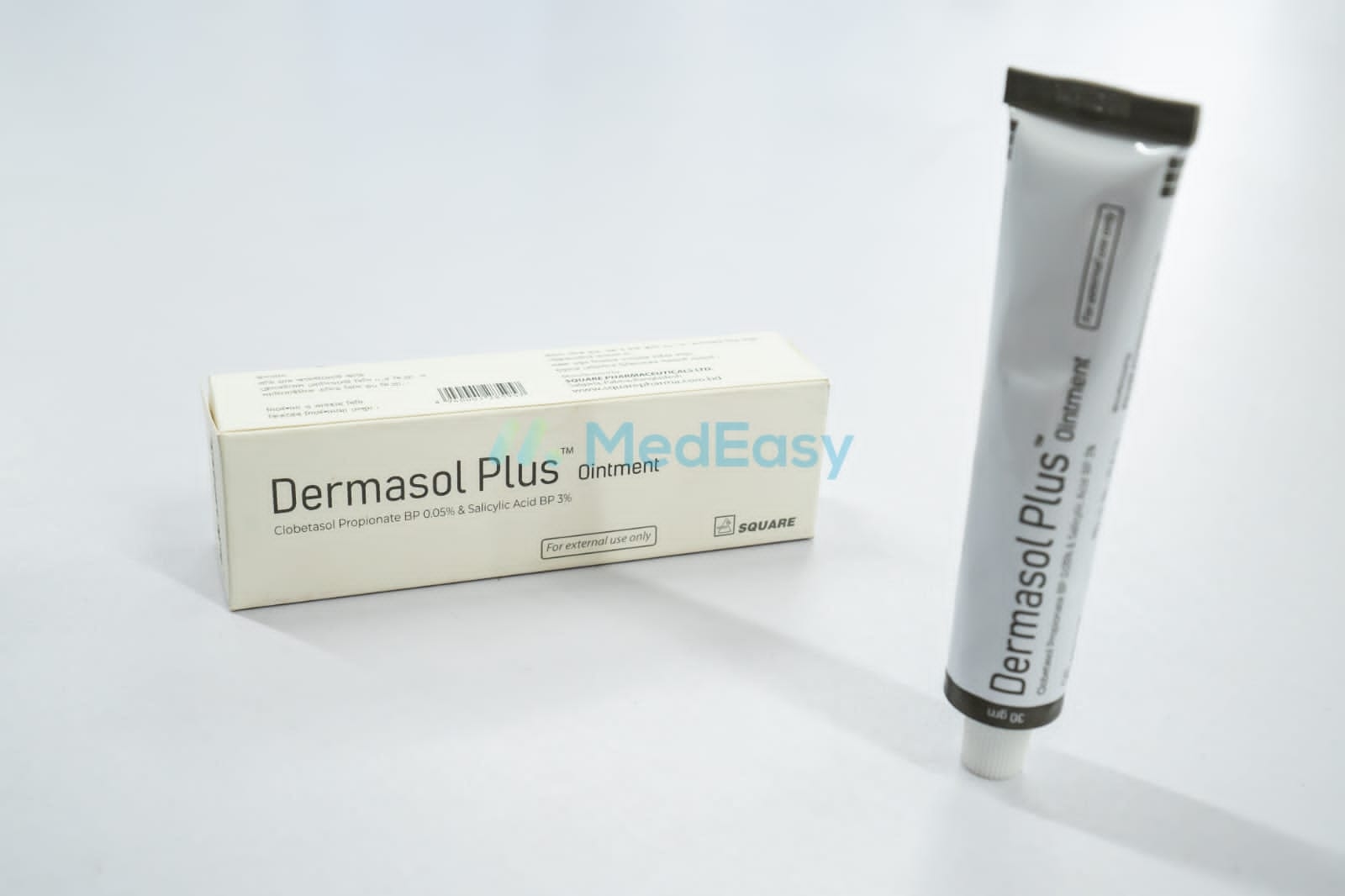
Dermasol Plus30 gm
Square Pharmaceuticals PLC.
৳135.00
Add to cart
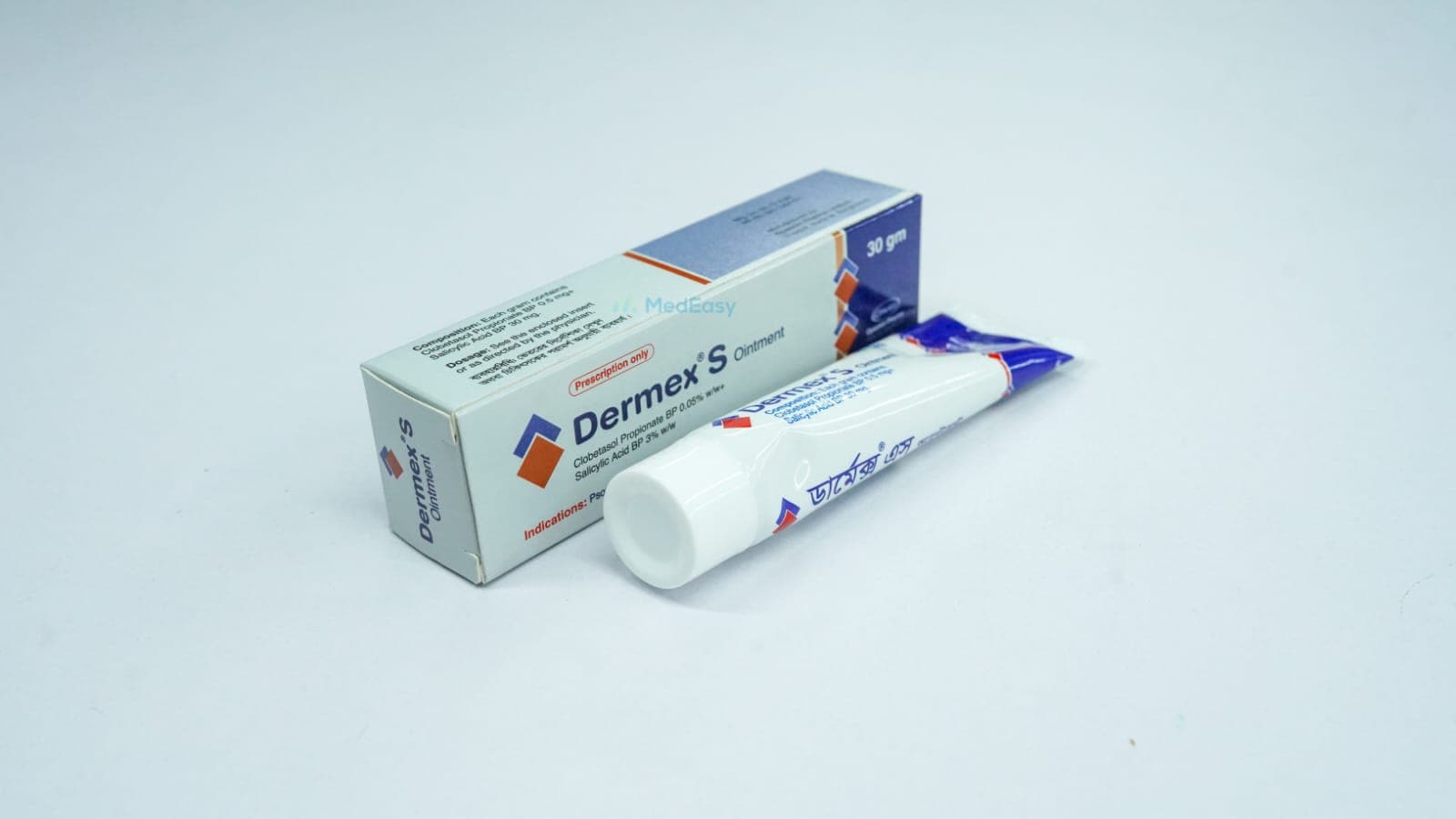

Dermex S ointment is a topical combination of a super-potent (Class I) corticosteroid and a keratolytic agent, indicated for:
Dermex S is intended for short-term, localized use only and is not a first-line treatment for mild psoriasis or for widespread/extensive disease.
Each gram of Clobetasol Propionate + Salicylic Acid ointment/cream typically contains:
in a suitable ointment or cream base. Exact strengths may vary slightly by manufacturer/formulation; always check the product label of the dispensed pack.
Dermex S is a fixed-dose topical combination product used in dermatology for thick, scaly plaque psoriasis. Clobetasol propionate is a synthetic, super-potent (Class I / Group I) topical corticosteroid with anti-inflammatory, antipruritic, and vasoconstrictive properties. Salicylic acid is a keratolytic agent that softens and dissolves the intercellular cement holding hyperkeratotic scale together, which both reduces scaling directly and increases penetration of the co-formulated corticosteroid into affected skin.
Because clobetasol propionate is among the most potent topical corticosteroids available, Dermex S is generally reserved for short courses on localized, thick, treatment-resistant plaques rather than for routine or widespread use.
Dermex S belongs to the therapeutic class of topical corticosteroid + keratolytic combinations, used in dermatology for hyperkeratotic, corticosteroid-responsive skin conditions such as thick plaque psoriasis.
Clobetasol Propionate + Salicylic Acid combines two agents with complementary mechanisms:
A super-potent (Class I) synthetic fluorinated corticosteroid that diffuses across cell membranes and binds intracellular glucocorticoid receptors, which translocate to the nucleus and modulate gene transcription. This induces synthesis of lipocortins that inhibit phospholipase A2, reducing release of arachidonic acid and downstream inflammatory mediators (prostaglandins, leukotrienes). The net effect is potent anti-inflammatory, antipruritic, antiproliferative, and vasoconstrictive activity in the skin.
A keratolytic that lowers the pH of the stratum corneum and disrupts corneocyte cohesion (intercellular cement), promoting desquamation of hyperkeratotic scale. By reducing scale thickness, it improves cutaneous penetration and efficacy of co-applied clobetasol propionate.
| Indication | Dose/Frequency | Maximum duration |
|---|---|---|
| Moderate-to-severe thick plaque psoriasis (including scalp) | Apply a thin film to the affected area(s) once or twice daily | Not more than 2 consecutive weeks; total weekly dose not to exceed 50 g |
Not recommended for use in children under 12 years of age; safety and efficacy in this age group have not been established. Use in adolescents (12-17 years) only under close physician supervision, for the shortest duration and smallest area necessary, due to greater risk of systemic absorption of both components relative to body surface area.
No specific dose adjustment is established for topical use; however, caution is advised because reduced clearance of systemically absorbed corticosteroid or salicylate could theoretically increase risk of systemic effects in significant hepatic or renal impairment.
For external (topical) use on the skin only. Wash and dry hands before and after application (unless hands are the treated area). Gently massage a thin film of Dermex S into the affected plaques until absorbed. Avoid contact with eyes, mouth, and mucous membranes. Do not bandage, wrap, or otherwise occlude the treated area unless the prescribing physician has specifically instructed occlusive use. Not for oral, ophthalmic, or intravaginal use.
Dermex S carries a low risk of clinically significant systemic drug interactions when used topically at recommended doses and over limited body surface area, because systemic absorption of both clobetasol propionate and salicylic acid is normally minimal.
Clobetasol Propionate + Salicylic Acid is contraindicated in:
Local skin reactions are most common; systemic effects are uncommon with correct short-term, limited-area use but risk rises with excessive quantity, duration, or body surface area.
Pregnancy: There are no adequate, well-controlled studies of Dermex S in pregnant women. Topical corticosteroids can be systemically absorbed and, in animal studies, potent corticosteroids have been associated with fetal harm when given systemically at high doses. Dermex S should be used during pregnancy only if the potential benefit justifies the potential risk to the fetus, in the smallest effective amount for the shortest duration, and only under a physician's direction.
Lactation: It is not known whether topically applied clobetasol propionate or salicylic acid is excreted in human milk in clinically significant amounts. Caution is advised; avoid application to the breast/nipple area to prevent inadvertent infant ingestion, and consult a physician before use while breastfeeding.
Dermex S contains clobetasol propionate, one of the most potent (Class I) topical corticosteroids available. Treatment should not exceed 2 consecutive weeks, and the total dose should not exceed 50 g per week, to minimize the risk of HPA-axis suppression, Cushing's syndrome, hyperglycemia, and skin atrophy. Avoid use on more than 10% of body surface area unless directed by a physician.
Application over large body surface areas, denuded/inflamed skin, or under occlusion increases systemic absorption of salicylic acid and the risk of salicylism, particularly in children and in patients with renal or hepatic impairment. Avoid use over large treatment areas.
Do not apply to the face, groin, axillae, or other intertriginous (skin-fold) areas, as these are more susceptible to atrophic changes; use only if specifically directed by the physician for these areas, and then for the shortest duration possible.
Do not use with occlusive dressings unless specifically instructed, as occlusion markedly increases systemic absorption of both components.
If concurrent skin infection is present, an appropriate antifungal or antibacterial agent should be used; if response is not prompt, discontinue Dermex S until the infection is controlled. See Contraindications for viral skin infections.
Children may be more susceptible to systemic toxicity from both components due to a larger skin-surface-to-body-mass ratio; use in children is generally avoided or limited to physician-directed, minimal-area, short-duration therapy. See Use in Special Populations.
Topical overdose or use over excessive body surface area/duration can lead to significant systemic absorption of both components. Signs of corticosteroid excess include HPA-axis suppression and Cushingoid features (moon face, weight gain, hyperglycemia); signs of salicylate toxicity (salicylism) include tinnitus, dizziness, headache, nausea, vomiting, hyperventilation, and, in severe cases, metabolic acidosis or altered mental status.
If accidental ingestion or signs of systemic toxicity from excessive use of Dermex S occur, discontinue use immediately and seek immediate medical attention or contact a poison control center/emergency services. Do not attempt specific home treatment beyond removing residual product from the skin (gently wash off) while awaiting medical advice.
Store at room temperature (below 30°C), away from light and moisture. Keep the tube tightly closed and out of reach of children.
Use of Dermex S in children under 12 years is not recommended; safety and efficacy have not been established, and children are at greater risk of HPA-axis suppression and salicylate toxicity due to a higher skin-surface-area-to-body-weight ratio. If used in adolescents, treatment should be limited to the smallest area and shortest duration necessary, under physician supervision.
No specific dose adjustment is established for elderly patients, but skin thinning associated with age may increase susceptibility to corticosteroid-induced atrophy; use the lowest effective amount for the shortest duration.
Use with caution; reduced clearance of any systemically absorbed drug could theoretically increase risk of systemic corticosteroid or salicylate effects. No formal dose-adjustment data are available for topical use.
Treatment with Dermex S should generally not exceed 2 consecutive weeks per course. If no improvement is seen within this period, the physician should reassess the diagnosis and treatment plan. Repeated or intermittent courses may be used under physician supervision, but continuous long-term use is not recommended due to cumulative risk of skin atrophy and HPA-axis suppression.
Topical corticosteroid (super-potent, Class I) combined with a keratolytic agent
Clobetasol Propionate + Salicylic Acid acts through two complementary mechanisms: clobetasol propionate binds intracellular glucocorticoid receptors to suppress inflammatory gene expression, producing potent anti-inflammatory, antipruritic, and antiproliferative effects that reduce psoriatic plaque activity; salicylic acid keratolytically loosens and removes thick, adherent scale by disrupting corneocyte cohesion, which both reduces visible scaling and enhances cutaneous penetration of the corticosteroid into the plaque.
Dermex S is not recommended for children under 12 years of age because safety and efficacy have not been established in this population, and children have a proportionally larger skin surface area relative to body weight, increasing the risk of systemic absorption of both clobetasol propionate (HPA-axis suppression, growth effects) and salicylic acid (salicylism). If a physician determines use in an adolescent (12-17 years) is necessary, it should be limited to the smallest affected area, lowest effective frequency, and shortest possible duration, with close monitoring.
Q: What is Dermex S 30 gm Ointment ointment used for?
A: Dermex S 30 gm Ointment is used for the short-term topical treatment of thick, scaly plaque psoriasis, especially resistant plaques on the body or scalp, where the salicylic acid helps remove scale and improve penetration of the corticosteroid.
Q: How long can I use Dermex S 30 gm Ointment?
A: Treatment is generally limited to a maximum of 2 consecutive weeks and no more than 50 g per week, because Dermex S 30 gm Ointment contains a super-potent (Class I) corticosteroid. Do not use longer than your physician has prescribed without follow-up.
Q: Can I use Dermex S 30 gm Ointment on my face or in skin folds?
A: No, Dermex S 30 gm Ointment should not be applied to the face, groin, armpits, or other skin-fold areas unless your physician specifically instructs you to, because these areas are thinner and more prone to skin thinning (atrophy) and irritation.
Q: Is Dermex S 30 gm Ointment safe to use in children?
A: Dermex S 30 gm Ointment is not recommended for children under 12 years old, as safety and effectiveness have not been established and children absorb more of the medicine relative to their body size, raising the risk of side effects. Use in adolescents should only be under close physician supervision.
Q: What side effects should I watch for with Dermex S 30 gm Ointment?
A: Common effects include burning, stinging, dryness, or irritation at the application site. With excessive or prolonged use, more serious effects such as skin thinning, stretch marks, or signs of hormone/adrenal suppression (unusual weight gain, high blood sugar) or salicylate toxicity (ringing in ears, dizziness, nausea) can occur - contact your physician if these develop.
Q: Can I use Dermex S 30 gm Ointment while pregnant or breastfeeding?
A: Dermex S 30 gm Ointment should be used during pregnancy or breastfeeding only if your physician determines it is clearly needed, using the smallest amount for the shortest time, since topical corticosteroids and salicylic acid can be absorbed into the bloodstream and their safety in pregnancy/lactation has not been firmly established.
Disclaimer
The information provided is accurate to the best of our knowledge, but it does not replace professional medical advice. We cannot guarantee its completeness or accuracy, and the absence of specific information about a drug should not be taken as an endorsement. We are not responsible for any consequences arising from this information, so please consult a healthcare professional for any concerns or questions.

