
7% Off
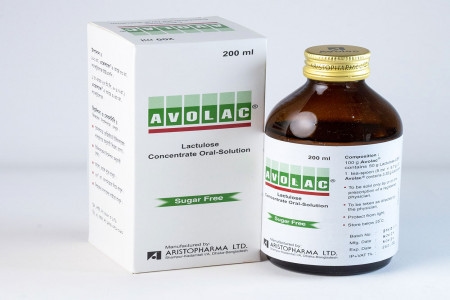
Avolac200 ml
Aristopharma Ltd.
৳297.60
Add to cart
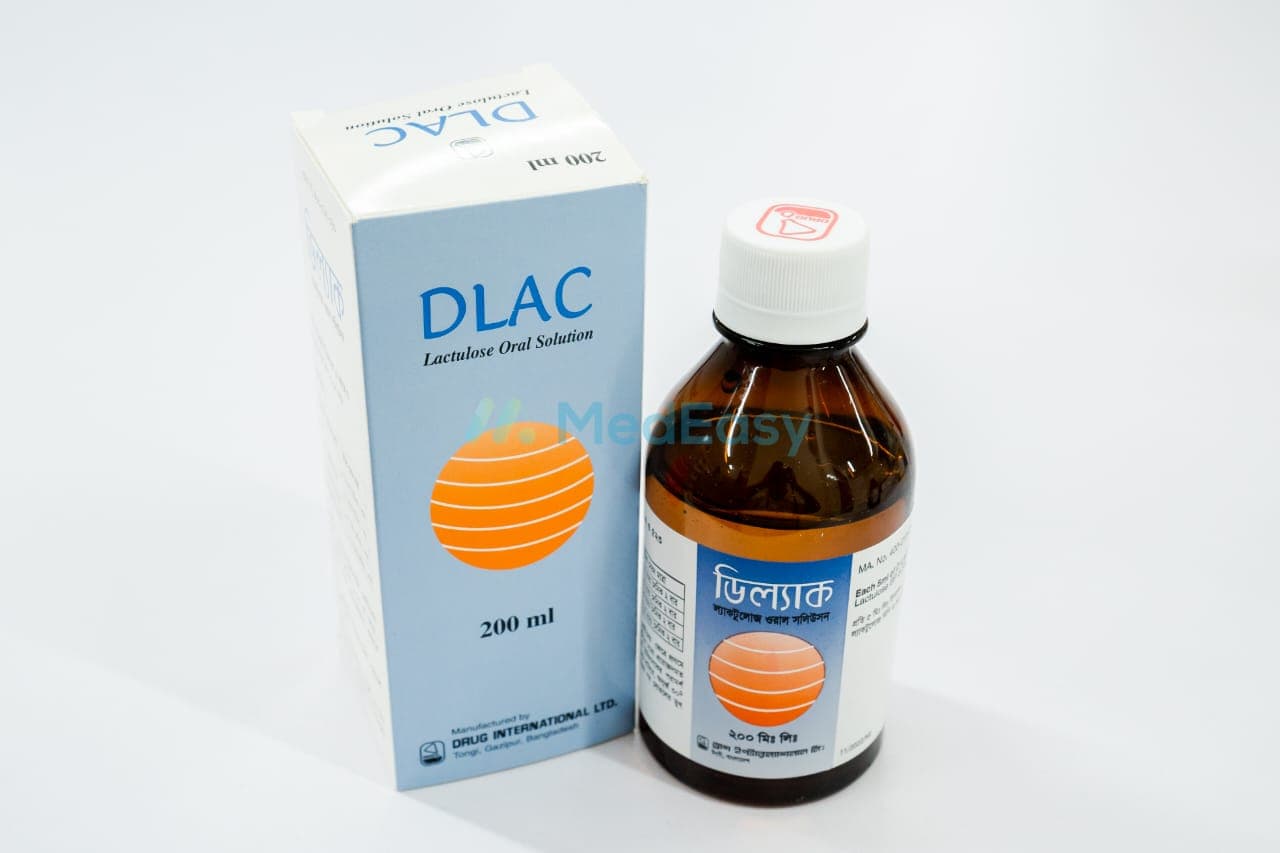

Dlac is not an antibiotic and has no role in treating infections.
Lactulose is available in Bangladesh mainly as an oral solution containing Lactulose 3.35 g per 5 mL (equivalent to a 10 g/15 mL strength), supplied in bottles of various sizes for oral use. Some manufacturers also market crystalline Lactulose powder for preparation of solutions. Strength and pack size vary by manufacturer; always check the product label for the exact concentration.
Dlac is a synthetic, non-absorbable disaccharide (a combination of the sugars galactose and fructose) used as an osmotic laxative and as an ammonia-lowering agent. Because Dlac is not broken down or absorbed in the small intestine, it passes intact into the colon, where it is metabolized by colonic bacteria into low-molecular-weight organic acids. These acids increase osmotic pressure within the colon, drawing water into the bowel lumen, softening the stool, and increasing stool frequency. The same colonic acidification also converts absorbable ammonia (NH3) into non-absorbable ammonium ions (NH4+), which are then trapped in the colon and excreted, lowering blood ammonia levels. Dlac is widely used both for chronic constipation and for the prevention and management of hepatic encephalopathy.
Osmotic (hyperosmotic) laxative; ammonia-lowering agent — synthetic disaccharide
Lactulose is a synthetic disaccharide of galactose and fructose. It is not hydrolyzed by intestinal enzymes and is minimally absorbed from the small intestine, so it reaches the colon essentially unchanged.
In the colon, bacterial flora metabolize Lactulose into low-molecular-weight organic acids (lactic, acetic, and small amounts of formic acid). These acids lower colonic pH and increase osmotic pressure, causing water retention in the bowel lumen. This softens the stool, increases stool volume, and stimulates peristalsis, producing a bowel movement typically within 24–48 hours.
The acidification of colonic contents converts absorbable ammonia (NH3) into the poorly absorbable ammonium ion (NH4+), trapping nitrogenous waste in the colon lumen for elimination in the stool. Lactulose also reduces the population of ammonia-producing (urease-containing) intestinal bacteria and, through its cathartic effect, reduces colonic transit time, further limiting ammonia absorption. This mechanism underlies its efficacy in reducing blood ammonia and improving mental status in hepatic encephalopathy.
Usual dose: 15–30 mL (10–20 g) of Dlac oral solution once daily, which may be increased up to 60 mL/day if required. A bowel movement is usually produced within 24–48 hours; the dose can then be titrated to maintain 1–2 soft stools per day.
Formal safety and effectiveness data for constipation in children have not been established in the manufacturer's labeling; however, Dlac is commonly used off-label under medical supervision, typically dosed by age/weight and titrated to a soft, comfortable stool pattern. Pediatric dosing should always be individualized and supervised by a physician.
| Regimen | Typical dose |
|---|---|
| Initial/titration | 30–45 mL (20–30 g) orally, 3–4 times daily, or 30–45 mL every 1–2 hours until laxation occurs, then adjust |
| Maintenance | Dose titrated (usually 30–45 mL, 2–4 times daily) to achieve 2–3 soft, formed stools per day |
| Rectal (if oral not possible) | A retention enema of Dlac solution diluted in water, given under medical supervision, may be used in patients unable to take oral therapy |
Dosing for hepatic encephalopathy is higher and more frequent than for simple constipation and must be individually titrated and monitored by a physician; it is not a fixed regimen for self-adjustment by the patient.
No dose adjustment is required for renal impairment because systemic absorption of Dlac is minimal. Dlac is, in fact, the primary treatment used in patients with hepatic impairment (for hepatic encephalopathy); electrolytes should be monitored with prolonged or high-dose use in this population.
Dlac oral solution may be taken directly or mixed with water, fruit juice, or milk to improve palatability, with or without food. Use a proper measuring device (dosing cup/spoon) rather than a household spoon for accuracy. It may take 24–48 hours to see the full laxative effect for constipation, so it should not be taken solely for rapid relief. For hepatic encephalopathy, doses are usually spread through the day and adjusted by the treating physician based on stool frequency and consistency. If a dose is missed, take it as soon as remembered unless it is close to the next dose; do not double the dose. Do not exceed the dose or duration advised by the physician.
Common (especially at the start of therapy, usually transient and dose-related): abdominal bloating, flatulence, belching, and abdominal cramping.
Less common: nausea, vomiting, and diarrhea, particularly with excessive dosing.
Uncommon/with excessive or prolonged use: electrolyte imbalance (e.g., low potassium, low sodium) related to fluid loss from diarrhea — see Precautions and Warnings.
Dlac is minimally absorbed systemically and is generally considered a low-risk laxative option during pregnancy; nevertheless, as with any medicine in pregnancy, Dlac should be used only if clearly needed and as directed by a physician, with the potential benefit weighed against any potential risk. There are no adequate, well-controlled studies in pregnant women.
Data on excretion of Dlac into breast milk are limited, but due to its negligible systemic absorption, it is generally considered acceptable for use during breastfeeding under medical guidance. A physician or pharmacist should be consulted before use in pregnancy or lactation.
Overdose with Dlac chiefly causes exaggerated laxative effects: severe diarrhea, abdominal cramping, and consequent loss of fluid and electrolytes. If overdose is suspected, discontinue Dlac, ensure adequate fluid intake, and seek immediate medical attention or contact a poison control center/emergency services, particularly if there are signs of dehydration (dizziness, reduced urination) or electrolyte disturbance. Do not attempt to manage a significant overdose with home remedies alone.
Store at room temperature (below 30°C), away from light and moisture. Do not freeze. Keep out of reach of children.
For constipation, Dlac is typically used for short courses initially, with response assessed within 24–48 hours; if there is no improvement within 2–3 days, a physician should be consulted. Dlac can be continued for longer-term management of chronic constipation under medical supervision, with periodic reassessment. For hepatic encephalopathy, Dlac is generally used long-term as maintenance therapy, with the dose continuously titrated by the treating physician to maintain 2–3 soft stools per day; duration is determined by the underlying liver disease and clinical response.
Osmotic laxatives; ammonia-detoxicating agents (synthetic disaccharides)
Lactulose reaches the colon unabsorbed, where bacterial fermentation converts it into organic acids that osmotically draw water into the bowel (laxative effect) and acidify the colonic contents, trapping ammonia as non-absorbable ammonium ions for excretion (ammonia-lowering effect). See Pharmacology for full detail.
B
The manufacturer's labeling for Dlac oral solution states that safety and effectiveness in pediatric patients for constipation have not been formally established. Despite this, Dlac is widely and commonly used off-label in children (including infants) under medical supervision for functional constipation, with the dose individualized by the treating physician according to the child's age and weight and titrated to achieve a soft, comfortable stool pattern. Dlac is also used in children with hepatic encephalopathy due to liver disease, again under close physician supervision. Parents/caregivers should not adjust the dose without medical advice, and should consult a pediatrician before use in infants and young children.
Q: What is Dlac 200 ml Oral Solution used for?
A: Dlac 200 ml Oral Solution is an osmotic laxative used to treat chronic constipation and is also a standard treatment for preventing and managing hepatic encephalopathy (confusion caused by liver disease) by lowering blood ammonia levels.
Q: How long does Dlac 200 ml Oral Solution take to work?
A: For constipation, Dlac 200 ml Oral Solution usually produces a bowel movement within 24 to 48 hours. It is not a fast-acting laxative, so it should not be used when immediate relief is needed.
Q: Can Dlac 200 ml Oral Solution be used during pregnancy or breastfeeding?
A: Dlac 200 ml Oral Solution is minimally absorbed into the bloodstream and is generally considered a low-risk laxative option during pregnancy and breastfeeding, but it should only be used if clearly needed and under the guidance of a physician, as there are no well-controlled studies confirming absolute safety.
Q: What are the common side effects of Dlac 200 ml Oral Solution?
A: The most common side effects are abdominal bloating, flatulence (gas), belching, and cramping, especially when starting treatment. These usually lessen over time. Excessive dosing can cause diarrhea and electrolyte imbalance.
Q: Who should not take Dlac 200 ml Oral Solution?
A: Dlac 200 ml Oral Solution should not be used by people who are hypersensitive to it, who have galactosemia or require a galactose-free diet, or who have a suspected or confirmed bowel obstruction.
Q: What should I do if I take too much Dlac 200 ml Oral Solution?
A: Taking too much Dlac 200 ml Oral Solution can cause severe diarrhea, abdominal cramping, dehydration, and electrolyte imbalance. Stop the medicine, drink fluids, and seek immediate medical attention or contact a poison control center/emergency services if symptoms are severe.
Disclaimer
The information provided is accurate to the best of our knowledge, but it does not replace professional medical advice. We cannot guarantee its completeness or accuracy, and the absence of specific information about a drug should not be taken as an endorsement. We are not responsible for any consequences arising from this information, so please consult a healthcare professional for any concerns or questions.

