8% Off
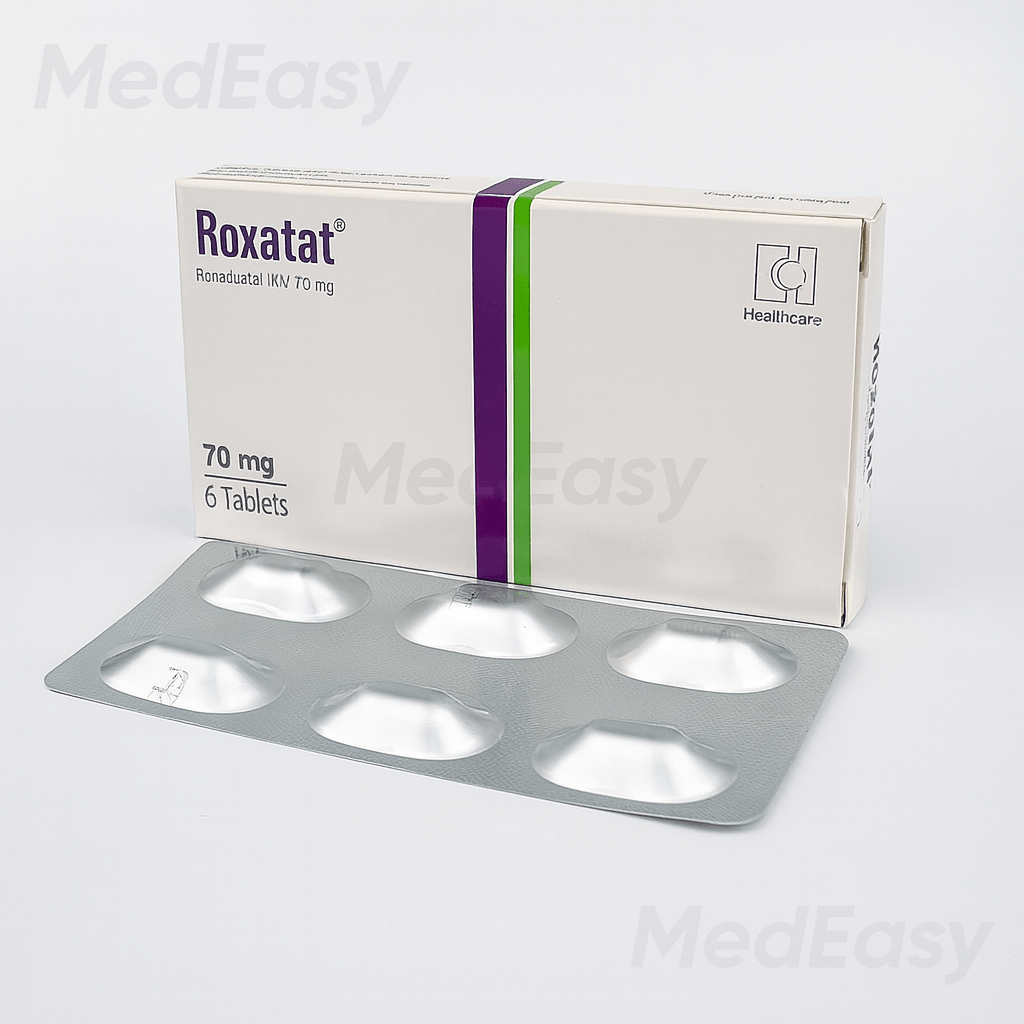
Roxatat70 mg
Healthcare Pharmaceuticals Ltd.
৳2760.00
Add to cart
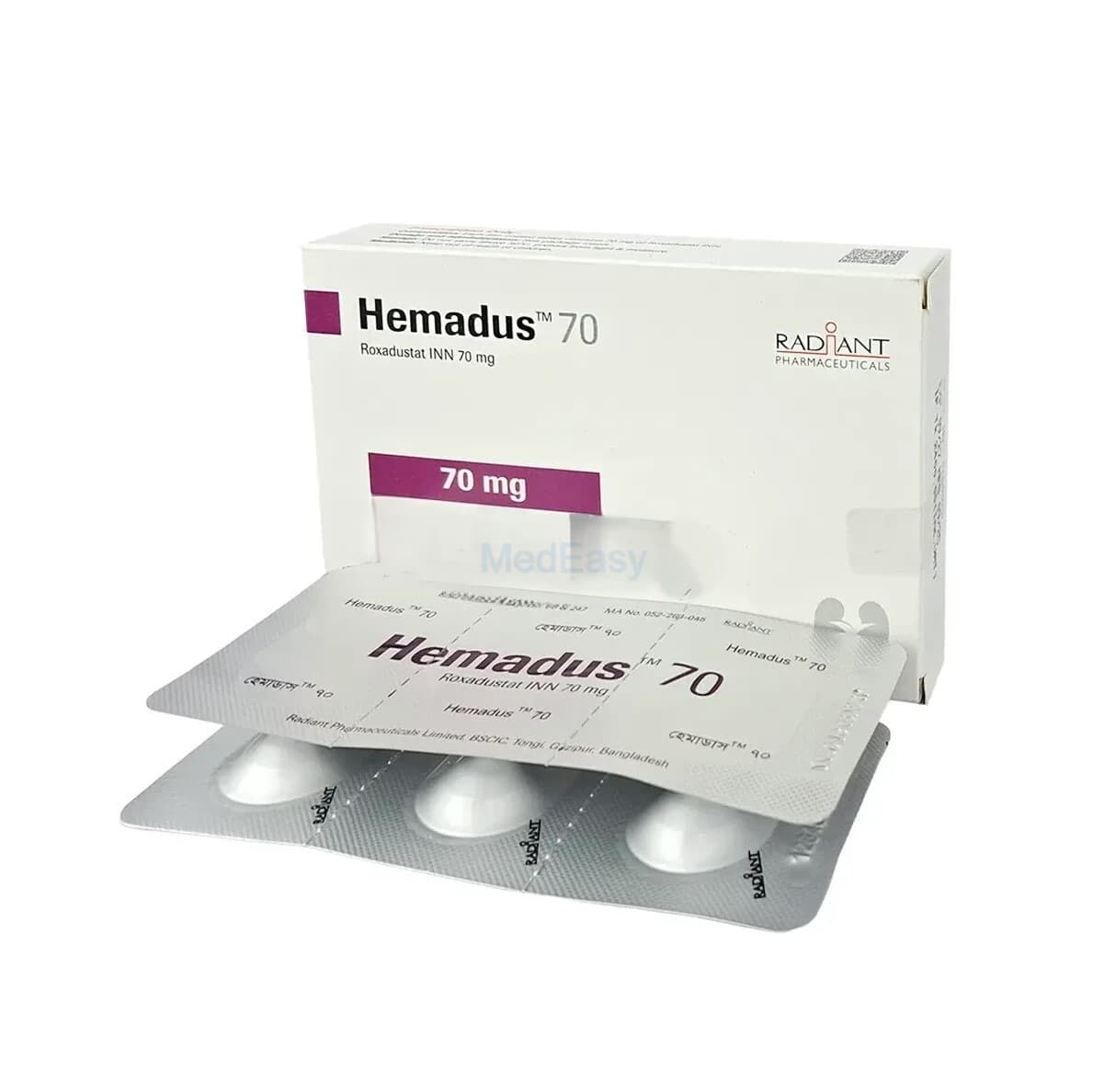

Hemadus is an oral hypoxia-inducible factor prolyl hydroxylase (HIF-PH) inhibitor used in the management of anaemia. Its evidence-based uses are classified below.
Hemadus has not been approved by the US FDA; a US advisory committee raised safety concerns (thromboembolic and cardiovascular risk) in 2021 and the application was not approved in the United States. Approval status and local availability should always be confirmed with a physician or pharmacist, as regulatory status differs by country.
Hemadus is not indicated for anaemia due to causes other than CKD (e.g. chemotherapy-induced anaemia, myelodysplastic syndromes) and should not be used off-label for these purposes outside of a clinical trial setting.
Each tablet contains Roxadustat as the active ingredient. Roxadustat is formulated as oral tablets, commonly available in strengths such as 20 mg, 50 mg, 70 mg, 100 mg, and 150 mg (exact strengths available may vary by market/manufacturer).
Hemadus is a first-in-class, orally administered hypoxia-inducible factor prolyl hydroxylase (HIF-PH) inhibitor developed for the treatment of symptomatic anaemia in patients with chronic kidney disease. Unlike traditional injectable erythropoiesis-stimulating agents (ESAs), Hemadus is taken by mouth and works by mimicking the body's natural adaptive response to low oxygen (hypoxia), stimulating endogenous erythropoietin production and improving iron availability for red blood cell formation.
Hemadus represents a newer class of anti-anaemic therapy and carries specific safety considerations, particularly regarding thromboembolic risk, that distinguish it from ESAs.
Anti-anaemic agent; Hypoxia-inducible factor prolyl hydroxylase (HIF-PH) inhibitor - oral erythropoiesis-stimulating therapy. Generic name: Hemadus.
Roxadustat works by reversibly inhibiting HIF prolyl hydroxylase enzymes, which under normal oxygen conditions continuously degrade hypoxia-inducible factor (HIF)-1α and HIF-2α. By inhibiting this degradation, Roxadustat stabilises HIF, mimicking the body's physiological response to moderate hypoxia (as occurs, for example, at high altitude).
The net effect is stimulation of red blood cell production and correction of anaemia, without requiring a subcutaneous or intravenous injection as with conventional ESAs.
Hemadus dosing is individualised, based on body weight and (for patients switching from an ESA) prior ESA dose, then titrated according to haemoglobin (Hb) response. The target Hb range is generally 10-12 g/dL; the treating physician sets and monitors this target and dose adjustments should not be made by the patient.
| Patient Group | Starting Dose | Maximum Dose |
|---|---|---|
| Non-dialysis-dependent CKD, body weight <100 kg | 70 mg three times weekly | 3 mg/kg or 300 mg three times weekly, whichever is lower |
| Non-dialysis-dependent CKD, body weight ≥100 kg | 100 mg three times weekly | 3 mg/kg or 300 mg three times weekly, whichever is lower |
| Dialysis-dependent CKD | 70-200 mg three times weekly (based on prior ESA dose, or 50-100 mg three times weekly if ESA-naive) | 3 mg/kg or 400 mg three times weekly, whichever is lower |
Doses are typically adjusted no more than once every 4 weeks, based on the change in Hb and current Hb level, using a step-wise titration schedule provided by the prescriber. If Hb rises by more than 2 g/dL within 4 weeks, or exceeds the target range, the dose is reduced or interrupted.
If an adequate Hb response is not achieved after an appropriate escalation period (approximately 24 weeks), Hemadus should generally be discontinued and alternative therapy considered, under physician guidance.
Hemadus tablets are taken orally, three times per week on non-consecutive days (for example, Monday/Wednesday/Friday), with or without food. Tablets should be swallowed whole and not crushed or chewed unless directed otherwise. Separate dosing from phosphate binders and other multivalent-cation products by at least one hour.
Use in the third trimester of pregnancy and during breast-feeding is also contraindicated on current labelling (see Pregnancy and Lactation for details); other cautions such as thromboembolic risk, hepatic impairment, and hypertension are important precautions but are not absolute contraindications and are addressed under Precautions and Warnings.
Patients should seek prompt medical attention for chest pain, shortness of breath, leg swelling/pain, seizure activity, or signs of jaundice while taking Hemadus.
Pregnancy: Data on the use of Hemadus in pregnancy are limited. Use during the third trimester of pregnancy is contraindicated based on current labelling. Use earlier in pregnancy is not recommended unless the potential benefit clearly justifies the potential risk to the fetus, and only under close physician supervision. Women of childbearing potential should use effective contraception during treatment and for at least one week after the last dose. Any suspected or confirmed pregnancy should be reported to the prescribing physician immediately.
Lactation: It is not known whether Hemadus passes into human breast milk. Breast-feeding is contraindicated during treatment with Hemadus on current labelling; a decision should be made with the physician to either discontinue breast-feeding or discontinue the drug, considering the benefit of treatment against the risk to the infant.
Hemadus therapy has been associated with an increased risk of thromboembolic events, including vascular access thrombosis (very common in dialysis patients), deep vein thrombosis, pulmonary embolism, and stroke. Patients with a history of thromboembolic disease require particularly close monitoring. Report leg swelling/pain, sudden chest pain, or breathlessness immediately.
Seizures have been reported commonly with Hemadus in clinical studies. Use with caution in patients with a history of seizure disorder, and counsel patients on this risk.
Elevations in liver enzymes have been reported. Liver function should be monitored periodically. Hemadus should be used with caution in moderate hepatic impairment and is not recommended in patients with severe hepatic impairment.
Hypertension is a common adverse effect; blood pressure should be monitored regularly and controlled with appropriate therapy during treatment.
Do not exceed the haemoglobin target set by the physician. As with other anaemia-of-CKD therapies, correcting haemoglobin above the recommended target range has been associated with an increased risk of serious cardiovascular events, including death, myocardial infarction, and stroke. Dose is adjusted by the physician based on regular haemoglobin monitoring - patients should never self-adjust the dose.
Because Hemadus affects pathways (including VEGF) that could theoretically influence tumour growth, it should be used with caution in patients with active or recent malignancy, and only under specialist guidance.
Hemadus should only be used under the supervision of a physician experienced in the management of anaemia associated with chronic kidney disease, with regular monitoring of haemoglobin, blood pressure, liver function, and iron status.
Reported effects of Hemadus overdose include transient tachycardia (fast heart rate), musculoskeletal pain, headache, and hypotension (low blood pressure). There is no specific antidote for Hemadus overdose.
If overdose is suspected, seek immediate medical attention or contact emergency services / a poison control centre. Management is supportive, with dose reduction or temporary discontinuation and close monitoring of vital signs and haemoglobin under medical supervision; Hemadus is not removed by dialysis to a clinically significant extent. Do not attempt to manage a suspected overdose at home without medical guidance.
Store at room temperature (below 30°C), away from light and moisture. Keep out of reach of children.
Hemadus is specifically indicated for anaemia associated with chronic kidney disease and is used across the spectrum of renal function, from non-dialysis-dependent CKD to dialysis-dependent patients; no additional dose adjustment based on degree of renal impairment (beyond the dialysis-dependent vs non-dialysis-dependent dosing tables) is required.
Use with caution in moderate hepatic impairment; not recommended in severe hepatic impairment (see Precautions and Warnings).
No dedicated dose adjustment is required based on age alone, but elderly patients should be monitored closely given a generally higher background risk of cardiovascular and thromboembolic events.
Safety and efficacy of Hemadus in patients under 18 years of age have not been established; its use in children is not recommended (see Paediatric Uses).
Hemadus is generally used as a long-term, ongoing therapy for the chronic management of anaemia associated with CKD, for as long as clinically indicated and tolerated, under regular physician review. If an adequate haemoglobin response is not seen after an appropriate dose-escalation period (approximately 24 weeks), continued therapy should be reassessed with the physician and discontinuation considered.
Hypoxia-inducible factor prolyl hydroxylase (HIF-PH) inhibitors; oral anti-anaemic agents (alternative to erythropoiesis-stimulating agents). Roxadustat is the prototype/representative agent of this oral class.
Roxadustat reversibly inhibits HIF prolyl hydroxylase enzymes, preventing the normal oxygen-dependent degradation of hypoxia-inducible factor (HIF). This stabilises HIF-1α/HIF-2α, activating transcription of genes involved in the erythropoietic response - most notably increasing endogenous erythropoietin production, improving iron absorption and mobilisation by lowering hepcidin, and increasing transferrin and total iron-binding capacity. The overall effect mimics the body's natural physiological adaptation to hypoxia, resulting in increased red blood cell production and correction of anaemia.
The safety and efficacy of Hemadus in children and adolescents under 18 years of age have not been established. Hemadus is therefore not recommended for use in the paediatric population outside of a clinical trial setting, and should only be considered if specifically advised by a paediatric nephrologist.
Q: What is Hemadus 70 mg Tablet used for?
A: Hemadus 70 mg Tablet is an oral medicine used to treat symptomatic anaemia (low haemoglobin/red blood cell count) in adults with chronic kidney disease, including those on dialysis and those not yet on dialysis. It works by helping the body produce more of its own erythropoietin.
Q: Is Hemadus 70 mg Tablet the same as erythropoietin injections?
A: No. Hemadus 70 mg Tablet is a tablet taken by mouth that stimulates the body's own erythropoietin production, whereas erythropoiesis-stimulating agents (ESAs) are given by injection. Hemadus 70 mg Tablet should not be taken together with ESA injections unless specifically directed by your physician.
Q: What are the most serious risks with Hemadus 70 mg Tablet?
A: The most important risks are blood clots (thromboembolic events, including clots in the dialysis access, legs, lungs, or elsewhere), seizures, liver enzyme elevation, and high blood pressure. Seek immediate medical attention for leg swelling or pain, sudden chest pain, breathlessness, seizure activity, or yellowing of the skin/eyes while taking Hemadus 70 mg Tablet.
Q: Can I take Hemadus 70 mg Tablet during pregnancy or while breastfeeding?
A: Hemadus 70 mg Tablet is not recommended in the third trimester of pregnancy and is not recommended during breast-feeding, based on limited safety data. If you are pregnant, planning pregnancy, or breastfeeding, discuss this with your physician before starting or continuing Hemadus 70 mg Tablet, as the benefits and risks need to be weighed carefully for your individual situation.
Q: How should I take Hemadus 70 mg Tablet?
A: Hemadus 70 mg Tablet is usually taken three times a week on non-consecutive days, with or without food, exactly as prescribed. Take it at least 1 hour apart from phosphate binders, iron, calcium, magnesium, or aluminium-containing products, as these can reduce its absorption. Never change your dose without consulting your physician, since your haemoglobin target is set individually.
Q: Is Hemadus 70 mg Tablet approved and available everywhere?
A: Hemadus 70 mg Tablet (brand name Evrenzo in some markets) is approved in a number of countries including China, Japan, and the European Union, but it has not been approved by the US FDA. Its availability and approved use can vary by country, so confirm with your physician or pharmacist whether Hemadus 70 mg Tablet is appropriate and accessible for you.
Disclaimer
The information provided is accurate to the best of our knowledge, but it does not replace professional medical advice. We cannot guarantee its completeness or accuracy, and the absence of specific information about a drug should not be taken as an endorsement. We are not responsible for any consequences arising from this information, so please consult a healthcare professional for any concerns or questions.