10% Off
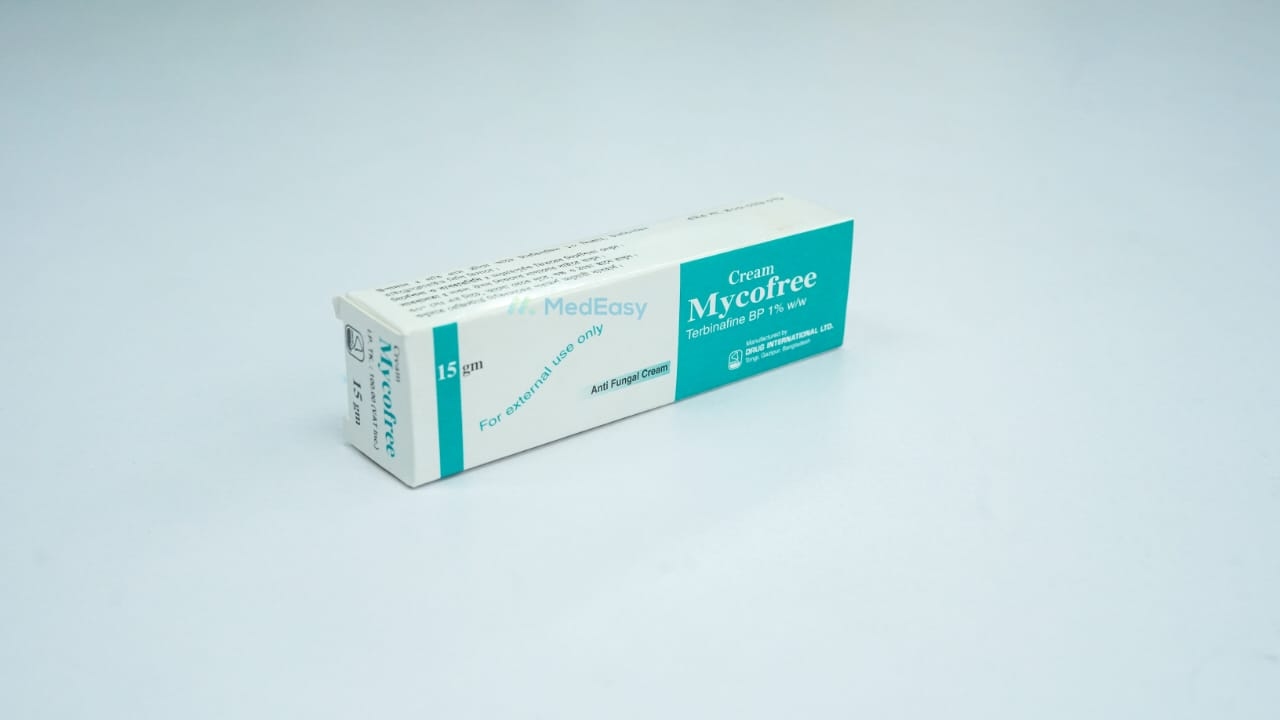
Mycofree1%
Drug International Ltd.
৳90.00
Add to cart
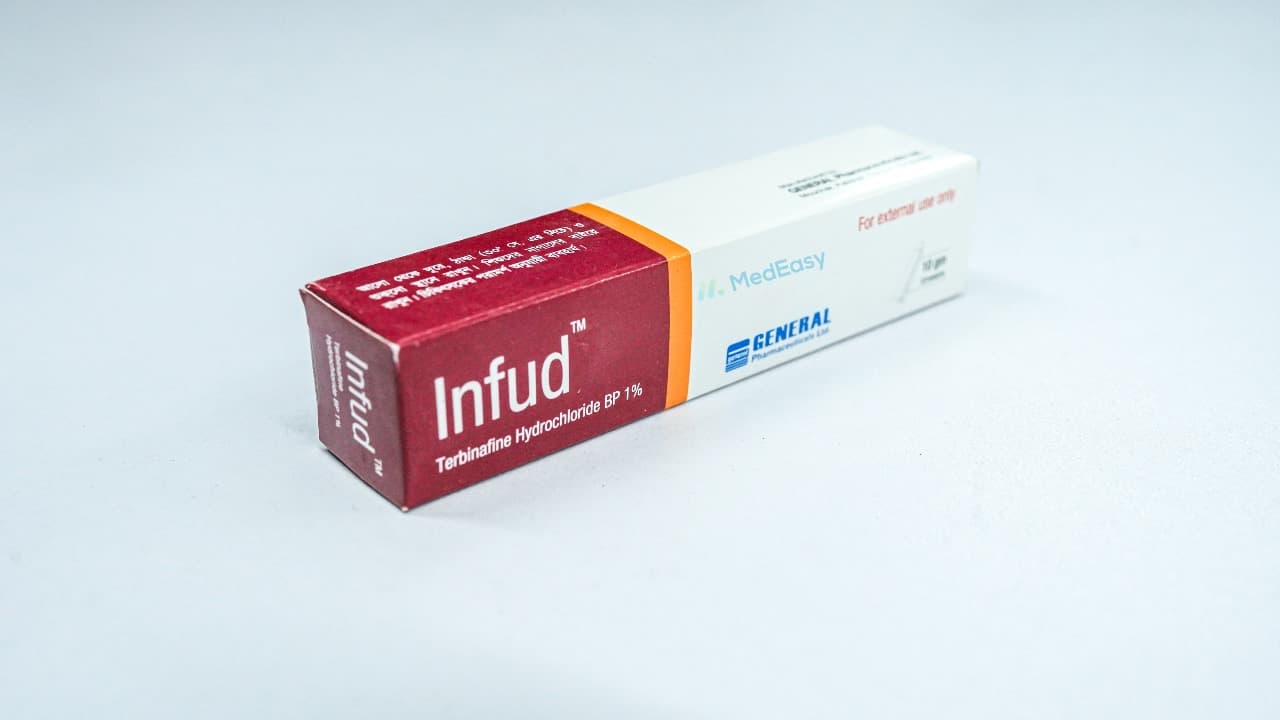

Infud 1% is a broad-spectrum allylamine antifungal used to treat a wide range of fungal infections affecting the nails, skin and scalp. It is available in multiple dosage forms — tablet, oral granules, cream and topical spray — each targeting specific fungal conditions.
Indicated for the treatment of onychomycosis (fungal infection) of the toenail or fingernail caused by dermatophytes, also known as tinea unguium.
Indicated for the treatment of tinea capitis (fungal infection of the scalp), most commonly seen in children.
Indicated for fungal infections of the skin, including:
Indicated for the treatment of tinea infections of the skin and for pityriasis (tinea) versicolor caused by Malassezia furfur.
Always take this medicine according to the advice of a registered physician.
Other Antifungal preparations, Topical Antifungal preparations.
Terbinafine is an allylamine antifungal agent that works by inhibiting the biosynthesis of ergosterol, an essential component of the fungal cell membrane. It achieves this by blocking the enzyme squalene epoxidase, an early step in the ergosterol synthesis pathway.
This inhibition leads to fungal cell death primarily due to the accumulation of high intracellular concentrations of squalene, which increases cell membrane permeability, rather than from ergosterol deficiency alone. Depending on the drug concentration and the fungal species tested in vitro, terbinafine may be fungicidal (kills the fungus) rather than merely fungistatic (stops growth), though the clinical significance of in vitro data is not fully established.
Terbinafine has demonstrated activity, both in vitro and in clinical infections, against most strains of dermatophytes including Trichophyton mentagrophytes and Trichophyton rubrum. Because it targets an early and fungus-specific step of sterol synthesis, terbinafine has a favourable selectivity profile against fungal cells compared with human cells.
The optimal clinical effect is usually seen some months after mycological cure and cessation of treatment, as this reflects the time required for a healthy nail to grow out.
Apply once or twice daily. Cleanse and dry the affected area thoroughly before use, then apply a thin layer to the affected skin and surrounding area and rub in lightly. For intertriginous infections (submammary, interdigital, intergluteal, inguinal), the application may be covered with a gauze strip, especially at night. Typical treatment durations are:
Relief of clinical symptoms usually occurs within a few days. Irregular use or premature discontinuation carries a risk of recurrence. If there is no improvement after two weeks, the diagnosis should be reconfirmed.
Apply once or twice daily depending on the indication. Cleanse and dry the affected area thoroughly, then apply enough solution to wet the treatment area(s) completely.
Relief of symptoms usually occurs within a few days. If there is no improvement after two weeks, the diagnosis should be verified.
Always take this medicine according to the advice of a registered physician.
In vivo studies have shown that terbinafine is an inhibitor of the CYP450 2D6 isoenzyme. Drugs that are predominantly metabolised by CYP450 2D6 may therefore have increased blood levels when taken with terbinafine. Affected drug classes include:
Co-administration of terbinafine with these medicines should be undertaken with careful clinical monitoring and may require a dose reduction of the 2D6-metabolised drug. Always inform your doctor about all prescription medicines, over-the-counter products and supplements you are taking.
Infud 1% tablet and cream are contraindicated in individuals with known hypersensitivity to terbinafine or to any component of the formulation.
The most commonly reported adverse events are generally mild, transient and rarely lead to discontinuation of treatment. These include:
Based on worldwide clinical experience, more serious but rarer adverse events have also been reported, including:
Seek medical attention promptly if you experience signs of liver problems (persistent nausea, dark urine, yellowing of the skin or eyes, upper abdominal pain), a progressive skin rash, or signs of a severe allergic reaction.
There are no adequate and well-controlled studies in pregnant women. Because animal reproduction studies are not always predictive of the human response, and because the treatment of onychomycosis can usually be postponed until after pregnancy, terbinafine tablets are not recommended during pregnancy. Terbinafine is excreted in breast milk after oral administration, so treatment is not recommended in nursing mothers.
Fetal toxicity and fertility studies in animals suggest no adverse effects. As there is no clinical experience in pregnant women, terbinafine cream should not be used during pregnancy unless the potential benefits clearly outweigh any potential risk. Since terbinafine is excreted in breast milk, mothers should not receive terbinafine treatment while breast-feeding.
Terbinafine Tablets: Rare cases of liver failure — some leading to death or liver transplant — have occurred with the use of terbinafine tablets for onychomycosis, in individuals both with and without pre-existing liver disease. In most reported liver cases, patients had serious underlying systemic conditions with an uncertain causal association with terbinafine. The severity or outcome of hepatic events may be worse in patients with active or chronic liver disease. Treatment should be discontinued if there is biochemical or clinical evidence of liver injury.
There have been isolated reports of serious skin reactions such as Stevens-Johnson Syndrome and toxic epidermal necrolysis. If a progressive skin rash occurs, terbinafine should be discontinued.
Terbinafine Cream: For external use only. Avoid contact with the eyes.
Infud 1% is not recommended for patients with chronic or active liver disease. Before prescribing, any pre-existing liver disease should be assessed, as hepatotoxicity may occur in patients with and without pre-existing liver disease. Pretreatment serum transaminase (ALT and AST) tests are advised for all patients before starting terbinafine tablets.
Clinical experience regarding overdose with terbinafine tablets is limited. Doses of up to 5 g (about 20 times the therapeutic daily dose) have been taken without inducing serious adverse reactions. Reported symptoms of overdose include nausea, vomiting, abdominal pain, dizziness, rash, frequent urination and headache. In case of a suspected overdose, seek medical assistance immediately.
Clinical experience regarding overdose with terbinafine tablets is limited. Doses of up to 5 g (about 20 times the therapeutic daily dose) have been taken without inducing serious adverse reactions. Reported symptoms of overdose include nausea, vomiting, abdominal pain, dizziness, rash, frequent urination and headache. In case of a suspected overdose, seek medical assistance immediately.
The safety and efficacy of terbinafine have not been established in pediatric patients, except where specifically indicated (e.g. oral granules for tinea capitis under medical supervision).
There is no evidence to suggest that elderly patients require different dosages or experience side effects different from those of younger patients.
Other Antifungal preparations, Topical Antifungal preparations
Terbinafine, an Allylamine antifungal, inhibits biosynthesis of Ergosterol (an essential component of fungai cell membrane) via inhibition of Squalene Epoxidase enzyme. This results in fungal cell death primarily due to the increased membrane permeability mediated by the accumulation of high concentrations of Squalene but not due to Ergosterol deficiency. Depending on the concentration of the drug and the fungal species test in vitro, Terbinafine hydrochloride may be fungicidal. However, the clinical significance of in vitro data is unknown. Terbinafine has been shown to be active against most strains of the following microorganisms both in vitro and in clinical infections: Tricophyton Mentagrophyte, Trichophyton Rubrum.
Terbinafine tablet: There are no adequate and well-controlled studies in pregnant women. Because animal reproduction studies are not always predictive of human response, and because treatment of onychomycosis can be postponed until after pregnancy is completed, it is recommended that terbinafine not be initiated during pregnancy. After oral administration, terbinafine is present in the breast milk of nursing mothers. Treatment with terbinafine is not recommended in nursing mothers. Terbinafine cream: Foetal toxicity and fertility studies in animals suggest no adverse effects. There is no clinical experience with terbinafine in pregnant women; therefore, unless the potential benefits outweigh any potential risk, terbinafine should not be administered. Terbinafine is excreted in breast milk and therefore mothers should not receive terbinafine treatment whilst breast-feeding.
Pediatric use: The safety and efficacy of terbinafine have not been established in pediatric patients.Use in the elderly: There is no evidence to suggest that elderly patients require different dosages or experience side-effects different to those of younger patients.
What is Infud 1% used for?
Infud 1% is a broad-spectrum allylamine antifungal used to treat a wide range of fungal infections affecting the nails, skin and scalp. It is available in multiple dosage forms — tablet, oral granules, cream and topical spray — each targeting specific fungal conditions. Terbinafine Tablet Indicated for the treatment of onychomycosis (fungal infection) of the toenail or fingernail caused by dermato…
What is the dosage of Infud 1%?
Terbinafine Tablet (Onychomycosis) Fingernail onychomycosis: 250 mg (one tablet) once daily for 6 weeks. Toenail onychomycosis: 250 mg (one tablet) once daily for 12 weeks. The optimal clinical effect is usually seen some months after mycological cure and cessation of treatment, as this reflects the time required for a healthy nail to grow out. Terbinafine Oral Granules (Tinea Capitis) — Weight-Ba…
What are the side effects of Infud 1%?
The most commonly reported adverse events are generally mild, transient and rarely lead to discontinuation of treatment. These include: Gastrointestinal symptoms such as diarrhoea, dyspepsia (indigestion) and abdominal pain Liver test abnormalities Skin reactions including rashes, urticaria (hives) and pruritus (itching) Taste disturbances Based on worldwide clinical experience, more serious but r…
Who should not take Infud 1%?
Infud 1% tablet and cream are contraindicated in individuals with known hypersensitivity to terbinafine or to any component of the formulation.
What precautions should be taken with Infud 1%?
Warnings Terbinafine Tablets: Rare cases of liver failure — some leading to death or liver transplant — have occurred with the use of terbinafine tablets for onychomycosis, in individuals both with and without pre-existing liver disease. In most reported liver cases, patients had serious underlying systemic conditions with an uncertain causal association with terbinafine. The severity or outcome o…
Is Infud 1% safe during pregnancy and breastfeeding?
Terbinafine Tablet There are no adequate and well-controlled studies in pregnant women. Because animal reproduction studies are not always predictive of the human response, and because the treatment of onychomycosis can usually be postponed until after pregnancy, terbinafine tablets are not recommended during pregnancy . Terbinafine is excreted in breast milk after oral administration, so treatmen…
The information provided is accurate to our best practices, but it does not replace professional medical advice. We cannot guarantee its completeness or accuracy. The absence of specific information about a drug should not be seen as an endorsement. We are not responsible for any consequences resulting from this information, so consult a healthcare professional for any concerns or questions.