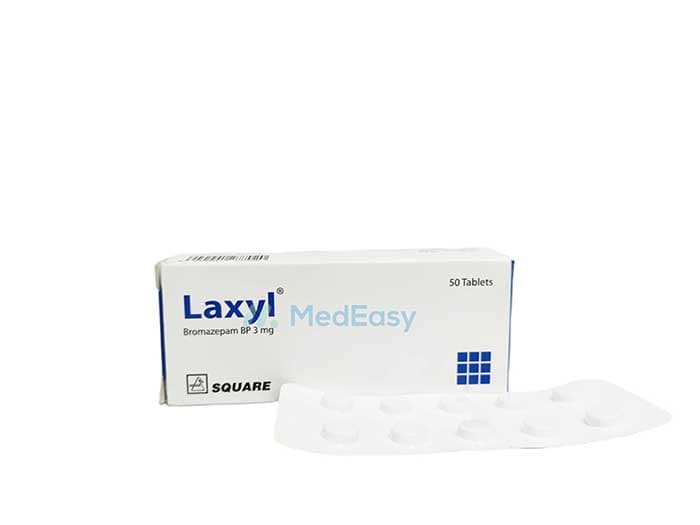
Laxyl 3 mg is indicated in-
Emotional disturbances, i.e. acute tension and anxiety states. Difficulties in interpersonal contact. Agitation, insomnia, anxious and agitated depressive reactions.
Functional disturbances in the cardiovascular and respiratory systems, i.e. pseudoangina pectoris, pericardial anxiety, tachycardia, emotiogenic hypertension, dyspnea and hyperventilation. ... Read moreLaxyl 3 mg is indicated in-
Emotional disturbances, i.e. acute tension and anxiety states. Difficulties in interpersonal contact. Agitation, insomnia, anxious and agitated depressive reactions.
Functional disturbances in the cardiovascular and respiratory systems, i.e. pseudoangina pectoris, pericardial anxiety, tachycardia, emotiogenic hypertension, dyspnea and hyperventilation.
Disturbances in the gastrointestinal tract, i.e. irritable bowel syndrome, epigastric pain, spasm, bloating diarrhea etc.
Disturbances in the urinary tract, i.e. frequency, irritable bladder and dysmenorrhea.
Psychosomatic disorder, i.e. psychogenic headache, asthma, gastric and duodenal ulcer.
It is also indicated in emotional reactions to chronic organic disease.
Theropeutic Class
Benzodiazepine sedatives
Pharmacology
Laxyl 3 mg is a powerful psychotropic agent. In lower dosage, it selectively reduces tension and anxiety. In higher dosage, it shows sedative and muscle-relaxant properties.Laxyl 3 mg binds to the GABA-A receptor producing a conformational change and potentiating its inhibitory effects. Other neurotransmitters are not influenced.
Dosage of Laxyl 3 mg
Standard dosage: Average dosage for outpatient therapy is 1.5-3 mg up to three times daily. Treatment of outpatients should begin with low doses, gradually increasing to the optimum level. In severe cases, especially in hospital: 6-12 mg 2 or 3 times daily. The overall treatment generally should not be more than 8-12 weeks. In certain cases extension beyond the maximum treatment period may be necessary; if so, it should be taken with re-evaluation of the patient's status with special expertise.Elderly and debilitated patients: Elderly patients and those with impaired hepatic functions require lower doses.Children: Laxyl 3 mg is usually not indicated in children, but if the physician feels Laxyl 3 mg treatment is appropriate, then the dose should be adjusted to their low bodyweight (about 0.1-0.3 mg/kg bodyweight)
Administration of Laxyl 3 mg
Laxyl 3 mg tablets are for oral administration
Interaction of Laxyl 3 mg
If Laxyl 3 mg is combined with other centrally active drugs, its sedative effects may be enhanced. These drugs are antidepressants, hypnotics, narcotics, antipsychotics, sedatives, antiepileptic drugs, sedative antihistamines and anesthetics. Co-administration of cimetidine may prolong the eliminiation half-life of Laxyl 3 mg. Concomitant intake of Laxyl 3 mg with alcohol should be avoided, because the sedative effect of Laxyl 3 mg may be intensified by alcohol.
Contraindications
Laxyl 3 mg is contraindicated in patients with known hypersensitivity to Laxyl 3 mg, severe respiratory insufficiency, severe hepatic insufficiency or sleep apnea syndrome.
Side Effects of Laxyl 3 mg
Common side-effects include fatigue, drowsiness, muscle weakness, numbed muscle, reduced alertness, confusion, headache, ataxia etc. These phenomena occur predominantly at the start of therapy and usually disappear with prolonged administration. Anterograde amnesia may occur using therapeutic doses.
Pregnancy & Lactation
The safety of Laxyl 3 mg during pregnancy has not been established. As Laxyl 3 mg is excreted in breast milk, use should be avoided during lactation.
Precautions & Warnings
The use of benzodiazepines and benzodiazepine like agents may lead to the development of physical and psychological dependence upon these products. This dependence depends on the dose and duration of treatment; it is also greater in predisposed patients with a history of alcohol. Once physical dependence has developed, termination of the treatment will be accompanied by withdrawal symptoms. These may consist of headache, muscle pain, extreme anxiety, tension, confusion and irritability. Since the risk of withdrawal phenomena and rebound phenomena is greater after abrupt discontinuation of the treatment, it is recommended that the dosage be decreased gradually. Laxyl 3 mg is not recommended for the primary treatment of sleeplessness caused by psychotic illness. Caution should be exercised while driving cars or using machineries.
Storage Conditions
Keep in a dry place away from light and heat. Keep out of the reach of children.
Drug Classes
Benzodiazepine sedatives
Mode Of Action
Laxyl 3 mg is a powerful psychotropic agent. In lower dosage, it selectively reduces tension and anxiety. In higher dosage, it shows sedative and muscle-relaxant properties. Laxyl 3 mg binds to the GABA-A receptor producing a conformational change and potentiating its inhibitory effects. Other neurotransmitters are not influenced.
Pregnancy
The safety of Laxyl 3 mg during pregnancy has not been established. As Laxyl 3 mg is excreted in breast milk, use should be avoided during lactation.
Frequently Asked Questions
What is Laxyl 3 mg used for?
Laxyl 3 mg is indicated in- Emotional disturbances, i.e. acute tension and anxiety states. Difficulties in interpersonal contact. Agitation, insomnia, anxious and agitated depressive reactions. Functional disturbances in the cardiovascular and respiratory systems, i.e. pseudoangina pectoris, pericardial anxiety, tachycardia, emotiogenic hypertension, dyspnea and hyperventilation. ... Read moreLaxy…
What is the dosage of Laxyl 3 mg?
Standard dosage: Average dosage for outpatient therapy is 1.5-3 mg up to three times daily. Treatment of outpatients should begin with low doses, gradually increasing to the optimum level. In severe cases, especially in hospital: 6-12 mg 2 or 3 times daily. The overall treatment generally should not be more than 8-12 weeks. In certain cases extension beyond the maximum treatment period may be nece…
What are the side effects of Laxyl 3 mg?
Common side-effects include fatigue, drowsiness, muscle weakness, numbed muscle, reduced alertness, confusion, headache, ataxia etc. These phenomena occur predominantly at the start of therapy and usually disappear with prolonged administration. Anterograde amnesia may occur using therapeutic doses.
Who should not take Laxyl 3 mg?
Laxyl 3 mg is contraindicated in patients with known hypersensitivity to Laxyl 3 mg, severe respiratory insufficiency, severe hepatic insufficiency or sleep apnea syndrome.
What precautions should be taken with Laxyl 3 mg?
The use of benzodiazepines and benzodiazepine like agents may lead to the development of physical and psychological dependence upon these products. This dependence depends on the dose and duration of treatment; it is also greater in predisposed patients with a history of alcohol. Once physical dependence has developed, termination of the treatment will be accompanied by withdrawal symptoms. These …
Is Laxyl 3 mg safe during pregnancy and breastfeeding?
The safety of Laxyl 3 mg during pregnancy has not been established. As Laxyl 3 mg is excreted in breast milk, use should be avoided during lactation.
Disclaimer
The information provided is accurate to our best practices, but it does not replace professional medical advice. We cannot guarantee its completeness or accuracy. The absence of specific information about a drug should not be seen as an endorsement. We are not responsible for any consequences resulting from this information, so consult a healthcare professional for any concerns or questions.