8% Off
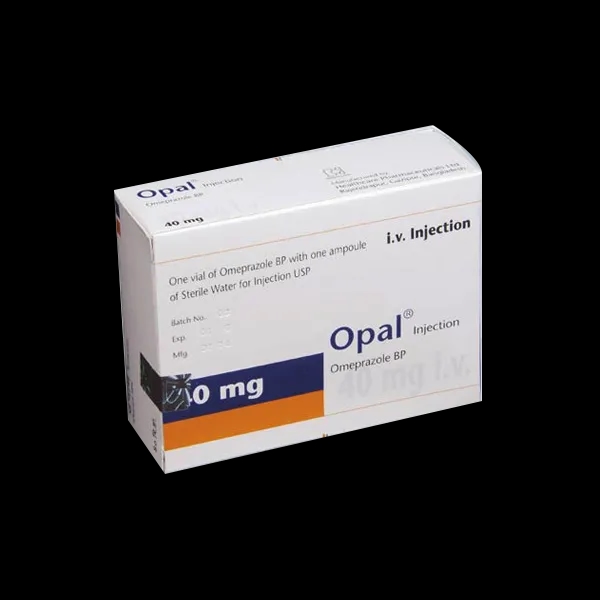
Opal40 mg/vial
Healthcare Pharmaceuticals Ltd.
৳87.40
Add to cart
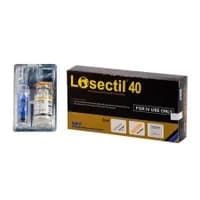

Losectil is FDA-approved for the treatment of symptomatic GERD and for the treatment and maintenance of healing of erosive esophagitis.
Losectil is FDA-approved for short-term treatment (typically 4 weeks) of active duodenal ulcer, and, in combination with antibacterial regimens, for Helicobacter pylori eradication to reduce the risk of duodenal ulcer recurrence.
Losectil is FDA-approved for short-term treatment (4-8 weeks) of active benign gastric ulcer.
Losectil is FDA-approved for risk reduction of NSAID-associated gastric ulcer in patients requiring continued NSAID use, and for healing of NSAID-associated ulcers.
Losectil is FDA-approved as part of combination regimens (with antibiotics such as clarithromycin and amoxicillin) for H. pylori eradication; it is not effective as monotherapy for this indication and requires combination therapy.
Losectil is FDA-approved for long-term treatment of pathological hypersecretory conditions, including Zollinger-Ellison syndrome, multiple endocrine adenomas, and systemic mastocytosis.
Losectil is also used, based on clinical practice and guideline support rather than a specific FDA-labeled indication in every case, for prophylaxis of acid aspiration during general anesthesia and for stress ulcer prophylaxis in select critically ill patients; such use should be directed by a physician.
Each dose contains Omeprazole as the active ingredient, typically formulated as enteric-coated (delayed-release) granules to protect the drug from degradation by gastric acid. In Bangladesh, Omeprazole is available as 10 mg, 20 mg, and 40 mg enteric-coated capsules and tablets, oral powder sachets (20 mg, 40 mg) for suspension, and a 40 mg/vial injection for intravenous use.
Losectil is a proton pump inhibitor (PPI) used to reduce the amount of acid produced in the stomach. It is widely prescribed for conditions such as gastroesophageal reflux disease (GERD), peptic ulcer disease, and, in combination with antibiotics, for the eradication of Helicobacter pylori infection. Losectil works by irreversibly blocking the hydrogen-potassium-adenosine triphosphatase (H+/K+-ATPase) enzyme system, often called the gastric proton pump, in the parietal cells of the stomach lining, which is the final step in gastric acid secretion. Losectil is available in oral delayed-release capsule, tablet, and oral suspension forms, as well as an intravenous injection for patients who cannot take medication by mouth. Losectil is not an antibiotic and has no direct antibacterial activity on its own.
Proton Pump Inhibitor (PPI)
Omeprazole is a substituted benzimidazole that is acid-labile and is therefore formulated as enteric-coated granules to allow absorption in the small intestine after passing through the acidic stomach. After oral administration, Omeprazole is absorbed rapidly, with peak plasma concentrations reached within 0.5 to 3.5 hours; bioavailability increases from about 35% after a single dose to approximately 60% with once-daily repeated dosing. Omeprazole is a prodrug that accumulates in the acidic environment of the parietal cell canaliculi, where it is converted to its active sulfenamide form, which irreversibly binds to and inhibits the H+/K+-ATPase enzyme, blocking the final common pathway of gastric acid secretion regardless of the stimulus. The onset of the antisecretory effect occurs within one hour, with the maximum effect within two hours, and the inhibitory effect on acid secretion can last up to 72 hours because new enzyme synthesis is required to restore acid secretion. Omeprazole is extensively metabolized in the liver, primarily by the CYP2C19 and, to a lesser extent, CYP3A4 enzyme pathways, with a plasma elimination half-life of about 0.5 to 1 hour in patients with normal hepatic function; metabolites are excreted mainly in the urine, with the remainder eliminated in the feces.
Dosing of Losectil depends on the indication being treated, the patient's age, and whether treatment is for short-term healing or long-term maintenance/hypersecretory control. The lowest effective dose for the shortest duration appropriate to the indication should be used, and Losectil should be taken exactly as directed by a physician. See Dosage for a per-indication breakdown and Administration for instructions on how to take Losectil.
The most common side effects reported with Losectil include the following:
Data from multiple epidemiological studies and case series have not shown a clear increase in the risk of major birth defects, miscarriage, or other adverse fetal outcomes with Losectil use during pregnancy. However, Losectil should be used during pregnancy only if clearly needed and if the potential benefit to the mother justifies the potential risk to the fetus; a physician should always be consulted before using Losectil during pregnancy.
Losectil passes into breast milk in small amounts. Because of the theoretical possibility of adverse effects in the nursing infant, a decision to continue or discontinue breastfeeding, or to continue or discontinue Losectil, should be made in consultation with a physician, weighing the benefits of breastfeeding against the mother's clinical need for Losectil.
Reported overdoses of Losectil (including doses far exceeding the usual therapeutic dose) have generally caused mild, transient symptoms such as confusion, drowsiness, blurred vision, rapid heartbeat, nausea, vomiting, sweating, flushing, headache, and dry mouth, with no serious long-term consequences reported. There is no specific antidote for Losectil overdose. If an overdose of Losectil is suspected, seek immediate medical attention or contact a poison control center right away; treatment is symptomatic and supportive, and Losectil is not effectively removed by dialysis due to extensive protein binding.
Store Losectil at room temperature, below 30°C, protected from light and moisture, and keep the container tightly closed. Keep out of reach of children.
The duration of Losectil treatment depends on the indication: most ulcer-healing and GERD/erosive esophagitis treatment courses run 4 to 8 weeks, H. pylori eradication regimens run 10 to 14 days, and NSAID-associated ulcer risk-reduction or maintenance therapy for erosive esophagitis may continue for longer periods as directed by a physician. Pathological hypersecretory conditions such as Zollinger-Ellison syndrome may require long-term, individually titrated Losectil therapy for as long as clinically indicated. Because long-term use of Losectil carries risks described in Precautions and Warnings, treatment should be used for the shortest duration that achieves the treatment goal, and the ongoing need for Losectil should be periodically reassessed by a physician.
Losectil for injection (40 mg/vial) is a lyophilized powder that must be reconstituted before intravenous use, strictly following the manufacturer's instructions and by a qualified healthcare professional. It is typically reconstituted with the diluent supplied, or with 0.9% Sodium Chloride Injection or 5% Dextrose Injection as specified in the product's prescribing information, and administered slowly by intravenous injection or infusion; the reconstituted solution of Losectil should be used within the time window specified on the product labeling and should not be mixed with other medications in the same line.
Proton Pump Inhibitor (PPI); substituted benzimidazole class
Omeprazole works by irreversibly binding to and inhibiting the hydrogen-potassium-adenosine triphosphatase (H+/K+-ATPase) enzyme system located in the secretory surface of the gastric parietal cells. This enzyme, commonly called the gastric proton pump, represents the final common step in gastric acid secretion, regardless of the stimulus (histamine, acetylcholine, or gastrin). By blocking this pump, Omeprazole suppresses both basal and stimulated gastric acid secretion, and because the inhibition is irreversible, new enzyme must be synthesized before acid secretion capacity is restored, giving Omeprazole a duration of action that outlasts its plasma half-life.
C (legacy FDA pregnancy category from older labeling; current U.S. prescribing information for Losectil uses a narrative pregnancy risk summary rather than a letter category)
Losectil is FDA-approved for the treatment of GERD and erosive esophagitis in children 1 year of age and older, with dosing based on body weight (see Dosage). Safety and efficacy of Losectil in infants younger than 1 year of age have not been established, and Losectil should be used in this age group only under close medical supervision if a physician determines it is necessary. Losectil is not FDA-approved in children for H. pylori eradication or pathological hypersecretory conditions, and its use for these indications in pediatric patients would be an off-label decision made by a physician based on individual clinical judgment.
Q: What is Losectil 40 mg/vial IV Injection used for?
A: Losectil 40 mg/vial IV Injection is a proton pump inhibitor used to treat gastroesophageal reflux disease (GERD), duodenal and gastric ulcers, NSAID-associated ulcers, and pathological hypersecretory conditions such as Zollinger-Ellison syndrome; it is also used in combination with antibiotics to help eradicate Helicobacter pylori infection.
Q: How should I take Losectil 40 mg/vial IV Injection?
A: Losectil 40 mg/vial IV Injection should be taken before a meal, usually in the morning, and the capsule or tablet should be swallowed whole with water without crushing or chewing, since this protects the enteric coating that allows Losectil 40 mg/vial IV Injection to work properly. See Administration for full instructions.
Q: Can Losectil 40 mg/vial IV Injection be taken with clopidogrel?
A: Losectil 40 mg/vial IV Injection can reduce the antiplatelet effect of clopidogrel by blocking the CYP2C19 enzyme needed to activate it, which may increase cardiovascular risk in patients relying on clopidogrel for heart protection; this combination should generally be avoided, and a physician should be consulted about alternatives. See Interaction for details.
Q: Is Losectil 40 mg/vial IV Injection safe during pregnancy and breastfeeding?
A: Available data have not shown a clear increase in birth defect risk with Losectil 40 mg/vial IV Injection use in pregnancy, but Losectil 40 mg/vial IV Injection should still be used during pregnancy only if clearly needed, with a physician's guidance. Losectil 40 mg/vial IV Injection passes into breast milk in small amounts, so breastfeeding mothers should discuss the benefits and risks with a physician before use. See Pregnancy and Lactation for full details.
Q: What are the risks of taking Losectil 40 mg/vial IV Injection for a long time?
A: Long-term use of Losectil 40 mg/vial IV Injection has been associated with an increased risk of bone fractures, low magnesium levels, vitamin B12 deficiency, Clostridioides difficile-associated diarrhea, and benign stomach (fundic gland) polyps. Losectil 40 mg/vial IV Injection should be used at the lowest effective dose for the shortest duration needed, and long-term use of Losectil 40 mg/vial IV Injection should be periodically reviewed by a physician. See Precautions and Warnings for details.
Q: What should I do if I take too much Losectil 40 mg/vial IV Injection?
A: If an overdose of Losectil 40 mg/vial IV Injection is suspected, seek immediate medical attention or contact a poison control center right away; treatment is generally supportive, as there is no specific antidote for Losectil 40 mg/vial IV Injection overdose. See Overdose Effects for more information.
Disclaimer
The information provided is accurate to the best of our knowledge, but it does not replace professional medical advice. We cannot guarantee its completeness or accuracy, and the absence of specific information about a drug should not be taken as an endorsement. We are not responsible for any consequences arising from this information, so please consult a healthcare professional for any concerns or questions.