10% Off
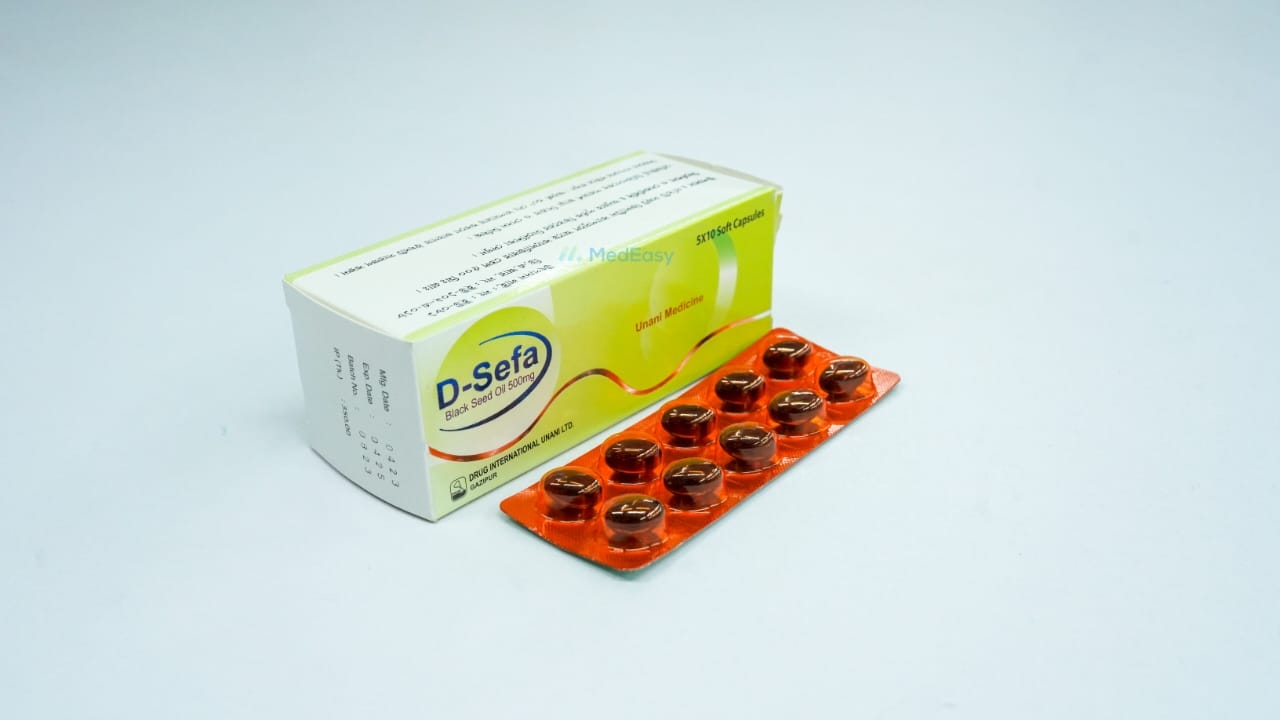
D-Sefa500 mg
Drug International Ltd.
৳7.20
Add to cart
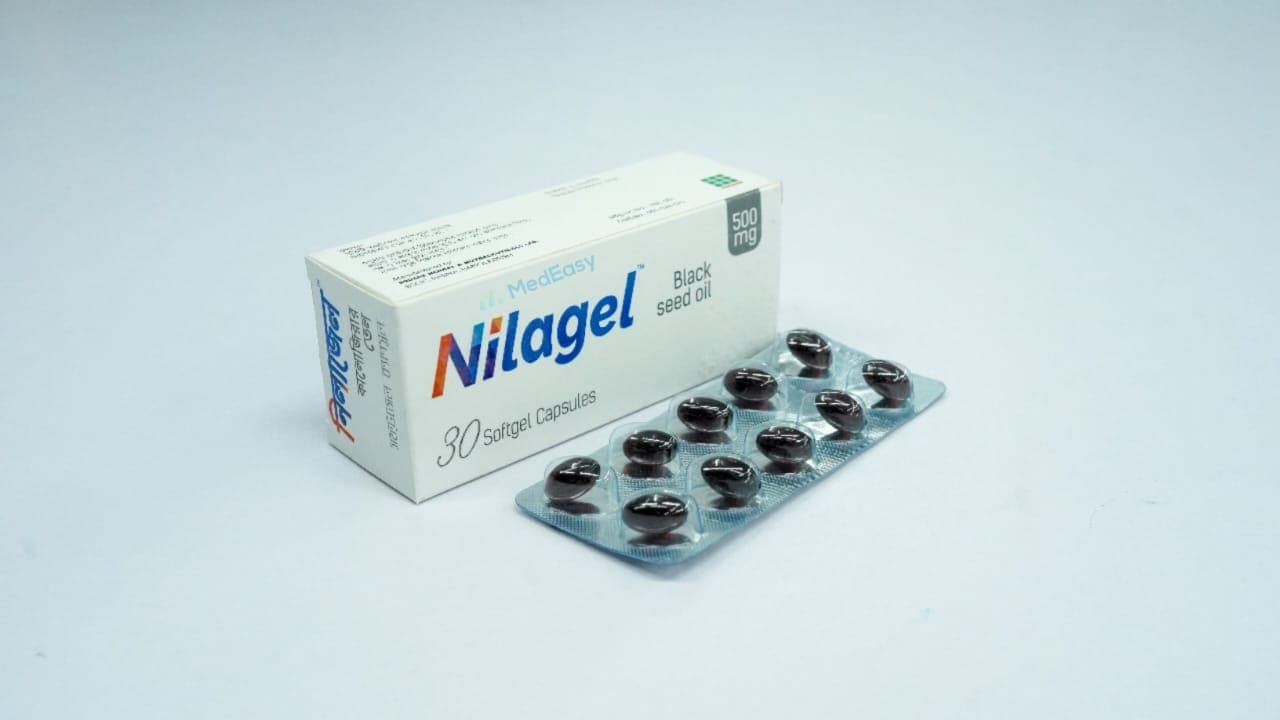

Nilagel is a herbal (nutraceutical) supplement derived from the seeds of the Nigella sativa plant, commonly known as black seed or black cumin. It is used in traditional and complementary medicine for a variety of purported health benefits. Overall clinical evidence for most uses remains limited and preliminary compared with conventional pharmacotherapy, so it should be regarded as a supportive or adjunct measure rather than a replacement for prescribed treatment.
These uses are supported mainly by small clinical trials, traditional use, and preliminary evidence; Nilagel is not a substitute for prescribed medical therapy, and any use for a diagnosed medical condition should be discussed with a physician.
Each formulation of Nigella Sativa [Black Seed Oil] is prepared as a soft-gelatin capsule or liquid oil containing cold-pressed oil obtained from the seeds of Nigella sativa. The oil naturally contains a range of bioactive constituents, the most studied of which is thymoquinone, along with other volatile oils, fatty acids (including linoleic and oleic acid), and minor phenolic compounds. No synthetic active pharmaceutical ingredient is added; potency can vary between batches depending on extraction method and seed source.
Nilagel is a herbal supplement made from the seed oil of Nigella sativa, an annual flowering plant native to South and Southwest Asia, also known as black seed, black cumin, or kalonji. The seeds and their oil have been used for thousands of years in traditional Middle Eastern, South Asian, and Unani/Ayurvedic medicine systems.
In modern use, Nilagel is marketed as a dietary/herbal supplement rather than a conventional prescription drug. It is not FDA-approved as a drug for any disease indication; its regulatory status in most markets, including Bangladesh, is that of a herbal/nutraceutical product. Users should have realistic expectations: available clinical evidence is generally from small or short-duration studies, and quality/standardization of commercial products can vary.
Herbal supplement / Nutraceutical (Complementary and Alternative Medicine agent) — Nilagel
The principal bioactive constituent of Nigella Sativa [Black Seed Oil] is thymoquinone, a naturally occurring compound believed to be responsible for most of its reported pharmacological effects. Proposed mechanisms, based largely on laboratory and small clinical studies, include:
These effects are generally modest in magnitude and have not been established with the same rigor as conventional pharmacological agents.
There is no single internationally standardized dose for Nilagel; the dosing below reflects common label/market convention in Bangladesh and doses used in clinical studies. Patients should follow the specific product label or their physician's/pharmacist's advice, since potency can vary by product.
| Population / Use | Typical Dose | Notes |
|---|---|---|
| Adults and adolescents (15 years and above) — general/adjunct use | 1 capsule (oil) twice daily, or 1–2.5 g of oil by mouth daily | Usually taken with meals; duration in studies typically 4–12 weeks |
| Children 5–15 years | 1 capsule once daily, or as directed by a physician | Use only under medical supervision; see Pediatric Use |
| Children under 5 years | Not recommended | Safety and effective dosing not established |
See Dosage and Administration below for a concise summary, and Duration of Treatment for how long a course is typically continued.
Nilagel capsules should be swallowed whole with water, preferably with meals to reduce the chance of stomach upset. If using the liquid oil form, it may be taken directly by mouth or mixed with food/water as directed on the product label. Do not exceed the labeled or physician-recommended dose.
Nilagel has clinically relevant interactions with several drug classes, primarily because of its mild blood-glucose-lowering, blood-pressure-lowering, and anti-clotting effects:
Patients should inform their physician or pharmacist of all prescription medicines, herbal products, and supplements they take before starting Nilagel.
Nigella Sativa [Black Seed Oil] is contraindicated in individuals with known hypersensitivity to Nigella sativa, its constituents (including thymoquinone), or related plants. No other true absolute contraindication is well established; other cautions (e.g. bleeding disorders, concurrent glucose- or blood-pressure-lowering therapy, pregnancy) are addressed under Precautions and Warnings and Pregnancy and Lactation rather than as absolute contraindications.
Nilagel is generally well tolerated when used short-term at recommended doses. Reported side effects include:
Data on safety of long-term or high-dose use of Nilagel are limited.
Pregnancy: Safety data for Nilagel in pregnancy are insufficient. Amounts beyond typical dietary/culinary use are generally not recommended during pregnancy, as some data suggest a possible effect on uterine muscle activity. Nilagel should be used in pregnancy only if clearly needed, and only under medical guidance, after the potential benefit has been weighed against potential risk to the fetus by a physician.
Lactation: There is insufficient reliable evidence on the safety of Nilagel during breastfeeding. It should be used during lactation only on the advice of a physician.
Use Nilagel with caution in the following situations:
There is no well-established human overdose syndrome or specific antidote for Nilagel. Taking substantially more than the recommended dose may increase the likelihood of gastrointestinal upset, hypotension, hypoglycemia, or increased bleeding tendency. If overdose is suspected, or if severe symptoms (fainting, severe dizziness, unusual bleeding) occur, seek immediate medical attention or contact a poison control center/emergency services rather than attempting home treatment.
Store at room temperature (below 30°C), away from light and moisture. Keep out of reach of children.
Renal impairment: data on the use of Nilagel in patients with renal impairment are insufficient; use with caution and under medical supervision.
Hepatic impairment: data on the use of Nilagel in patients with hepatic impairment are insufficient; use with caution and under medical supervision.
Elderly: no specific dose adjustment is established, but elderly patients are more likely to be on interacting medications (antidiabetics, antihypertensives, anticoagulants); monitor closely (see Interaction).
Pediatric population: see Pediatric Use.
Nilagel is typically used for defined trial periods rather than indefinitely, most commonly for about 4 to 12 weeks in clinical studies for a given purpose (e.g. glucose or lipid support). Long-term safety data beyond this duration are limited. Response and continued need for Nilagel should be reassessed with a physician periodically, particularly if it is being used alongside prescribed medication for a diagnosed condition.
Herbal supplement; Complementary and Alternative Medicine (CAM) agent — Nigella Sativa [Black Seed Oil]
The reported mode of action of Nigella Sativa [Black Seed Oil] centers on its principal constituent, thymoquinone, which exhibits antioxidant and anti-inflammatory activity in laboratory and clinical studies. Proposed effects include scavenging of reactive oxygen species, modulation of inflammatory cytokine pathways, and mild modulation of glucose, lipid, and blood pressure regulation. See Pharmacology for further detail.
Formal pediatric safety and efficacy data for Nilagel are limited, so its use in children should always be under medical supervision. Common market convention in Bangladesh is:
Parents/caregivers should consult a pediatrician before giving Nilagel to a child, particularly if the child has an underlying medical condition or takes other medication.
Q: What is Nilagel 500 mg Capsule used for?
A: Nilagel 500 mg Capsule is a herbal supplement traditionally used for general wellness and immune support, and studied as an adjunct (add-on, not a replacement) for conditions such as allergic rhinitis, asthma, type 2 diabetes, and mild high blood pressure or cholesterol, alongside standard medical treatment.
Q: Can Nilagel 500 mg Capsule replace my prescribed medication for diabetes or blood pressure?
A: No. Nilagel 500 mg Capsule should only be used as an adjunct alongside physician-prescribed treatment, never as a replacement. Because it may have mild blood-sugar and blood-pressure-lowering effects, combining it with your regular medication can increase the risk of hypoglycemia or low blood pressure, so blood glucose and blood pressure should be monitored closely and any changes discussed with your physician.
Q: Is Nilagel 500 mg Capsule safe during pregnancy or breastfeeding?
A: Safety data are insufficient. Nilagel 500 mg Capsule should be used in pregnancy only if clearly needed and only under medical guidance, after a physician has weighed potential benefit against potential risk to the fetus. During breastfeeding, it should likewise only be used on a physician's advice, as reliable safety information is lacking.
Q: Who should not take Nilagel 500 mg Capsule?
A: Anyone with a known hypersensitivity (allergy) to Nigella sativa, thymoquinone, or related plants should not take Nilagel 500 mg Capsule. People with bleeding disorders, those on blood-thinning medication, or those scheduled for surgery should use it only with medical guidance, since it may increase bleeding risk.
Q: What side effects can Nilagel 500 mg Capsule cause?
A: Nilagel 500 mg Capsule is generally well tolerated short-term, but it can cause gastrointestinal upset (nausea, bloating, constipation), allergic skin reactions, and, less commonly, symptoms of low blood pressure or low blood sugar (dizziness, lightheadedness, sweating), especially if combined with related medications.
Q: What should I do if I take too much Nilagel 500 mg Capsule?
A: If you suspect you or someone else has taken an excessive amount of Nilagel 500 mg Capsule and experiences symptoms such as fainting, severe dizziness, or unusual bleeding, seek immediate medical attention or contact a poison control center/emergency services rather than trying to manage it at home.
Disclaimer
The information provided is accurate to the best of our knowledge, but it does not replace professional medical advice. We cannot guarantee its completeness or accuracy, and the absence of specific information about a drug should not be taken as an endorsement. We are not responsible for any consequences arising from this information, so please consult a healthcare professional for any concerns or questions.