8% Off
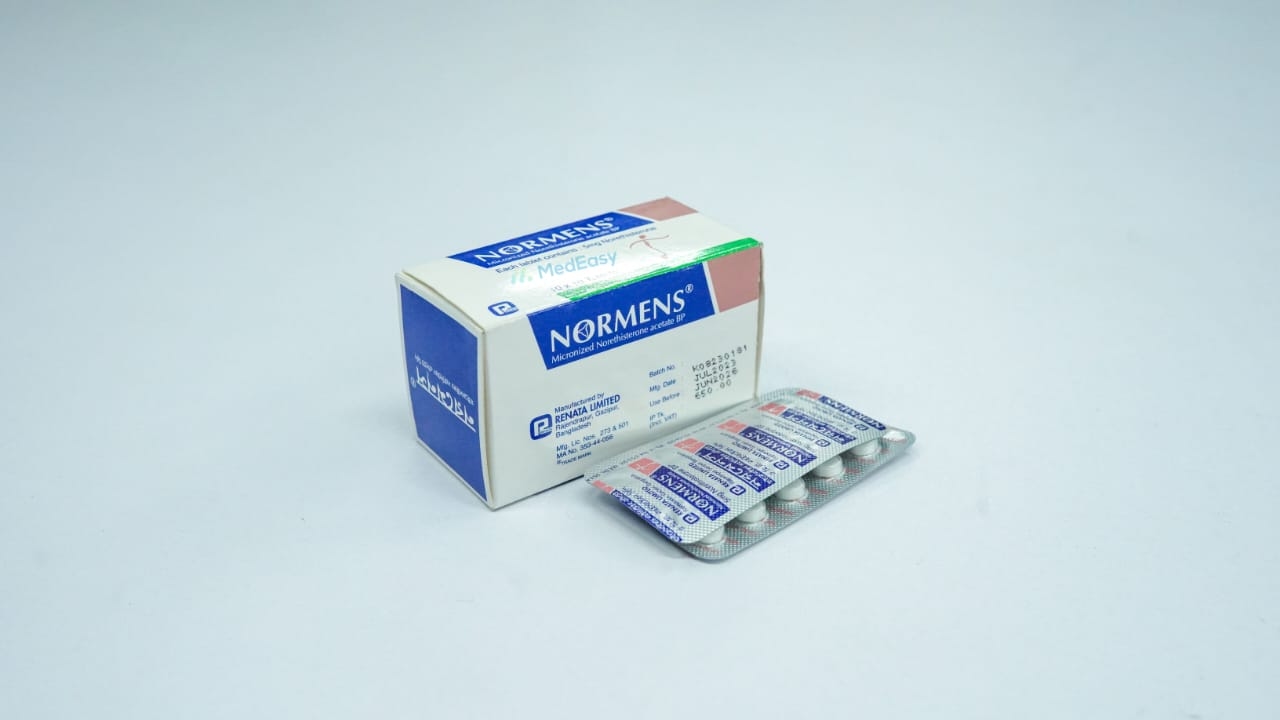
Normens5 mg
Renata Limited
৳59.80
Add to cart


Noteron is a synthetic progestin used in the treatment of several gynecological conditions. Evidence-based uses include:
Off-label, Noteron is sometimes used by physicians to manipulate the timing of the menstrual cycle around surgery, travel, or examinations; such use should only be under medical supervision.
Each Norethisterone tablet, as commonly marketed, contains Norethisterone (or its ester, norethisterone acetate) 5 mg as the active ingredient, together with pharmaceutically inert excipients such as lactose, starch, and magnesium stearate used in tablet manufacture. Norethisterone is also available internationally in a long-acting injectable ester form (norethisterone enanthate) used for contraception. The exact strength and excipients vary by brand, so the specific product label dispensed should always be checked.
Noteron is a synthetic progestogen (a 19-nortestosterone derivative) used in women's health for menstrual cycle disorders, endometriosis, and as a component of hormonal contraception. It works by mimicking the natural hormone progesterone, producing secretory changes in the endometrium and, at sufficient doses, inhibiting ovulation.
Noteron is most commonly administered orally as tablets; in some countries it is also available as a long-acting intramuscular injection. It has been used clinically for decades, both as a single-ingredient product and as part of fixed-dose combination contraceptive formulations.
Noteron belongs to the therapeutic class of Progestogens (synthetic progestins), a subgroup of female sex hormones used in gynecology and reproductive health.
Norethisterone is a synthetic progestin derived from 19-nortestosterone. It binds to progesterone receptors in the endometrium, myometrium, and hypothalamic-pituitary axis, producing progesterone-like effects. It converts proliferative endometrium into secretory endometrium, helping to control abnormal uterine bleeding, and at sufficient doses suppresses gonadotropin-releasing hormone (GnRH) and luteinizing hormone (LH) release, inhibiting ovulation.
Norethisterone is well absorbed after oral administration and undergoes hepatic first-pass metabolism, with elimination chiefly via urine and feces. In addition to its progestogenic activity, it has some inherent androgenic and mild estrogenic activity due to its steroid structure.
1 tablet (5 mg) of Noteron three times daily for 10 days to control an acute bleeding episode; bleeding usually stops within 1-3 days. For prevention of recurrence, 1 tablet twice daily from day 19 to day 26 of the cycle for several cycles.
Usual dose is 2 tablets (10 mg) of Noteron daily, starting on day 5 of the cycle and continued for 4-6 months; the dose may be increased (up to 4-5 tablets/day) if breakthrough bleeding occurs.
1 tablet of Noteron three times daily, starting 3 days before the expected onset of menstruation; menstruation typically occurs 2-3 days after stopping treatment.
1 tablet of Noteron, two to three times daily, from day 19 to day 26 of the cycle.
| Indication | Typical Adult Dose |
|---|---|
| Dysfunctional uterine bleeding (acute) | 5 mg three times daily for 10 days |
| Prevention of recurrence | 5 mg twice daily, days 19-26 of cycle |
| Endometriosis | 10 mg daily from day 5, for 4-6 months |
| Postponement of menstruation | 5 mg three times daily, from 3 days before expected period |
| Premenstrual syndrome / menorrhagia | 5-15 mg daily, days 19-26 of cycle |
See Use in Special Populations for renal/hepatic considerations, and Pediatric Uses for use in adolescents.
Noteron tablets are taken by mouth, with or without food, at approximately the same time(s) each day to maintain steady hormone levels. If a dose is missed, it should be taken as soon as remembered; if it is almost time for the next dose, the missed dose should be skipped rather than doubled. Tablets should be swallowed whole with water. Always follow the cycle-day instructions given by the prescribing physician, since timing relative to the menstrual cycle affects the efficacy of Noteron.
Drugs that induce hepatic CYP3A4 enzymes - including rifampicin, certain anticonvulsants (e.g., phenytoin, carbamazepine, barbiturates), and St. John's Wort - can accelerate the metabolism of Noteron, reducing its effectiveness. This is particularly important when Noteron is used for contraception, where reduced efficacy can result in unintended pregnancy; additional barrier contraception is recommended during and for some time after use of these interacting drugs.
Noteron may alter the anticoagulant effect of vitamin K antagonists such as warfarin; closer monitoring of coagulation parameters is advised when used together.
Noteron may inhibit the metabolism of ciclosporin, increasing its plasma levels and risk of toxicity; monitoring of ciclosporin levels and renal function is recommended.
Conditions such as migraine, uncontrolled hypertension, diabetes with vascular involvement, or smoking are important cautions rather than absolute contraindications for Norethisterone; see Precautions and Warnings.
Common side effects of Noteron include:
Serious but uncommon effects include venous or arterial thromboembolic events - see Contraindications and Precautions and Warnings. Patients experiencing severe abdominal pain, chest pain, leg swelling, sudden severe headache, or visual disturbances while taking Noteron should seek medical attention promptly.
Pregnancy: Noteron is contraindicated in known or suspected pregnancy for its labeled gynecological and contraceptive indications; it should be discontinued immediately if pregnancy is suspected or confirmed. Noteron should never be used as a "test" for pregnancy. Consult a physician promptly if pregnancy occurs while taking Noteron.
Lactation: Progestin-only formulations of Noteron are generally considered compatible with breastfeeding by many guidelines when used for contraception, as they typically do not affect milk supply; however, Noteron should be used only if clearly needed and under a physician's guidance, since data on all indications and long-term infant effects remain limited.
Overdose with Noteron is not generally life-threatening. Reported effects of excessive intake may include nausea, vomiting, breast tenderness, dizziness, and withdrawal bleeding. There is no specific antidote for Noteron overdose. If overdose is suspected, seek immediate medical attention or contact emergency services/a poison control center; treatment is supportive and symptomatic based on the clinical presentation.
Store at room temperature (below 30°C), away from light and moisture. Keep out of reach of children.
No specific dose adjustment for Noteron is well established; use with caution and physician supervision, as fluid retention effects of progestins may be relevant in significant renal impairment.
Noteron is contraindicated in severe hepatic impairment or active liver tumors (see Contraindications); use with caution and close monitoring in mild-to-moderate hepatic disease.
Noteron for gynecological indications is used in women of reproductive age; it is not generally indicated in postmenopausal women outside of hormone therapy regimens specifically formulated for that purpose.
Noteron may be used under specialist supervision for menstrual disorders once gynecological indications are confirmed; see Pediatric Uses.
Duration of Noteron treatment varies by indication: acute dysfunctional uterine bleeding is typically treated for 10 days; cyclic regimens (days 19-26) for prevention of recurrence, menorrhagia, or premenstrual syndrome are usually continued for several menstrual cycles as advised by the physician; endometriosis treatment is typically continued for 4 to 6 months; menstrual postponement uses Noteron short-term (a few days) around the expected period. Treatment duration should always be individualized and reviewed periodically by the prescribing physician.
Progestins (synthetic progestogens); 19-nortestosterone (estrane) derivative; female sex hormone. Norethisterone is a member of this drug class.
Norethisterone acts as a progesterone receptor agonist, converting proliferative endometrium to a secretory state and, at higher doses, suppressing the hypothalamic-pituitary-ovarian axis to inhibit ovulation. Due to its steroid structure, Norethisterone also has weak androgenic and estrogenic partial-agonist activity.
X (legacy FDA pregnancy category historically assigned to hormonal contraceptive/progestin products containing Noteron; confirm current labeling status with a physician)
Safety and efficacy of Noteron have not been established in children before puberty. In adolescents who have reached menarche, Noteron may be used under specialist gynecological supervision for conditions such as dysfunctional uterine bleeding, following the same evidence base as in adults, but treatment should be individualized and closely monitored given limited pediatric-specific data.
Q: What is Noteron 5 mg Tablet used for?
A: Noteron 5 mg Tablet is a synthetic progestin used to treat dysfunctional uterine bleeding, endometriosis, and premenstrual syndrome, to delay (postpone) menstruation, and as a component of some hormonal contraceptives.
Q: Can I take Noteron 5 mg Tablet during pregnancy?
A: No. Noteron 5 mg Tablet is contraindicated in known or suspected pregnancy. If you think you may be pregnant while taking Noteron 5 mg Tablet, stop the medicine and contact your physician immediately.
Q: Is Noteron 5 mg Tablet safe while breastfeeding?
A: Progestin-only forms of Noteron 5 mg Tablet are generally considered compatible with breastfeeding by many guidelines, but Noteron 5 mg Tablet should be used only if clearly needed and under your physician's advice, since data are limited for all indications.
Q: What are the common side effects of Noteron 5 mg Tablet?
A: Common side effects of Noteron 5 mg Tablet include breakthrough bleeding or spotting, breast tenderness, headache, mood changes, weight changes, and acne. Serious effects like blood clots are uncommon but require prompt medical attention if symptoms such as leg swelling, chest pain, or severe headache occur.
Q: Does Noteron 5 mg Tablet interact with other medicines?
A: Yes. Enzyme-inducing drugs such as rifampicin and certain anticonvulsants can reduce the effectiveness of Noteron 5 mg Tablet, particularly for contraception. Noteron 5 mg Tablet may also affect the levels of anticoagulants like warfarin and increase ciclosporin levels. Always tell your physician about all medicines you are taking.
Q: Who should not take Noteron 5 mg Tablet?
A: Noteron 5 mg Tablet should not be used by anyone with a known allergy to it, known or suspected pregnancy, undiagnosed vaginal bleeding, current or past hormone-dependent cancer such as breast cancer, current or past blood clots (venous or arterial), or severe liver disease/liver tumors.
Disclaimer
The information provided is accurate to the best of our knowledge, but it does not replace professional medical advice. We cannot guarantee its completeness or accuracy, and the absence of specific information about a drug should not be taken as an endorsement. We are not responsible for any consequences arising from this information, so please consult a healthcare professional for any concerns or questions.