
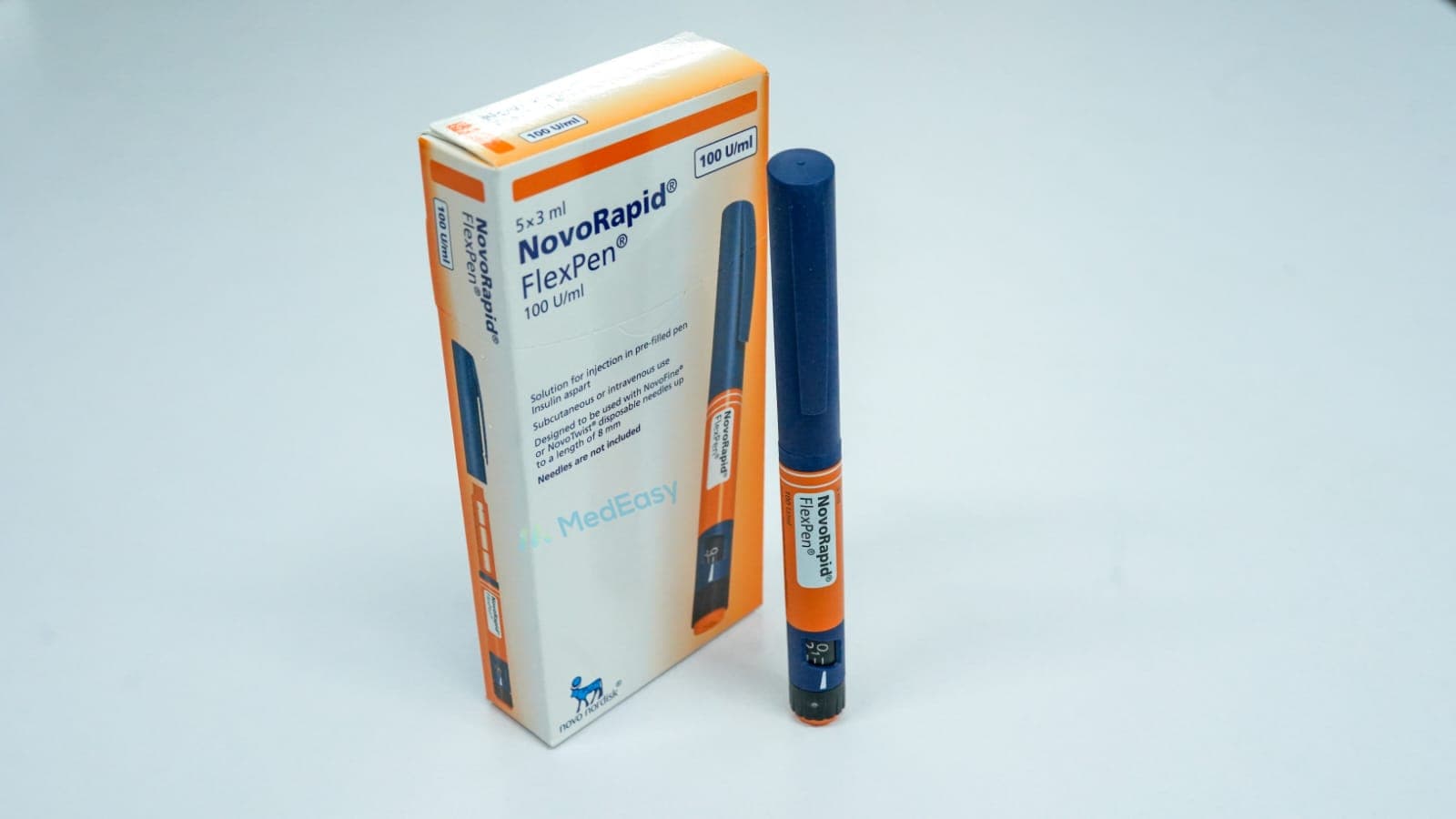

Medicine overview
Indications of NovoRapid Flexpen
NovoRapid Flexpen is a premixed (biphasic) insulin formulation combining a protamine-crystallized, intermediate-acting insulin aspart component with a rapid-acting soluble insulin aspart component. It is FDA-approved and widely used for the following indication:
- Glycemic control in diabetes mellitus: Indicated to improve glycemic control in adults with type 1 or type 2 diabetes mellitus who require insulin therapy.
Limitations of use: NovoRapid Flexpen is not recommended for treatment of diabetic ketoacidosis, and because the two components are fixed in a set ratio, the rapid-acting and intermediate-acting portions cannot be dosed independently of one another.
Composition
Each mL of Protamine Crystallised Insulin Aspart suspension (100 units/mL, U-100) typically contains 70% insulin aspart protamine crystals (intermediate-acting) and 30% soluble insulin aspart (rapid-acting), produced by recombinant DNA technology using Saccharomyces cerevisiae (baker's yeast). Inactive ingredients commonly include protamine sulfate, zinc, phenol, metacresol, glycerol, disodium hydrogen phosphate dihydrate, sodium chloride, and water for injection, with hydrochloric acid or sodium hydroxide added as needed to adjust pH.
Description
NovoRapid Flexpen is a biphasic (premixed) human insulin analogue suspension. It combines a rapid-acting insulin aspart fraction, which begins lowering blood glucose within minutes of injection, with a protamine-crystallized insulin aspart fraction that dissolves and acts more slowly, providing intermediate-duration glucose control. This dual action allows a single injection to cover both a meal-related glucose rise and a longer background insulin requirement. It appears as a white, uniformly cloudy suspension that must be resuspended before each use.
Therapeutic Class
NovoRapid Flexpen belongs to the therapeutic class of premixed (biphasic) rapid- and intermediate-acting insulin analogues, used in the pharmacologic management of diabetes mellitus.
Pharmacology
Mechanism of Action
Protamine Crystallised Insulin Aspart works primarily through regulation of glucose metabolism. Insulin aspart binds to insulin receptors on target tissues (skeletal muscle and adipose tissue), promoting cellular uptake of glucose and inhibiting hepatic glucose output. It also inhibits lipolysis and proteolysis while enhancing protein synthesis.
Pharmacodynamics
The rapid-acting (soluble) fraction has an onset of action within 10-20 minutes, while the protamine-crystallized fraction dissolves gradually to provide an intermediate-acting effect. Following a 0.3 unit/kg subcutaneous dose, peak activity occurs at approximately 2.7 ± 0.9 hours, with a total duration of action of up to 24 hours.
Pharmacokinetics
A single amino acid substitution (proline to aspartic acid at position B28) in the rapid-acting fraction of Protamine Crystallised Insulin Aspart reduces self-association (hexamer formation), allowing faster subcutaneous absorption of that portion compared with regular human insulin. Mean peak serum concentration is reached at approximately 85 minutes, and serum insulin levels return to baseline by 16-20 hours after injection. Plasma protein binding is low (less than 10%).
Dosage & Administration of NovoRapid Flexpen
General Dosing Principles
The dose of NovoRapid Flexpen must be individualized based on the patient's metabolic needs, blood glucose monitoring results, and glycemic goals, and adjusted for changes in diet, physical activity, renal or hepatic function, or intercurrent illness.
Adult Dosing
| Diabetes Type | Typical Regimen |
|---|---|
| Type 1 diabetes | Usually given twice daily, injected within 15 minutes before a meal, individualized to the patient's needs. |
| Type 2 diabetes | Usually given once or twice daily before meals; may be injected up to 15 minutes before or shortly after starting a meal. |
Pediatric Dosing
Safety and effectiveness of NovoRapid Flexpen have not been established in pediatric patients; use only under specialist guidance if considered necessary.
Renal/Hepatic Impairment
Formal pharmacokinetic studies in renal or hepatic impairment have not been conducted for this specific formulation, but insulin requirements may be reduced and the risk of hypoglycemia is increased; more frequent blood glucose monitoring and dose adjustment are recommended (see Use in Special Populations).
Preparation and Administration
- Before use, the suspension must be resuspended by gently rolling the vial between the palms or moving the pre-filled pen up and down at least 10 times until uniformly white and cloudy; do not use if it remains clear or contains clumps/particles.
- Administer by subcutaneous injection only into the abdomen, thigh, buttock, or upper arm; do NOT administer intravenously or by insulin infusion pump.
- Rotate injection sites within the same body region to reduce the risk of lipodystrophy.
Administration of NovoRapid Flexpen
NovoRapid Flexpen is for subcutaneous injection only (abdomen, thigh, buttock, or upper arm). It must never be given intravenously or through an insulin pump. Resuspend thoroughly before each dose and rotate injection sites. See Dosage and Administration for complete instructions.
Interaction of NovoRapid Flexpen
Many medicines can alter the glucose-lowering effect of NovoRapid Flexpen, increasing the risk of hypoglycemia or hyperglycemia. Report all medicines, including over-the-counter drugs and herbal products, to the prescribing physician.
Drugs that may increase hypoglycemia risk
Other antidiabetic agents, ACE inhibitors, angiotensin receptor blockers, disopyramide, fibrates, fluoxetine, monoamine oxidase inhibitors (MAOIs), pentoxifylline, pramlintide, salicylates, somatostatin analogues, and sulfonamide antibiotics.
Drugs that may decrease glucose-lowering effect (risk of hyperglycemia)
Corticosteroids, thiazide diuretics, atypical antipsychotics, danazol, estrogens/progestogens (including oral contraceptives), glucagon, isoniazid, niacin, protease inhibitors, somatropin, sympathomimetics (e.g., epinephrine, albuterol), and thyroid hormones.
Drugs with variable effect
Alcohol, beta-blockers, clonidine, and lithium may either potentiate or weaken the blood-glucose-lowering effect.
Drugs that mask hypoglycemia symptoms
Beta-blockers, clonidine, guanethidine, and reserpine can blunt the warning signs of hypoglycemia (such as tremor and palpitations), delaying recognition and treatment.
Contraindications
Protamine Crystallised Insulin Aspart is contraindicated in:
- Patients experiencing an episode of hypoglycemia.
- Patients with known hypersensitivity to insulin aspart or to any excipient in the formulation.
Side Effects of NovoRapid Flexpen
The most common and most serious adverse effect of NovoRapid Flexpen is hypoglycemia, which can range from mild to severe and, if untreated, may result in seizure, unconsciousness, or death.
Other reported side effects
- Injection site reactions (redness, swelling, itching)
- Lipodystrophy (thickening or pitting of fat) at injection sites with repeated use in the same spot
- Weight gain
- Peripheral edema (fluid retention), especially when starting insulin or intensifying therapy
- Headache
- Upper respiratory tract infection, pharyngitis, rhinitis
- Diarrhea and dyspepsia
- Allergic reactions ranging from mild local rash to rare severe generalized hypersensitivity/anaphylaxis
Pregnancy & Lactation
Pregnancy
Poorly controlled diabetes during pregnancy increases the risk of complications to both mother and fetus, so good glycemic control is important. Data specific to this exact combination product in pregnancy are limited; published data on insulin aspart itself have not shown an association with major birth defects. NovoRapid Flexpen should be used in pregnancy only under close medical supervision, with the dose individualized and adjusted as insulin requirements typically change during pregnancy.
Lactation
Insulin is a normal component of human milk, and limited data suggest it does not pose a specific risk to the breastfed infant. However, insulin requirements may need adjustment during breastfeeding, and use of NovoRapid Flexpen while breastfeeding should be guided by a physician, weighing the benefits of breastfeeding against any potential effects.
Precautions & Warnings
Use NovoRapid Flexpen only under medical supervision, with the following precautions:
- Hypoglycemia: The principal risk of therapy; patients and caregivers must be educated to recognize and promptly treat low blood glucose. Risk increases with changes in meal timing/content, unusual physical activity, alcohol intake, renal or hepatic impairment, and certain concomitant medications (see Interactions).
- Never share insulin pens or needles between patients, even after a needle change, due to risk of transmitting blood-borne infections.
- Medication errors: Always confirm the insulin product and dose before each injection to avoid mix-ups with other insulin products.
- Do not switch to a different insulin product/brand or strength without medical supervision, as this may require dose adjustment.
- Hypersensitivity reactions: Discontinue immediately and seek medical attention if signs of a generalized allergic reaction (rash over the whole body, shortness of breath, wheezing, hypotension, rapid pulse, or sweating) occur.
- Hypokalemia: Insulin therapy can cause a shift of potassium into cells and lower serum potassium; monitor in patients at risk (e.g., those on potassium-lowering medicines or with reduced renal function).
- Fluid retention/heart failure: Using thiazolidinediones (TZDs) together with insulin, including this product, can cause fluid retention and heart failure, particularly in patients with pre-existing heart failure risk factors.
- Renal and hepatic impairment: May reduce insulin clearance and increase hypoglycemia risk; monitor glucose closely and adjust dose as needed.
- Do not use if the suspension has failed to resuspend to a uniform, cloudy white appearance, or if clumps or particles remain visible.
Overdose Effects of NovoRapid Flexpen
Overdose of NovoRapid Flexpen causes hypoglycemia, which may also be accompanied by hypokalemia. Mild hypoglycemic episodes can usually be managed with oral glucose or sugary food/drink. Severe hypoglycemia, associated with confusion, seizures, or unconsciousness, is a medical emergency and requires immediate medical attention — treatment may include glucagon injection or intravenous glucose administered by trained personnel, along with monitoring and correction of potassium levels. Anyone who has overdosed or is unable to take oral glucose should be taken to the nearest emergency department or have emergency medical services contacted immediately; do not attempt to manage severe hypoglycemia at home alone.
Storage Conditions
Unopened vials/pens of NovoRapid Flexpen should be stored in a refrigerator (2°C to 8°C), protected from light, and must not be frozen; discard if frozen. Once in use (opened), vials and pens may be kept at room temperature (below 30°C), away from direct heat and light, and should be discarded after 28 days even if insulin remains, whether refrigerated or kept at room temperature. Keep out of reach of children.
Use In Special Populations
Pediatric Use
Safety and efficacy of NovoRapid Flexpen have not been established in children.
Geriatric Use
Elderly patients may have reduced ability to recognize hypoglycemia; conservative initial dosing and cautious dose titration are recommended, with close glucose monitoring.
Renal Impairment
Insulin requirements may be reduced in renal impairment due to decreased insulin clearance; monitor blood glucose closely and adjust dose to reduce hypoglycemia risk.
Hepatic Impairment
Insulin requirements may be reduced in hepatic impairment; monitor blood glucose closely and adjust dose as needed.
Duration Of Treatment
Diabetes mellitus is a chronic condition, and NovoRapid Flexpen is generally used long-term (often lifelong) as part of ongoing diabetes management. Duration and regimen should be reviewed regularly by the treating physician and adjusted according to glycemic control, changes in health status, and any transition to other therapies.
Drug Classes
Premixed (biphasic) rapid-acting/intermediate-acting insulin analogue.
Mode Of Action
Protamine Crystallised Insulin Aspart lowers blood glucose by binding insulin receptors, thereby stimulating peripheral glucose uptake by muscle and fat tissue and suppressing hepatic glucose production; it also inhibits lipolysis and proteolysis and promotes protein synthesis. The soluble (rapid-acting) fraction acts quickly after injection, while the protamine-crystallized fraction dissolves more slowly to extend the duration of glucose-lowering action.
Pediatric Uses
Safety and effectiveness of NovoRapid Flexpen have not been established in pediatric patients. Use in children should occur only under specialist medical supervision if considered clinically necessary, with careful individualized dosing and monitoring.
Frequently Asked Questions
Q: What is NovoRapid Flexpen 100 IU/ml Flexpen used for?
A: NovoRapid Flexpen 100 IU/ml Flexpen is a premixed insulin used to improve blood glucose control in adults with type 1 or type 2 diabetes mellitus who need insulin therapy.
Q: How and when should I inject NovoRapid Flexpen 100 IU/ml Flexpen?
A: It is given as a subcutaneous injection into the abdomen, thigh, buttock, or upper arm, usually once or twice daily shortly before a meal, after resuspending it thoroughly until uniformly cloudy. Never inject it into a vein or use it in an insulin pump.
Q: What is the most important side effect to watch for?
A: The most common and serious side effect is hypoglycemia (low blood sugar), which can cause shakiness, sweating, confusion, seizures, or unconsciousness if severe. Always carry a fast-acting sugar source and know the early warning signs.
Q: Can I use NovoRapid Flexpen 100 IU/ml Flexpen during pregnancy or while breastfeeding?
A: It may be used in pregnancy and breastfeeding only under close medical supervision, as insulin needs often change during these periods; discuss dose adjustments with your physician rather than changing the dose yourself.
Q: Who should not use NovoRapid Flexpen 100 IU/ml Flexpen?
A: It should not be used by anyone currently experiencing a hypoglycemic episode or anyone with a known hypersensitivity/allergy to insulin aspart or any ingredient in the product.
Q: What should I do if I think I have taken too much NovoRapid Flexpen 100 IU/ml Flexpen?
A: Overdose can cause dangerous hypoglycemia. For mild symptoms, take fast-acting glucose immediately; for severe symptoms such as confusion, seizure, or loss of consciousness, seek emergency medical help right away or have someone take you to the nearest hospital.
Disclaimer
The information provided is accurate to the best of our knowledge, but it does not replace professional medical advice. We cannot guarantee its completeness or accuracy, and the absence of specific information about a drug should not be taken as an endorsement. We are not responsible for any consequences arising from this information, so please consult a healthcare professional for any concerns or questions.
