
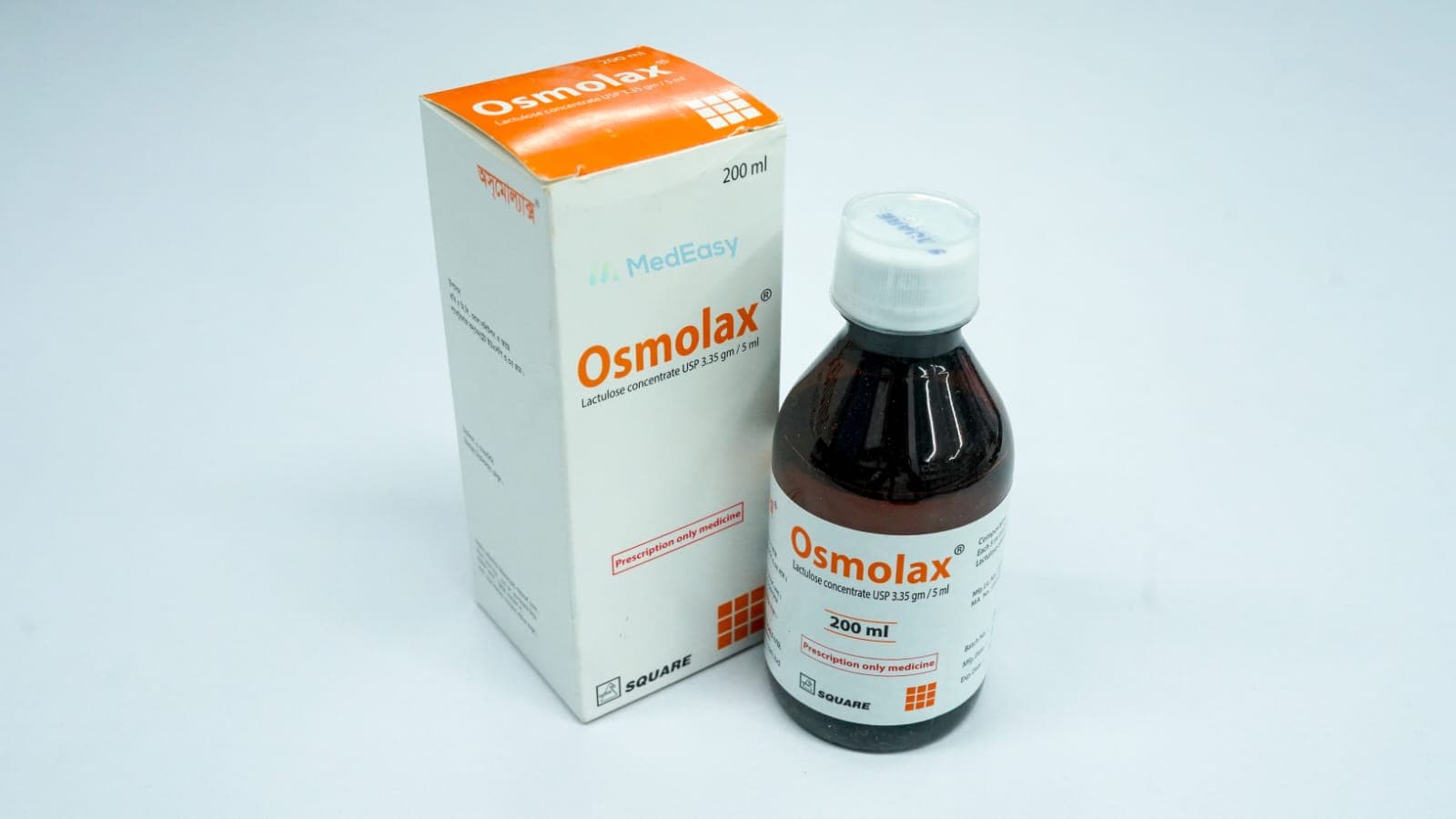

Medicine overview
Indications of Osmolax
Osmolax is an osmotic (hyperosmotic) laxative with two well-established, FDA-recognized indications:
- Treatment of chronic constipation: Osmolax is indicated for the treatment of constipation by increasing the frequency of bowel movements and softening stool consistency.
- Prevention and treatment of hepatic encephalopathy (portal-systemic encephalopathy): Osmolax is indicated to prevent and treat episodes of hepatic encephalopathy, including hepatic coma, in patients with liver disease, by reducing blood ammonia levels.
Osmolax is not indicated for the management of acute constipation requiring rapid relief; onset of a laxative effect may take 24-48 hours.
Composition
Each 15 mL of Lactulose Concentrate oral solution typically contains 10 g of lactulose (equivalent to a concentration of approximately 667 mg/mL) in a purified water base, with galactose and lactose present as minor constituents from the manufacturing process. Strength and pack size may vary by manufacturer/brand; always check the product label.
Description
Osmolax is a synthetic, non-absorbable disaccharide composed of fructose and galactose. Unlike naturally occurring sugars, Osmolax is not broken down by digestive enzymes in the small intestine and passes largely unchanged into the colon, where it is metabolized by colonic bacteria.
Osmolax is supplied as an oral solution (syrup) and is used both as a laxative for chronic constipation and as an ammonia-lowering agent in patients with liver disease at risk of hepatic encephalopathy.
Therapeutic Class
Osmolax belongs to the class of osmotic laxatives (hyperosmotic/saccharide laxatives). It is also classified functionally as an ammonia-detoxifying agent when used for hepatic encephalopathy.
Pharmacology
Mechanism of action: Lactulose Concentrate reaches the colon essentially unabsorbed because humans lack the enzyme to hydrolyze it in the small intestine. In the colon, bacterial flora metabolize Lactulose Concentrate into low-molecular-weight organic acids (lactic acid, acetic acid, and small amounts of formic acid), which:
- Lower colonic pH, which converts absorbable ammonia (NH3) into poorly-absorbable ammonium ion (NH4+), trapping nitrogenous waste in the colon for excretion in the stool - this underlies its role in hepatic encephalopathy.
- Increase osmotic pressure within the colon, drawing water into the bowel lumen, which softens stool and increases stool frequency and volume - this underlies its laxative effect.
Pharmacokinetics: Lactulose Concentrate is minimally absorbed systemically (less than 3%) after oral administration; any small absorbed fraction is excreted largely unchanged in the urine. Onset of laxative action is typically 24-48 hours.
Dosage & Administration of Osmolax
| Indication | Population | Typical Dose |
|---|---|---|
| Chronic constipation | Adults | 15-30 mL (10-20 g) orally once daily; may be increased to 60 mL/day in divided or single doses if needed. Adjust to produce 2-3 soft stools per day. |
| Children | Use only under medical supervision; dose individualized by physician based on age/weight, as formal pediatric labeling for constipation is limited. | |
| Hepatic encephalopathy | Adults | Initial: 30-45 mL (20-30 g) orally, 3-4 times daily, then titrated (usually to 30-45 mL every 1-2 hours initially if needed) to produce 2-3 soft stools per day. Can be given via nasogastric tube or as a retention enema (300 mL Osmolax mixed with 700 mL water or normal saline, retained for 30-60 minutes) in patients unable to take oral doses, e.g. those with impaired consciousness. |
| Children | Use only under specialist medical supervision; dosing is individualized and titrated to stool response. |
Osmolax should be taken exactly as directed by the prescribing physician. Doses are typically titrated to achieve a specific therapeutic endpoint (soft stool frequency) rather than following a fixed schedule, especially in hepatic encephalopathy.
Administration of Osmolax
Osmolax oral solution may be taken directly or mixed with water, fruit juice, or milk to improve palatability. It can be taken with or without food; consistent timing (e.g. with meals) may help minimize gastrointestinal discomfort. For patients unable to swallow, Osmolax may be given via nasogastric tube or as a retention enema, as directed by a physician. Do not exceed the dose or frequency prescribed.
Interaction of Osmolax
Clinically significant interactions with Osmolax include:
- Oral antibiotics (e.g. neomycin, other broad-spectrum antibiotics): may reduce the effectiveness of Osmolax in hepatic encephalopathy by suppressing the colonic bacteria required to metabolize Osmolax into its active acidic byproducts.
- Antacids and other agents that increase colonic/gastric pH: may decrease the efficacy of Osmolax, since its ammonia-trapping effect depends on colonic acidification.
- Other laxatives: concurrent use with other laxatives may make it difficult to judge the therapeutic response used to titrate the Osmolax dose (particularly in hepatic encephalopathy) and is generally discouraged unless directed by a physician.
Inform your physician or pharmacist of all medicines you are taking before starting Osmolax.
Contraindications
Lactulose Concentrate is contraindicated in patients with:
- Known hypersensitivity to lactulose or any component of the formulation.
- Galactosemia, since Lactulose Concentrate contains galactose.
- A requirement for a low-galactose diet.
Side Effects of Osmolax
Common side effects of Osmolax, especially at initiation of therapy, include:
- Flatulence (gas)
- Abdominal cramping, bloating, or discomfort
- Belching
- Nausea
With excessive dosing or prolonged use, diarrhea can occur, which may lead to fluid and electrolyte disturbances (e.g. low potassium, low sodium) - see Precautions and Warnings. Most gastrointestinal effects are dose-related and tend to improve as the bowel adapts or the dose is adjusted.
Pregnancy & Lactation
Pregnancy: Osmolax undergoes minimal systemic absorption, and it is generally considered a low-risk option for managing constipation during pregnancy. However, as with any medicine, Osmolax should be used during pregnancy only if clearly needed, and only as directed by a physician, since well-controlled studies establishing safety in all trimesters are limited.
Lactation: Because systemic absorption of Osmolax is minimal, it is generally considered compatible with breastfeeding when used as directed; nonetheless, a breastfeeding mother should consult her physician before using Osmolax.
Precautions & Warnings
Use Osmolax with caution in the following situations:
- Diabetes mellitus: Osmolax contains small amounts of free galactose and lactose; diabetic patients should monitor blood glucose and use Osmolax under medical supervision.
- Electrolyte disturbances: excessive or prolonged diarrhea from overdosing can cause clinically significant loss of fluid and electrolytes (particularly potassium and sodium), which may be especially important in elderly or debilitated patients; report persistent diarrhea to a physician.
- Undiagnosed abdominal pain: Osmolax, like other laxatives, should not be used in patients with undiagnosed abdominal pain or symptoms of appendicitis or acute surgical abdomen until a serious condition has been excluded.
- Dose titration required: the dose of Osmolax for hepatic encephalopathy must be individually titrated (usually to produce 2-3 soft stools per day) under close medical supervision; do not adjust the dose on your own.
Overdose Effects of Osmolax
Overdose of Osmolax may cause severe diarrhea, abdominal cramping, and consequent dehydration or electrolyte imbalance. If an overdose of Osmolax is suspected, discontinue the medicine and seek immediate medical attention or contact a poison control center/emergency services. Treatment is generally supportive, focused on fluid and electrolyte replacement under medical supervision; do not attempt to manage a suspected overdose at home without professional guidance.
Storage Conditions
Store at room temperature (below 30°C), away from light and moisture. Avoid freezing, as this may cause crystallization of the solution. Keep out of reach of children.
Use In Special Populations
Renal impairment: No specific dose adjustment of Osmolax is generally required, as systemic absorption is minimal; however, caution is warranted regarding electrolyte monitoring.
Hepatic impairment: Osmolax is a primary treatment used in patients with hepatic impairment complicated by hepatic encephalopathy; dosing is titrated to clinical response as described in Dosage and Administration.
Diabetic patients: Use Osmolax with monitoring of blood glucose given its small sugar content (see Precautions and Warnings).
Elderly: No specific dose adjustment is typically required for Osmolax, but elderly and debilitated patients are more susceptible to fluid/electrolyte disturbances from excessive diarrhea and should be monitored closely.
Duration Of Treatment
For chronic constipation, Osmolax may be used for as long as needed to maintain regular bowel movements, with periodic physician review; if no improvement occurs within a few days, consult a physician. For hepatic encephalopathy, Osmolax is typically continued long-term, as chronic or recurrent liver disease requires ongoing ammonia control, with the dose adjusted over time to maintain the target stool frequency.
Drug Classes
Lactulose Concentrate is classified as an osmotic laxative (hyperosmotic saccharide laxative) and, in the context of liver disease, as an ammonia-lowering agent. It is not an antibiotic or antimicrobial.
Mode Of Action
Lactulose Concentrate exerts its effects through colonic bacterial fermentation. Since it is not absorbed or digested in the small intestine, Lactulose Concentrate reaches the colon intact, where resident bacteria break it down into short-chain organic acids. This lowers colonic pH, which (a) converts absorbable ammonia into non-absorbable ammonium for fecal excretion (basis for its hepatic encephalopathy effect), and (b) creates an osmotic gradient that draws water into the colon, softening stool and stimulating peristalsis (basis for its laxative effect).
Pregnancy
B
Pediatric Uses
Osmolax is used off-label in children for the management of chronic constipation, with dosing individualized by the treating physician based on age and weight; formal FDA pediatric labeling for constipation is limited, so use in children should be supervised by a pediatrician. For hepatic encephalopathy in children, Osmolax is used based on clinical judgment and specialist guidance, as safety and efficacy have not been established in extensive controlled pediatric trials for this indication. Osmolax should not be given to infants or children without medical supervision.
Frequently Asked Questions
Q: What is Osmolax 200 ml Syrup used for?
A: Osmolax 200 ml Syrup is used to treat chronic constipation and to prevent or treat hepatic encephalopathy (a complication of liver disease caused by high blood ammonia levels).
Q: How long does it take for Osmolax 200 ml Syrup to work?
A: Osmolax 200 ml Syrup typically takes 24 to 48 hours to produce a bowel movement, as it works by drawing water into the colon and being fermented by colonic bacteria; it is not a fast-acting laxative.
Q: Can Osmolax 200 ml Syrup be used during pregnancy?
A: Osmolax 200 ml Syrup has minimal systemic absorption and is generally considered a low-risk option for constipation during pregnancy, but it should be used only if clearly needed and under the guidance of a physician, since dedicated safety data are limited.
Q: What are the common side effects of Osmolax 200 ml Syrup?
A: Common side effects include flatulence, abdominal bloating or cramping, and belching, especially when starting treatment. Excessive doses can cause diarrhea and electrolyte imbalance, so the dose should be adjusted as directed by a physician.
Q: Who should not take Osmolax 200 ml Syrup?
A: Osmolax 200 ml Syrup should not be used by patients who are hypersensitive to lactulose, who have galactosemia, or who require a low-galactose diet, since Osmolax 200 ml Syrup contains galactose.
Q: What should I do if I take too much Osmolax 200 ml Syrup?
A: An overdose of Osmolax 200 ml Syrup can cause severe diarrhea and dehydration. Stop taking the medicine and seek immediate medical attention or contact a poison control center if an overdose is suspected.
Disclaimer
The information provided is accurate to the best of our knowledge, but it does not replace professional medical advice. We cannot guarantee its completeness or accuracy, and the absence of specific information about a drug should not be taken as an endorsement. We are not responsible for any consequences arising from this information, so please consult a healthcare professional for any concerns or questions.
