10% Off
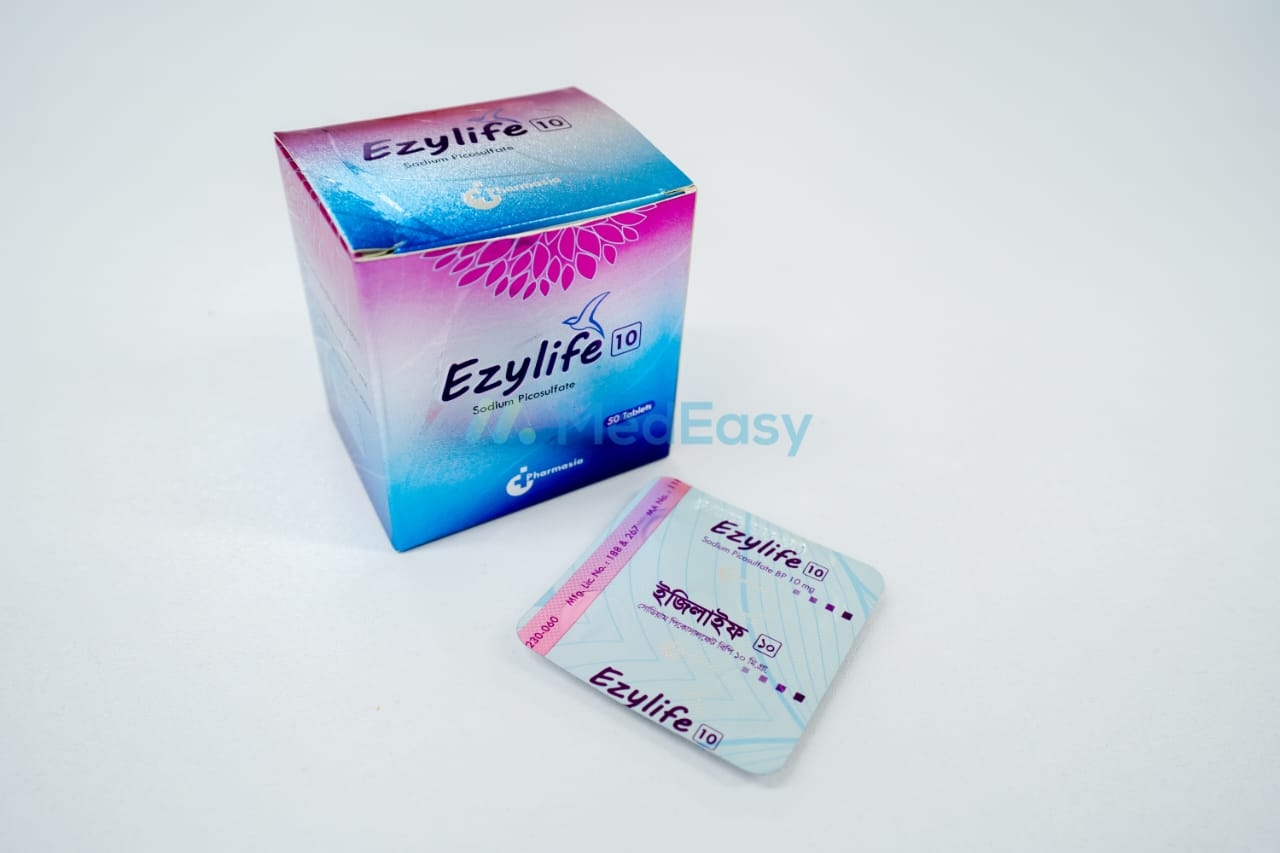
Ezylife10 mg
Pharmasia Limited
৳64.80
Add to cart

Picolon 10 mg Tablet is available on MedEasy for ৳45.00 per 10's Strip, with home delivery anywhere in Bangladesh. It is manufactured by Delta Pharma Ltd. Its generic name is Sodium Picosulfate.

Picolon is a stimulant laxative used in the following situations:
Picolon is not intended for routine, long-term management of constipation; if constipation persists beyond a few days despite use, a physician should be consulted to evaluate for an underlying cause.
Each formulation contains Sodium Picosulfate as the active pharmaceutical ingredient. It is available as tablets (commonly 5 mg or 10 mg), oral drops/solution, and as part of combination bowel-preparation powders/solutions together with magnesium oxide/magnesium citrate and citric acid. Refer to the specific product label for exact strength and excipients.
Picolon is a triarylmethane-type stimulant laxative belonging to the same pharmacological family as bisacodyl. It is essentially inactive when taken orally and is converted by colonic bacteria into its active metabolite, which stimulates colonic motility and alters fluid and electrolyte transport in the bowel to produce a bowel movement. It is used both for occasional constipation and, at higher doses, for bowel cleansing before colonoscopy and other procedures.
Picolon belongs to the therapeutic class of stimulant (contact) laxatives, specifically the triarylmethane laxative subgroup, and is also used as a component of osmotic/stimulant combination bowel-cleansing (bowel preparation) agents.
Mechanism of action: Sodium Picosulfate is a prodrug that is largely unabsorbed and pharmacologically inactive in the stomach and small intestine. In the colon, bacterial enzymes (sulfatases) cleave it to its active free diphenol metabolite, bis-(p-hydroxyphenyl)-pyridyl-2-methane (BHPM). BHPM directly stimulates sensory nerve endings in the colonic mucosa, increasing peristaltic contractions of the large bowel, and also modifies water and electrolyte transport, increasing intraluminal fluid accumulation. The combined effect softens stool and promotes evacuation.
Onset of action: Typically 6-12 hours after oral administration, which is why it is usually dosed at bedtime for a morning bowel movement.
Pharmacokinetics: Systemic absorption of both the parent drug and its active metabolite is minimal; the drug acts locally within the colon, which limits systemic pharmacokinetic effects.
5-10 mg (one to two 5 mg tablets, or the equivalent oral solution) taken once daily at bedtime. The dose may be adjusted by a physician within this range to achieve a comfortable bowel movement; the lowest effective dose should be used.
2.5-5 mg once daily, under medical supervision.
Approximately 0.25 mg/kg body weight once daily, only under direct medical supervision.
| Regimen | Typical Dosing |
|---|---|
| Split-dose bowel prep | Picolon combination sachet dissolved in water, one dose the evening before and one dose the morning of the procedure, each followed by additional clear fluids, as directed by the prescribing physician/endoscopy unit protocol. |
Administration: Tablets/drops are taken orally, typically at night, usually with or without food as directed. Bowel-preparation formulations should be mixed and taken exactly as instructed by the physician or procedure-specific protocol, with adequate additional fluid intake to prevent dehydration.
Take Picolon orally, generally at bedtime for constipation so that an evacuation occurs the following morning. For bowel-cleansing regimens, dissolve/take the product exactly as directed (often split into an evening and a morning dose) and drink plenty of clear fluids throughout the preparation period to avoid dehydration.
Reduced absorption of concomitant oral medications: When Picolon is used at bowel-preparation doses, the resulting rapid bowel evacuation and diarrhea can reduce the absorption of other orally administered drugs taken around the same time; oral medications should generally be timed at least 1 hour before or several hours after dosing, or as advised by a physician.
Diuretics and corticosteroids: Concomitant use with diuretics (e.g. loop or thiazide diuretics) or corticosteroids may increase the risk of electrolyte disturbances (particularly hypokalemia), because both drug classes can independently promote potassium loss; electrolyte monitoring is advised with combined use, especially in bowel-prep regimens.
Antibiotics: Broad-spectrum antibiotics may reduce colonic bacterial activity needed to convert Picolon to its active metabolite, potentially reducing laxative effectiveness.
Other laxatives: Concurrent use with other laxatives is not recommended as it increases the risk of excessive purgation, dehydration, and electrolyte imbalance.
Sodium Picosulfate is contraindicated in patients with:
Common and important adverse effects associated with Picolon include:
Electrolyte disturbances and dehydration are of particular concern with bowel-preparation doses; patients should drink adequate clear fluids and seek medical attention for severe or persistent symptoms (e.g. marked weakness, palpitations, reduced urination, confusion).
Pregnancy: Data on Picolon use in pregnancy are limited. As a general precaution, Picolon should be avoided during the first trimester and used in later pregnancy only if clearly needed, after the potential benefit to the mother has been weighed against potential risk to the fetus, and under medical supervision. Bowel-preparation regimens (higher doses, risk of dehydration/electrolyte disturbance) require particular caution in pregnancy and should only be used if a physician determines it is necessary.
Lactation: Available data suggest that Picolon and its active metabolite are not significantly excreted into breast milk of healthy lactating women, and short-term use at usual laxative doses is generally considered acceptable; however, a physician should be consulted before use during breastfeeding, particularly for bowel-preparation doses.
Not for prolonged use: Picolon is intended for short-term or occasional use. Prolonged or excessive use as a laxative can lead to laxative dependence, loss of normal bowel function, and chronic electrolyte imbalance (particularly hypokalemia).
Fluid and electrolyte status: Use with caution in elderly patients and those with renal impairment, cardiac disease (including arrhythmia risk from electrolyte shifts), or conditions predisposing to fluid/electrolyte disturbance, especially when used for bowel preparation; adequate hydration and, where appropriate, electrolyte monitoring are recommended.
Undiagnosed abdominal symptoms: Do not use in patients with undiagnosed abdominal pain, as this may mask or worsen a serious underlying condition — see Contraindications.
Bowel preparation setting: Ensure adequate oral fluid intake throughout the bowel-cleansing process; patients with impaired swallowing, seizure disorder, or at risk of aspiration/regurgitation should use bowel-prep regimens only under close medical supervision.
General: Picolon should be taken exactly as directed by the physician or as per the product label; do not exceed the recommended dose or duration without medical advice.
Overdose or excessive use of Picolon may cause severe abdominal cramping, profuse diarrhea, significant fluid and electrolyte loss, and dehydration. If overdose is suspected, seek immediate medical attention or contact a poison control center; supportive treatment (rehydration and correction of electrolyte imbalance) should be provided by a healthcare professional. Do not attempt to self-treat a significant overdose at home.
Store at room temperature (below 30°C), away from light and moisture. Keep out of reach of children.
Elderly: Use with caution; elderly patients are at higher risk of dehydration and electrolyte disturbance, particularly with bowel-preparation doses. Adequate hydration and monitoring are advised.
Renal impairment: Use with caution, particularly for bowel-preparation regimens, due to increased risk of fluid and electrolyte imbalance; medical supervision is recommended.
Hepatic impairment: No specific dose adjustment is well established; use with general caution and medical guidance.
Cardiac disease: Use with caution in patients with cardiac disease, as electrolyte shifts (especially hypokalemia) can predispose to arrhythmia; this is particularly relevant for bowel-preparation doses.
Pediatric and pregnant/lactating patients: See Pediatric Uses and Pregnancy and Lactation sections.
For constipation, Picolon should be used for the shortest duration needed to restore normal bowel habit, typically no more than a few days to about one week, unless otherwise directed by a physician; if constipation persists, medical review is advised. For bowel preparation, it is used as a single-course regimen (evening and morning doses) immediately before the scheduled procedure, as directed.
Stimulant (contact) laxative; triarylmethane laxative; bowel-cleansing/bowel-preparation agent (often combined with magnesium oxide/magnesium citrate and citric acid).
Sodium Picosulfate is hydrolyzed by colonic bacterial enzymes to its active metabolite (BHPM), which stimulates colonic sensory nerve endings to increase peristalsis and alters intestinal fluid/electrolyte transport to increase luminal water content, producing a laxative effect within about 6-12 hours.
Picolon may be used in children for constipation under medical supervision, with age-based dosing: children over 10 years, 5-10 mg daily; children 4-10 years, 2.5-5 mg daily; infants and young children 1 month to 4 years, approximately 0.25 mg/kg daily. Use in infants and young children should be initiated and supervised by a physician. Safety and efficacy of Picolon-containing bowel-preparation products for colonoscopy have not been well established in young children, and such use should only occur under specialist medical direction.
Q: What is Picolon 10 mg Tablet used for?
A: Picolon 10 mg Tablet is used to relieve short-term or occasional constipation, and at higher doses it is used to clean out the bowel before a colonoscopy or certain surgical or radiological procedures.
Q: How should I take Picolon 10 mg Tablet for constipation?
A: For constipation, Picolon 10 mg Tablet is usually taken once daily at bedtime, with the dose depending on age (adults/children over 10: 5-10 mg; children 4-10 years: 2.5-5 mg; infants/young children: weight-based dosing under medical supervision). Always follow your physician's or pharmacist's instructions.
Q: Can Picolon 10 mg Tablet be used for a long time?
A: No. Picolon 10 mg Tablet is intended for short-term or occasional use only. Using it for a prolonged period can cause laxative dependence and electrolyte imbalance. If constipation continues for more than a few days, consult a physician.
Q: Is Picolon 10 mg Tablet safe during pregnancy or breastfeeding?
A: Picolon 10 mg Tablet should be avoided in the first trimester of pregnancy and used later in pregnancy only if clearly needed and advised by a physician. In breastfeeding, short-term use at usual doses is generally considered acceptable since the drug is not significantly excreted in breast milk, but you should consult your physician before use.
Q: Who should not take Picolon 10 mg Tablet?
A: Picolon 10 mg Tablet should not be used by anyone with a known allergy to it, intestinal obstruction or ileus, gastrointestinal perforation or an acute surgical abdomen, severe inflammatory bowel disease or toxic megacolon, severe dehydration, or active gastrointestinal bleeding.
Q: What should I do if I take too much Picolon 10 mg Tablet?
A: An overdose of Picolon 10 mg Tablet can cause severe cramping, diarrhea, and dehydration or electrolyte imbalance. Seek immediate medical attention or contact a poison control center if an overdose is suspected.
Disclaimer
The information provided is accurate to the best of our knowledge, but it does not replace professional medical advice. We cannot guarantee its completeness or accuracy, and the absence of specific information about a drug should not be taken as an endorsement. We are not responsible for any consequences arising from this information, so please consult a healthcare professional for any concerns or questions.