
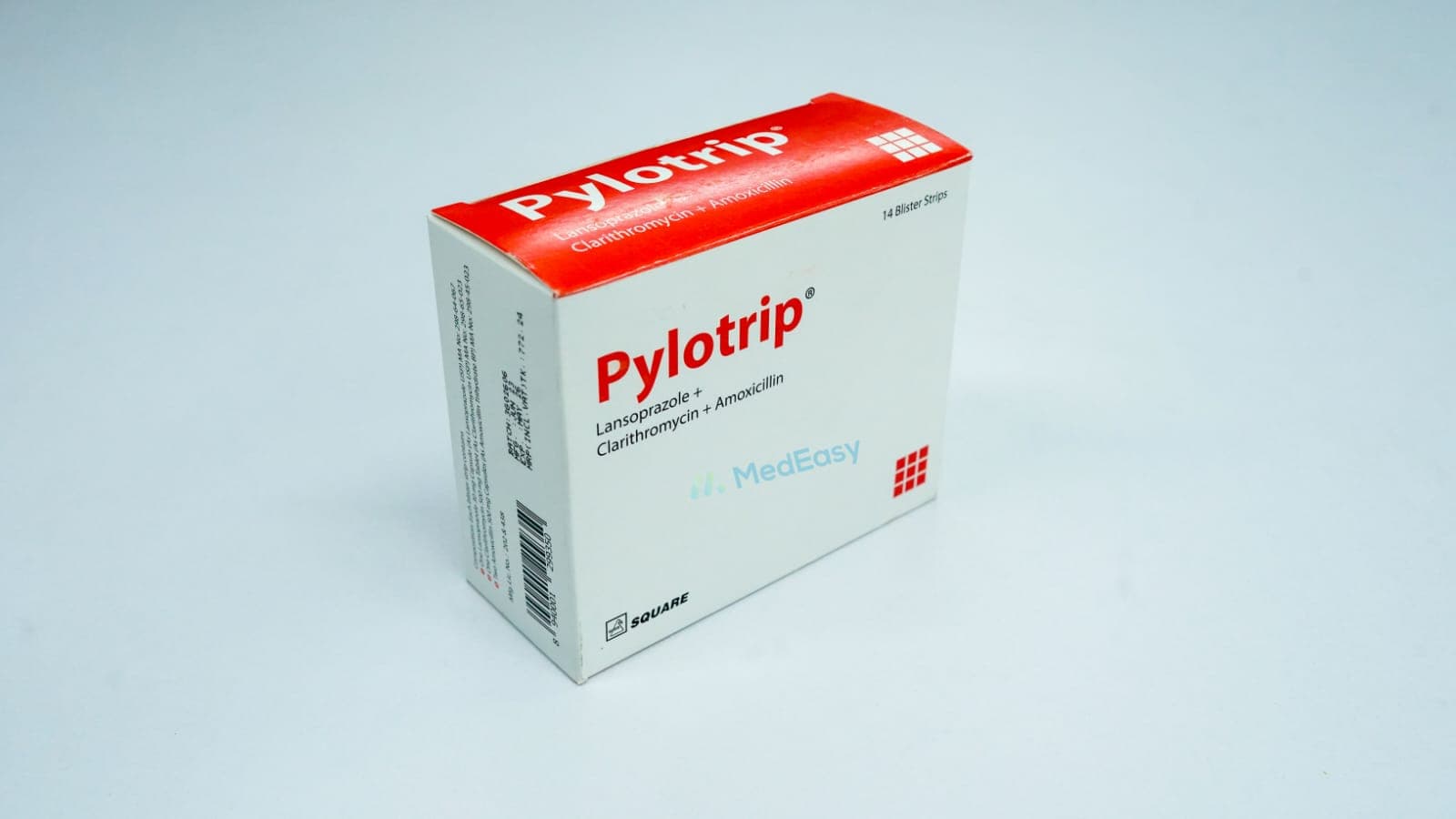
Pylotrip30 mg+1000 mg+500 mg

Medicine overview
Indications of Pylotrip
Established Indication
Pylotrip is a fixed-combination regimen (a proton pump inhibitor plus two antibiotics) indicated for the treatment of patients with Helicobacter pylori (H. pylori) infection and duodenal ulcer disease (active or a history within the past 5 years), to eradicate H. pylori. Eradication of H. pylori has been shown to reduce the risk of duodenal ulcer recurrence.
Not Indicated For
- Pylotrip is not indicated for isolated gastro-oesophageal reflux disease, dyspepsia, or peptic ulcer disease without confirmed H. pylori infection; a full triple-antibiotic course should not be used unless H. pylori infection has actually been demonstrated (by biopsy, stool antigen, or urea breath test).
- Pylotrip is not a standard first-line regimen in regions/patients with known high clarithromycin resistance; local resistance patterns should guide the choice of eradication regimen.
Pylotrip must always be used as directed by a physician for a confirmed indication; it should not be substituted for other acid-suppressive therapy alone.
Composition
Lansoprazole + Amoxicillin + Clarithromycin is supplied as a combination pack (or co-blistered kit) containing three separate medicines to be taken together for each dose:
- Lansoprazole delayed-release capsules 30 mg
- Amoxicillin capsules 500 mg (two capsules per dose, total 1 g)
- Clarithromycin tablets 500 mg
All three components of Lansoprazole + Amoxicillin + Clarithromycin are taken together, twice daily, for the duration of the eradication course.
Description
Pylotrip is a triple-therapy combination used specifically for the eradication of Helicobacter pylori, a bacterium strongly associated with duodenal ulcer disease and, less commonly, gastric ulcer disease. It combines a proton pump inhibitor (lansoprazole), which reduces gastric acid secretion and raises intragastric pH, with two antibiotics (amoxicillin and clarithromycin) that act against H. pylori. Combining an acid suppressant with two antibiotics improves eradication rates compared with dual therapy and shortens the antibiotic exposure needed for cure.
Pylotrip is dispensed as a co-packaged, fixed-course regimen and is not intended for long-term or as-needed use.
Therapeutic Class
Pylotrip belongs to a multi-drug therapeutic class combination:
- Lansoprazole — Proton Pump Inhibitor (PPI)
- Amoxicillin — Aminopenicillin (beta-lactam antibiotic)
- Clarithromycin — Macrolide antibiotic
Together, Pylotrip functions as an anti-H.-pylori eradication therapy.
Pharmacology
Lansoprazole + Amoxicillin + Clarithromycin works through three complementary mechanisms:
- Lansoprazole irreversibly inhibits the H+/K+-ATPase (proton pump) in gastric parietal cells, suppressing basal and stimulated gastric acid secretion. Raising intragastric pH improves antibiotic stability and efficacy against H. pylori and promotes ulcer healing.
- Amoxicillin inhibits bacterial cell-wall synthesis by binding penicillin-binding proteins, producing bactericidal activity against H. pylori.
- Clarithromycin binds the 50S ribosomal subunit, inhibiting bacterial protein synthesis and providing bacteriostatic/bactericidal activity against H. pylori.
The three-drug combination in Lansoprazole + Amoxicillin + Clarithromycin achieves substantially higher H. pylori eradication rates than any single agent or two-drug regimen.
Dosage & Administration of Pylotrip
Adult Dosage (H. pylori eradication)
| Component | Dose | Frequency | Duration |
|---|---|---|---|
| Lansoprazole | 30 mg | Twice daily (every 12 hours) | 10–14 days (per prescribed protocol; 14 days per standard labeling) |
| Amoxicillin | 1 g (2 x 500 mg) | Twice daily (every 12 hours) | Same course as above |
| Clarithromycin | 500 mg | Twice daily (every 12 hours) | Same course as above |
All three components of Pylotrip are taken together before meals, morning and evening, for the full prescribed duration — typically 14 days, though some protocols use 10 days depending on local resistance patterns and physician judgment.
Renal/Hepatic Adjustment
- Severe renal impairment (creatinine clearance < 30 mL/min): the lansoprazole component of Pylotrip is generally reduced to once-daily dosing, and amoxicillin dosing frequency may need reduction; use of Pylotrip in severe renal impairment should be individualized by a physician.
- Severe hepatic impairment: clarithromycin exposure increases; use of Pylotrip should be reviewed by a physician, with dose reduction or an alternative regimen considered if renal impairment coexists.
Missed Dose
If a dose of Pylotrip is missed, it should be taken as soon as remembered unless it is close to the next scheduled dose; doses should not be doubled. Completing every dose for the full course is essential (see Precautions).
Administration of Pylotrip
Pylotrip should be taken by mouth, with all three components of a dose taken together, generally before a meal, approximately 12 hours apart (e.g., morning and evening). Capsules and tablets should be swallowed whole with water and not crushed or chewed unless a physician specifically advises otherwise. Pylotrip should be taken at the same times each day to maintain consistent drug levels, and the entire prescribed course must be completed even if symptoms improve early.
Interaction of Pylotrip
Pylotrip contains clarithromycin, a strong CYP3A4 inhibitor, and lansoprazole, which raises gastric pH; both properties create clinically important interactions.
- Pimozide, ergotamine/dihydroergotamine, cisapride, astemizole, terfenadine: Co-administration with Pylotrip is contraindicated — clarithromycin raises plasma levels of these drugs via CYP3A4 inhibition, risking serious cardiac arrhythmia (including QT prolongation/torsades de pointes) or ergotism.
- Lovastatin, simvastatin: Contraindicated with Pylotrip due to markedly increased statin levels and risk of rhabdomyolysis; other statins (e.g., atorvastatin, rosuvastatin) require dose caution or temporary interruption during the course.
- Oral anticoagulants (e.g., warfarin): Clarithromycin in Pylotrip can potentiate anticoagulant effect; INR should be monitored closely during and shortly after therapy.
- Colchicine: Increased colchicine toxicity risk, especially in renal/hepatic impairment; avoid or reduce colchicine dose during Pylotrip therapy.
- Digoxin, carbamazepine, theophylline, triazolam/midazolam: Clarithromycin can raise levels of these drugs; monitoring or dose adjustment may be needed during Pylotrip therapy.
- Drugs requiring an acidic gastric pH for absorption (e.g., ketoconazole, itraconazole, atazanavir): The lansoprazole component of Pylotrip can reduce their absorption and effectiveness.
- Methotrexate (high-dose): PPIs such as the lansoprazole in Pylotrip may delay methotrexate elimination and increase toxicity risk.
- Other QT-prolonging drugs: Additive QT-prolongation risk when combined with Pylotrip; avoid concurrent use where possible.
Patients should tell their physician about all other medicines before starting Pylotrip.
Contraindications
- Known hypersensitivity to lansoprazole, any other proton pump inhibitor, amoxicillin or other penicillins/beta-lactams, clarithromycin, or any other macrolide antibiotic — Lansoprazole + Amoxicillin + Clarithromycin must not be used in patients with any of these allergies; an alternative eradication regimen is required.
- Concomitant use with pimozide, cisapride, ergotamine or dihydroergotamine, astemizole, or terfenadine — the clarithromycin component of Lansoprazole + Amoxicillin + Clarithromycin can raise plasma levels of these drugs via CYP3A4 inhibition, risking life-threatening cardiac arrhythmia or ergotism.
- Concomitant use with lovastatin or simvastatin — risk of severe rhabdomyolysis due to clarithromycin-mediated CYP3A4 inhibition.
- History of QT prolongation, ventricular cardiac arrhythmia (including torsades de pointes), or known congenital long QT syndrome — the clarithromycin component of Lansoprazole + Amoxicillin + Clarithromycin carries a QT-prolongation risk.
- History of cholestatic jaundice/hepatic dysfunction previously associated with clarithromycin use.
Side Effects of Pylotrip
Common
- Diarrhea (may be dose-limiting)
- Nausea and abdominal discomfort
- Altered or metallic taste (dysgeusia) — a well-recognized clarithromycin effect
- Headache
- Vaginal candidiasis (yeast infection) due to antibiotic use
- Skin rash
Less Common / Serious
- Clostridioides difficile-associated diarrhea/colitis, which can range from mild to life-threatening and may occur during or up to several weeks after finishing Pylotrip.
- Hepatic enzyme elevation or, rarely, hepatotoxicity.
- QT-interval prolongation and, rarely, serious ventricular arrhythmia.
- Severe hypersensitivity reactions, including anaphylaxis and severe cutaneous reactions (e.g., Stevens-Johnson syndrome) — rare but require immediate discontinuation of Pylotrip and medical attention.
Patients should seek prompt medical attention for severe or persistent diarrhea, signs of allergic reaction, jaundice, or palpitations while taking Pylotrip.
Pregnancy & Lactation
Pylotrip should be used during pregnancy only if clearly needed and if the potential benefit justifies the potential risk to the fetus; a physician should be consulted before use. Amoxicillin is generally considered compatible with pregnancy when indicated, but data specifically on the combined use of lansoprazole and clarithromycin together in pregnancy are limited, and clarithromycin has shown adverse findings in some animal reproduction studies. Pylotrip should therefore not be used in pregnancy unless a physician determines no suitable alternative exists.
During breastfeeding, all three components of Pylotrip pass into breast milk to varying degrees. Pylotrip should be used during lactation only under medical supervision, with the infant monitored for diarrhea, thrush, or rash; a physician should weigh the benefits of treatment against potential risk to the breastfed infant.
Precautions & Warnings
Antibiotic Stewardship
Take Pylotrip exactly as prescribed by your physician; do not stop, extend, skip doses, or share this medicine with others without medical advice. Completing the full course is essential for successful H. pylori eradication and to reduce the risk of antibiotic resistance.
Other Precautions
- Clostridioides difficile-associated diarrhea: Can occur during or after use of Pylotrip; seek medical attention for severe, persistent, or bloody diarrhea.
- QT prolongation: Use Pylotrip with caution in patients with electrolyte disturbances (hypokalemia, hypomagnesemia), significant bradycardia, or concomitant use of other QT-prolonging drugs.
- Hepatic function: Monitor for signs of liver injury (jaundice, dark urine, unusual fatigue) during therapy with Pylotrip.
- Masking of gastric malignancy: Symptomatic response to the lansoprazole component of Pylotrip does not exclude gastric malignancy; this should be considered before starting therapy in at-risk patients.
- Superinfection: Prolonged antibiotic use in Pylotrip may result in overgrowth of non-susceptible organisms, including fungal infection.
- Clarithromycin resistance: Local H. pylori clarithromycin resistance rates should guide whether Pylotrip remains an appropriate first-line choice.
Overdose Effects of Pylotrip
Specific data on overdose of Pylotrip as a combination are limited. Overdose could produce exaggerated effects of its components, such as severe gastrointestinal upset (nausea, vomiting, diarrhea), or effects related to excess antibiotic exposure. In case of suspected overdose of Pylotrip, seek immediate medical attention or contact a poison control center; treatment is supportive and symptomatic, as there is no specific antidote. Do not attempt home treatment for a suspected overdose.
Storage Conditions
Store at room temperature (below 30°C), away from light and moisture. Keep out of reach of children.
Use In Special Populations
- Pediatric use: The safety and efficacy of Pylotrip as a fixed combination have not been established in pediatric patients; this regimen is generally intended for adults. See Pediatric Uses.
- Elderly: No overall differences in effectiveness have been observed, but elderly patients may have a higher prevalence of decreased hepatic, renal, or cardiac function, warranting closer monitoring during Pylotrip therapy.
- Renal impairment: Dose adjustment of the lansoprazole and amoxicillin components of Pylotrip may be required in severe renal impairment (see Dosage and Administration).
- Hepatic impairment: Clarithromycin exposure increases in hepatic impairment; use Pylotrip with caution and physician oversight, particularly if renal impairment coexists.
Duration Of Treatment
Pylotrip is prescribed as a fixed-course regimen, typically for 14 days (some protocols use 10 days depending on local resistance patterns and physician judgment). The full course must be completed exactly as prescribed; Pylotrip is not intended for open-ended or as-needed use, and treatment should not be shortened even if symptoms resolve early.
Drug Classes
Proton pump inhibitor + Aminopenicillin (beta-lactam) antibiotic + Macrolide antibiotic (fixed-combination H. pylori eradication therapy)
Mode Of Action
Lansoprazole + Amoxicillin + Clarithromycin combines acid suppression with dual antibacterial action against H. pylori. Lansoprazole irreversibly blocks the gastric H+/K+-ATPase pump, reducing acid secretion and creating a gastric environment less favorable to the organism while improving antibiotic stability. Amoxicillin disrupts bacterial cell-wall synthesis, and clarithromycin inhibits bacterial protein synthesis at the ribosomal level. The combined, complementary mechanisms in Lansoprazole + Amoxicillin + Clarithromycin achieve eradication rates well above those of any single component.
Pediatric Uses
The safety and efficacy of Pylotrip as a fixed triple-therapy combination have not been established in pediatric patients, and it is not approved for pediatric use. H. pylori eradication in children, when indicated, is generally managed with individually weight-based antibiotic and acid-suppression regimens selected and dosed by a pediatric specialist, not with this fixed adult-strength combination. Pylotrip should not be given to children unless specifically directed by a physician experienced in pediatric H. pylori management.
Frequently Asked Questions
Q: What is Pylotrip 30 mg+1000 mg+500 mg Tablet used for?
A: Pylotrip 30 mg+1000 mg+500 mg Tablet is a fixed combination of a proton pump inhibitor (lansoprazole) and two antibiotics (amoxicillin and clarithromycin) used together to eradicate Helicobacter pylori infection in patients with active or past duodenal ulcer disease.
Q: How long do I need to take Pylotrip 30 mg+1000 mg+500 mg Tablet?
A: Pylotrip 30 mg+1000 mg+500 mg Tablet is usually prescribed for 10 to 14 days, exactly as directed by your physician. It is essential to complete the entire course even if you start feeling better, to fully eradicate the infection and reduce the risk of antibiotic resistance.
Q: Can I take Pylotrip 30 mg+1000 mg+500 mg Tablet if I am allergic to penicillin?
A: No. A true penicillin allergy is an absolute contraindication to Pylotrip 30 mg+1000 mg+500 mg Tablet because it contains amoxicillin, a penicillin-class antibiotic. Tell your physician about any penicillin or macrolide allergy so an alternative eradication regimen can be chosen.
Q: Is Pylotrip 30 mg+1000 mg+500 mg Tablet safe during pregnancy or breastfeeding?
A: Pylotrip 30 mg+1000 mg+500 mg Tablet should be used in pregnancy or while breastfeeding only if a physician determines it is clearly needed and no safer alternative exists, since data on the combined use of its components in these situations are limited. Always consult your physician first.
Q: What side effects should I watch for with Pylotrip 30 mg+1000 mg+500 mg Tablet?
A: Common side effects of Pylotrip 30 mg+1000 mg+500 mg Tablet include diarrhea, nausea, altered taste, and headache. Seek prompt medical attention for severe or bloody diarrhea, signs of allergic reaction (rash, swelling, difficulty breathing), jaundice, or irregular heartbeat.
Q: Can I stop Pylotrip 30 mg+1000 mg+500 mg Tablet early if I feel better?
A: No. Take Pylotrip 30 mg+1000 mg+500 mg Tablet exactly as prescribed by your physician; do not stop, extend, skip doses, or share this medicine with others without medical advice. Stopping early risks treatment failure and antibiotic resistance.
Disclaimer
The information provided is accurate to the best of our knowledge, but it does not replace professional medical advice. We cannot guarantee its completeness or accuracy, and the absence of specific information about a drug should not be taken as an endorsement. We are not responsible for any consequences arising from this information, so please consult a healthcare professional for any concerns or questions.
