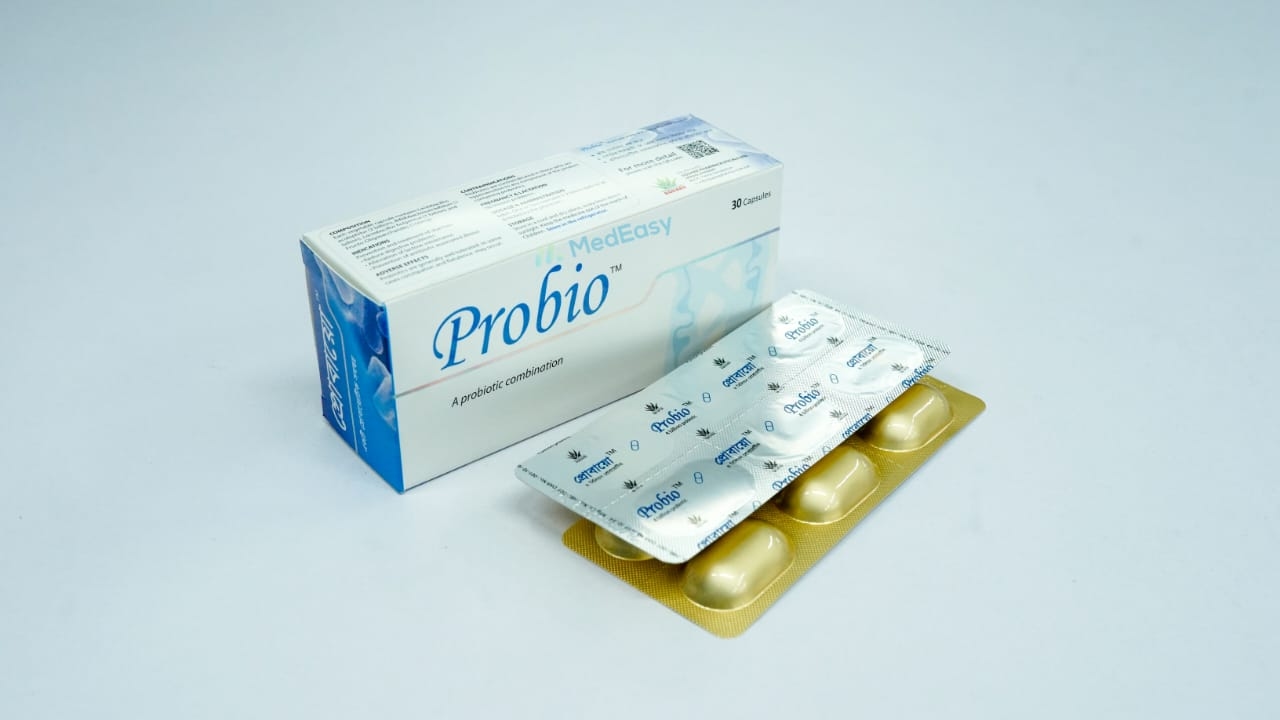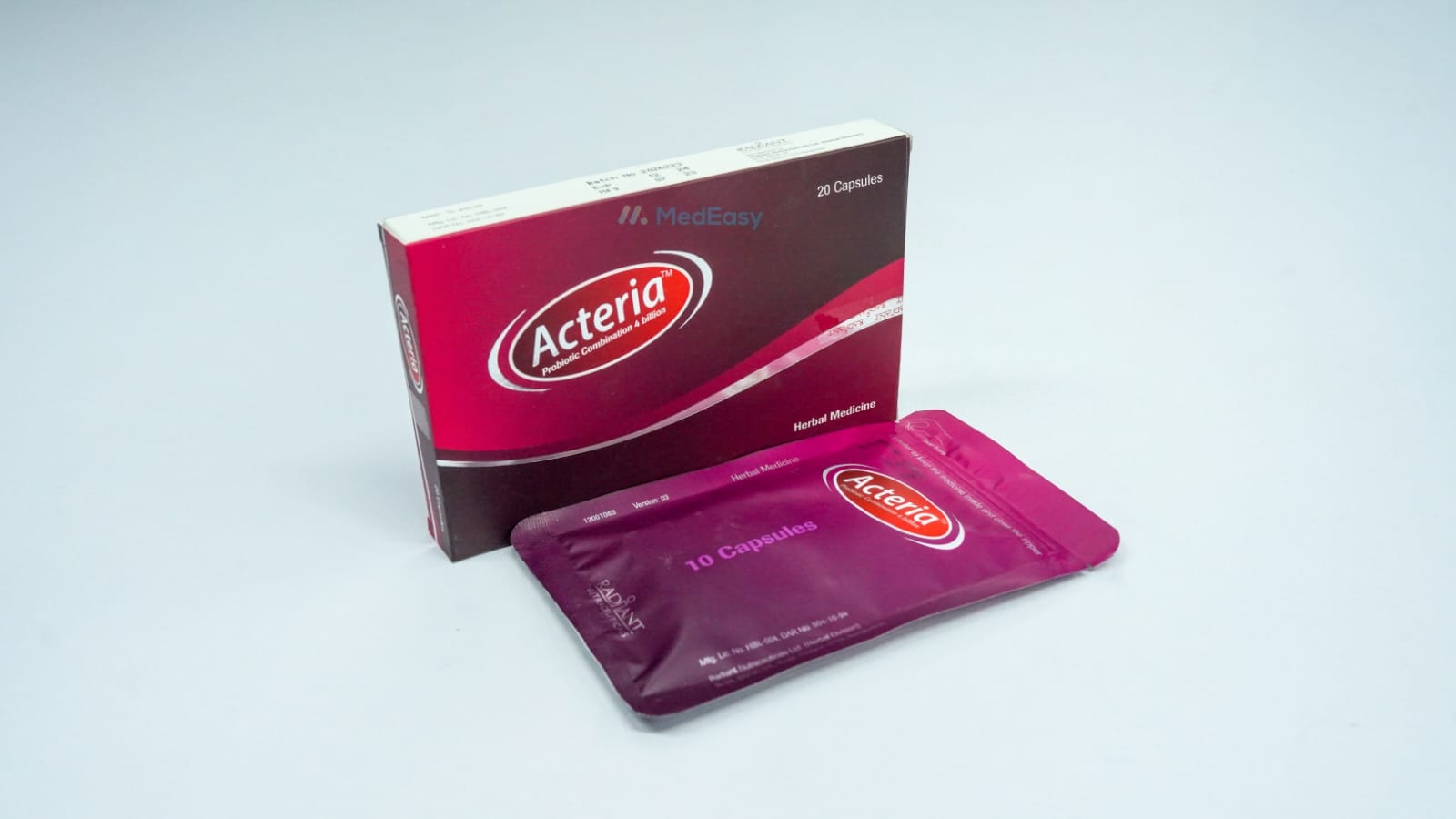
Acteria4 billion
Radiant Pharmaceuticals Ltd.

Rebio is a multi-strain probiotic supplement containing live beneficial microorganisms (such as Lactobacillus and Bifidobacterium species, and in some formulations Saccharomyces boulardii). It is used to support and restore healthy gut flora. The strength of evidence varies by indication and by the specific strains included:
Rebio is a supportive/adjunct therapy and should not be used as a substitute for prescribed treatment of underlying gastrointestinal disease or infection.
Probiotic Combination typically contains a blend of live freeze-dried probiotic strains, which may include one or more of the following depending on the specific product: Lactobacillus acidophilus, Lactobacillus rhamnosus, Lactobacillus casei, Bifidobacterium bifidum, Bifidobacterium longum, Bifidobacterium breve, Streptococcus thermophilus, and/or Saccharomyces boulardii (a probiotic yeast). Formulations are typically expressed in colony-forming units (CFU) per capsule/sachet, commonly in the range of 1–10 billion CFU or higher. Exact strain composition and CFU count vary by manufacturer; always check the product label.
Rebio is a dietary/nutritional supplement containing a combination of live beneficial bacteria and/or yeast strains ("probiotics"). These organisms are naturally found in the human gut and in fermented foods, and are believed to help maintain a healthy balance of intestinal microbiota.
Rebio is available in various dosage forms, including capsules, sachets (oral powder for reconstitution in water or food), and chewable or oral suspension formulations, to suit different age groups and clinical needs. It is widely used both as a standalone digestive-health supplement and as an adjunct alongside antibiotic therapy or during acute diarrheal illness.
Probiotic / Gut flora modifier — Rebio belongs to the class of live microbial dietary supplements used for gastrointestinal health support.
Probiotic Combination works through several complementary mechanisms typical of probiotic organisms:
The clinical effect of Probiotic Combination is strain- and dose-dependent; different strains within a combination may contribute different mechanisms, which is the rationale for using multi-strain formulations.
| Indication | Typical Adult Dose | Typical Pediatric Dose |
|---|---|---|
| General digestive health / gut flora support | 1 capsule or 1 sachet once or twice daily, or as directed on the product label | As per product label; pediatric-specific formulations/strengths should be used where available |
| Antibiotic-associated diarrhea prevention | 1 capsule/sachet once or twice daily, started with the antibiotic course and continued for several days after completion | As directed by physician; weight/age-appropriate formulation |
| Adjunct in acute infectious diarrhea | 1 sachet/capsule 1–2 times daily alongside oral rehydration therapy until symptoms resolve | Age-appropriate dose as directed by physician; not a substitute for oral rehydration |
Rebio should preferably be taken with or shortly after meals, or as specified on the product label, to improve organism survival through the stomach. When taken together with an antibiotic, doses of Rebio should be separated from the antibiotic dose by at least 2–3 hours to reduce the antibiotic's effect on the probiotic organisms. Duration of use varies by indication; for general supplementation, Rebio may be used for as long as advised by a physician or as indicated on the label.
Antibiotics/antimicrobials: Concurrent antibiotic use can reduce the viability and effectiveness of the live organisms in Rebio, since antibiotics do not distinguish between pathogenic and beneficial bacteria. When Rebio is used for prevention of antibiotic-associated diarrhea, dosing should be separated from the antibiotic by at least 2–3 hours to minimize this effect.
Antifungal agents: If the product contains Saccharomyces boulardii (a yeast-based probiotic), concomitant antifungal therapy may reduce its efficacy; consult a physician if antifungal treatment is required.
Immunosuppressant medicines: In patients on immunosuppressive therapy, there is a theoretical increased risk of systemic infection from live probiotic organisms (see Contraindications and Precautions); use of Rebio in such patients should be under medical supervision.
Probiotic Combination is contraindicated in:
Rebio is generally very well tolerated. Reported side effects include:
Rebio contains organisms with a long history of use in fermented foods and dietary supplements, and is generally regarded as low-risk during pregnancy and breastfeeding at typical supplement doses. However, robust controlled clinical trial data in pregnant and lactating women remain limited. As a general precaution, Rebio should be used during pregnancy and lactation only if clearly needed, and a physician should be consulted before use, particularly for higher-strength or specialized formulations.
Rebio has a wide margin of safety, and significant toxicity from overdose is unlikely given its nature as a dietary supplement of live organisms. Taking substantially more than the recommended dose may increase the likelihood of gastrointestinal side effects such as bloating, gas, or abdominal discomfort. If a large overdose is taken, or if the patient develops fever, chills, or signs of systemic illness, seek immediate medical attention or contact a poison control center/emergency services rather than attempting home treatment.
Storage requirements vary by formulation: many probiotic products containing Rebio require refrigeration (2–8°C) to preserve organism viability, while some shelf-stable formulations can be stored at room temperature (below 30°C), away from light and moisture. Always check and follow the specific storage instructions on the product label. Keep out of reach of children.
Rebio is generally well tolerated in elderly patients and may be used for the same indications as in younger adults; no specific dose adjustment is typically required, though caution is warranted if significant immune compromise or serious comorbidity is present (see Contraindications).
No specific dose adjustment of Rebio is established for renal or hepatic impairment, as it is not systemically absorbed or metabolized in the same way as conventional drugs.
Rebio should generally be avoided in severely immunocompromised patients due to a rare but documented risk of systemic infection (see Contraindications and Precautions).
Duration of Rebio use depends on the indication: for prevention of antibiotic-associated diarrhea, it is typically continued for the duration of the antibiotic course and for several days (commonly around 1–2 weeks) afterward. For acute infectious diarrhea, it is generally used until symptoms resolve, typically a few days to about a week. For general digestive health maintenance, Rebio may be used on a longer-term or intermittent basis as advised by a physician or as directed on the product label.
Probiotic supplements; live biotherapeutic/microbial gut flora modifiers
Probiotic Combination acts by delivering live beneficial microorganisms to the gastrointestinal tract, where they help restore and maintain a healthy balance of intestinal microbiota through competitive exclusion of pathogens, production of antimicrobial metabolites (such as lactic acid and bacteriocins), reinforcement of the gut mucosal barrier, and modulation of local immune activity. See Pharmacology for further detail.
Rebio is commonly used in children as an adjunct for prevention of antibiotic-associated diarrhea and for acute infectious diarrhea, generally under medical guidance, using age-appropriate strengths and formulations (e.g., sachets dissolved in water, milk, or soft food). Formal, well-established age-based or weight-based dosing recommendations are not standardized across all products, as Rebio is regulated as a dietary supplement rather than under uniform pediatric drug labeling in most jurisdictions. For infants and very young children, and for specific strain/strength selection, a pediatrician should be consulted before use. Safety and efficacy of specific Rebio formulations have not been formally established for all pediatric age groups in the same manner as prescription drugs.
Q: What is Rebio 4 billion Capsule used for?
A: Rebio 4 billion Capsule is a multi-strain probiotic supplement used to support healthy gut flora, help prevent or reduce antibiotic-associated diarrhea, act as an adjunct in acute infectious diarrhea (especially in children, alongside oral rehydration therapy), and support general digestive health. It is a supportive/adjunct therapy, not a replacement for prescribed treatment of underlying infections.
Q: Can I take Rebio 4 billion Capsule together with antibiotics?
A: Yes, Rebio 4 billion Capsule is commonly used alongside antibiotics to help reduce the risk of antibiotic-associated diarrhea. However, antibiotics can reduce the viability of the live organisms in Rebio 4 billion Capsule, so it is best to separate the two doses by at least 2–3 hours.
Q: Who should avoid taking Rebio 4 billion Capsule?
A: Rebio 4 billion Capsule should be avoided by people who are severely immunocompromised (for example, due to advanced HIV/AIDS, bone marrow transplant, or high-dose chemotherapy/immunosuppressive therapy), critically ill patients, and those with a central venous catheter in place, because of a rare but documented risk of the live organisms causing a bloodstream infection (bacteremia or fungemia) in these groups. Anyone with a known allergy to a component of Rebio 4 billion Capsule should also avoid it.
Q: Is Rebio 4 billion Capsule safe during pregnancy and breastfeeding?
A: Rebio 4 billion Capsule is generally considered low-risk during pregnancy and breastfeeding given the long history of use of probiotic organisms in foods and supplements, but robust clinical trial data are limited. It should be used during pregnancy and lactation only if clearly needed, and a physician should be consulted before starting it.
Q: What are the common side effects of Rebio 4 billion Capsule?
A: Rebio 4 billion Capsule is generally well tolerated. The most common side effects are mild and temporary gastrointestinal symptoms such as bloating, gas, and mild abdominal discomfort, particularly during the first few days of use. Serious side effects such as systemic infection are rare and occur almost exclusively in severely immunocompromised or critically ill patients.
Q: What should I do if I miss a dose or take too much Rebio 4 billion Capsule?
A: If you miss a dose of Rebio 4 billion Capsule, simply resume your normal dosing schedule; do not double the next dose. Rebio 4 billion Capsule has a wide margin of safety, so taking more than the recommended amount is unlikely to cause serious harm, though it may increase mild gastrointestinal side effects like bloating or gas. If you experience fever, chills, or feel seriously unwell after taking Rebio 4 billion Capsule, seek immediate medical attention or contact emergency services/poison control.
Disclaimer
The information provided is accurate to the best of our knowledge, but it does not replace professional medical advice. We cannot guarantee its completeness or accuracy, and the absence of specific information about a drug should not be taken as an endorsement. We are not responsible for any consequences arising from this information, so please consult a healthcare professional for any concerns or questions.