
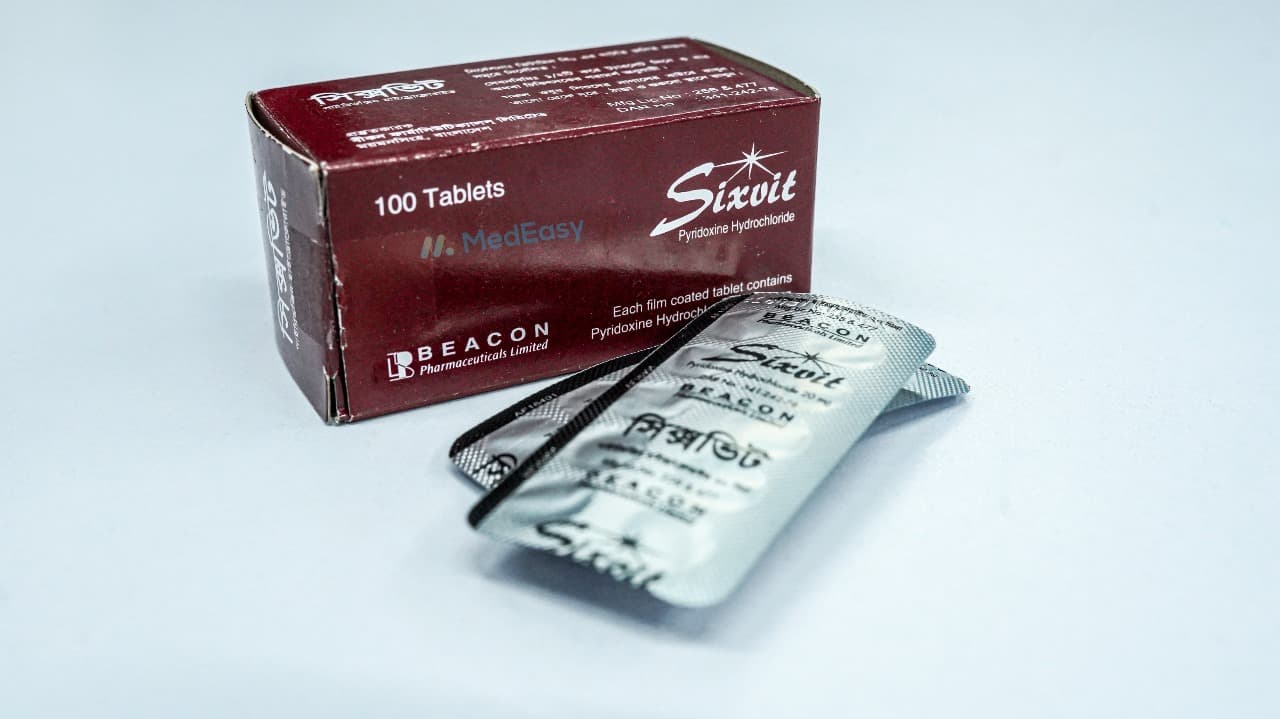

Medicine overview
Indications of Sixvit
Sixvit is a form of vitamin B6 used for the following indications:
Established/FDA-approved uses
- Prevention and treatment of vitamin B6 (pyridoxine) deficiency, including deficiency caused by poor diet, malabsorption, alcohol use disorder, or certain medications.
- Prevention and treatment of isoniazid-induced peripheral neuropathy in patients receiving isoniazid therapy for tuberculosis.
- Treatment of pyridoxine-dependent seizures, a rare inherited metabolic disorder that presents in infancy.
Guideline-supported / adjunct uses
- Sideroblastic anemia that is pyridoxine-responsive, usually as an adjunct with other therapy.
- Nausea and vomiting of pregnancy, often used alone or in combination with doxylamine succinate under medical supervision.
Commonly used off-label
- Symptomatic relief of premenstrual syndrome (PMS), though evidence is limited and it should be used under medical guidance.
Sixvit is not a treatment for conditions unrelated to vitamin B6 deficiency or the specific indications listed above.
Composition
Each tablet/capsule of Pyridoxine Hydrochloride contains Pyridoxine Hydrochloride USP/BP equivalent to a specified amount of pyridoxine (commonly available as 20 mg, 25 mg, 50 mg, or 100 mg tablets). Injectable formulations of Pyridoxine Hydrochloride are also available for parenteral use where oral administration is not feasible. Strength and formulation vary by manufacturer; always check the product label for the exact composition.
Description
Sixvit is the hydrochloride salt form of pyridoxine, one of the six compounds collectively known as vitamin B6 (the others being pyridoxal, pyridoxal 5'-phosphate, pyridoxamine, and their phosphorylated forms). Vitamin B6 is a water-soluble vitamin that is not synthesized by the body in adequate amounts and must be obtained through diet or supplementation.
In the body, Sixvit is converted to its biologically active coenzyme form, pyridoxal 5'-phosphate (PLP), which participates in over 100 enzymatic reactions, primarily involving amino acid, glucose, and lipid metabolism, as well as neurotransmitter synthesis. Sixvit is available as oral tablets and, in specific clinical settings, as an injectable solution.
Therapeutic Class
Sixvit belongs to the therapeutic class of Vitamin B-complex preparations, specifically classified as a water-soluble vitamin (Vitamin B6) and antioxidant/nutritional supplement. It is also categorized as an antidote/prophylactic agent when used specifically against isoniazid-induced neuropathy.
Pharmacology
Pyridoxine Hydrochloride is absorbed in the jejunum and converted primarily in the liver, through phosphorylation by pyridoxal kinase, to its active coenzyme forms pyridoxal 5'-phosphate (PLP) and pyridoxamine 5'-phosphate (PMP).
PLP, the active metabolite of Pyridoxine Hydrochloride, acts as an essential coenzyme in over 100 enzymatic reactions involved in:
- Amino acid metabolism, including transamination and decarboxylation reactions.
- Synthesis of neurotransmitters such as serotonin, dopamine, norepinephrine, and gamma-aminobutyric acid (GABA).
- Heme synthesis (as a cofactor for delta-aminolevulinic acid synthase).
- Glycogenolysis and gluconeogenesis.
- Niacin (vitamin B3) synthesis from tryptophan.
In isoniazid-induced neuropathy, isoniazid forms a complex with pyridoxal and pyridoxal phosphate, increasing their renal excretion and inhibiting pyridoxal kinase, leading to a functional vitamin B6 deficiency that supplemental Pyridoxine Hydrochloride corrects. Excess Pyridoxine Hydrochloride and its metabolites are excreted in the urine.
Dosage & Administration of Sixvit
Dosage of Sixvit depends on the indication being treated. See the Dosage section for indication-specific dosing and the Administration section for how to take it.
Administration of Sixvit
Sixvit tablets may be taken orally with or without food; taking it with food may reduce mild stomach upset. Tablets should be swallowed whole with water unless otherwise directed. Injectable Sixvit is administered by a healthcare professional via intramuscular, intravenous, or subcutaneous routes, typically in hospital settings when oral administration is not possible. Do not exceed the dose or duration recommended by your physician.
Interaction of Sixvit
Sixvit has the following clinically significant interactions:
- Levodopa (without carbidopa): Sixvit can enhance the peripheral decarboxylation of levodopa, reducing its effectiveness for Parkinson's disease when levodopa is used alone. This interaction is largely avoided in modern levodopa/carbidopa combination products, since carbidopa blocks this peripheral breakdown.
- Phenytoin and phenobarbital: High doses of Sixvit may lower serum concentrations of these anticonvulsants, potentially reducing seizure control; monitoring is advised if high-dose pyridoxine is co-administered.
- Isoniazid, cycloserine, penicillamine, hydralazine: These drugs increase the body's requirement for Sixvit by interfering with its metabolism or increasing its excretion; supplementation is often specifically indicated in these situations rather than being a true interaction to avoid.
Inform your physician of all medications, including over-the-counter drugs and supplements, before starting Sixvit.
Contraindications
Pyridoxine Hydrochloride is contraindicated in patients with known hypersensitivity to pyridoxine hydrochloride or any component of the formulation.
Side Effects of Sixvit
Sixvit is generally well tolerated at standard supplemental and therapeutic doses. Reported side effects include:
- Mild nausea or stomach upset
- Headache
- Drowsiness or tingling sensations (paresthesia), usually mild and transient at recommended doses
With chronic high-dose use (see Precautions and Warnings for details), sensory peripheral neuropathy, unsteady gait, and numbness of the hands and feet have been reported, which may be irreversible in severe cases. Rare hypersensitivity reactions have also been reported.
Pregnancy & Lactation
Pregnancy: Vitamin B6 requirements increase during pregnancy, and Sixvit is commonly used, including for nausea and vomiting of pregnancy, under medical supervision. Nonetheless, Sixvit should be used during pregnancy only if clearly needed and the potential benefit justifies any potential risk; consult a physician before use, particularly at doses above standard supplementation.
Lactation: Pyridoxine is excreted into breast milk, and requirements are also increased during lactation. Standard supplemental doses are generally considered acceptable, but very high doses may suppress lactation in some cases. Use Sixvit during breastfeeding only as advised by a physician.
Precautions & Warnings
Use Sixvit with the following precautions:
- Peripheral neuropathy risk with chronic high-dose use: Prolonged use of Sixvit at doses well above standard supplementation (doses exceeding 200 mg/day for extended periods have been associated with this risk) can cause sensory peripheral neuropathy, which may be irreversible in severe cases. Do not exceed the dose or duration recommended by your physician, especially for long-term use.
- Levodopa monotherapy: Use with caution in patients taking levodopa without carbidopa (see Interactions).
- Renal impairment: Use with caution, as reduced clearance may increase risk of accumulation with higher doses; follow physician guidance.
- Consult a physician before use in pregnancy or lactation, especially for doses above standard dietary supplementation.
Overdose Effects of Sixvit
Overdose of Sixvit is uncommon with standard supplemental use but can occur with chronic high-dose intake. Symptoms may include sensory peripheral neuropathy, numbness or tingling of the extremities, unsteady gait (ataxia), and photosensitivity skin reactions with very high doses. If overdose of Sixvit is suspected, seek immediate medical attention or contact a poison control center or emergency services. Do not attempt home treatment; management is supportive and directed by a healthcare professional.
Storage Conditions
Store at room temperature (below 30°C), away from light and moisture. Keep out of reach of children.
Use In Special Populations
Elderly: No specific dose adjustment is generally required for Sixvit in elderly patients at standard supplemental doses, though age-related renal impairment should be considered when higher doses are used.
Renal impairment: Use with caution at higher doses; standard supplemental doses are generally acceptable, but physician guidance is recommended (see Precautions and Warnings).
Hepatic impairment: No well-established dose adjustment is required, as pyridoxine metabolism is not significantly dependent on hepatic function at standard doses; use as directed by a physician.
Pediatric and pregnant/lactating populations: See Pediatric Uses and Pregnancy and Lactation sections respectively.
Duration Of Treatment
Duration of Sixvit therapy depends on the indication: dietary supplementation and isoniazid-neuropathy prophylaxis are typically continued for the duration of the underlying dietary deficiency or isoniazid therapy, respectively, while treatment of pyridoxine-dependent seizures may require lifelong supplementation under specialist supervision. Do not continue high-dose therapy longer than directed by a physician, given the risk of dose- and duration-dependent peripheral neuropathy.
Drug Classes
Vitamin B6 preparation; water-soluble vitamin; nutritional supplement.
Mode Of Action
Pyridoxine Hydrochloride is converted in the liver to pyridoxal 5'-phosphate (PLP), the biologically active coenzyme form of vitamin B6. PLP serves as an essential cofactor for enzymes involved in amino acid metabolism (transamination, decarboxylation), neurotransmitter synthesis (serotonin, dopamine, GABA, norepinephrine), heme synthesis, and glycogen metabolism. By restoring adequate PLP levels, Pyridoxine Hydrochloride corrects the metabolic disturbances caused by vitamin B6 deficiency or increased vitamin B6 utilization/loss (as with isoniazid therapy).
Pregnancy
A (at RDA doses; category C at doses above the RDA, per FDA legacy pregnancy categories)
Pediatric Uses
Use of Sixvit in children should be guided by a physician. It is used for the treatment and prevention of vitamin B6 deficiency and, in specialist settings, for pyridoxine-dependent seizures in infants, where high, specialist-directed doses are required and safety/efficacy of the specific dosing regimen is established only under such specialist supervision. For prevention of isoniazid-induced neuropathy in children receiving isoniazid, weight-based dosing is used as directed by a physician. Safety and efficacy of routine high-dose Sixvit supplementation for indications outside these established uses have not been established in children, and dosing should not exceed what is recommended by a pediatrician.
Frequently Asked Questions
Q: What is Sixvit 20 mg Tablet used for?
A: Sixvit 20 mg Tablet is a form of vitamin B6 used to prevent and treat vitamin B6 deficiency, prevent and treat isoniazid-induced peripheral neuropathy in patients on tuberculosis treatment, and manage pyridoxine-dependent seizures in infants. It is also sometimes used for nausea and vomiting of pregnancy and premenstrual syndrome under medical guidance.
Q: Can I take Sixvit 20 mg Tablet during pregnancy?
A: Sixvit 20 mg Tablet is commonly used during pregnancy, including for nausea and vomiting, but it should be used only if clearly needed and the potential benefit justifies any potential risk. Always consult your physician before use, especially at doses above standard dietary supplementation.
Q: Is it safe to take Sixvit 20 mg Tablet long-term at high doses?
A: No. Prolonged use of Sixvit 20 mg Tablet at doses well above standard supplementation (generally doses exceeding 200 mg/day for extended periods) can cause sensory peripheral neuropathy, which may be irreversible in severe cases. Do not exceed the dose or duration recommended by your physician.
Q: What are the common side effects of Sixvit 20 mg Tablet?
A: At standard doses, Sixvit 20 mg Tablet is generally well tolerated, with mild nausea, headache, or drowsiness reported occasionally. Chronic high-dose use can cause peripheral neuropathy, numbness, or unsteady gait.
Q: Does Sixvit 20 mg Tablet interact with other medications?
A: Yes. Sixvit 20 mg Tablet can reduce the effectiveness of levodopa when levodopa is used alone (without carbidopa), and high doses may lower blood levels of phenytoin or phenobarbital. Drugs like isoniazid, cycloserine, and penicillamine increase the body's need for Sixvit 20 mg Tablet. Tell your physician about all medications you are taking.
Q: What should I do if I take too much Sixvit 20 mg Tablet?
A: If you suspect an overdose of Sixvit 20 mg Tablet, seek immediate medical attention or contact a poison control center or emergency services right away. Do not attempt to treat an overdose at home.
Disclaimer
The information provided is accurate to the best of our knowledge, but it does not replace professional medical advice. We cannot guarantee its completeness or accuracy, and the absence of specific information about a drug should not be taken as an endorsement. We are not responsible for any consequences arising from this information, so please consult a healthcare professional for any concerns or questions.
