10% Off
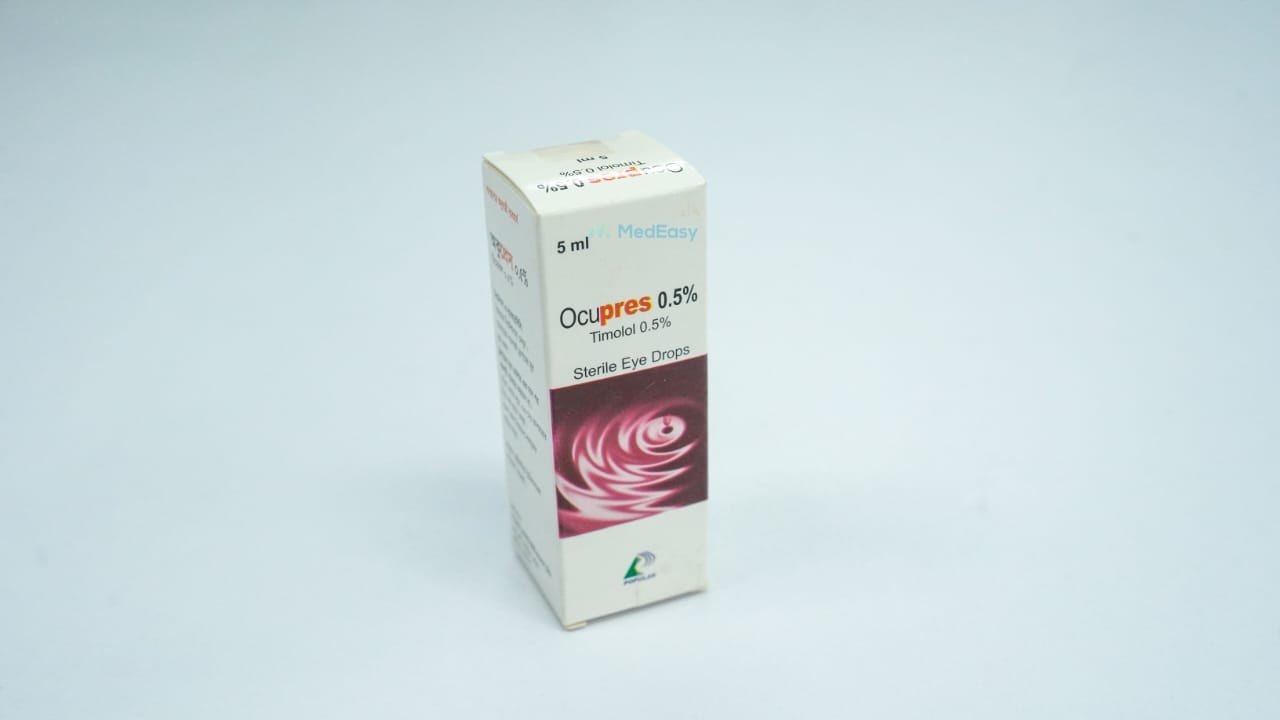
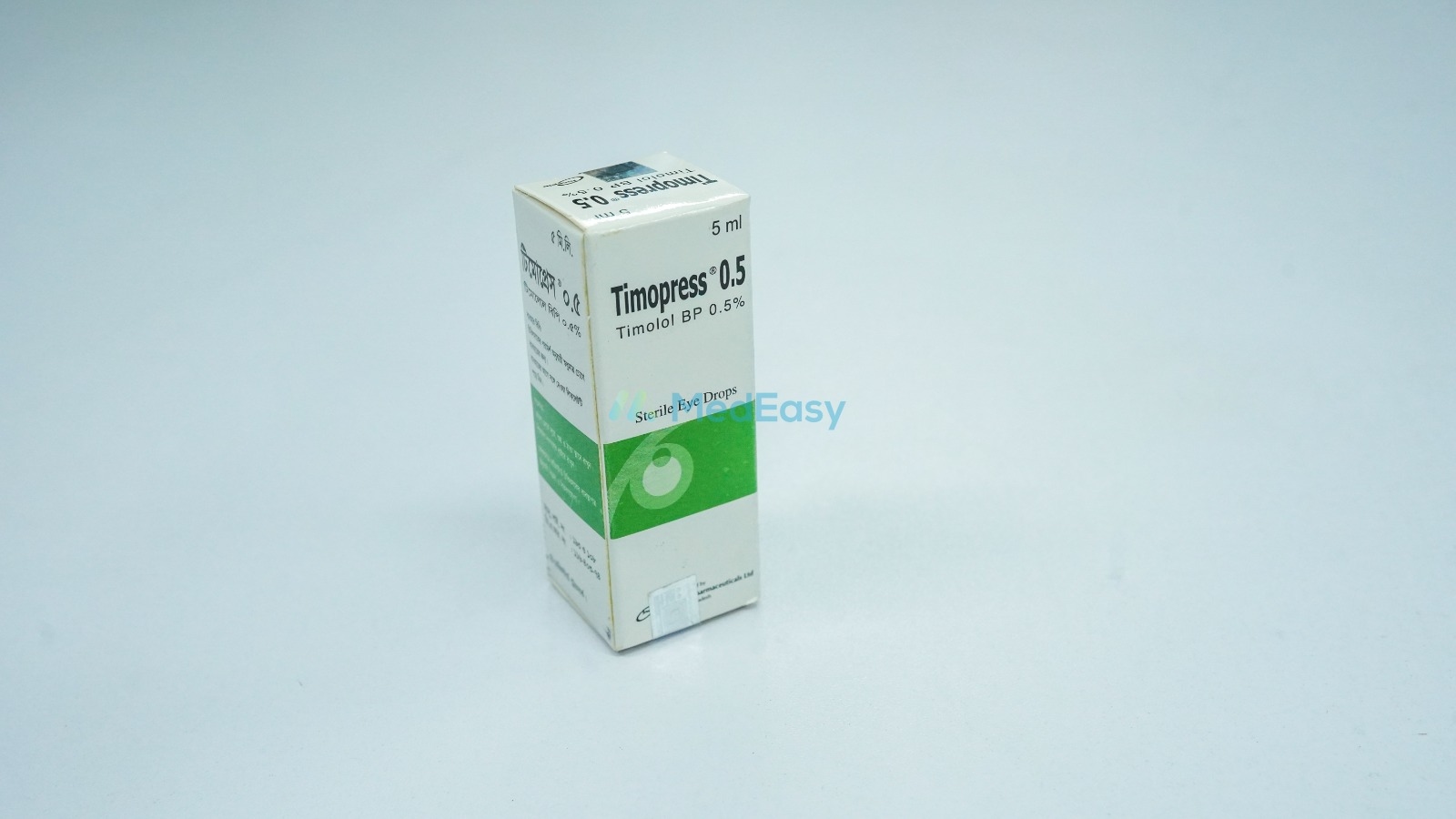
Timopress0.5%
Incepta Pharmaceuticals Ltd.
৳63.00
Add to cart


Timolol is a non-selective beta-adrenergic blocking agent used both topically (as eye drops) and, in some markets, orally (as tablets), depending on the indication.
In Bangladesh, Timolol is primarily marketed and used as an ophthalmic (eye drop) preparation for glaucoma and ocular hypertension.
Each mL of Timolol Maleate ophthalmic solution typically contains Timolol Maleate equivalent to 0.25% or 0.5% timolol base, formulated as eye drops or a gel-forming ophthalmic solution. Where marketed orally, Timolol Maleate tablets are typically available in strengths equivalent to 5 mg, 10 mg, or 20 mg of timolol base.
Timolol is a non-selective beta-adrenergic (beta-blocker) agent that blocks both beta-1 and beta-2 adrenergic receptors. It is available as an ophthalmic solution/gel-forming solution used to lower elevated intraocular pressure in glaucoma and ocular hypertension, and in some countries as oral tablets used for hypertension, angina, migraine prophylaxis, and secondary prevention after myocardial infarction.
Timolol does not cure glaucoma but helps control intraocular pressure to reduce the risk of optic nerve damage and vision loss; regular use and follow-up eye examinations are important.
Timolol belongs to the non-selective beta-adrenergic blocking agents (beta-blockers). Depending on route, it is classified as an ocular hypotensive/anti-glaucoma agent (ophthalmic use) or as an antihypertensive, antianginal, and migraine-prophylactic agent (oral use).
Timolol Maleate non-selectively blocks beta-1 (cardiac) and beta-2 (bronchial, vascular) adrenergic receptors, without significant intrinsic sympathomimetic, direct myocardial depressant, or local anesthetic (membrane-stabilizing) activity.
Applied topically, Timolol Maleate reduces elevated intraocular pressure by decreasing aqueous humor production, with little or no effect on pupil size or accommodation. The onset of action is within about 20 minutes, with maximal effect typically seen within 1-2 hours and a duration of action lasting up to 24 hours, allowing once- or twice-daily dosing.
Systemically, Timolol Maleate reduces heart rate, myocardial contractility, cardiac output, and renin release, lowering blood pressure and myocardial oxygen demand. Even topical ophthalmic Timolol Maleate is absorbed systemically via the nasolacrimal duct and can produce measurable systemic beta-blockade.
After ophthalmic administration, peak plasma concentrations occur within 1-2 hours. After oral administration, Timolol Maleate is well absorbed, undergoes some hepatic first-pass metabolism, and is eliminated mainly via the kidneys, with an elimination half-life of approximately 4 hours.
| Formulation | Typical adult dose |
|---|---|
| Timolol ophthalmic solution 0.25% or 0.5% | 1 drop in the affected eye(s) twice daily; if controlled, may reduce to once daily |
| Timolol gel-forming ophthalmic solution 0.25% or 0.5% | 1 drop in the affected eye(s) once daily in the morning |
If switching from another ophthalmic beta-blocker, discontinue that medicine and begin Timolol the following day. Intraocular pressure should be re-checked after about 4 weeks of use, as the ocular hypotensive effect may stabilize after this period.
| Indication | Typical adult dose |
|---|---|
| Hypertension | Initially 10 mg twice daily, increased gradually at intervals of at least 7 days to a usual maintenance dose of 20-40 mg daily in divided doses (maximum per label up to 60 mg/day) |
| Post-myocardial infarction | 10 mg twice daily in clinically stable patients, usually starting within 1-4 weeks after infarction |
| Migraine prophylaxis | 10 mg twice daily initially; usual maintenance range 10-30 mg daily |
Oral Timolol must not be stopped abruptly; the dose should be tapered gradually over 1-2 weeks under medical supervision (see Precautions and Warnings).
Administration technique and timing are detailed under Administration below.
Timolol can interact with several other medicines, mainly related to its beta-blocking activity. Clinically significant interactions include:
Always inform the physician or pharmacist about all other medicines, including other eye drops, being used with Timolol.
Timolol Maleate is contraindicated in patients with:
These contraindications apply to both ophthalmic and oral forms of Timolol Maleate, because clinically significant systemic beta-blockade can occur even after topical (eye drop) administration due to systemic absorption.
Patients should seek prompt medical attention for signs of a very slow heart rate, fainting, severe shortness of breath, or wheeze while using Timolol.
Pregnancy: There are no adequate and well-controlled studies of Timolol in pregnant women. Timolol should be used during pregnancy only if the potential benefit to the mother clearly justifies the potential risk to the fetus, and only under close medical supervision. Neonates of mothers treated with beta-blockers near term should be monitored for signs of beta-blockade (e.g., bradycardia, low blood sugar) after delivery.
Lactation: Timolol has been detected in human breast milk after both oral and ophthalmic administration. A decision should be made, in consultation with a physician, whether to discontinue breastfeeding or discontinue Timolol, taking into account the importance of the medicine to the mother and the potential for beta-blocker effects in the nursing infant.
Overdose with Timolol (particularly oral, but also ophthalmic if a large amount is ingested, such as by a child) can cause symptoms of excessive beta-blockade, including a very slow heart rate (bradycardia), low blood pressure, severe fatigue, dizziness, fainting, difficulty breathing or bronchospasm, and in severe cases, heart failure, cardiac arrest, or seizures.
Suspected overdose with Timolol is a medical emergency. Seek immediate medical attention or contact a poison control center/emergency services right away. Do not attempt to manage a suspected overdose at home; treatment is supportive and must be provided under medical supervision in a hospital setting.
Store Timolol eye drops/tablets at controlled room temperature, generally 15°C to 25°C (59°F to 77°F), protected from light. Keep the bottle tightly closed when not in use, do not freeze, and discard any remaining ophthalmic solution after the manufacturer's recommended in-use period. Keep out of reach of children.
For glaucoma and ocular hypertension, Timolol is typically used long-term (often lifelong) to control intraocular pressure, with periodic eye examinations to reassess IOP, optic nerve status, and visual fields. For hypertension and post-MI cardioprotection, oral Timolol is generally continued long-term as directed by the physician. For migraine prophylaxis, a treatment trial of at least 2-3 months is usually needed to assess benefit, with periodic reassessment of continued need. Treatment duration should always be determined by the prescribing physician based on response and tolerability.
Non-selective beta-adrenergic blocking agent (beta-blocker); ocular hypotensive/anti-glaucoma agent (ophthalmic use); antihypertensive, antianginal, and migraine-prophylactic agent (oral use).
Timolol Maleate works by non-selectively blocking beta-1 and beta-2 adrenergic receptors. In the eye, this reduces the production of aqueous humor by the ciliary body, thereby lowering elevated intraocular pressure. Systemically (whether from oral dosing or absorption of eye drops), beta-blockade reduces heart rate, myocardial contractility, cardiac output, and renin release, which lowers blood pressure and myocardial oxygen demand.
C
Oral use: the safety and effectiveness of oral Timolol have not been established in children and adolescents; it is not approved for pediatric use by this route.
Ophthalmic use: the safety and effectiveness of ophthalmic Timolol have also not been formally established in pediatric patients, particularly infants, who may be more susceptible to systemic beta-blocker effects such as bradycardia, low blood sugar, and apnea. Some specialists use topical Timolol off-label under close supervision for selected conditions such as infantile hemangiomas; this should only be done under the direct guidance of a specialist physician, with monitoring for systemic side effects.
Q: What is Timolol 0.5% Ophthalmic Solution used for?
A: Timolol 0.5% Ophthalmic Solution is mainly used as eye drops to lower elevated pressure inside the eye in people with glaucoma or ocular hypertension. In some countries it is also available as tablets to treat high blood pressure, to reduce the risk of death after a heart attack, and to prevent migraine headaches.
Q: How should I use Timolol 0.5% Ophthalmic Solution eye drops correctly?
A: Wash your hands, avoid touching the dropper tip to your eye, tilt your head back, pull down the lower eyelid, and instill one drop as directed (usually once or twice daily). Gently press on the inner corner of the eye or close the eyelid for 1-2 minutes afterward to reduce absorption of Timolol 0.5% Ophthalmic Solution into the bloodstream, and wait several minutes before using any other eye drops.
Q: Can I suddenly stop taking Timolol 0.5% Ophthalmic Solution?
A: No. Oral Timolol 0.5% Ophthalmic Solution should never be stopped abruptly, as this can trigger worsening chest pain, heart attack, or dangerous heart rhythm problems in people with heart disease; the dose must be tapered gradually under a physician's supervision. Even Timolol 0.5% Ophthalmic Solution eye drops should only be stopped or changed on your doctor's advice.
Q: Who should not use Timolol 0.5% Ophthalmic Solution?
A: Timolol 0.5% Ophthalmic Solution should not be used by people who are allergic to it, or who have asthma or severe COPD, a very slow heart rate (sinus bradycardia), second- or third-degree heart block, uncontrolled heart failure, or cardiogenic shock, because Timolol 0.5% Ophthalmic Solution can worsen these conditions even when used as eye drops.
Q: Is Timolol 0.5% Ophthalmic Solution safe during pregnancy or breastfeeding?
A: Timolol 0.5% Ophthalmic Solution should be used in pregnancy only if the potential benefit clearly outweighs the potential risk to the baby, and only under a physician's guidance, since well-controlled studies in pregnant women are lacking. Timolol 0.5% Ophthalmic Solution passes into breast milk, so a physician should help decide whether to continue breastfeeding or continue the medicine while nursing.
Q: What should I do if too much Timolol 0.5% Ophthalmic Solution is taken accidentally?
A: Overdose of Timolol 0.5% Ophthalmic Solution can cause a very slow heartbeat, low blood pressure, severe dizziness, fainting, or breathing difficulty, and can be dangerous, especially in children who swallow eye drops. Seek immediate medical attention or contact emergency services or a poison control center right away rather than trying to manage it at home.
Disclaimer
The information provided is accurate to the best of our knowledge, but it does not replace professional medical advice. We cannot guarantee its completeness or accuracy, and the absence of specific information about a drug should not be taken as an endorsement. We are not responsible for any consequences arising from this information, so please consult a healthcare professional for any concerns or questions.