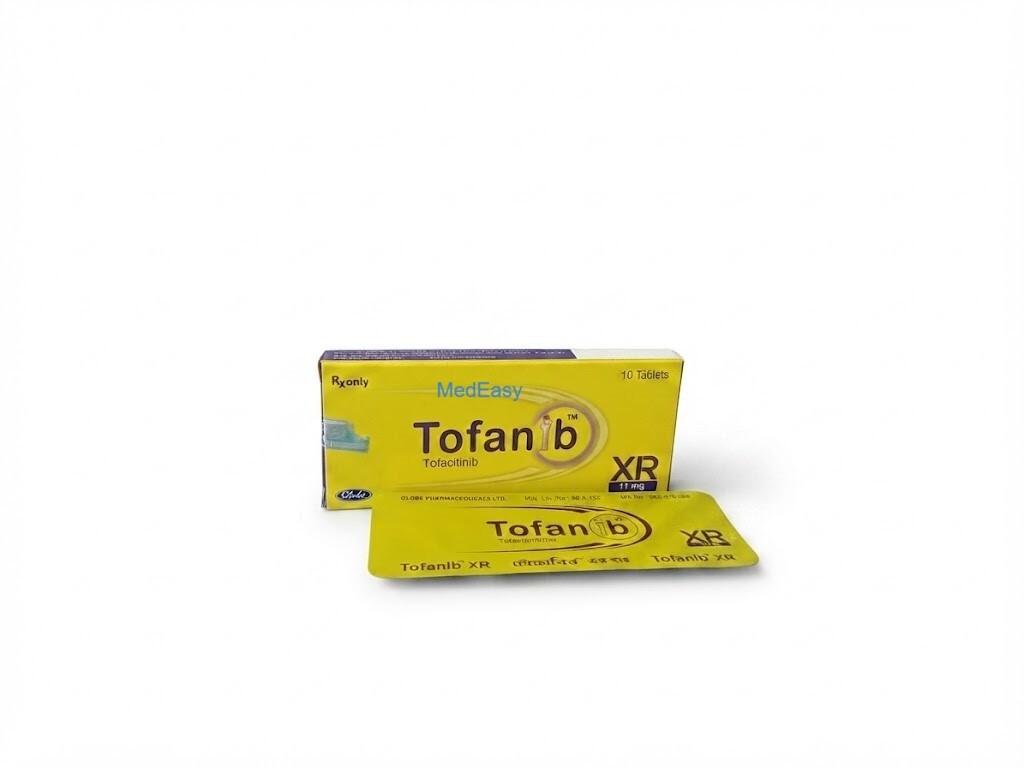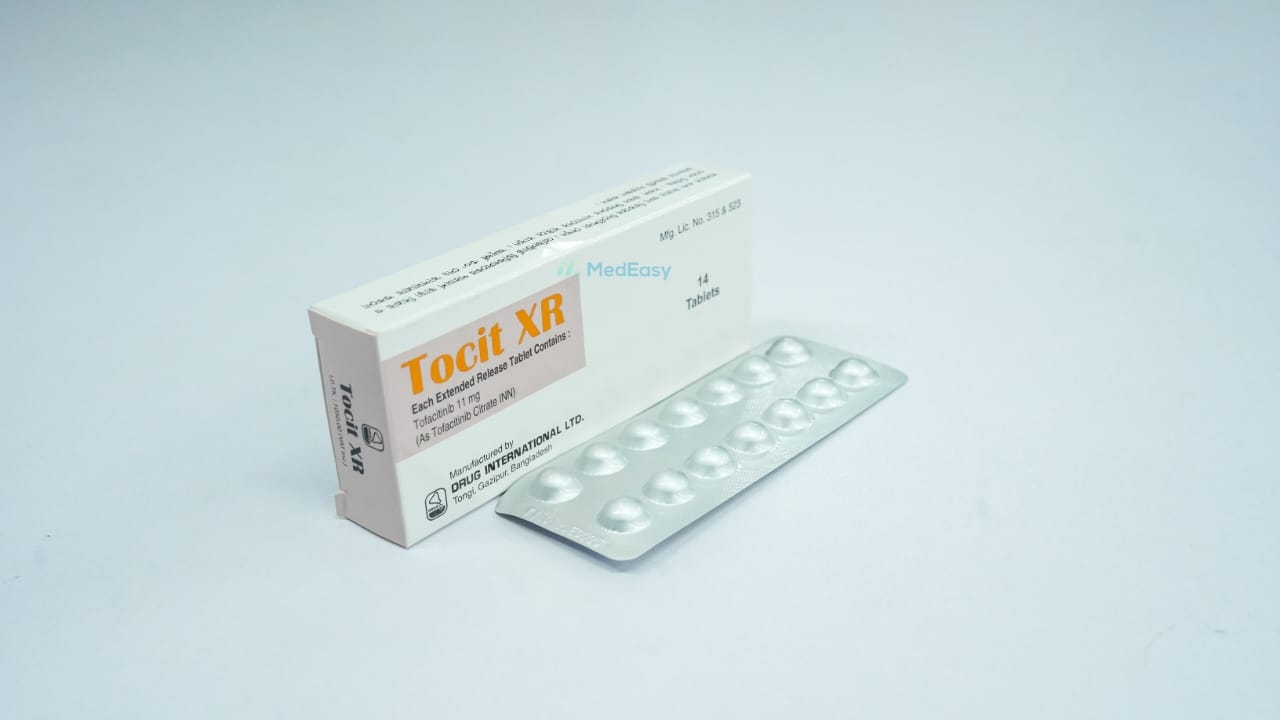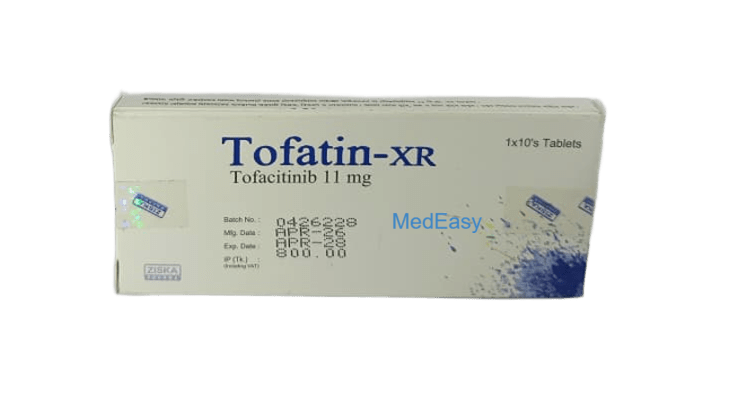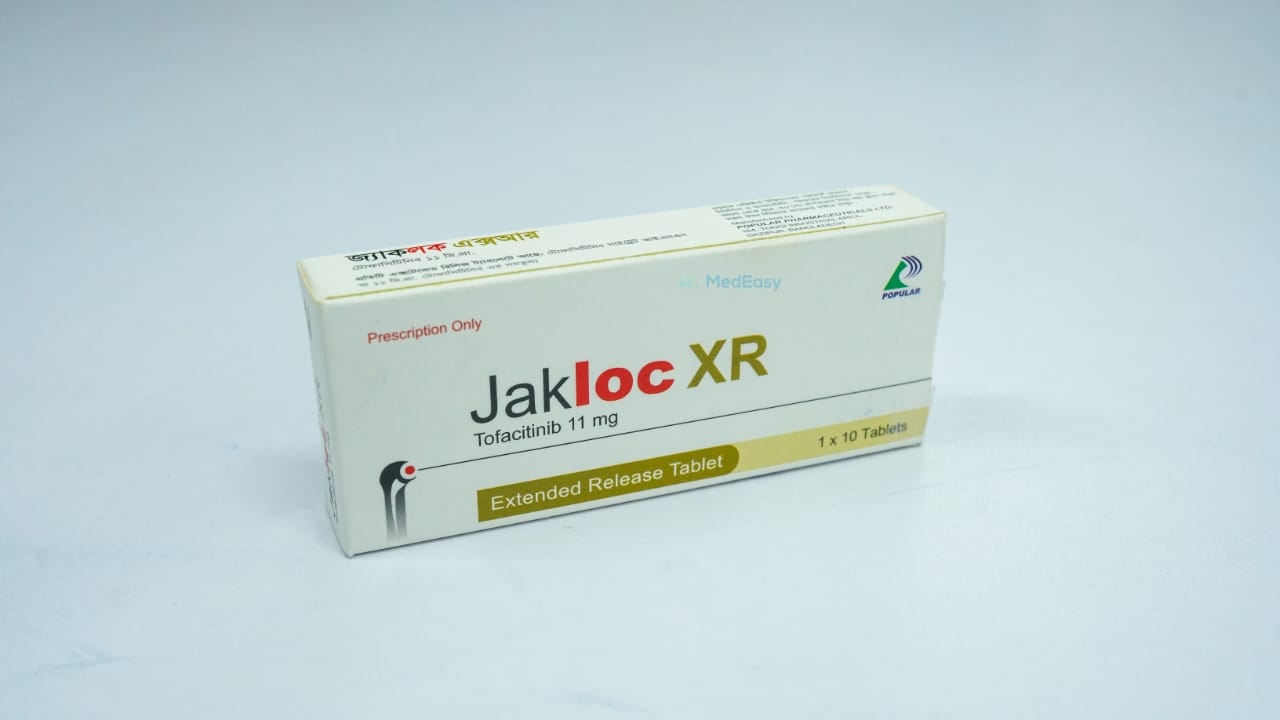
7% Off
Jakloc XR11 mg
Popular Pharmaceuticals Ltd.
৳558.00
Add to cart
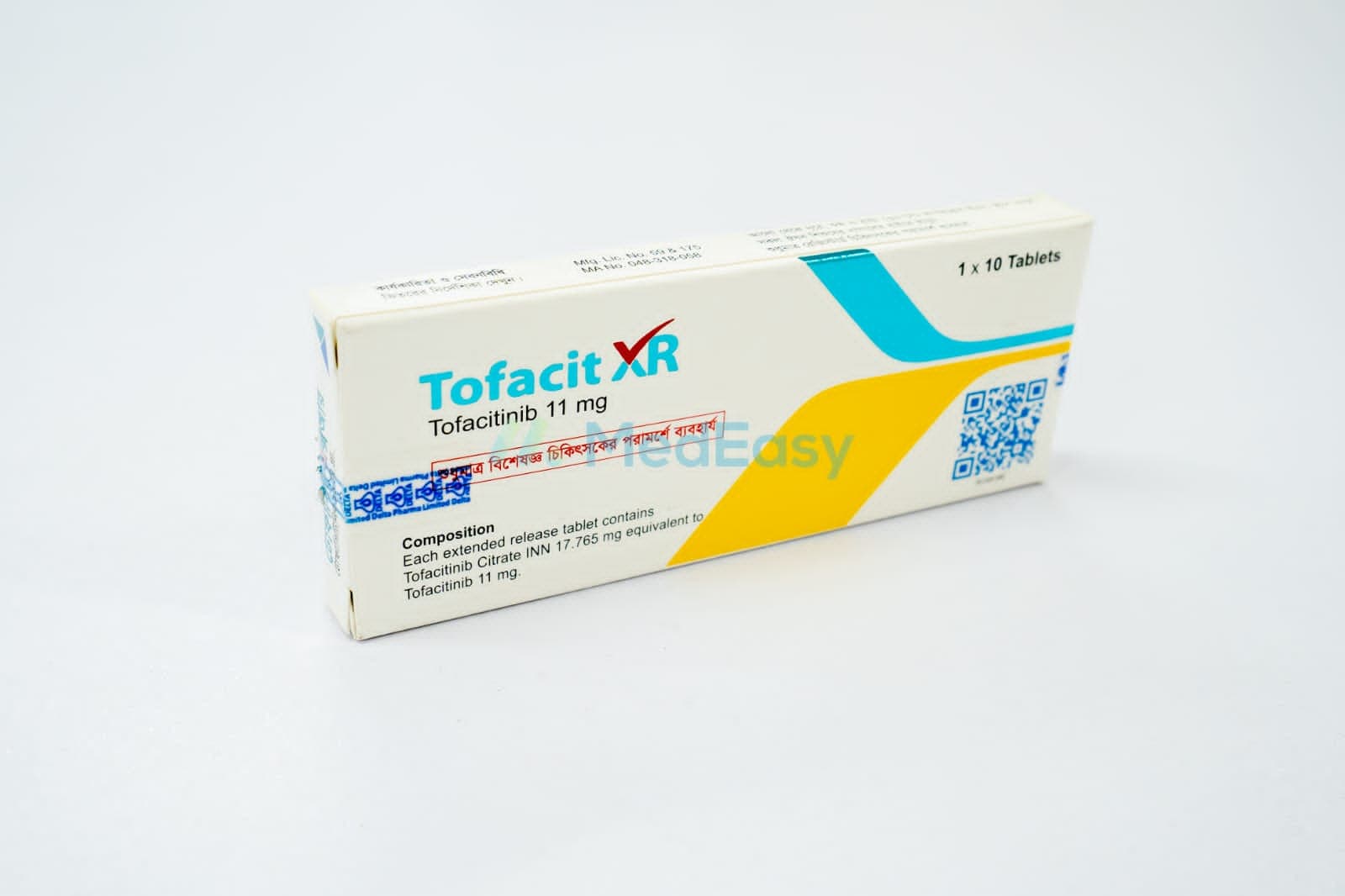

Tofacit XR is not recommended for use in combination with biologic DMARDs (e.g. TNF blockers, IL-1 or IL-6 antagonists) or with potent immunosuppressants such as azathioprine or cyclosporine, because of the possibility of increased immunosuppression and increased risk of infection.
Given the extensive boxed warnings associated with Tofacit XR (see Precautions and Warnings), it is generally reserved for patients who have not responded adequately to other therapies, and the lowest effective dose should be used for the shortest duration consistent with treatment goals.
Tofacit XR is an oral Janus kinase (JAK) inhibitor used to treat certain chronic inflammatory and autoimmune conditions, including rheumatoid arthritis, psoriatic arthritis, ulcerative colitis, and polyarticular juvenile idiopathic arthritis.
By blocking JAK enzymes involved in the signaling of multiple inflammatory cytokines, Tofacit XR reduces the immune-driven inflammation responsible for joint damage and gastrointestinal mucosal injury in these diseases. Because it works by suppressing part of the immune system, Tofacit XR carries important safety warnings, including increased risks of serious infection, malignancy, major cardiovascular events, and blood clots, and its use requires careful patient selection and monitoring.
Janus Kinase (JAK) Inhibitor / Immunosuppressant (targeted synthetic DMARD)
Tofacitinib is a small-molecule Janus kinase (JAK) inhibitor. It works intracellularly to modulate the signaling of cytokines and growth factors that are important for immune cell function, hematopoiesis, and inflammation.
At clinically relevant concentrations, Tofacitinib preferentially inhibits signaling by receptors that associate with JAK1 and/or JAK3, with functional selectivity over receptors that signal via pairs of JAK2. This inhibition blocks the phosphorylation and activation of signal transducers and activators of transcription (STATs), which in turn reduces the transcription of genes involved in the inflammatory cascade seen in rheumatoid arthritis, psoriatic arthritis, and ulcerative colitis.
Tofacitinib is well absorbed orally, metabolized primarily in the liver via CYP3A4 (with a minor contribution from CYP2C19), and eliminated through both hepatic metabolism and renal excretion, with an elimination half-life of approximately 3 hours for the immediate-release formulation.
| Formulation | Usual Dose |
|---|---|
| Immediate-release tablet | 5 mg twice daily |
| Extended-release (XR) tablet | 11 mg once daily |
Doses of 10 mg twice daily (or 22 mg XR once daily) are not recommended for RA or PsA.
| Phase | Usual Dose |
|---|---|
| Induction (up to 16 weeks) | 10 mg twice daily (or 22 mg XR once daily) |
| Maintenance | 5 mg twice daily (or 11 mg XR once daily); some patients who lose response may need 10 mg twice daily, used at the lowest effective dose for the shortest duration |
| Body Weight | Usual Dose |
|---|---|
| 10 kg to <20 kg | 3.2 mg twice daily |
| 20 kg to <40 kg | 4 mg twice daily |
| ≥40 kg | 5 mg twice daily |
Tofacit XR immediate-release tablets and oral solution may be taken with or without food. Extended-release tablets must be swallowed whole and must not be split, crushed, or chewed. Do not abruptly stop Tofacit XR without consulting a physician, as this may lead to loss of disease control.
Inform your physician and pharmacist of all prescription and over-the-counter medicines, herbal products, and supplements before starting Tofacit XR.
Tofacitinib is contraindicated in patients with known hypersensitivity to Tofacitinib or any component of the formulation.
Tofacitinib should not be initiated in patients with an active, clinically significant infection, including localized infections, because of the drug's immunosuppressive effect and the boxed warning for serious infection — see Precautions and Warnings for full detail.
Serious infections, malignancy, major adverse cardiovascular events, and blood clots (venous and arterial thrombosis) can occur with Tofacit XR — these are subjects of the FDA boxed warnings; see Precautions and Warnings for details and warning signs to watch for. Other serious but less common effects include gastrointestinal perforation, significant elevations in liver enzymes, and low blood counts (lymphopenia, neutropenia, anemia).
Seek prompt medical attention for signs of infection (fever, chills, persistent cough), chest pain or shortness of breath, one-sided limb swelling or pain, sudden weakness or vision changes, or unusual bleeding while taking Tofacit XR.
Pregnancy: Animal reproduction studies with Tofacit XR have shown adverse effects on the fetus at high exposures, and adequate, well-controlled studies in pregnant women are lacking. Tofacit XR should be used during pregnancy only if the potential benefit to the mother clearly justifies the potential risk to the fetus, and only under close physician supervision. Women who become pregnant while taking Tofacit XR should notify their physician promptly; enrollment in a pregnancy exposure registry may be recommended where available.
Lactation: Tofacit XR passes into breast milk in animal studies, and breastfeeding is generally advised against during treatment and for a period after the last dose. Discuss the risks and benefits of breastfeeding with your physician, who may recommend an alternative feeding method during therapy.
Tofacit XR carries U.S. FDA boxed (black box) warnings for the following:
Do not start, stop, or change the dose of Tofacit XR without consulting your physician, given the extent of these safety considerations.
There is no specific antidote for Tofacit XR overdose. In case of a suspected overdose of Tofacit XR, seek immediate medical attention or contact a poison control center. Treatment is supportive, with monitoring for signs and symptoms of adverse reactions (such as infection, unusual bleeding/clotting, or cardiovascular symptoms). Because Tofacit XR undergoes significant non-renal clearance, hemodialysis is of limited value in removing the drug from the body. Do not attempt to manage a Tofacit XR overdose at home.
Store at room temperature (below 30°C), away from light and moisture. Keep out of reach of children.
Tofacit XR is approved for polyarticular course juvenile idiopathic arthritis in children 2 years of age and older, using weight-based dosing (see Dosage and Administration). Safety and efficacy in children below 2 years of age, and for indications other than pJIA, have not been established.
Patients 65 years and older, and particularly those 50 years and older with at least one cardiovascular risk factor, are at increased risk of serious infection, malignancy, major cardiovascular events, and mortality with Tofacit XR — see Precautions and Warnings. Use the lowest effective dose in elderly patients and monitor closely.
Dose reduction of Tofacit XR is required in patients with moderate to severe renal impairment — see Dosage and Administration.
Dose reduction of Tofacit XR is required in moderate hepatic impairment; use in severe hepatic impairment is not recommended.
Janus Kinase (JAK) Inhibitors; Targeted Synthetic Disease-Modifying Antirheumatic Drugs (tsDMARDs); Immunosuppressants
Q: What is Tofacit XR 11 mg Tablet used for?
A: Tofacit XR 11 mg Tablet is used to treat moderately to severely active rheumatoid arthritis, active psoriatic arthritis, moderately to severely active ulcerative colitis, and polyarticular juvenile idiopathic arthritis in children 2 years and older, typically after other treatments such as methotrexate or TNF blockers have not worked well enough.
Q: Why does Tofacit XR 11 mg Tablet have a boxed warning?
A: Tofacit XR 11 mg Tablet carries FDA boxed warnings because clinical trial data showed increased risks of serious infections (including tuberculosis reactivation), higher mortality and major cardiovascular events (heart attack, stroke) in patients 50 years and older with cardiovascular risk factors, increased risk of certain cancers such as lymphoma, and increased risk of blood clots (deep vein thrombosis, pulmonary embolism, arterial thrombosis). Your physician will weigh these risks against the benefits before prescribing Tofacit XR 11 mg Tablet and will monitor you closely during treatment.
Q: Can I take Tofacit XR 11 mg Tablet during pregnancy or while breastfeeding?
A: Tofacit XR 11 mg Tablet should be used in pregnancy only if the potential benefit clearly justifies the potential risk to the fetus, as animal studies showed harm at high exposures and human data are limited; breastfeeding is generally not recommended during Tofacit XR 11 mg Tablet treatment and for a period after the last dose. Always consult your physician before using Tofacit XR 11 mg Tablet if you are pregnant, planning pregnancy, or breastfeeding.
Q: What monitoring do I need while on Tofacit XR 11 mg Tablet?
A: Before starting Tofacit XR 11 mg Tablet, you will typically be screened for tuberculosis and other infections and have baseline blood tests (complete blood count, liver function, lipid panel). During treatment, these labs are repeated periodically to check for low blood cell counts, liver problems, and rising cholesterol, since Tofacit XR 11 mg Tablet can affect all of these.
Q: Can I receive vaccines while taking Tofacit XR 11 mg Tablet?
A: Live or live-attenuated vaccines should be avoided while taking Tofacit XR 11 mg Tablet because of the risk of causing infection from the vaccine strain in an immunosuppressed patient. Non-live (inactivated) vaccines are generally acceptable, but discuss the timing of any vaccination with your physician before or during Tofacit XR 11 mg Tablet therapy.
Q: What should I do if I miss a dose or take too much Tofacit XR 11 mg Tablet?
A: If you miss a dose of Tofacit XR 11 mg Tablet, take it as soon as you remember unless it is almost time for the next dose, in which case skip the missed dose - do not double up. If you suspect you have taken too much Tofacit XR 11 mg Tablet, seek immediate medical attention or contact a poison control center, as overdose requires prompt evaluation and supportive care.
Disclaimer
The information provided is accurate to the best of our knowledge, but it does not replace professional medical advice. We cannot guarantee its completeness or accuracy, and the absence of specific information about a drug should not be taken as an endorsement. We are not responsible for any consequences arising from this information, so please consult a healthcare professional for any concerns or questions.