
10% Off
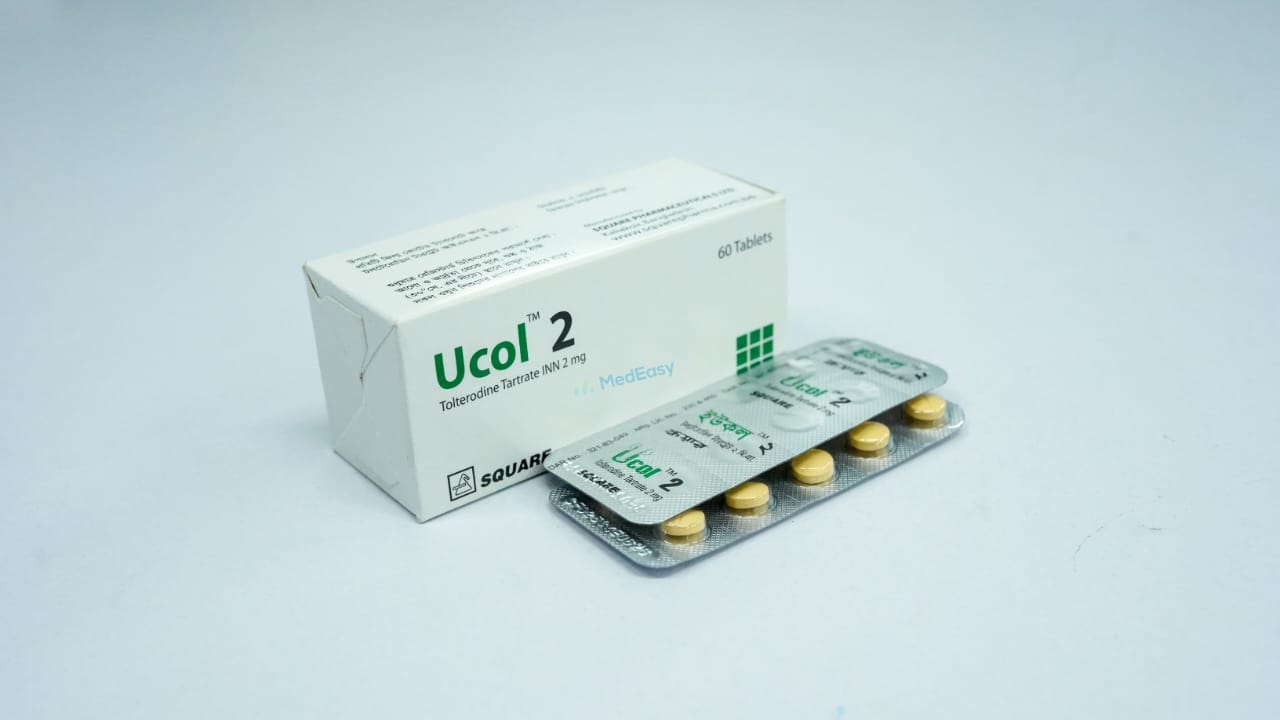
Ucol2 mg
Square Pharmaceuticals PLC.
৳45.00
Add to cart
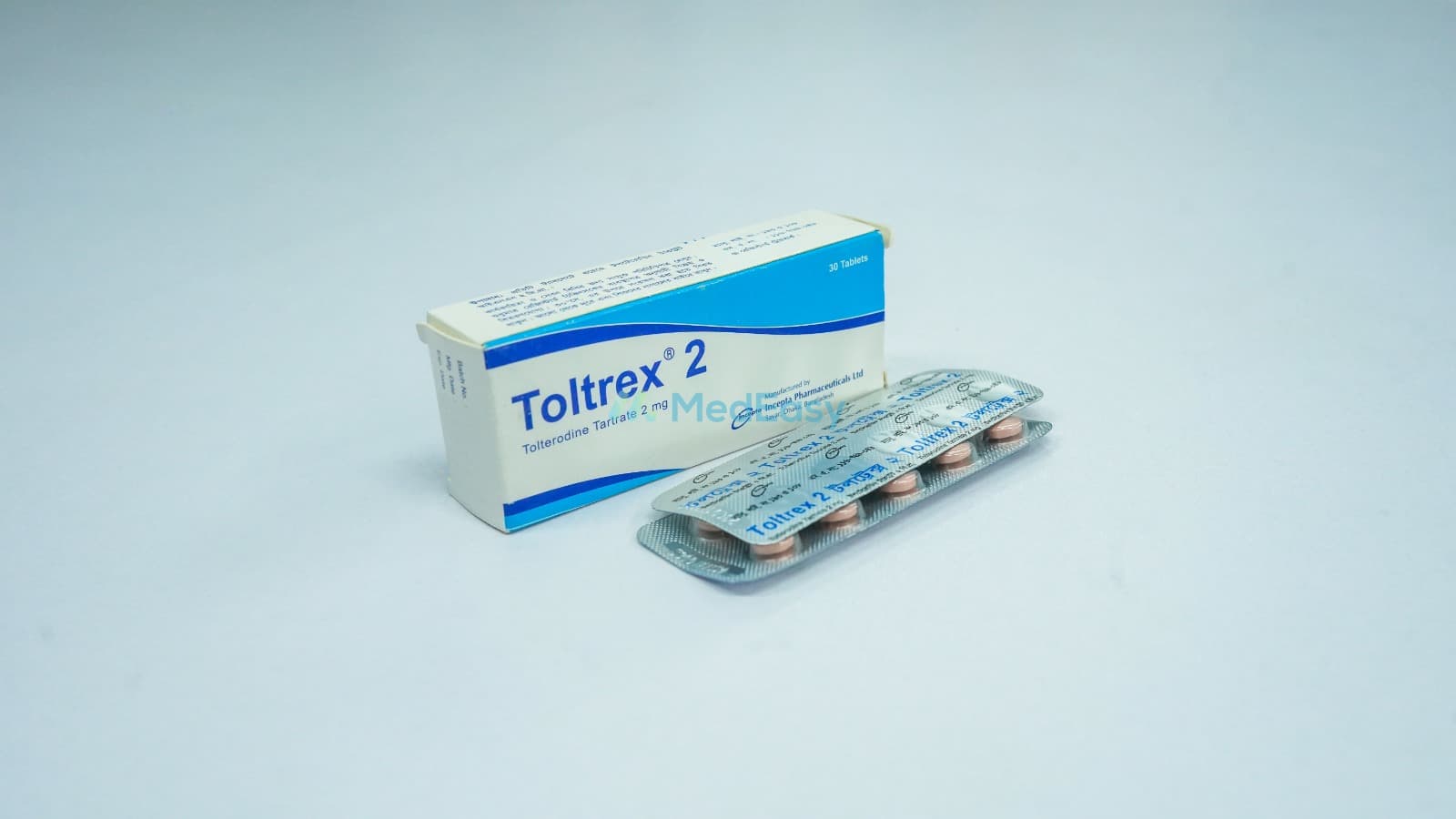

Toltrex is an antimuscarinic (anticholinergic) agent approved for the treatment of overactive bladder (OAB).
Toltrex is not indicated for stress urinary incontinence or for children, and it has no established role as an adjunct or combination therapy for other conditions.
Each unit of Tolterodine Tartrate contains tolterodine tartrate as the active pharmaceutical ingredient, formulated as:
Excipients vary by manufacturer and formulation; refer to the specific product label for the complete inactive ingredient list.
Toltrex is a synthetic muscarinic receptor antagonist used to reduce the involuntary contractions of the urinary bladder that cause overactive bladder symptoms. It is available as an immediate-release tablet, dosed twice daily, and as an extended-release capsule, dosed once daily.
Toltrex does not cure overactive bladder but helps control its symptoms as long as treatment continues; ongoing use should be reviewed periodically with a physician.
Toltrex belongs to the antimuscarinic (anticholinergic) urinary antispasmodic class of drugs, used specifically for bladder overactivity.
Tolterodine Tartrate is a competitive antagonist at muscarinic acetylcholine receptors (predominantly M2 and M3 subtypes) found on bladder detrusor smooth muscle. By blocking acetylcholine-mediated stimulation of these receptors, Tolterodine Tartrate reduces involuntary detrusor muscle contractions, thereby increasing bladder capacity and reducing urgency, frequency, and urge incontinence episodes.
Tolterodine Tartrate is extensively metabolized in the liver, primarily via CYP2D6 to an active metabolite (5-hydroxymethyl tolterodine) with a pharmacologic activity similar to the parent drug, and to a lesser extent via CYP3A4. Elimination is mainly renal and hepatic. Individuals who are poor CYP2D6 metabolizers rely more heavily on the CYP3A4 pathway and may have higher exposure to unmetabolized Tolterodine Tartrate, which is relevant when combined with CYP3A4 inhibitors.
| Formulation | Usual adult dose | Notes |
|---|---|---|
| Immediate-release (IR) tablet | 2 mg twice daily; may be reduced to 1 mg twice daily based on individual response and tolerability | Take with or without food |
| Extended-release (ER) capsule | 4 mg once daily; may be reduced to 2 mg once daily based on individual response and tolerability | Swallow whole; do not chew or open |
In patients with significant hepatic impairment, the recommended dose of Toltrex is the lower dose (1 mg twice daily for IR, or 2 mg once daily for ER).
In patients with significantly reduced renal function, the recommended dose of Toltrex is the lower dose (1 mg twice daily for IR, or 2 mg once daily for ER).
When Toltrex is co-administered with a potent CYP3A4 inhibitor, the lower dose should be used (see Drug Interactions).
Safety and efficacy of Toltrex in children have not been established; it is not recommended for pediatric use.
Toltrex extended-release capsules should be swallowed whole with water and must not be chewed, crushed, or opened. Toltrex immediate-release tablets may be taken with or without food, at consistent times each day (approximately 12 hours apart). If a dose is missed, it should be taken as soon as remembered unless it is close to the next scheduled dose, in which case the missed dose should be skipped — doses should not be doubled.
Co-administration of Toltrex with potent CYP3A4 inhibitors (e.g., ketoconazole, itraconazole, clarithromycin, ritonavir) or potent CYP2D6 inhibitors (e.g., fluoxetine, paroxetine) can significantly increase plasma levels of Toltrex. When Toltrex is used with a strong CYP3A4 inhibitor, the lower recommended dose should be used.
Concurrent use of Toltrex with other anticholinergic medications (e.g., other bladder antimuscarinics, certain antihistamines, tricyclic antidepressants) can produce additive anticholinergic effects such as dry mouth, constipation, blurred vision, and confusion, particularly in elderly patients.
Toltrex has a dose-related effect on cardiac repolarization (QT interval). Combining Toltrex with other drugs known to prolong the QT interval, or use in patients with pre-existing QT prolongation or relevant risk factors, may increase the risk of ventricular arrhythmia; such combinations require caution and, where possible, avoidance.
Tolterodine Tartrate is contraindicated in patients with:
The most common adverse effect of Toltrex, consistent with its anticholinergic mechanism, is:
Toltrex can cause a dose-related prolongation of the QT interval (see Interactions and Precautions). Confusion, memory impairment, and other cognitive effects have been reported, particularly in elderly patients, due to the drug's anticholinergic burden.
Data on the use of Toltrex in human pregnancy are limited. Toltrex should be used during pregnancy only if clearly needed and if the potential benefit to the mother justifies the potential risk to the fetus. It is not known whether Toltrex is excreted in human breast milk; a decision should be made whether to discontinue breastfeeding or discontinue the drug, taking into account the benefit of breastfeeding and the mother's clinical need for treatment. A physician should always be consulted before use of Toltrex during pregnancy or breastfeeding.
Toltrex should be used with caution in elderly patients, who may be more susceptible to anticholinergic central nervous system effects such as confusion, memory impairment, and falls risk, especially when combined with other anticholinergic medications.
Use Toltrex with caution in patients with conditions associated with decreased gastrointestinal motility, such as severe constipation, due to the risk of gastric retention.
Toltrex may worsen symptoms of myasthenia gravis and should be used with caution in these patients.
Toltrex should be used with caution in patients with clinically significant bladder outlet obstruction because of the risk of urinary retention.
Toltrex produces a dose-related increase in the QT interval. Caution is warranted in patients with congenital or acquired QT prolongation, relevant electrolyte disturbances (e.g., hypokalemia, hypomagnesemia), or when combined with other QT-prolonging drugs (see Interactions).
Dose reduction of Toltrex is recommended in significant hepatic or renal impairment (see Dosage and Administration).
As with other anticholinergic drugs, Toltrex may decrease sweating, and use in a hot environment can result in heat prostration.
Toltrex may cause blurred vision, dizziness, or somnolence; patients should be cautious about driving or operating machinery until they know how they respond to treatment.
Overdose with Toltrex may result in exaggerated anticholinergic effects such as severe dry mouth, blurred vision, urinary retention, agitation, and, notably, QT prolongation or cardiac arrhythmia due to its dose-related cardiac repolarization effect. There is no specific antidote for Toltrex overdose.
In case of a suspected overdose, seek immediate medical attention or contact a poison control center right away. ECG monitoring may be warranted because of the risk of QT prolongation. Treatment is supportive and symptomatic and should be managed by qualified medical personnel; do not attempt unsupervised home treatment.
Store at room temperature (below 30°C), away from light and moisture. Keep out of reach of children.
No overall dose adjustment of Toltrex is required based on age alone, but elderly patients may be more sensitive to anticholinergic adverse effects (e.g., confusion, constipation), so caution and monitoring are advised.
A lower dose of Toltrex is recommended in patients with significantly reduced renal function (see Dosage and Administration).
A lower dose of Toltrex is recommended in patients with significant hepatic impairment (see Dosage and Administration).
Safety and efficacy of Toltrex have not been established in children; it is not recommended for use in this population.
See Pregnancy and Lactation section — use only if clearly needed, under medical supervision.
The duration of Toltrex treatment should be individualized based on symptom response, generally assessed after 2 to 3 months of therapy. Toltrex controls symptoms of overactive bladder but does not cure the underlying condition, so ongoing treatment should be periodically reviewed with the prescribing physician to confirm continued benefit and tolerability.
Antimuscarinics; Urinary antispasmodics; Overactive bladder agents
Tolterodine Tartrate acts as a competitive muscarinic receptor antagonist, blocking M2 and M3 muscarinic acetylcholine receptors on the detrusor smooth muscle of the urinary bladder. This antagonism inhibits acetylcholine-induced detrusor contraction, reducing involuntary bladder muscle spasms, increasing functional bladder capacity, and thereby decreasing the frequency and urgency of urination as well as episodes of urge incontinence.
C
The safety and effectiveness of Toltrex in pediatric patients have not been established. Toltrex is not recommended for use in children, and no approved pediatric dosing exists.
Q: What is Toltrex 2 mg Tablet used for?
A: Toltrex 2 mg Tablet is used to treat overactive bladder, helping to reduce sudden urges to urinate, frequent urination, and involuntary urine leakage (urge incontinence).
Q: How should I take Toltrex 2 mg Tablet?
A: Extended-release capsules of Toltrex 2 mg Tablet should be swallowed whole, once daily, and should not be chewed or opened. Immediate-release tablets are usually taken twice daily, with or without food, about 12 hours apart. Always follow your physician's specific instructions.
Q: What are the most common side effects of Toltrex 2 mg Tablet?
A: The most common side effect of Toltrex 2 mg Tablet is dry mouth. Other effects can include constipation, blurred vision, dizziness, and headache. Contact your physician if side effects are bothersome or persistent.
Q: Who should not take Toltrex 2 mg Tablet?
A: Toltrex 2 mg Tablet should not be used by people with urinary retention, gastric retention, uncontrolled narrow-angle glaucoma, or a known hypersensitivity to tolterodine or its components.
Q: Can Toltrex 2 mg Tablet be taken during pregnancy?
A: Toltrex 2 mg Tablet should be used during pregnancy only if clearly needed and if the potential benefit justifies the potential risk to the baby. Always consult your physician before using Toltrex 2 mg Tablet if you are pregnant or breastfeeding.
Q: Does Toltrex 2 mg Tablet interact with other medicines?
A: Yes. Toltrex 2 mg Tablet can interact with strong CYP3A4 or CYP2D6 inhibitors (such as ketoconazole or fluoxetine), other anticholinergic medicines, and drugs that prolong the QT interval. Tell your physician about all medicines you are taking before starting Toltrex 2 mg Tablet.
Disclaimer
The information provided is accurate to the best of our knowledge, but it does not replace professional medical advice. We cannot guarantee its completeness or accuracy, and the absence of specific information about a drug should not be taken as an endorsement. We are not responsible for any consequences arising from this information, so please consult a healthcare professional for any concerns or questions.

