
8% Off
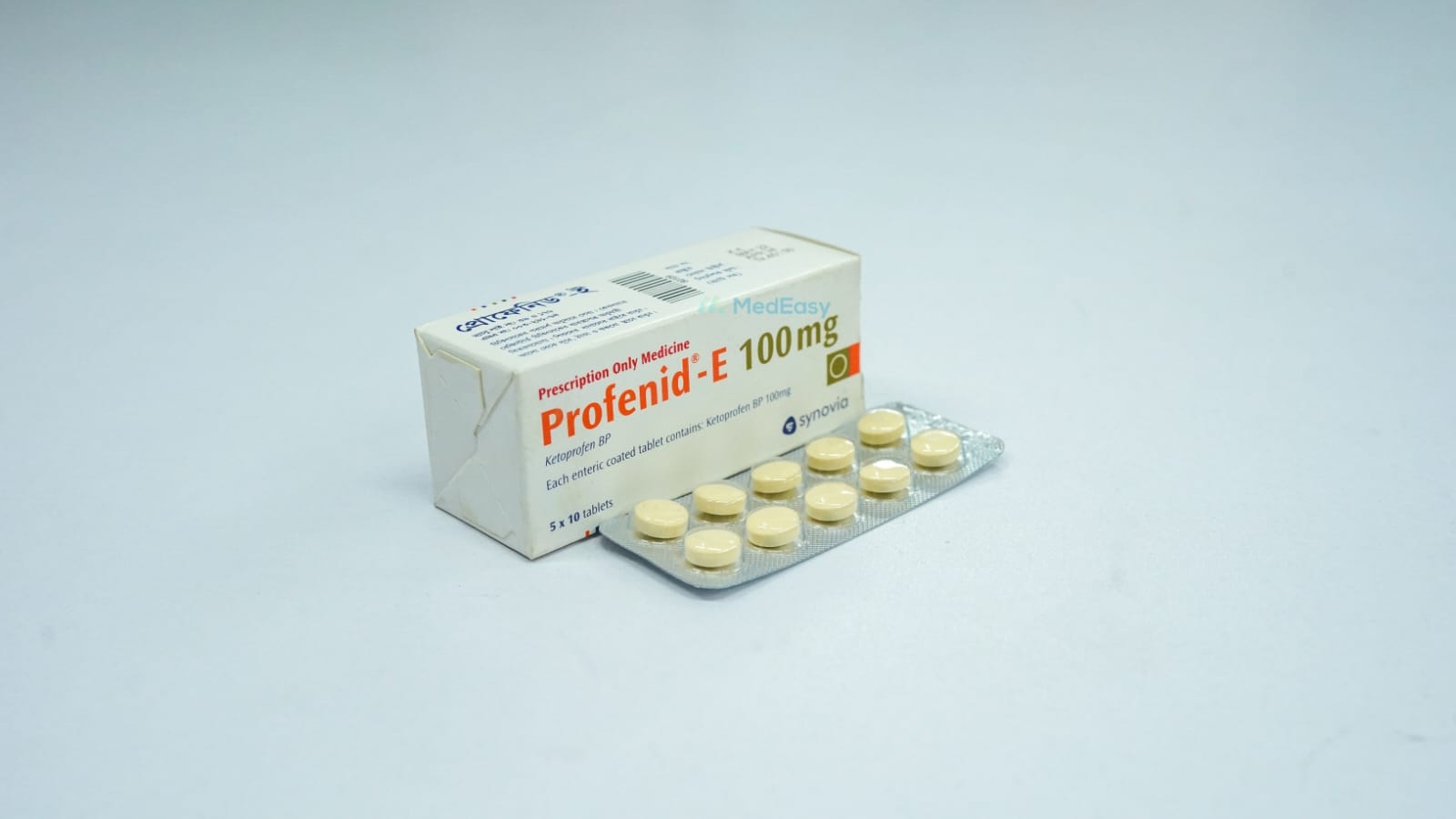
Profenid-E100 mg
Synovia Pharma PLC
৳8.30
Add to cart


Top is a nonsteroidal anti-inflammatory drug (NSAID) of the propionic acid class, established for the following uses:
Top is used only for symptomatic relief; it does not alter the underlying course of arthritic disease.
Each dose of Ketoprofen contains Ketoprofen as the active pharmaceutical ingredient. It is formulated as immediate-release capsules/tablets, extended-release capsules, injectable solution, or suppositories, depending on the product; inactive ingredients vary by manufacturer and dosage form.
Top is a propionic-acid derivative nonsteroidal anti-inflammatory drug (NSAID) with analgesic, anti-inflammatory, and antipyretic activity. It is chemically related to other propionic acid NSAIDs such as ibuprofen and naproxen. Top is available in immediate-release and extended-release oral formulations, as well as parenteral and rectal forms in some markets, and is widely used for pain and inflammatory joint conditions.
Top belongs to the Nonsteroidal Anti-Inflammatory Drug (NSAID) class, specifically the propionic acid derivative subgroup.
Ketoprofen works primarily by non-selectively inhibiting cyclooxygenase (COX-1 and COX-2) enzymes, thereby reducing the synthesis of prostaglandins that mediate pain, inflammation, and fever. It also has some inhibitory action on lipoxygenase and bradykinin activity, contributing to its analgesic effect.
Pharmacokinetics: Ketoprofen is rapidly and almost completely absorbed after oral administration, with peak plasma concentration reached within 0.5-2 hours (delayed with extended-release forms). It is approximately 99% bound to plasma proteins. The elimination half-life is roughly 1.1-4 hours for immediate-release forms. It is metabolized in the liver mainly via glucuronidation and excreted primarily in the urine.
| Regimen | Dose |
|---|---|
| Starting dose | 75 mg three times daily OR 50 mg four times daily |
| Maintenance | Adjust based on response; total 100-300 mg/day in divided doses |
| Maximum | 300 mg/day |
25-50 mg every 6-8 hours as necessary. Maximum single dose 75 mg; maximum 300 mg/day.
Use a reduced starting dose. See Use in Special Populations for detailed adjustment.
Take oral Top with food, milk, or antacids to reduce gastrointestinal irritation. Extended-release capsules should be swallowed whole, not crushed or chewed. Use the lowest effective dose for the shortest duration consistent with treatment goals.
Top capsules/tablets should be taken orally with food or milk to minimize stomach upset. Extended-release forms must be swallowed whole. Injectable forms are administered by a healthcare professional. Do not exceed the prescribed dose or duration.
The most common adverse effects (occurring in more than 1% of patients) include:
Less common but serious reactions (each fully explained under Precautions and Warnings) include gastrointestinal ulceration/bleeding/perforation, cardiovascular thrombotic events (MI, stroke), renal impairment/papillary necrosis, hepatotoxicity, serious skin reactions (Stevens-Johnson syndrome, toxic epidermal necrolysis), DRESS syndrome, anaphylactoid reactions, and blood dyscrasias. Seek prompt medical attention if any severe or unusual symptoms occur while taking Top.
Pregnancy: Top is contraindicated starting at approximately 30 weeks gestation (third trimester) due to the risk of premature closure of the fetal ductus arteriosus. Use between 20 and 30 weeks gestation should be avoided if possible; if needed, use the lowest effective dose for the shortest duration, as NSAID exposure in this period has been associated with fetal renal dysfunction leading to oligohydramnios. In earlier pregnancy, Top should be used only if clearly needed and the potential benefit justifies the potential risk to the fetus; consult a physician before use at any stage of pregnancy.
Lactation: Use of Top is not recommended in nursing mothers, as it is expected to pass into breast milk and safety data in this setting are limited. Consult a physician to weigh alternatives before use while breastfeeding.
Top, like other NSAIDs, may increase the risk of serious cardiovascular thrombotic events, including myocardial infarction and stroke, which can be fatal. This risk may occur early in treatment and may increase with duration of use. Use the lowest effective dose for the shortest duration possible. Top is contraindicated in the setting of coronary artery bypass graft (CABG) surgery.
Top can cause serious gastrointestinal adverse events including bleeding, ulceration, and perforation of the stomach or intestines, which can occur at any time during use, with or without warning symptoms, and can be fatal. Elderly patients and those with a prior history of peptic ulcer disease or GI bleeding are at greatest risk.
Long-term use of Top can cause renal papillary necrosis and other renal injury. Patients with pre-existing renal impairment, heart failure, liver dysfunction, or volume depletion, and the elderly, are at greatest risk of renal decompensation.
Borderline elevations of liver enzymes may occur; discontinue Top if signs or symptoms of liver dysfunction develop or if abnormal liver test results persist or worsen.
Top can cause serious skin reactions such as Stevens-Johnson syndrome, toxic epidermal necrolysis, and DRESS syndrome, which can be fatal. Discontinue at the first appearance of skin rash or other signs of hypersensitivity.
Top may cause anaphylactoid reactions even without prior exposure; patients with aspirin-sensitive asthma are at particular risk of severe bronchospasm.
Top can cause anemia and inhibits platelet aggregation, increasing bleeding risk; monitor patients on anticoagulant therapy closely.
The antipyretic and anti-inflammatory effects of Top may reduce fever and inflammation, potentially masking signs of underlying infection.
Elderly patients are at higher risk of GI, renal, and cardiovascular adverse effects with Top; use the lowest effective dose and monitor closely (see Use in Special Populations).
Symptoms of Top overdose may include lethargy, drowsiness, nausea, vomiting, and epigastric pain; more severe cases can involve gastrointestinal bleeding, hypertension, acute renal failure, respiratory depression, coma, and (rarely) convulsions.
In case of suspected overdose, seek immediate medical attention or contact a poison control center right away. Treatment is supportive and symptomatic; there is no specific antidote. Do not attempt home treatment beyond seeking urgent professional care.
Store at room temperature (below 30°C), away from light and moisture. Keep the container tightly closed and out of reach of children.
Safety and effectiveness of Top in patients below 18 years of age have not been established; its use in children is generally not recommended.
Elderly patients (65 years and older) are more likely to have reduced renal and hepatic clearance of Top and are at higher risk of GI bleeding and cardiovascular events. Use a reduced starting dose, particularly in patients over 75 years, and monitor closely.
In mild renal impairment, limit Top to a maximum of 150 mg/day. In moderate-to-severe impairment, limit to a maximum of 100 mg/day. Avoid use in severe or advanced renal disease.
In patients with hypoalbuminemia (serum albumin below 3.5 g/dL) due to liver disease, limit initial dose to a maximum of 100 mg/day of Top and monitor closely.
Use Top for the shortest duration necessary to control symptoms, at the lowest effective dose. For acute pain or dysmenorrhea, short courses of a few days are typical; for chronic conditions such as rheumatoid arthritis or osteoarthritis, ongoing use should be periodically reassessed by a physician to weigh benefit against cumulative GI, renal, and cardiovascular risk.
Ketoprofen belongs to the Nonsteroidal Anti-Inflammatory Drug (NSAID) class, propionic acid derivative subgroup, related to ibuprofen, naproxen, and flurbiprofen.
Ketoprofen non-selectively inhibits cyclooxygenase (COX-1 and COX-2) enzymes, reducing prostaglandin synthesis responsible for pain, inflammation, and fever, and also has some inhibitory effect on lipoxygenase pathways contributing to its analgesic action.
Safety and effectiveness of Top in pediatric patients (below 18 years) have not been established. Its use in children is generally not recommended; consult a pediatrician for alternative options if pain or fever management is needed in a child.
Q: What is Top 100 mg Tablet used for?
A: Top 100 mg Tablet is used to relieve pain and inflammation in conditions such as rheumatoid arthritis, osteoarthritis, musculoskeletal pain, and primary dysmenorrhea (menstrual cramps).
Q: Can I take Top 100 mg Tablet with aspirin or other painkillers?
A: No. Taking Top 100 mg Tablet together with aspirin or other NSAIDs increases the risk of stomach bleeding and ulcers, and is generally not recommended. Always tell your doctor about all medicines you take.
Q: Is Top 100 mg Tablet safe during pregnancy?
A: Top 100 mg Tablet is contraindicated in the third trimester of pregnancy (from about 30 weeks) because it can cause premature closure of a blood vessel in the baby's heart. It should also be avoided between 20-30 weeks unless clearly necessary, and used only if the benefit outweighs the risk earlier in pregnancy, after consulting a physician.
Q: What are the serious side effects I should watch for?
A: Seek immediate medical attention if you experience chest pain, sudden weakness or slurred speech (signs of heart attack or stroke), black or bloody stools, severe stomach pain, unusual bruising or bleeding, yellowing of the skin/eyes, or a severe skin rash while taking Top 100 mg Tablet.
Q: Can elderly patients take Top 100 mg Tablet?
A: Yes, but with caution. Elderly patients are at greater risk of stomach bleeding, kidney problems, and cardiovascular events with Top 100 mg Tablet, so a lower starting dose and close monitoring by a physician are recommended.
Q: What should I do if I miss a dose or take too much Top 100 mg Tablet?
A: If you miss a dose, take it as soon as you remember unless it is almost time for the next dose; do not double up. If you suspect an overdose of Top 100 mg Tablet, seek immediate medical attention or contact a poison control center right away.
Disclaimer
The information provided is accurate to the best of our knowledge, but it does not replace professional medical advice. We cannot guarantee its completeness or accuracy, and the absence of specific information about a drug should not be taken as an endorsement. We are not responsible for any consequences arising from this information, so please consult a healthcare professional for any concerns or questions.

