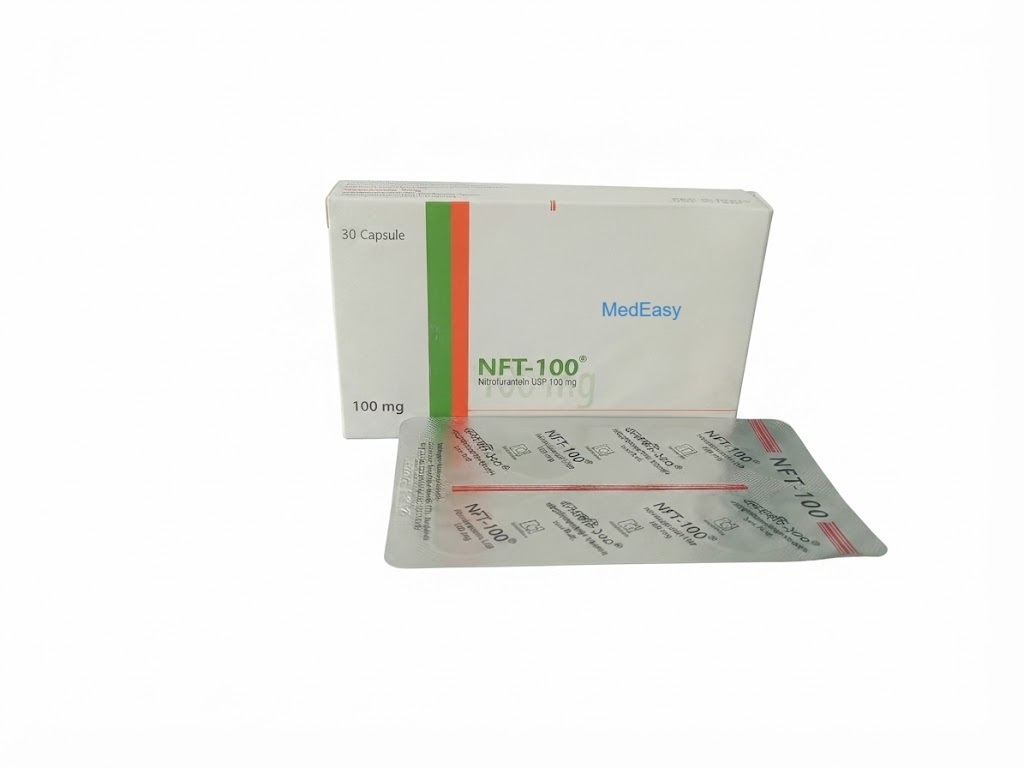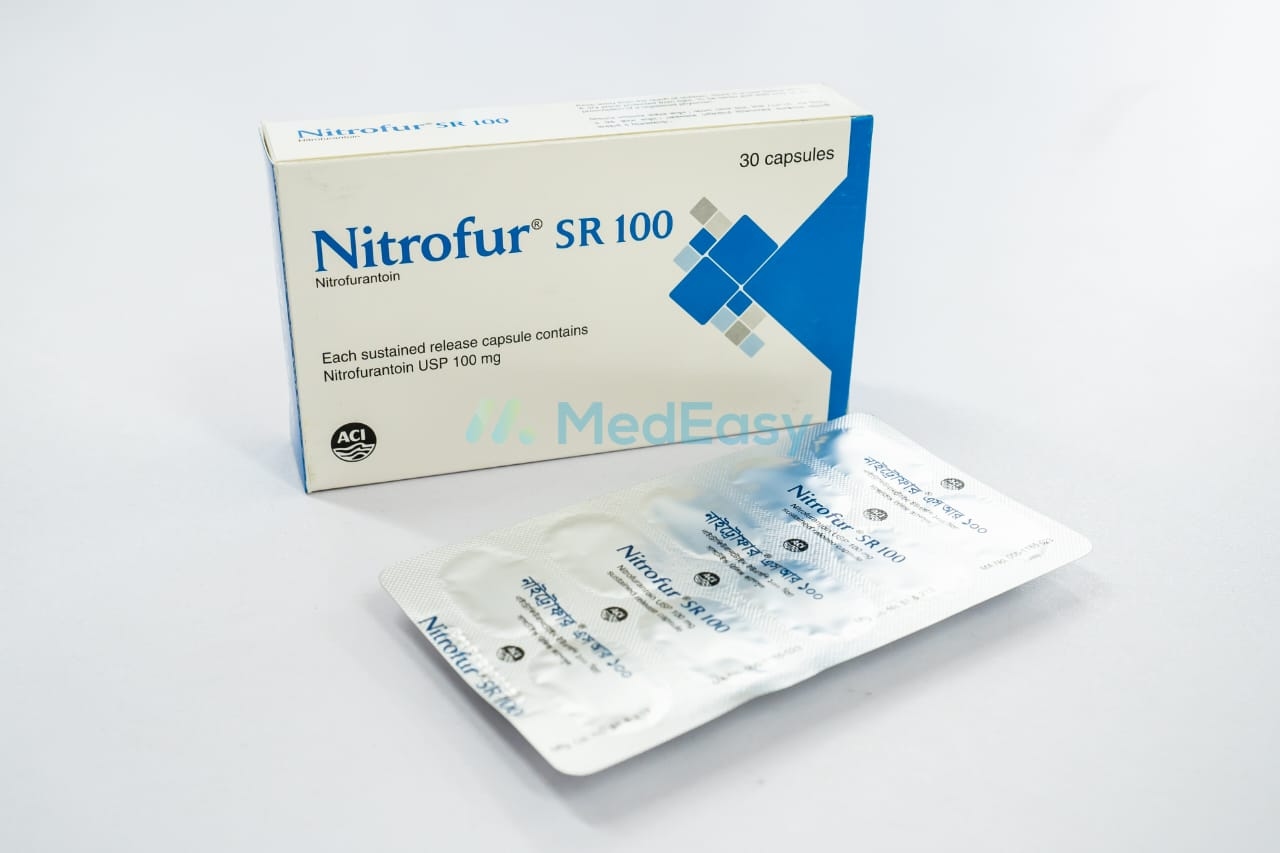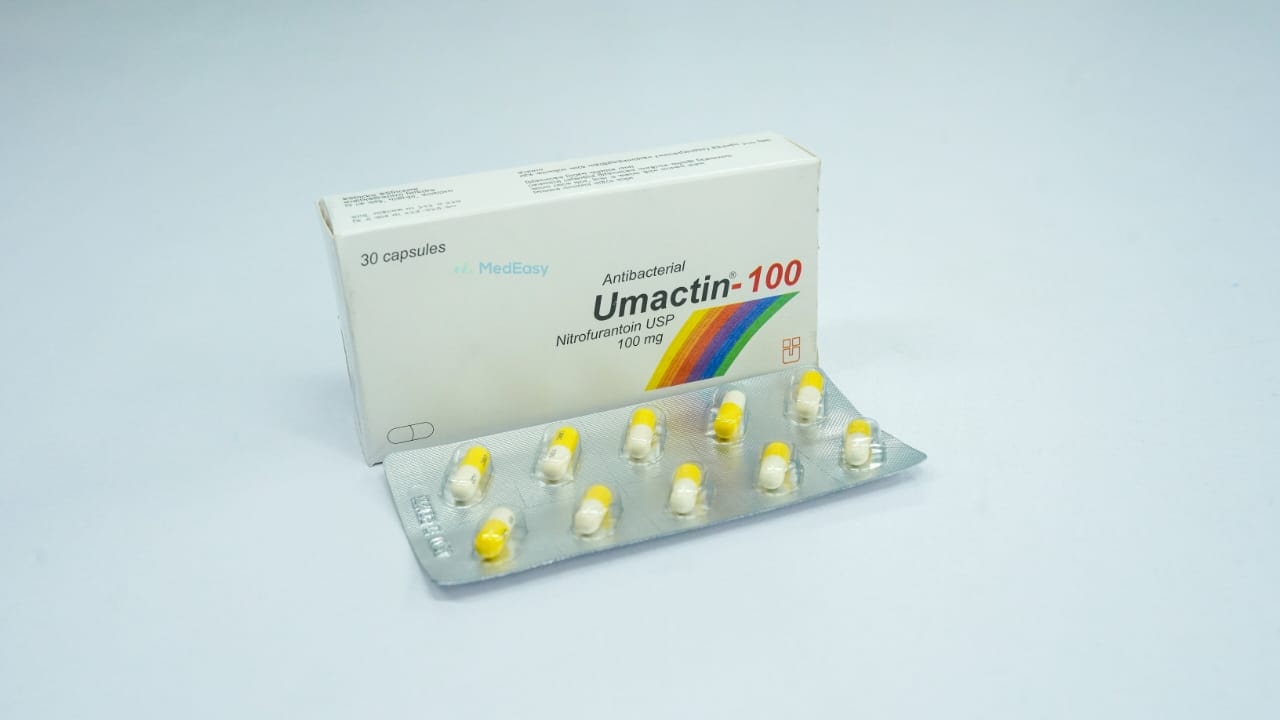
10% Off
Urocure SR100 mg
Square Pharmaceuticals PLC.
৳180.00
Add to cart


Umactabid is a urinary antiseptic antibiotic that is FDA-approved and guideline-supported for the following use:
Umactabid is not effective for pyelonephritis, perinephric abscess, prostatitis, or other upper urinary tract or systemic infections, because it does not achieve adequate tissue or serum concentrations outside the urine. It is not indicated for infections outside the urinary tract.
Each unit of Nitrofurantoin contains Nitrofurantoin as the active ingredient, available in the following forms and strengths:
Umactabid is a synthetic nitrofuran-derivative antibacterial agent used specifically as a urinary antiseptic. Unlike most systemic antibiotics, Umactabid achieves therapeutic bactericidal concentrations mainly within the urine rather than in blood or tissue, which is why its use is restricted to lower urinary tract infections.
It is available as plain crystalline, macrocrystalline, and monohydrate/macrocrystalline formulations, which differ in their dissolution and absorption rates but are used for the same clinical indication.
Urinary anti-infective (urinary antiseptic); nitrofuran-class antibacterial agent, classified under Systemic Urinary Anti-infectives.
Nitrofurantoin is bactericidal in urine. Bacterial flavoproteins reduce Nitrofurantoin to reactive intermediates that inactivate or alter bacterial ribosomal proteins and other macromolecules, inhibiting bacterial protein synthesis, aerobic energy metabolism, DNA, RNA, and cell wall synthesis. This broad, multi-target mechanism explains the low rate of acquired bacterial resistance to Nitrofurantoin.
Absorption of Nitrofurantoin is enhanced when taken with food. Approximately 20-25% of an oral dose is excreted unchanged in the urine within 24 hours, producing urinary concentrations well above the minimum inhibitory concentration for most susceptible urinary pathogens, while plasma concentrations remain very low (typically under 1 mcg/mL) because of rapid renal clearance and tissue distribution/metabolism. Because urinary excretion is essential for its antibacterial effect, adequate renal function is required for Nitrofurantoin to work and to avoid toxic accumulation.
Umactabid should be taken with food to enhance absorption and reduce gastrointestinal upset.
| Indication | Adult Dose | Duration |
|---|---|---|
| Acute uncomplicated UTI (immediate-release) | 50-100 mg four times daily | 7 days, or at least 3 days after urine sterility is achieved |
| Acute uncomplicated UTI (dual-release, e.g. 100 mg monohydrate/macrocrystalline) | 100 mg every 12 hours | 7 days |
| Long-term suppressive therapy | 50-100 mg once daily, usually at bedtime | As directed by physician; periodic reassessment required |
Important: Take Umactabid exactly as prescribed by your physician; do not stop, extend, skip doses, or share this medicine with others without medical advice. Completing the full prescribed course, even after symptoms improve, is essential to clear the infection and reduce the risk of antibiotic resistance.
See Use in Special Populations for pediatric dosing and Precautions for renal-function requirements.
Umactabid should be taken orally with food or milk to improve absorption and minimize gastrointestinal side effects such as nausea. Capsules and tablets should be swallowed whole; the oral suspension should be measured with an accurate dosing device and may be mixed with water, milk, or juice if needed. Doses should be spaced evenly through the day as prescribed.
Always inform your physician or pharmacist of all medicines, supplements, and antacids being used before starting Umactabid.
The following adverse effects have been reported with Umactabid use:
Most common (generally mild):
Less common but serious (see Precautions and Warnings for full details):
Pregnancy: Umactabid should be used during pregnancy only if clearly needed and if the potential benefit justifies the potential risk to the fetus; always consult a physician. Umactabid is contraindicated at term (38-42 weeks gestation), during labor, and when delivery is imminent, because of the risk of hemolytic anemia in the newborn. Some formal drug references classify Umactabid under a legacy pregnancy category B (animal reproduction studies have not demonstrated fetal risk, but adequate well-controlled human studies are lacking); however, some later guidance urges caution regarding use in the first trimester, so use should always be individualized under medical supervision.
Lactation: Umactabid passes into breast milk in small (trace) amounts. It should be used with caution during breastfeeding, and avoided if the infant is under one month old, has known or suspected G6PD deficiency, or is otherwise at increased risk of hemolytic anemia. Consult a physician before using Umactabid while breastfeeding.
Both acute and chronic pulmonary reactions have been reported with Umactabid. Acute reactions (fever, chills, cough, chest pain, dyspnea, and infiltrates on chest X-ray) are hypersensitivity-type reactions that usually resolve within days of stopping the drug. Chronic pulmonary reactions, including pulmonary fibrosis, can develop insidiously during prolonged therapy (generally six months or more) and may be irreversible or fatal if unrecognized. Patients on long-term Umactabid therapy should be monitored periodically for changes in pulmonary function, and the drug should be discontinued immediately if pulmonary symptoms develop.
Hepatotoxic reactions, including hepatitis, cholestatic jaundice, and (rarely, with long-term use) chronic active hepatitis and hepatic necrosis, have occurred with Umactabid, occasionally with fatal outcomes. Liver function should be monitored during prolonged therapy, and Umactabid should be discontinued immediately if signs of hepatic injury occur.
Peripheral neuropathy, which may become severe or irreversible, has been reported with Umactabid, particularly with prolonged use and in patients with renal impairment, anemia, diabetes mellitus, electrolyte imbalance, vitamin B deficiency, or debilitation. Patients should report any tingling, numbness, or weakness in the hands or feet promptly.
Umactabid requires adequate renal function to concentrate in the urine for antibacterial effect and to avoid systemic toxic accumulation; it is contraindicated in significant renal impairment (see Contraindications).
Hemolytic anemia may occur in patients with glucose-6-phosphate dehydrogenase (G6PD) deficiency; Umactabid should be used with caution or avoided in such patients.
Take Umactabid exactly as prescribed by your physician; do not stop, extend, skip doses, or share this medicine with others without medical advice, as this may reduce effectiveness and contribute to antibiotic resistance.
Superinfection with resistant organisms, including Clostridioides difficile-associated diarrhea, may occur with any antibiotic including Umactabid.
There is no specific antidote for Umactabid overdose. Vomiting is the most commonly reported effect of acute overdosage. In case of a suspected overdose of Umactabid, seek immediate medical attention or contact a poison control center or emergency services. General supportive measures may be used, including maintaining adequate fluid intake to promote urinary output; Umactabid is dialyzable, so hemodialysis may be considered by a physician in severe cases. Do not attempt to manage an overdose at home without professional medical guidance.
Store at room temperature (below 30°C), protected from light and moisture. Keep the container tightly closed and out of the reach and sight of children.
Umactabid is contraindicated in infants younger than one month of age due to the risk of hemolytic anemia from immature red blood cell enzyme systems. In children one month of age and older, the usual dose is 5-7 mg/kg/day in divided doses (four times daily) for acute infection, or as low as 1 mg/kg/day for long-term suppressive therapy, as directed by a physician. Safety and effectiveness of Umactabid in children under 12 years for the dual-release (macrocrystalline/monohydrate) formulation have not been separately established; use the age-appropriate formulation as prescribed.
Elderly patients may have age-related reduction in renal function, which can increase the risk of toxicity from Umactabid even when serum creatinine appears normal; renal function should be assessed before and periodically during therapy, and Umactabid avoided if significant impairment is present (see Contraindications).
Umactabid is contraindicated in significant renal impairment (see Contraindications and Precautions).
Umactabid should be avoided in patients with a history of cholestatic jaundice or hepatic dysfunction associated with prior Umactabid use (see Contraindications).
For acute uncomplicated urinary tract infection, Umactabid is typically given for 7 days, or for at least 3 days after urine cultures become sterile, as directed by the prescribing physician. For long-term suppressive (prophylactic) therapy, Umactabid may be continued for extended periods at a lower dose under close medical supervision, with periodic reassessment of pulmonary, hepatic, and renal status given the risks of prolonged use.
Nitrofuran antibacterials; urinary anti-infective agents.
Nitrofurantoin is reduced by bacterial flavoproteins into highly reactive intermediate compounds. These intermediates damage bacterial ribosomal proteins and other macromolecules, broadly inhibiting bacterial protein synthesis, aerobic energy metabolism, and DNA/RNA/cell wall synthesis. Because Nitrofurantoin attacks multiple bacterial targets simultaneously rather than one specific pathway, development of acquired bacterial resistance is uncommon.
B
Umactabid is contraindicated in infants under one month of age because of the risk of hemolytic anemia related to immature red blood cell enzyme systems. In children one month of age or older, Umactabid may be used for treatment of acute uncomplicated urinary tract infections at a dose of 5-7 mg/kg/day in four divided doses, or for long-term suppressive therapy at doses as low as 1 mg/kg/day, under a physician's direction. Safety and efficacy of certain sustained-release formulations of Umactabid have not been established in children under 12 years; the appropriate formulation and dose should be selected by the treating physician.
Q: What is Umactabid 100 mg Capsule used for?
A: Umactabid 100 mg Capsule is an antibiotic used specifically to treat and prevent uncomplicated urinary tract infections (bladder infections/cystitis) caused by susceptible bacteria. It is not effective for kidney infections or infections outside the urinary tract because it does not reach adequate levels in the blood or other tissues.
Q: How should I take Umactabid 100 mg Capsule?
A: Take Umactabid 100 mg Capsule exactly as prescribed by your physician, with food or milk to improve absorption and reduce stomach upset. Do not stop, extend, skip doses, or share this medicine with others without medical advice, and complete the full course even if you feel better before finishing it.
Q: Can I take Umactabid 100 mg Capsule if I have kidney problems?
A: No. Umactabid 100 mg Capsule is contraindicated in patients with significant renal impairment (creatinine clearance under approximately 60 mL/minute), anuria, or oliguria, because reduced kidney function prevents the drug from concentrating properly in the urine and increases the risk of serious toxicity. Tell your physician about any kidney problems before starting Umactabid 100 mg Capsule.
Q: Is Umactabid 100 mg Capsule safe during pregnancy?
A: Umactabid 100 mg Capsule should be used during pregnancy only if clearly needed, as determined by a physician who weighs the potential benefit against potential risk to the fetus. Umactabid 100 mg Capsule is contraindicated at term (38-42 weeks), during labor, and when delivery is imminent, due to the risk of hemolytic anemia in the newborn. Always consult your physician before using Umactabid 100 mg Capsule during pregnancy.
Q: What side effects should I watch for with Umactabid 100 mg Capsule?
A: Common side effects of Umactabid 100 mg Capsule include nausea, headache, and flatulence. Seek prompt medical attention if you develop cough, fever, chest pain, or shortness of breath (possible lung reaction), yellowing of the skin or eyes (possible liver problem), or numbness/tingling in the hands or feet (possible nerve problem), as these can indicate serious but uncommon reactions to Umactabid 100 mg Capsule.
Q: What should I do if I miss a dose or take too much Umactabid 100 mg Capsule?
A: If you miss a dose of Umactabid 100 mg Capsule, take it as soon as you remember unless it is almost time for the next dose; do not double up doses. If you suspect an overdose of Umactabid 100 mg Capsule, seek immediate medical attention or contact a poison control center, as vomiting is the most common effect and medical supervision is needed to manage it safely.
Disclaimer
The information provided is accurate to the best of our knowledge, but it does not replace professional medical advice. We cannot guarantee its completeness or accuracy, and the absence of specific information about a drug should not be taken as an endorsement. We are not responsible for any consequences arising from this information, so please consult a healthcare professional for any concerns or questions.