8% Off
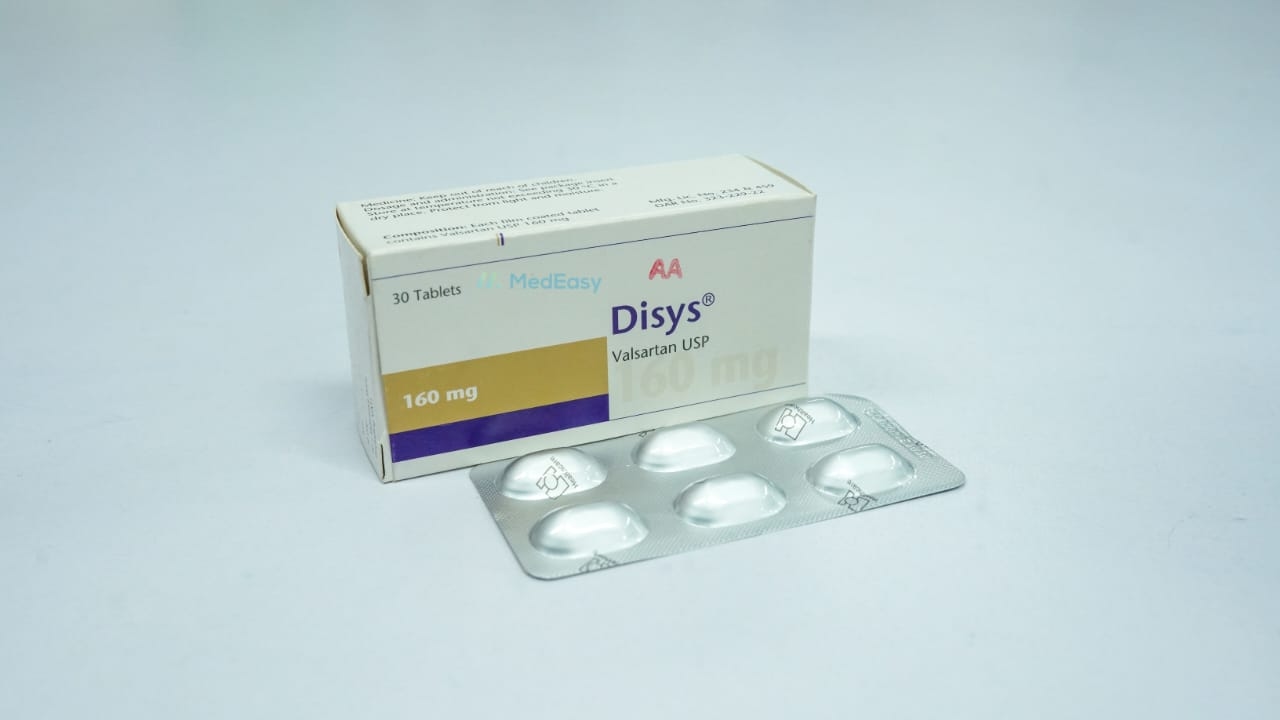
Disys160 mg
Healthcare Pharmaceuticals Ltd.
৳99.36
Add to cart

Valtin 160 mg Tablet is available on MedEasy for ৳144.36 per 10's Strip, with home delivery anywhere in Bangladesh. It is manufactured by ACME Laboratories Ltd. Its generic name is Valsartan.

Valtin is an angiotensin II receptor blocker (ARB) with the following evidence-based uses:
Valtin should not be used in patients who are pregnant due to the risk of fetal harm (see Pregnancy and Lactation).
Each film-coated tablet of Valsartan typically contains Valsartan as the active ingredient, commonly available in strengths of 40 mg, 80 mg, 160 mg, and 320 mg. Excipients vary by manufacturer and may include microcrystalline cellulose, crospovidone, magnesium stearate, colloidal silicon dioxide, and a film-coating system. Valsartan is also marketed in fixed-dose combinations with hydrochlorothiazide, amlodipine, or sacubitril in some markets; this document refers to Valsartan as a single-ingredient product unless otherwise specified.
Valtin is a synthetic, orally active angiotensin II receptor antagonist that acts on the AT1 receptor subtype. It is chemically distinct from the biphenyl-tetrazole class in some structural aspects but shares the core pharmacology of ARBs. Valtin does not inhibit ACE (kininase II), the enzyme that generates angiotensin II and also degrades bradykinin, which is why it is associated with a lower incidence of dry cough and angioedema compared with ACE inhibitors, though angioedema can still rarely occur.
Valtin is used to manage hypertension, chronic heart failure, and to improve survival after a heart attack in appropriate patients, by reducing the harmful cardiovascular and renal effects of angiotensin II.
Valtin belongs to the therapeutic class of Angiotensin II Receptor Blockers (ARBs), also called angiotensin receptor antagonists. This class is used primarily in the management of hypertension, heart failure, and cardiovascular/renal protection.
Valsartan selectively blocks the binding of angiotensin II to the AT1 receptor found in vascular smooth muscle and the adrenal gland. Angiotensin II is a potent vasoconstrictor and the primary active hormone of the renin-angiotensin-aldosterone system (RAAS); it also stimulates aldosterone secretion. By blocking AT1 receptors, Valsartan:
Pharmacokinetics: After oral administration, Valsartan has an absolute bioavailability of about 23%, with peak plasma concentrations reached in 2-4 hours. Food reduces systemic exposure (AUC) by about 40-50%, but this is not considered clinically significant and Valsartan can be taken with or without food. It is highly protein bound (~95%), undergoes minimal hepatic metabolism, and is eliminated mainly unchanged, primarily via bile/feces (~83%) and to a lesser extent in urine (~13%). The elimination half-life is approximately 6 hours.
| Parameter | Recommendation |
|---|---|
| Usual starting dose | 80 mg or 160 mg once daily |
| Maintenance/maximum dose | Up to 320 mg once daily, depending on response |
| Onset of effect | Antihypertensive effect substantially present within 2 weeks; maximal effect generally by 4 weeks |
| Parameter | Recommendation |
|---|---|
| Starting dose | 40 mg twice daily |
| Titration | Increase to 80 mg twice daily, then to the target dose of 160 mg twice daily, as tolerated, at intervals of at least 2 weeks |
| Parameter | Recommendation |
|---|---|
| Starting dose | 20 mg twice daily, initiated as early as 12 hours after a heart attack |
| Titration | Gradually increase over several weeks to a target dose of 160 mg twice daily, as tolerated |
| Body weight | Dose |
|---|---|
| 18 kg to <35 kg | Starting dose 40 mg once daily |
| 35 kg to <80 kg | Starting dose 80 mg once daily |
| 80 kg to 160 kg | Starting dose 160 mg once daily |
Doses may be titrated based on blood pressure response, generally not exceeding the adult maximum dose. Use in children under 6 years is not established.
No initial dosage adjustment of Valtin is routinely required in mild-to-moderate renal impairment or mild hepatic impairment, but caution and monitoring are advised. Use in patients with severe hepatic impairment, biliary cirrhosis, or biliary obstruction is not recommended.
Valtin tablets should be swallowed whole with a glass of water, with or without food, at approximately the same time(s) each day to maintain consistent blood levels. Do not crush or chew the tablet unless advised by a physician or pharmacist. If a dose is missed, it should be taken as soon as remembered unless it is almost time for the next dose, in which case the missed dose should be skipped; doses should not be doubled.
Clinically significant drug interactions with Valtin include:
Valsartan is contraindicated in the following situations:
Most patients tolerate Valtin well. Reported adverse effects include:
Pregnancy: Valtin is contraindicated during pregnancy. Drugs that act directly on the renin-angiotensin system, including Valtin, can cause injury and death to the developing fetus when used in the second and third trimesters, including fetal renal failure, oligohydramnios, skull hypoplasia, and neonatal death. If pregnancy is detected, Valtin should be discontinued as soon as possible and the patient switched to an alternative antihypertensive under medical supervision. Women of childbearing potential should discuss reliable contraception with their physician while taking Valtin.
Lactation: It is not known whether Valtin is excreted in human breast milk. Because of the potential for adverse effects on the nursing infant, a decision should be made whether to discontinue breastfeeding or discontinue Valtin, taking into account the importance of the drug to the mother; use only if clearly needed and after consulting a physician.
The following precautions apply to the use of Valtin:
Overdose with Valtin may cause marked hypotension, dizziness, and tachycardia or bradycardia. If overdose is suspected, seek immediate medical attention or contact a poison control center right away. Treatment is supportive and may include monitoring of vital signs and, if needed, intravenous fluids or other supportive measures administered by medical professionals; Valtin is not effectively removed by hemodialysis due to its high protein binding. Do not attempt to manage an overdose at home without medical guidance.
Store at room temperature (below 30°C), away from light and moisture. Keep out of reach of children.
Elderly: No overall differences in effectiveness were observed between elderly and younger patients; however, elderly patients may be more sensitive to blood-pressure-lowering effects, so caution is advised.
Renal impairment: No initial dosage adjustment is routinely required in mild-to-moderate renal impairment, but renal function and potassium should be monitored. Use with caution in severe renal impairment.
Hepatic impairment: No dosage adjustment needed in mild-to-moderate hepatic impairment; not recommended in severe hepatic impairment or biliary obstruction.
Pediatric patients: Safety and efficacy of Valtin for hypertension are established in children aged 6 years and older; not established in children under 6 years or for heart failure/post-MI indications in children.
Pregnancy: Contraindicated (see Pregnancy and Lactation).
Valtin is typically used as a long-term, often lifelong, maintenance therapy for chronic conditions such as hypertension and heart failure, since these conditions generally require continuous blood pressure and cardiovascular risk control. In post-myocardial infarction patients, treatment is usually continued indefinitely unless discontinued by the treating physician. The duration of therapy should be determined by the prescribing physician based on the underlying condition, response, and tolerability; Valtin should not be stopped abruptly without medical advice.
Valsartan is classified as an Angiotensin II Receptor Blocker (ARB), within the broader category of renin-angiotensin-aldosterone system (RAAS) inhibitors, which also includes ACE inhibitors and direct renin inhibitors.
Valsartan works by selectively blocking the AT1 subtype of angiotensin II receptors, preventing angiotensin II from causing vasoconstriction and aldosterone release. This results in vasodilation, reduced peripheral vascular resistance, decreased sodium and water retention, and consequently lowers blood pressure and reduces cardiac workload, which is beneficial in hypertension, heart failure, and after a heart attack.
D
Valtin is approved for the treatment of hypertension in children aged 6 to 16 years, with weight-based starting doses (see Dosage and Administration). Use in children under 6 years of age is not established, and use for heart failure or post-myocardial infarction indications has not been established in pediatric patients. As with adults, Valtin is contraindicated in pregnant adolescents due to the risk of fetal harm. Growing children on long-term therapy should have periodic monitoring of renal function, electrolytes, and blood pressure by their physician.
Q: What is Valtin 160 mg Tablet used for?
A: Valtin 160 mg Tablet is mainly used to treat high blood pressure (hypertension), symptomatic heart failure, and to improve survival in clinically stable patients after a heart attack with reduced heart function.
Q: How should I take Valtin 160 mg Tablet?
A: Valtin 160 mg Tablet should be taken exactly as prescribed by your physician, usually once or twice daily, with or without food, at the same time(s) each day. Do not stop taking it suddenly without consulting your doctor, even if you feel well, since high blood pressure often has no symptoms.
Q: Can I take Valtin 160 mg Tablet during pregnancy?
A: No. Valtin 160 mg Tablet is contraindicated during pregnancy because it can cause serious harm or death to the developing fetus, especially if used in the second or third trimester. If you become pregnant or are planning pregnancy while taking Valtin 160 mg Tablet, contact your physician immediately so your treatment can be changed.
Q: What are the common side effects of Valtin 160 mg Tablet?
A: Common side effects of Valtin 160 mg Tablet include dizziness, headache, fatigue, and elevated blood potassium levels. Serious but rare effects include very low blood pressure, worsening kidney function, and angioedema (swelling of the face, lips, tongue, or throat), which requires immediate emergency medical attention.
Q: Can Valtin 160 mg Tablet be taken with ACE inhibitors like ramipril or enalapril?
A: Combining Valtin 160 mg Tablet with an ACE inhibitor is generally not recommended because it increases the risk of high potassium levels, low blood pressure, and kidney problems, without providing additional benefit. Always inform your physician about all medicines you are taking.
Q: What should I do if I miss a dose or take too much Valtin 160 mg Tablet?
A: If you miss a dose of Valtin 160 mg Tablet, take it as soon as you remember unless it is almost time for your next dose; do not double the dose. If you suspect an overdose, which can cause severe low blood pressure and a fast or slow heartbeat, seek immediate medical attention or contact a poison control center right away.
Disclaimer
The information provided is accurate to the best of our knowledge, but it does not replace professional medical advice. We cannot guarantee its completeness or accuracy, and the absence of specific information about a drug should not be taken as an endorsement. We are not responsible for any consequences arising from this information, so please consult a healthcare professional for any concerns or questions.