
10% Off
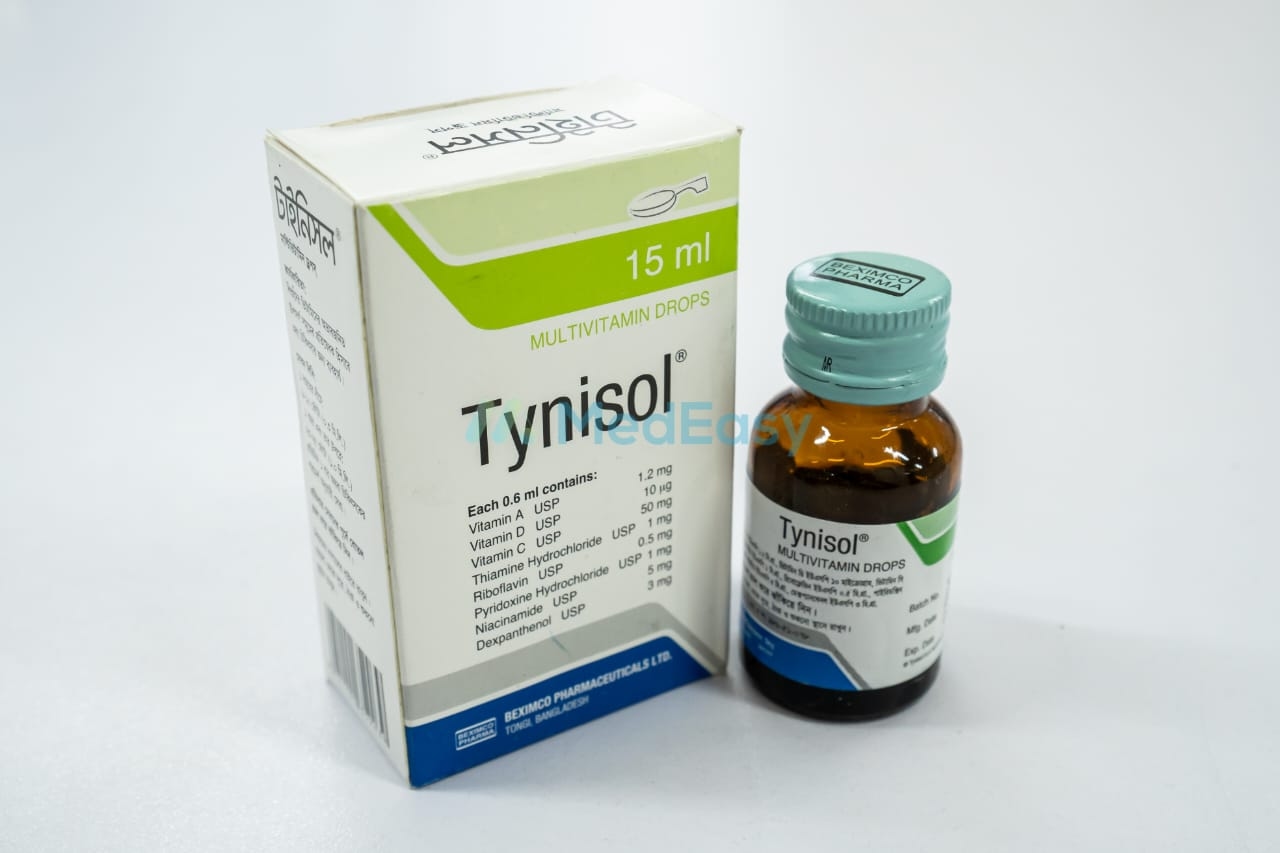
Tynisol
Beximco Pharmaceuticals Ltd.
৳21.60
Add to cart


Vita-M is indicated for the prevention and treatment of vitamin and mineral deficiency in infants and children. Established/guideline-supported uses include:
Vita-M is not a substitute for a balanced diet and should be used as directed by a physician or pediatrician, particularly for infants and young children.
Multivitamin [Pediatric preparation] is a combination nutritional supplement typically containing a balanced blend of fat-soluble and water-soluble vitamins, and in some formulations, minerals, suitable for pediatric use. Common constituents include:
Exact strengths and the presence/absence of individual components vary between formulations (drops, syrup, chewable tablets); refer to the specific product label for the exact composition.
Vita-M is an oral nutritional supplement formulated specifically for infants and children to help meet daily vitamin (and in some formulations, mineral) requirements. It is available in age-appropriate dosage forms such as oral drops (for infants), syrup, and chewable tablets (for older children).
Vita-M is intended to supplement, not replace, a balanced and varied diet, and is commonly recommended by pediatricians for children with poor dietary intake, increased nutritional needs, or specific deficiency risks.
Vita-M belongs to the therapeutic class of vitamin and mineral supplements (multivitamin preparations), used for pediatric nutritional supplementation.
Multivitamin [Pediatric preparation] works by supplying essential vitamins (and minerals, where included) that the body requires for normal growth, metabolism, immune function, vision, bone development, and neurological function, but which may be insufficiently obtained from diet alone.
These are absorbed via normal intestinal pathways (fat-soluble vitamins A, D, E require adequate dietary fat/bile for absorption) and are utilized or stored according to the body's physiological requirements.
Dosage of Vita-M should be individualized by age, weight, and the specific product formulation, and given strictly according to the physician's advice or the product label. Representative age-based dosing (formulation-dependent) is summarized below; always confirm against the specific product's approved labeling.
| Age group | Typical dosing (formulation-dependent) |
|---|---|
| Infants (0–12 months) | Oral drops, typically 0.3–1 mL once daily, as advised by pediatrician |
| Children 1–3 years | Syrup, typically 5 mL once daily, or age-appropriate chewable tablet dose |
| Children 4–12 years | Syrup 5–10 mL once daily, or 1 chewable tablet once daily, per product label |
Administration: Give with or after food to improve absorption of fat-soluble vitamins and reduce the chance of stomach upset. Use the calibrated dropper/measuring cup supplied with the product for liquid formulations; do not use household spoons. Do not exceed the recommended dose. Consult a physician before use in infants under 6 months of age or before combining with other vitamin/mineral supplements.
Vita-M is administered orally. Liquid formulations should be measured accurately using the provided dropper or measuring device. It may be given directly or mixed with a small amount of food or drink (per product instructions) to improve palatability. Chewable tablets should be chewed thoroughly before swallowing. Administering with meals may improve absorption and tolerability.
At recommended pediatric doses, Vita-M has minimal clinically significant drug interactions. However, the following should be noted:
Inform the treating physician of all supplements and medicines the child is taking before starting Vita-M.
Multivitamin [Pediatric preparation] is contraindicated in:
Vita-M is generally well tolerated when taken at recommended pediatric doses. Reported side effects include:
Because pediatric formulations are often flavored and chewable, accidental ingestion of large quantities by a child poses a genuine overdose risk; see Precautions and Warnings.
Vita-M is formulated specifically for infant and pediatric use and is not intended for use during pregnancy or lactation; dedicated adult/prenatal multivitamin products should be used instead in these situations. If a pregnant or breastfeeding individual has inadvertently taken a pediatric formulation, this is not typically associated with significant risk at usual pediatric doses, but a physician should be consulted for guidance and to confirm appropriate adult supplementation. Use only under medical advice if there is any uncertainty.
The following precautions apply to the use of Vita-M:
Overdose of Vita-M, particularly involving fat-soluble vitamins (A and D) or iron (if present in the formulation), can be serious in children. Symptoms may include nausea, vomiting, irritability, headache, abdominal pain, excessive thirst, weakness, or (with iron-containing products) more severe gastrointestinal and systemic toxicity. If overdose is suspected, seek immediate medical attention or contact a poison control center/emergency services right away; do not attempt home treatment or induce vomiting without professional guidance. Bring the product packaging when seeking care.
Store at room temperature (below 30°C), away from light and moisture. Keep the container tightly closed. Keep out of reach and sight of children at all times, given the attractive flavored formulations commonly used in pediatric products.
Infants (under 12 months): Use only under pediatrician guidance; dosing is weight/age-specific and should not be estimated by caregivers.
Children with renal or hepatic impairment: Use Vita-M with caution and medical supervision, as impaired clearance may increase the risk of vitamin/mineral accumulation.
Children with malabsorption syndromes (e.g. cystic fibrosis, celiac disease, cholestatic liver disease): May require specialized, higher-dose fat-soluble vitamin formulations under specialist supervision rather than standard Vita-M products.
Elderly/adult use: Vita-M is formulated for pediatric use; adults should use an appropriately formulated adult multivitamin product instead.
Duration of Vita-M use depends on the indication and should be determined by the treating physician. It may be used short-term (during illness recovery or a period of poor dietary intake) or longer-term (for ongoing dietary inadequacy or chronic malabsorption, with periodic medical review). Prolonged use without medical supervision is not recommended, particularly for formulations containing vitamin A, vitamin D, or iron, due to accumulation risk.
Vitamin and mineral supplement; multivitamin preparation (pediatric).
Multivitamin [Pediatric preparation] acts by replenishing essential vitamins (and minerals, where present) that serve as cofactors and structural components in numerous physiological processes, including energy metabolism, immune defense, vision, bone mineralization, collagen synthesis, and neurological function, thereby correcting or preventing deficiency states when dietary intake is inadequate.
Vita-M is specifically formulated and indicated for use in infants and children to support age-appropriate nutritional requirements and to prevent or treat vitamin deficiency. Approved age ranges and dosing are formulation-specific (drops for infants, syrup or chewable tablets for older children) — refer to the specific product labeling. Safety and efficacy of specific formulations in infants under 6 months, or in specific high-dose regimens, have not been established outside of physician guidance; use only under pediatric medical supervision in this age group. Caregivers should be counseled on accurate dosing and safe storage to prevent accidental overdose.
Q: What is Vita-M Pediatric Drops used for?
A: Vita-M Pediatric Drops is used to prevent or treat vitamin deficiency in infants and children, and to provide nutritional support for children with poor dietary intake, increased nutritional needs, or specific medical conditions, as advised by a pediatrician.
Q: Can Vita-M Pediatric Drops replace a healthy diet?
A: No. Vita-M Pediatric Drops is intended to supplement, not replace, a balanced and varied diet. It should be used alongside good nutrition, not instead of it.
Q: Is it safe to give my child more than the recommended dose of Vita-M Pediatric Drops?
A: No. Giving more than the recommended dose is not safe and can lead to vitamin toxicity, particularly hypervitaminosis A or D, which can cause symptoms such as vomiting, irritability, headache, and in severe cases more serious effects. Always follow the age/weight-based dose on the label or as prescribed by the physician.
Q: What should I do if my child accidentally swallows a large amount of Vita-M Pediatric Drops?
A: Seek immediate medical attention or contact a poison control center/emergency services right away. Do not attempt home treatment or induce vomiting without professional guidance. Bring the product packaging with you.
Q: Can Vita-M Pediatric Drops be given to infants under 6 months of age?
A: Use in infants under 6 months should only be done under the direct guidance of a pediatrician, as dosing in this age group requires careful medical judgment; safety and efficacy of unsupervised use in this age group are not established.
Q: How should Vita-M Pediatric Drops be stored?
A: Store at room temperature (below 30°C), away from light and moisture, with the container tightly closed. Keep out of reach and sight of children at all times, as flavored pediatric formulations can be mistaken for candy.
Disclaimer
The information provided is accurate to the best of our knowledge, but it does not replace professional medical advice. We cannot guarantee its completeness or accuracy, and the absence of specific information about a drug should not be taken as an endorsement. We are not responsible for any consequences arising from this information, so please consult a healthcare professional for any concerns or questions.

