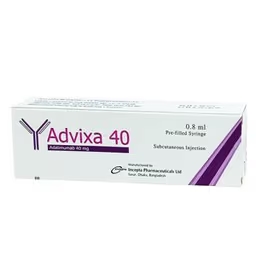
8% Off
Adalimab40 mg/0.8
Healthcare Pharmaceuticals Ltd.
৳13800.00
Add to cart
Adalimumab is a tumor necrosis factor-alpha (TNF-α) inhibitor biologic used to treat a range of chronic inflammatory and autoimmune conditions.
Adalimumab is a tumor necrosis factor-alpha (TNF-α) inhibitor biologic used to treat a range of chronic inflammatory and autoimmune conditions. Indications are classified below by strength of evidence.
Adalimumab is frequently used as an add-on to conventional disease-modifying antirheumatic drugs (e.g., methotrexate) in rheumatoid arthritis when response to conventional therapy alone is inadequate.
Adalimumab is sometimes used off-label, under specialist supervision, for conditions such as sarcoidosis, Behçet's disease, and certain other refractory inflammatory conditions where evidence is more limited. Off-label use should only be undertaken by a specialist physician after standard therapies have failed.
Dosing of Adalimumab is individualized by indication, and in pediatric patients, often by body weight. The following table summarizes typical adult dosing regimens; a physician must confirm the exact regimen.
| Indication | Typical Adult Dosing |
|---|---|
| Rheumatoid arthritis, psoriatic arthritis, ankylosing spondylitis | 40 mg subcutaneously every other week (may increase to 40 mg weekly in RA if not on methotrexate, per physician assessment) |
| Crohn's disease / ulcerative colitis | Induction: 160 mg on Day 1, 80 mg on Day 15; Maintenance: 40 mg every other week starting Day 29 |
| Plaque psoriasis / non-infectious uveitis | Induction: 80 mg initial dose; Maintenance: 40 mg every other week starting one week later |
| Hidradenitis suppurativa | Induction: 160 mg on Day 1, 80 mg on Day 15; Maintenance: 40 mg weekly starting Day 29 |
See Pediatric Uses and Use in Special Populations for weight-based and age-specific regimens.
Common side effects of Adalimumab include:
Serious but less common adverse effects include an increased risk of serious infections, malignancies (including lymphoma), heart failure exacerbation, demyelinating disease, and hypersensitivity reactions — see Precautions and Warnings for full detail.
Adalimumab is contraindicated in the following situations:
Disclaimer
The information provided is accurate to the best of our knowledge, but it does not replace professional medical advice. We cannot guarantee its completeness or accuracy, and the absence of specific information about a drug should not be taken as an endorsement. We are not responsible for any consequences arising from this information, so please consult a healthcare professional for any concerns or questions.