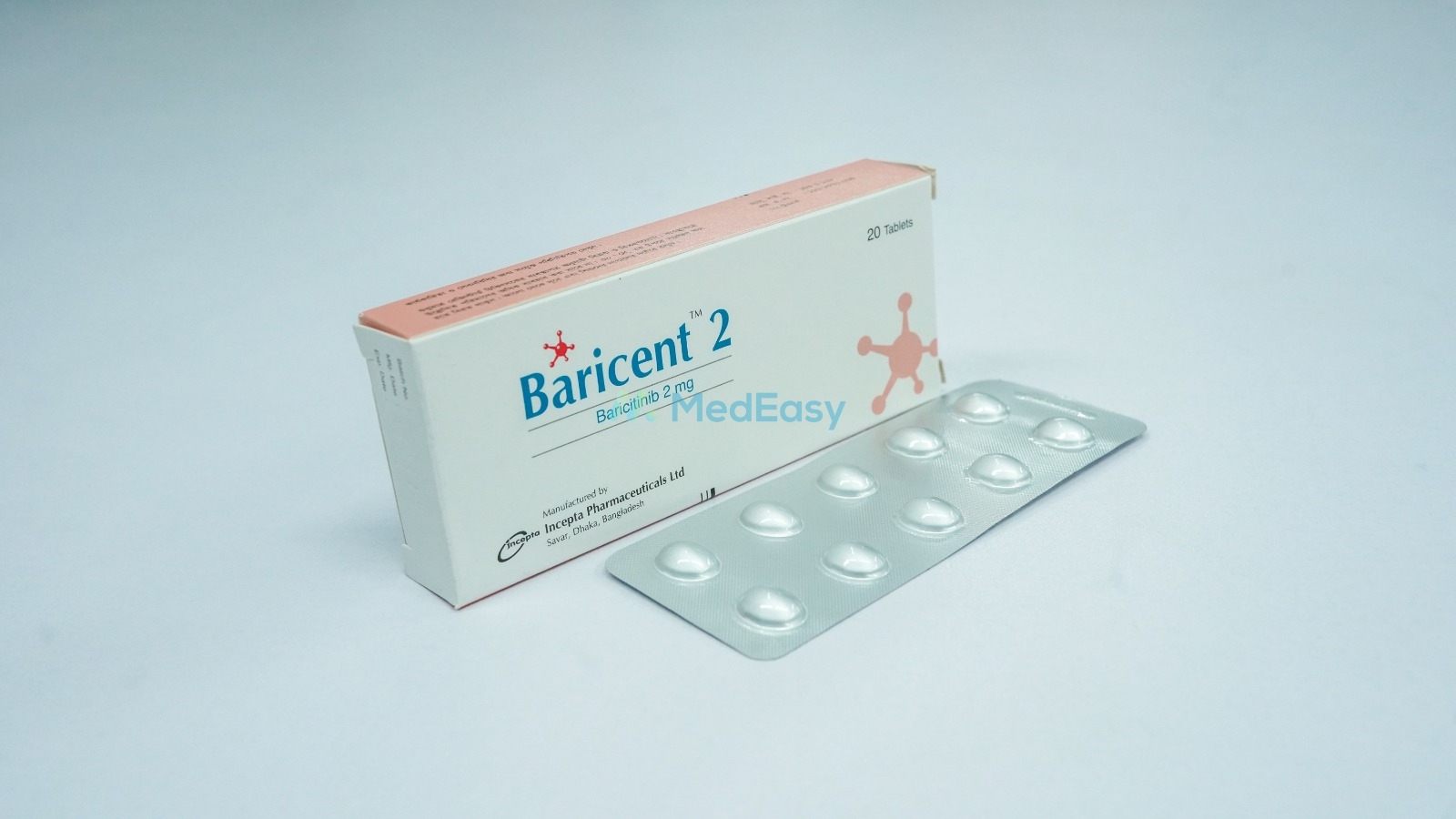
Generic medicine

Baricitinib: Brands, Price & Uses in Bangladesh

Baricitinib is a targeted synthetic disease-modifying antirheumatic drug (Janus kinase inhibitor) with the following evidence-graded uses: Established / approved uses Rheumatoid arthritis (RA):…

Forms:Tablet

About Baricitinib

Indications of Baricitinib

Baricitinib is a targeted synthetic disease-modifying antirheumatic drug (Janus kinase inhibitor) with the following evidence-graded uses:

Established / approved uses

  • Rheumatoid arthritis (RA): Moderately to severely active RA in adults who have had an inadequate response to one or more tumor necrosis factor (TNF) antagonist therapies. May be used as monotherapy or in combination with methotrexate or other conventional disease-modifying antirheumatic drugs (DMARDs).
  • Severe alopecia areata: Adults with severe patchy, multifocal, or total/universal hair loss.
  • COVID-19 (hospitalized adults): Treatment of COVID-19 in hospitalized adults who require supplemental oxygen, non-invasive or invasive mechanical ventilation, or extracorporeal membrane oxygenation (ECMO), used in combination with standard-of-care therapy.

Approved in some international markets (not FDA-approved in the United States)

  • Moderate-to-severe atopic dermatitis: In adults whose disease is not adequately controlled with other systemic therapies, including biologics, or when those therapies are not advisable — approved for this use in the European Union, United Kingdom, Japan and certain other countries.

Baricitinib should not be combined with other JAK inhibitors, biologic DMARDs, or other potent immunosuppressants such as azathioprine or cyclosporine.

Dosage & Administration of Baricitinib

Rheumatoid arthritis

PopulationDose
Adults, normal renal function2 mg orally once daily, alone or with methotrexate/other DMARDs
eGFR 30–60 mL/min/1.73m²1 mg once daily
eGFR <30 mL/min/1.73m²Not recommended

Severe alopecia areata

Adults: 2 mg once daily; may be increased to 4 mg once daily if response is inadequate. Once an adequate response is achieved, consider reducing to the lowest effective dose (2 mg once daily).

COVID-19 (hospitalized adults)

4 mg once daily for up to 14 days or until hospital discharge, whichever comes first, in combination with standard supportive care. Dose is reduced to 1–2 mg once daily depending on the degree of renal impairment (see Use in Special Populations).

Administration

Baricitinib tablets are taken orally, with or without food, at approximately the same time each day. Swallow the tablet whole. If a dose is missed, it should be taken as soon as remembered unless the next scheduled dose is due soon, in which case the missed dose should be skipped — do not double the dose.

Take exactly as prescribed by your physician; do not stop, increase, skip doses, or share this medicine with others without medical advice.

Side Effects of Baricitinib

Baricitinib carries a boxed warning for serious infections, increased mortality, malignancy, major adverse cardiovascular events (MACE), and thrombosis — see Precautions and Warnings for details.

Common side effects

  • Upper respiratory tract infections
  • Nausea
  • Headache
  • Herpes simplex and herpes zoster (shingles) reactivation
  • Increased LDL ("bad") cholesterol
  • Increased creatine phosphokinase (CPK)
  • Acne
  • Thrombocytosis (elevated platelet count)

Serious side effects (seek prompt medical attention)

  • Signs of serious infection (fever, chills, persistent cough, night sweats)
  • Signs of blood clots (leg swelling/pain, sudden shortness of breath, chest pain)
  • Signs of a heart attack or stroke (chest pain, weakness on one side, slurred speech)
  • Unusual bruising, bleeding, or signs of low blood counts
  • Symptoms suggestive of gastrointestinal perforation (severe abdominal pain, fever)

Contraindications of Baricitinib

Baricitinib is contraindicated in patients with:

  • Known hypersensitivity to Baricitinib or any component of the formulation.
  • Active tuberculosis or any other active, serious infection (including active systemic fungal or opportunistic infection) — treatment should not be initiated until the infection is controlled.

Frequently Asked Questions about Baricitinib

What is Baricitinib used for?

Baricitinib is a Janus kinase (JAK) inhibitor used mainly to treat moderately to severely active rheumatoid arthritis in adults who have not responded well to other treatments, and severe alopecia areata. It is also used in hospitalized adults with COVID-19 who need supplemental oxygen, and in some countries it is approved for moderate-to-severe atopic dermatitis.

How should I take Baricitinib?

Baricitinib is taken by mouth, usually once daily, with or without food, at about the same time each day. Take it exactly as your physician prescribes and do not stop or change the dose on your own.

What are the most serious risks of Baricitinib?

Baricitinib carries a boxed warning for serious infections (including tuberculosis reactivation), increased risk of death, cancer (including lymphoma), major heart problems such as heart attack and stroke, and blood clots. Your physician will weigh these risks against the benefits before prescribing it, especially if you are over 50 or have heart disease risk factors.

Can I take Baricitinib during pregnancy or while breastfeeding?

Baricitinib should be strictly avoided during pregnancy because it may harm the developing baby, based on animal studies; effective contraception is recommended during treatment and for at least a week after stopping. Breastfeeding is not recommended during treatment and for at least 4 days after the last dose. Always consult your physician if you are pregnant, planning pregnancy, or breastfeeding.

Who should not take Baricitinib?

Baricitinib should not be used by anyone with a known allergy to it, or by anyone with active tuberculosis or another active, serious infection. Your physician will screen you for tuberculosis and hepatitis before starting treatment.

What if I miss a dose or take too much Baricitinib?

If you miss a dose, take it as soon as you remember unless it is almost time for the next dose — do not double up. If you or someone else has taken too much Baricitinib, seek immediate medical attention or contact emergency services / poison control right away.

Disclaimer

The information provided is accurate to the best of our knowledge, but it does not replace professional medical advice. We cannot guarantee its completeness or accuracy, and the absence of specific information about a drug should not be taken as an endorsement. We are not responsible for any consequences arising from this information, so please consult a healthcare professional for any concerns or questions.

DoctorBlogArticles