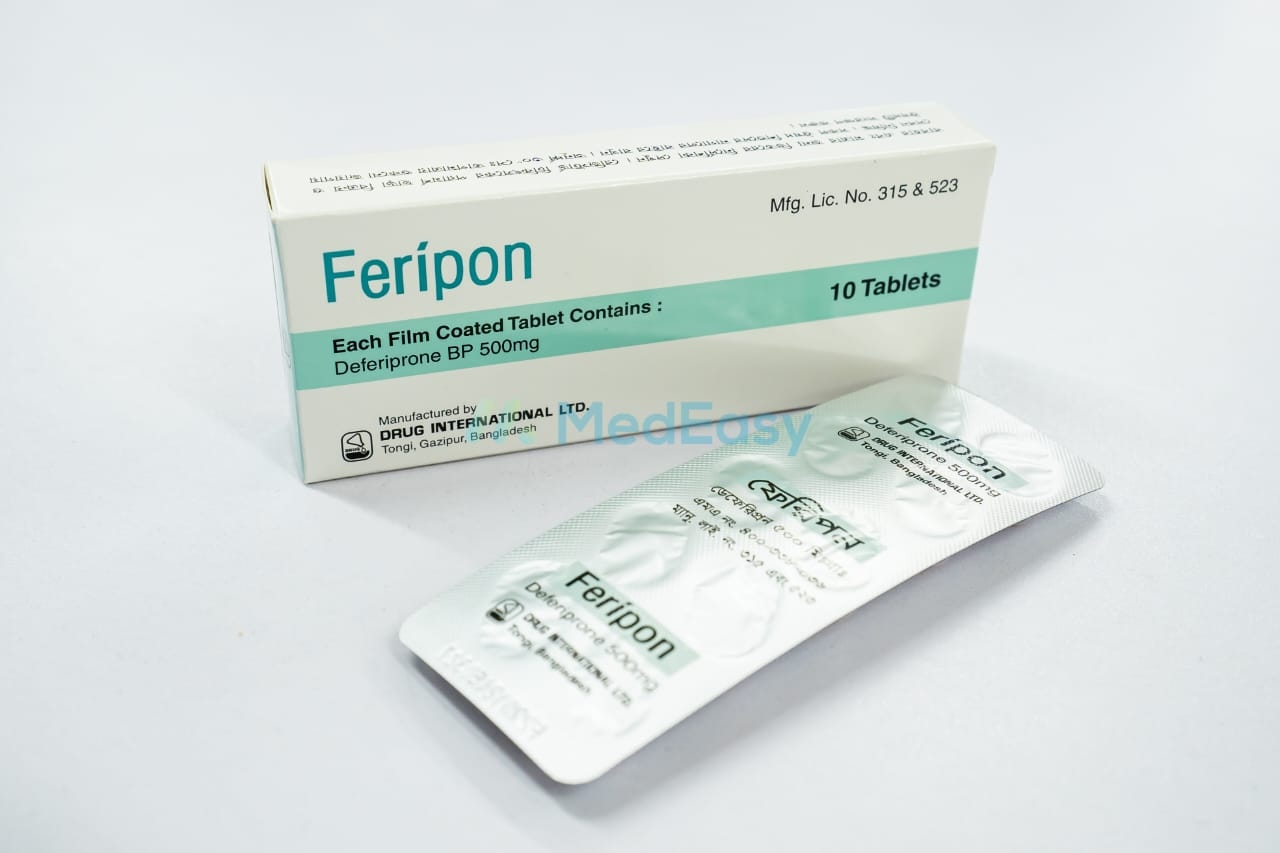
Generic medicine

Deferiprone: Brands, Price & Uses in Bangladesh

Deferiprone is an oral iron chelator used to reduce chronic iron overload.

Forms:Tablet

About Deferiprone

Indications of Deferiprone

Deferiprone is an oral iron chelator used to reduce chronic iron overload.

Established / approved uses

  • Transfusional iron overload due to thalassemia syndromes (thalassemia major) — Deferiprone is indicated in adults and children when current chelation therapy (e.g., deferoxamine) is inadequate or contraindicated.
  • Transfusional iron overload due to sickle cell disease or other anemias — Deferiprone is approved for this use in patients whose prior chelation therapy is inadequate.

Not established

The safety and efficacy of Deferiprone have not been established for iron overload due to myelodysplastic syndrome or Diamond-Blackfan anemia, and it should not be used for these conditions outside of a specialist/clinical-trial setting.

Deferiprone is generally reserved as second-line therapy and, in some regimens, is used in combination with deferoxamine under specialist supervision for patients with severe iron overload.

Dosage & Administration of Deferiprone

Adults and children 8 years and older (as per approved labeling)

IndicationStarting doseMaximum dose
Transfusional iron overload (thalassemia syndromes, sickle cell disease, other anemias)75 mg/kg/day given in divided doses (twice or three times daily depending on formulation)99 mg/kg/day

Dose is individualized and adjusted based on serum ferritin trends and clinical response. In some national labels (including Bangladesh), Deferiprone is dosed as 25 mg/kg three times daily (75 mg/kg/day) in patients above 6 years of age, up to a maximum of 100 mg/kg/day, when deferoxamine therapy is inadequate or contraindicated; the treating physician's local label and monitoring protocol should be followed.

Renal or hepatic impairment

Dedicated dose-adjustment studies are lacking. Deferiprone should be used with caution and close monitoring in patients with hepatic impairment (see Precautions) and is not recommended in patients with significant renal impairment unless benefit clearly outweighs risk, under specialist supervision.

Administration

Deferiprone tablets are usually taken with meals to reduce gastrointestinal upset, swallowed whole with water; the oral solution (where available) should be measured with the supplied dosing device. Doses should be spaced evenly through the day. Do not take iron- or mineral-containing supplements (e.g., antacids, zinc, or iron products) within 4 hours of a dose (see Interactions).

Side Effects of Deferiprone

Common

  • Nausea, vomiting, abdominal pain
  • Joint pain (arthralgia)
  • Elevated liver enzymes (ALT)
  • Reddish-brown discoloration of urine (chromaturia) — a harmless, expected effect of iron excretion
  • Headache

Serious (see Precautions and Warnings for full detail)

  • Neutropenia and agranulocytosis (potentially fatal — requires immediate discontinuation and evaluation)
  • Zinc deficiency
  • Hepatic fibrosis (rare, reported with long-term use)

In patients treated for sickle cell disease or other anemias, fever, bone/back pain, sickle cell crisis, sore throat, and upper respiratory infection have also been reported with Deferiprone.

Contraindications of Deferiprone

  • Known hypersensitivity to Deferiprone or any component of the formulation.
  • History of recurrent episodes of neutropenia.
  • History of agranulocytosis.

See Precautions and Warnings for the mandatory blood-count monitoring required even outside these absolute contraindications.

Frequently Asked Questions about Deferiprone

What is Deferiprone used for?

Deferiprone is used to remove excess iron from the body in patients with chronic transfusional iron overload, most commonly due to thalassemia major, when other chelation therapy is inadequate or not tolerated.

Why do I need regular blood tests while taking Deferiprone?

Deferiprone carries a risk of agranulocytosis, a serious and potentially fatal drop in a type of white blood cell that fights infection. Regular absolute neutrophil count (blood) tests, typically weekly, are mandatory throughout treatment so that the medicine can be stopped promptly if your counts fall.

What should I do if I get a fever or sore throat while on Deferiprone?

Contact your doctor immediately and have a blood count checked, since fever, sore throat, or mouth sores can be early signs of a serious drop in white blood cells associated with Deferiprone. Do not wait for your next scheduled test.

Can Deferiprone be used during pregnancy?

Deferiprone can harm a developing fetus and should generally be avoided in pregnancy; it should only be used if clearly necessary and the benefit outweighs the risk, under close physician supervision, and effective contraception is recommended during treatment.

Is it normal for my urine to change color on Deferiprone?

Yes, a reddish-brown discoloration of urine is a common and harmless effect of Deferiprone, reflecting the excretion of the iron-chelator complex; it does not indicate a problem on its own.

Can I take iron or zinc supplements with Deferiprone?

Iron-, aluminum-, or zinc-containing antacids or supplements can bind to Deferiprone and reduce its absorption, so these should be separated from Deferiprone doses by at least 4 hours, and any supplementation should be guided by your physician based on your monitored zinc and iron levels.

Disclaimer

The information provided is accurate to the best of our knowledge, but it does not replace professional medical advice. We cannot guarantee its completeness or accuracy, and the absence of specific information about a drug should not be taken as an endorsement. We are not responsible for any consequences arising from this information, so please consult a healthcare professional for any concerns or questions.
DoctorBlogArticles