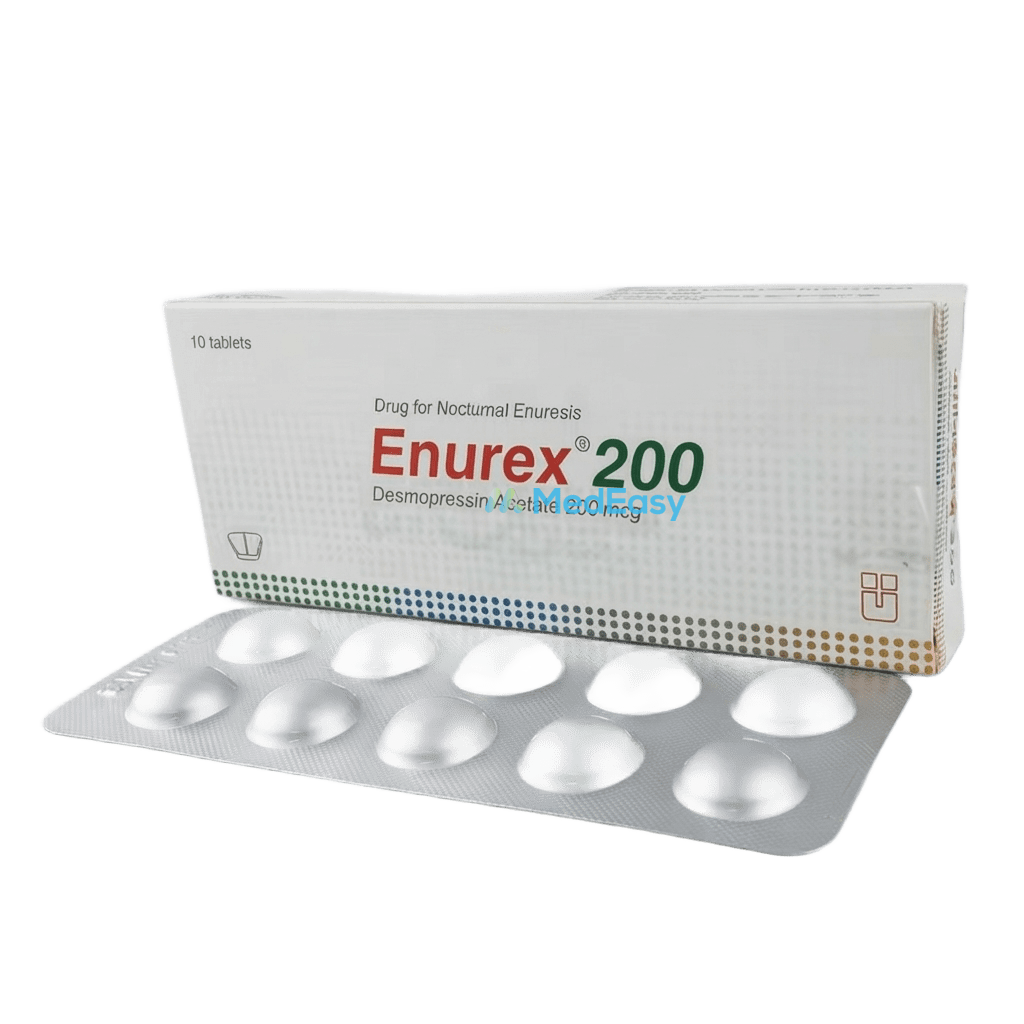
Generic medicine

Desmopressin Acetate: Brands, Price & Uses in Bangladesh

Desmopressin Acetate is a synthetic analog of the natural hormone vasopressin (antidiuretic hormone).

Forms:TabletSublingual Tablet

About Desmopressin Acetate

Indications of Desmopressin Acetate

Desmopressin Acetate is a synthetic analog of the natural hormone vasopressin (antidiuretic hormone). It is prescribed for the following indications, which vary in strength of evidence:

Established/approved uses

  • Central diabetes insipidus — as antidiuretic replacement therapy to control excessive thirst and urination caused by deficient endogenous vasopressin.
  • Temporary polyuria and polydipsia following head trauma or pituitary surgery.
  • Primary nocturnal enuresis (bedwetting) in children aged 6 years and older, used alone or together with behavioral measures; oral tablet or sublingual formulations of Desmopressin Acetate are generally preferred over intranasal spray for this indication (see Precautions and Warnings).

Specialist-guided / hemostatic uses (higher-dose injectable or concentrated intranasal formulations)

  • To temporarily raise plasma factor VIII and von Willebrand factor levels in selected patients with mild haemophilia A or type 1 von Willebrand disease, to control or prevent bleeding around minor surgery or dental procedures. Response varies by patient and requires factor-level testing and haematology specialist supervision.

Desmopressin Acetate is not effective for nephrogenic diabetes insipidus.

Dosage & Administration of Desmopressin Acetate

Dosing of Desmopressin Acetate is individualized to the lowest effective dose for each patient and indication. The following is a general guide; the prescribing physician's instructions should always be followed.

IndicationPopulationTypical Dosing
Central diabetes insipidusAdultsOral tablet: start 0.05 mg (half of a 0.1 mg tablet) twice daily; usual maintenance 0.1-0.8 mg/day in 2-3 divided doses (max approximately 1.2 mg/day). Sublingual: start 60 mcg three times daily; usual range 60-120 mcg three times daily.
Central diabetes insipidusChildren (≥4 years)Same formulations as adults, started at the lowest dose (e.g., 0.05 mg orally) and individually titrated, with close monitoring for hyponatremia.
Primary nocturnal enuresisChildren ≥6 yearsOral tablet: start 0.2 mg at bedtime, may increase up to 0.6 mg if needed. Fluid intake must be restricted from 1 hour before the dose until the following morning (see Precautions).
Hemostatic use (mild haemophilia A, von Willebrand disease type 1)Adults and selected children (specialist use)Higher-dose intranasal or intravenous formulations dosed by body weight under haematology specialist supervision, typically 20-30 minutes before a procedure; response confirmed by factor VIII/von Willebrand factor testing.

Fluid intake should be limited to what is necessary to satisfy thirst, beginning approximately one hour before each dose of Desmopressin Acetate and continuing until the next morning or for about 8 hours after dosing, to reduce the risk of hyponatremia and water intoxication.

Side Effects of Desmopressin Acetate

Common side effects of Desmopressin Acetate include headache, nausea, mild abdominal pain, nasal congestion or irritation (with intranasal use), and flushing. Less commonly, mild transient blood pressure changes may occur.

The most important serious adverse effect is hyponatremia (low blood sodium) and water intoxication, which can present as headache, nausea/vomiting, weight gain, confusion, and, if severe and untreated, seizures or coma (see Precautions and Warnings). Rare hypersensitivity/allergic reactions have also been reported.

Contraindications of Desmopressin Acetate

Desmopressin Acetate is contraindicated in patients with:

  • Known hypersensitivity to Desmopressin Acetate or any component of the formulation.
  • Hyponatremia or a history of hyponatremia.
  • Moderate to severe renal impairment (creatinine clearance below approximately 50 mL/min), for the diabetes insipidus and enuresis indications, due to reduced ability to excrete free water.
  • Syndrome of inappropriate antidiuretic hormone secretion (SIADH).
  • Habitual or psychogenic polydipsia (patients who drink more fluid than physiologically needed), because of the increased risk of water intoxication.

Frequently Asked Questions about Desmopressin Acetate

What is Desmopressin Acetate used for?

Desmopressin Acetate is mainly used to treat central diabetes insipidus (a condition of excessive thirst and urination due to low antidiuretic hormone) and primary nocturnal enuresis (bedwetting) in children aged 6 years and older. Higher-dose formulations are also used, under specialist supervision, to temporarily raise clotting factor levels in mild haemophilia A and von Willebrand disease.

Why do I need to limit fluids while taking Desmopressin Acetate?

Because Desmopressin Acetate reduces how much water the kidneys remove from the body, drinking too much fluid while it is working can cause the body to retain too much water, leading to low blood sodium (hyponatremia) and, in severe cases, seizures. You should limit fluid intake to just what is needed to satisfy thirst, generally from about one hour before your dose until the next morning, as instructed by your physician.

Can Desmopressin Acetate be used in pregnancy or while breastfeeding?

Desmopressin Acetate falls under legacy FDA Pregnancy Category B; available data have not shown an increased risk of birth defects, but there are no well-controlled studies in pregnant women, so it should be used only if clearly needed and if the benefit outweighs the potential risk, under a physician's guidance. It is not definitively known whether it passes into breast milk in significant amounts, so breastfeeding mothers should consult their physician before use.

Who should not take Desmopressin Acetate?

Desmopressin Acetate should not be used by people with known hypersensitivity to it, current or past hyponatremia, moderate-to-severe kidney impairment, syndrome of inappropriate antidiuretic hormone secretion (SIADH), or habitual/psychogenic polydipsia (drinking excessive fluids), because of the increased risk of dangerous water retention.

What should I do if I miss a dose or take too much Desmopressin Acetate?

If you miss a dose of Desmopressin Acetate, take it when you remember unless it is close to your next dose; do not double the dose. If you or someone else has taken too much Desmopressin Acetate and has symptoms such as severe headache, confusion, rapid weight gain, or reduced urination, seek immediate medical attention or contact emergency services, as this may indicate dangerous water retention.

Is intranasal Desmopressin Acetate safe for bedwetting in children?

Intranasal formulations of Desmopressin Acetate have been associated with reports of hyponatremia and seizures when used for nocturnal enuresis in children, so oral tablet or sublingual formulations of Desmopressin Acetate are now generally preferred for this indication. Discuss the most appropriate formulation with your physician.

Disclaimer

The information provided is accurate to the best of our knowledge, but it does not replace professional medical advice. We cannot guarantee its completeness or accuracy, and the absence of specific information about a drug should not be taken as an endorsement. We are not responsible for any consequences arising from this information, so please consult a healthcare professional for any concerns or questions.

DoctorBlogArticles