
8% Off
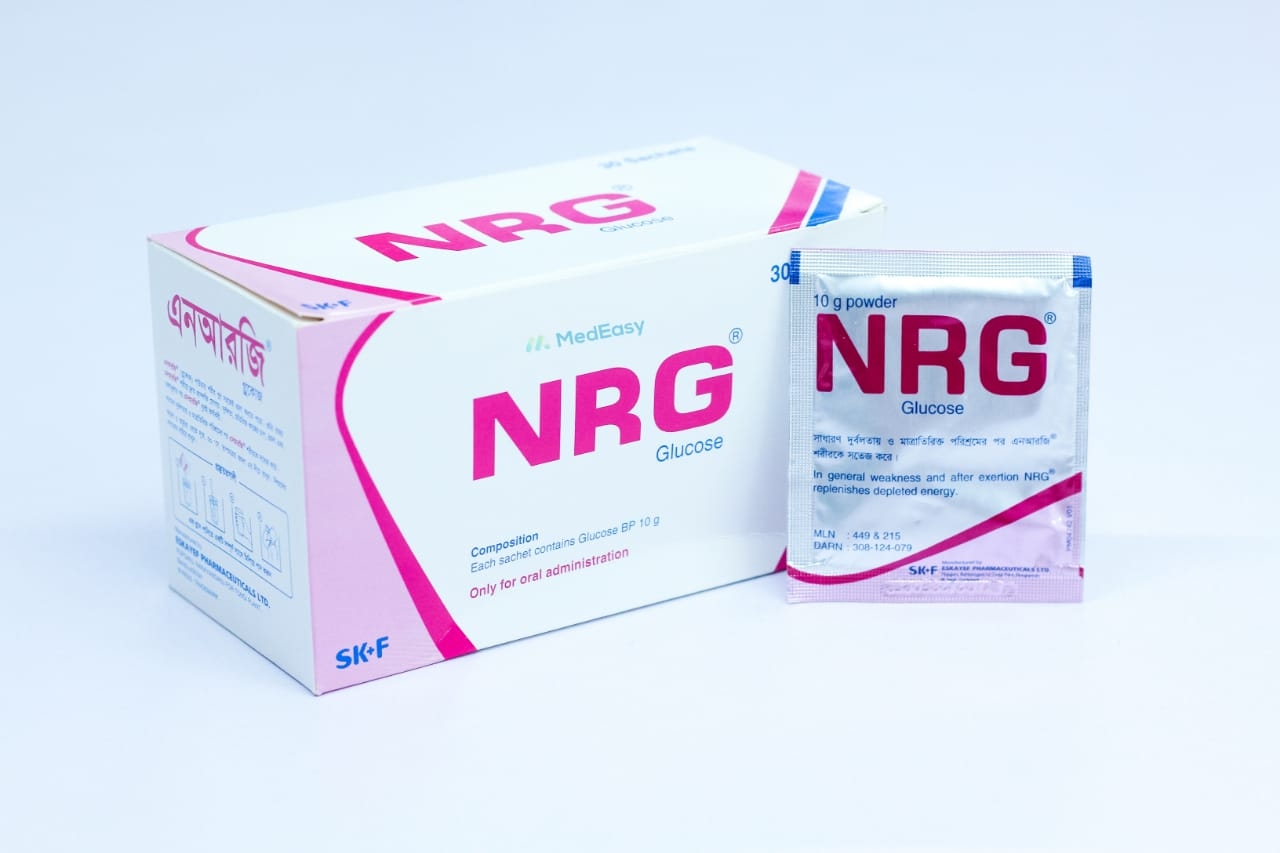
NRG100%
Eskayef Bangladesh Ltd.
৳6.44
Add to cart
Dextrose (dextrose monohydrate) solutions are used for the following indications, listed by strength of evidence: Established / FDA-approved uses (intravenous) Source of calories and free water for…
Dextrose (dextrose monohydrate) solutions are used for the following indications, listed by strength of evidence:
The specific concentration and route (IV vs. oral) used depend on the clinical indication and must be selected by a physician; see Dosage and Administration.
Dextrose dosing is individualised by indication, concentration, patient age, weight, fluid/electrolyte status, and clinical response, and IV use requires monitoring by a physician or under medical supervision.
| Indication | Typical adult dosing | Notes |
|---|---|---|
| Fluid/caloric maintenance | 5% Dextrose: 500–1000 mL IV infusion, rate individualised; usually not exceeding 0.5 g/kg/hour to avoid glycosuria | May be given via peripheral vein |
| Moderate fluid/carbohydrate depletion | 10% Dextrose: dose and rate individualised (e.g. up to 20–30 mL/kg over the prescribed period) per clinical status | Peripheral vein may be used cautiously; watch for irritation |
| Severe/symptomatic hypoglycemia | 10–50% Dextrose IV; a common regimen is 25 g (50 mL of 50% Dextrose) by slow IV push, or continuous infusion of a lower concentration until glucose stabilises | Recheck blood glucose after treatment; higher concentrations (>12.5%) generally require a large peripheral or central vein |
| Hyperkalemia (adjunct) | Dextrose (e.g. 25–50 g) given with regular insulin (commonly 5–10 units) by IV infusion | Combination therapy only; monitor blood glucose and potassium closely; see Precautions |
| Parenteral nutrition component | Higher concentrations (20–70%) as part of an individualised TPN prescription | Concentrations >10–12.5% (osmolarity ≥900 mOsm/L) generally require central venous administration |
| Oral hypoglycemia treatment | 10–20 g oral Dextrose as a single dose; may repeat once after about 10–15 minutes if symptoms/low glucose persist | Only for a conscious patient able to swallow safely |
| Oral glucose tolerance test | Standard oral Dextrose load per the testing protocol in use (physician/laboratory directed) | Test-specific; follow local protocol |
Renal/hepatic impairment: use with caution and closer monitoring of glucose, fluid, and electrolyte status in renal or hepatic impairment; no fixed dose-reduction schedule is established — the prescribing physician individualises the rate and concentration.
The most commonly reported adverse reactions with Dextrose infusion are:
Oral Dextrose is generally well tolerated; mild nausea or gastrointestinal discomfort may occasionally occur.
Seek prompt medical attention for signs of a serious reaction (difficulty breathing, swelling of the face/throat, chest pain, severe confusion) during or after Dextrose administration.
Dextrose is contraindicated in:
Diabetes, fluid-overload-prone conditions, and electrolyte disturbances are important precautions requiring caution and monitoring, not absolute contraindications — see Precautions and Warnings.
Disclaimer
The information provided is accurate to the best of our knowledge, but it does not replace professional medical advice. We cannot guarantee its completeness or accuracy, and the absence of specific information about a drug should not be taken as an endorsement. We are not responsible for any consequences arising from this information, so please consult a healthcare professional for any concerns or questions.
