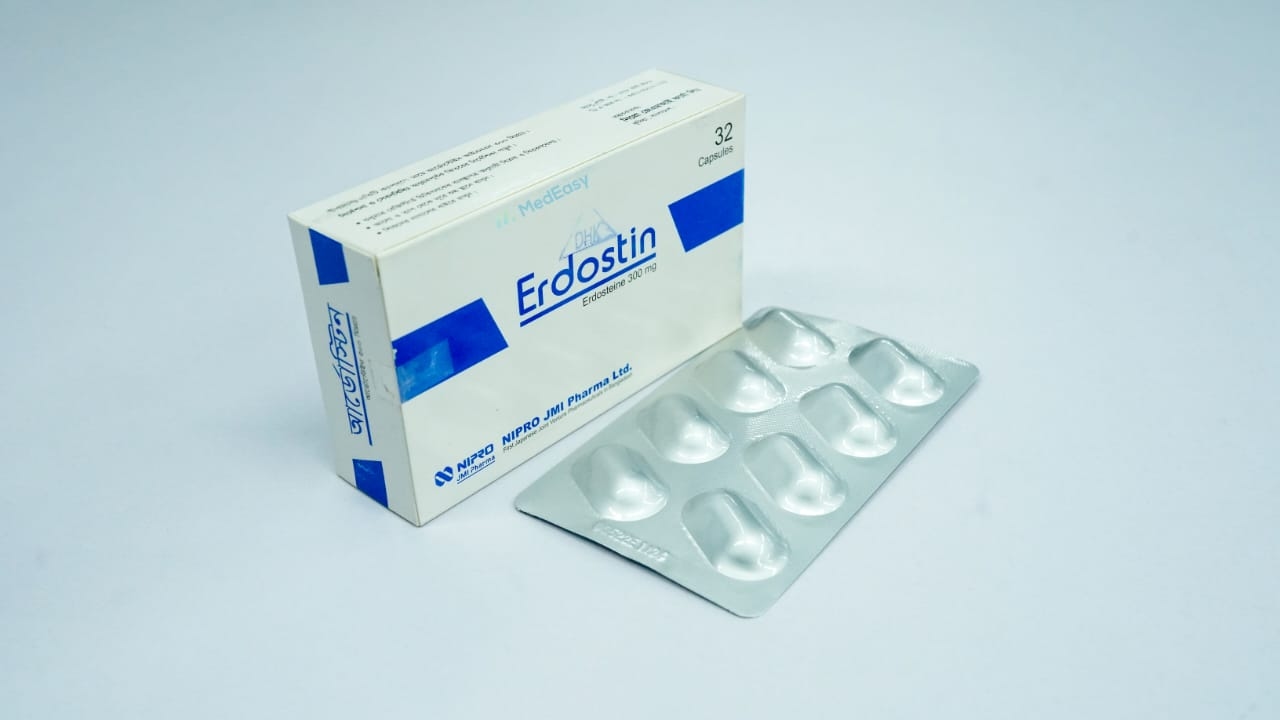
Generic medicine

Erdosteine: Brands, Price & Uses in Bangladesh

Erdosteine is a thiol-derivative mucolytic (mucoactive) agent used to reduce the viscosity of respiratory mucus and facilitate its clearance.

Forms:Capsule

About Erdosteine

Indications of Erdosteine

Erdosteine is a thiol-derivative mucolytic (mucoactive) agent used to reduce the viscosity of respiratory mucus and facilitate its clearance.

Established / Guideline-Supported Use

  • Symptomatic treatment of acute exacerbations of chronic bronchitis (including COPD exacerbations) in adults, where excessive or thick mucus contributes to cough and breathing difficulty. Erdosteine is used as an adjunct to help thin and mobilize bronchial secretions during an acute exacerbation, typically alongside other indicated therapies (e.g., bronchodilators, antibiotics when a bacterial infection is present) rather than as a standalone cure.

Adjunct / Supportive Use

  • Erdosteine may be used as an adjunct to antibiotic therapy in respiratory infections with mucus hypersecretion, as it has been shown to increase antibiotic penetration into bronchial secretions and to reduce bacterial adhesion to the respiratory epithelium (see Pharmacology). It does not replace antibiotic therapy when a bacterial infection is present.

Erdosteine is not indicated for dry (non-productive) cough, and it is not established as a treatment for asthma or for chronic use outside of defined exacerbation episodes. A physician should confirm the diagnosis and appropriateness of Erdosteine before use.

Dosage & Administration of Erdosteine

Adults - Acute Exacerbation of Chronic Bronchitis

PopulationDoseMaximum Duration
Adults (including elderly with normal renal/hepatic function)300 mg twice dailyUp to 10 days per course, per the treated exacerbation; do not continue beyond this without medical reassessment

Renal Impairment

Erdosteine is contraindicated in patients with creatinine clearance below 25 mL/min (see Contraindications). No formal dose adjustment is established for mild-to-moderate renal impairment, but use with caution and physician supervision (see Use in Special Populations).

Hepatic Impairment

Erdosteine is contraindicated in severe hepatic impairment (see Contraindications). Use with caution in mild-to-moderate hepatic impairment.

Pediatric Dosing

See Pediatric Uses; a defined pediatric dosing regimen for the reference-labeled capsule/granule product has not been established, and pediatric use should only follow a physician's specific instructions where a suitable formulation is available.

Side Effects of Erdosteine

Common

  • Epigastric pain / upper abdominal discomfort

Uncommon

  • Headache
  • Altered sense of taste (dysgeusia)
  • Nausea, vomiting, diarrhea
  • Dyspnea or other respiratory symptoms
  • Skin hypersensitivity reactions, including urticaria (hives)

Rare

  • Angioedema

Patients who develop signs of a severe allergic reaction (facial/throat swelling, difficulty breathing, widespread rash) should stop Erdosteine and seek immediate medical attention.

Contraindications of Erdosteine

  • Known hypersensitivity to Erdosteine or to other thiol (sulfhydryl)-containing compounds.
  • Severe hepatic impairment.
  • Severe renal impairment (creatinine clearance below 25 mL/min).
  • Active peptic ulcer disease.
  • Cystinuria or other hereditary disorders of amino acid metabolism that interfere with the body's handling of thiol-group compounds.

Frequently Asked Questions about Erdosteine

What is Erdosteine used for?

Erdosteine is a mucolytic medicine used to help thin and clear thick mucus in adults having an acute exacerbation (flare-up) of chronic bronchitis, including COPD exacerbations, making coughing more productive and breathing easier. It may also help antibiotics work better in the airways when a bacterial infection is present.

How should I take Erdosteine?

Erdosteine is usually taken as 300 mg twice daily, swallowing the capsule whole with water, for up to 10 days per exacerbation, unless your physician advises otherwise. If you have a granule or sachet form, dissolve it in water immediately before drinking.

Can I take a cough suppressant together with Erdosteine?

No. Erdosteine should not be combined with cough-suppressant (antitussive) medicines, because suppressing the cough while Erdosteine loosens mucus can cause dangerous mucus buildup in the airways. Speak to a physician if you need cough symptom relief.

Who should not take Erdosteine?

Erdosteine should not be used by anyone with a known hypersensitivity to Erdosteine or other thiol-containing compounds, severe liver or kidney impairment (creatinine clearance below 25 mL/min), active peptic ulcer disease, or cystinuria/hereditary thiol-metabolism disorders. Discuss your full medical history with your physician before starting Erdosteine.

Is Erdosteine safe in pregnancy or while breastfeeding?

There isn't enough reliable safety data on Erdosteine in pregnancy or breastfeeding, so it is not generally recommended in these situations. If treatment is being considered, a physician should weigh the potential benefit against the potential unknown risk before prescribing Erdosteine.

What side effects can Erdosteine cause?

The most common side effect is upper abdominal (epigastric) discomfort. Less commonly, Erdosteine can cause headache, altered taste, nausea, vomiting, diarrhea, or skin reactions such as hives; rarely, more serious allergic reactions (angioedema) can occur, and immediate medical attention should be sought if this happens.

Disclaimer

The information provided is accurate to the best of our knowledge, but it does not replace professional medical advice. We cannot guarantee its completeness or accuracy, and the absence of specific information about a drug should not be taken as an endorsement. We are not responsible for any consequences arising from this information, so please consult a healthcare professional for any concerns or questions.

DoctorBlogArticles