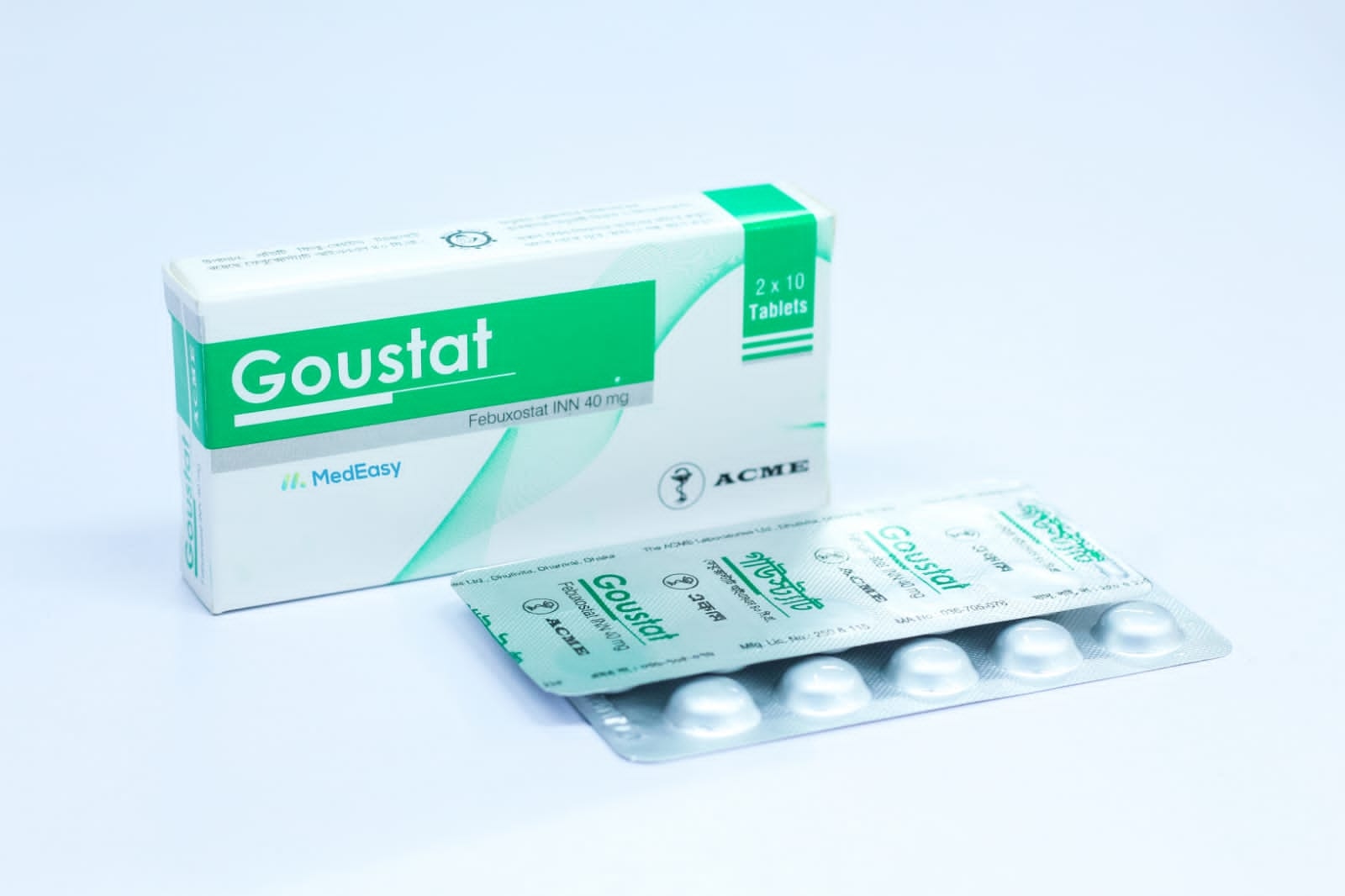
Generic medicine

Febuxostat: Brands, Price & Uses in Bangladesh

Febuxostat is a xanthine oxidase inhibitor used for the chronic management of hyperuricemia (high uric acid) in adult patients with gout.

Forms:Tablet

About Febuxostat

Indications of Febuxostat

Febuxostat is a xanthine oxidase inhibitor used for the chronic management of hyperuricemia (high uric acid) in adult patients with gout.

Established / FDA-Approved Use

  • Chronic management of hyperuricemia in adult patients with gout who have had an inadequate response to, are intolerant of, or for whom treatment with allopurinol is not medically advisable.

Not Indicated

  • Treatment of asymptomatic hyperuricemia (elevated uric acid without gout symptoms).

Important Note on Timing

Febuxostat is not used to treat an acute gout flare. It is a long-term urate-lowering therapy; starting it can transiently increase the frequency of gout flares due to mobilization of urate crystals from tissue deposits, so flare prophylaxis (e.g. an NSAID or colchicine) is often co-prescribed at initiation.

Guideline-Supported / Off-Label Use

  • Prevention of hyperuricemia associated with tumor lysis syndrome in patients undergoing chemotherapy for hematologic malignancies — used in some countries' oncology guidelines and approved in certain international labels; this is not an FDA-approved indication in the United States and should only be used under specialist (oncologist) direction.

Dosage & Administration of Febuxostat

Adult Dose — Chronic Gout / Hyperuricemia

StepDose
Starting dose40 mg orally once daily
If serum uric acid remains ≥ 6 mg/dL after 2 weeksIncrease to 80 mg orally once daily

Administration

  • Take by mouth once daily, with or without food.
  • Swallow the tablet whole; do not use as treatment for an acute gout attack — continue any ongoing gout treatment during the first weeks of therapy as advised by the physician.
  • Gout flare prophylaxis (e.g. NSAID or colchicine) is recommended for up to 6 months at initiation, as directed by the prescriber.

Renal Impairment

No dose adjustment is needed in mild-to-moderate renal impairment. Data in severe renal impairment are limited; use with caution and physician-guided dose limitation.

Hepatic Impairment

No dose adjustment is needed in mild-to-moderate hepatic impairment. Use with caution in severe hepatic impairment, as it has not been well studied.

Pediatric Dose

Safety and efficacy have not been established in pediatric patients; not recommended for use in children.

Side Effects of Febuxostat

Common Side Effects

  • Liver function test abnormalities
  • Nausea
  • Joint pain (arthralgia)
  • Rash
  • Diarrhea
  • Headache
  • Gout flares (especially during the first weeks of treatment)
  • Edema (swelling)

Serious Side Effects (Seek Medical Attention)

  • Signs of liver injury: yellowing of the skin/eyes (jaundice), dark urine, unusual fatigue, right upper abdominal pain (rare cases of hepatic failure, some fatal, have been reported).
  • Serious hypersensitivity/skin reactions: Stevens-Johnson syndrome, toxic epidermal necrolysis, or drug reaction with eosinophilia and systemic symptoms (DRESS) — symptoms may include widespread rash, blistering, fever, or swollen lymph nodes.
  • Symptoms of a heart attack or stroke, such as chest pain, shortness of breath, weakness on one side of the body, or slurred speech (see Precautions and Warnings for cardiovascular risk).

Contraindications of Febuxostat

Febuxostat is contraindicated in the following situations:

  • Known hypersensitivity to Febuxostat or any component of the formulation.
  • Concurrent use with azathioprine or mercaptopurine, due to the risk of severe, life-threatening toxicity from xanthine oxidase inhibition (see Drug Interactions).

Frequently Asked Questions about Febuxostat

What is Febuxostat used for?

Febuxostat is used for the long-term (chronic) management of high uric acid levels (hyperuricemia) in adults with gout, typically in patients who have not responded well to, or cannot tolerate, allopurinol. It is not used to treat a sudden gout attack.

Why do gout flares sometimes get worse when I start Febuxostat?

When you start Febuxostat, uric acid crystals stored in your joints and tissues begin to be mobilized and dissolved, which can temporarily trigger more frequent gout flares in the first weeks to months. Your physician may prescribe an anti-inflammatory medicine (such as an NSAID or colchicine) alongside Febuxostat at the start of treatment to help prevent this. Do not stop Febuxostat on your own if this happens — contact your physician.

Is Febuxostat safe for the heart?

Febuxostat carries a boxed warning because, in a large clinical trial of gout patients with existing heart disease, those taking Febuxostat had a higher rate of cardiovascular death than those taking allopurinol. For this reason, Febuxostat is generally reserved for patients who cannot use allopurinol, and physicians will weigh personal cardiovascular risk factors before prescribing it. Report any chest pain, shortness of breath, or symptoms of stroke to a doctor immediately.

Can I take Febuxostat with azathioprine or mercaptopurine?

No. Febuxostat must not be taken with azathioprine or mercaptopurine (6-mercaptopurine), because it blocks the enzyme that breaks these drugs down, which can cause dangerous, potentially life-threatening drops in blood cell counts. Tell your physician about all medicines you take before starting Febuxostat.

Can pregnant or breastfeeding women take Febuxostat?

Data in pregnancy are limited, so Febuxostat should be used in pregnancy only if clearly needed and a physician determines the benefit outweighs the potential risk to the baby. It is not known whether Febuxostat passes into human breast milk, so breastfeeding mothers should consult their physician, who will weigh the benefits of breastfeeding against the mother's need for the medicine.

What should I do if I miss a dose or take too much Febuxostat?

If you miss a dose, take it as soon as you remember unless it is almost time for your next dose — do not double up. If you or someone else has taken more Febuxostat than prescribed, seek immediate medical attention or contact emergency services/poison control right away, even if no symptoms are present yet.

Disclaimer

The information provided is accurate to the best of our knowledge, but it does not replace professional medical advice. We cannot guarantee its completeness or accuracy, and the absence of specific information about a drug should not be taken as an endorsement. We are not responsible for any consequences arising from this information, so please consult a healthcare professional for any concerns or questions.
DoctorBlogArticles