
Generic medicine

Filgrastim: Brands, Price & Uses in Bangladesh

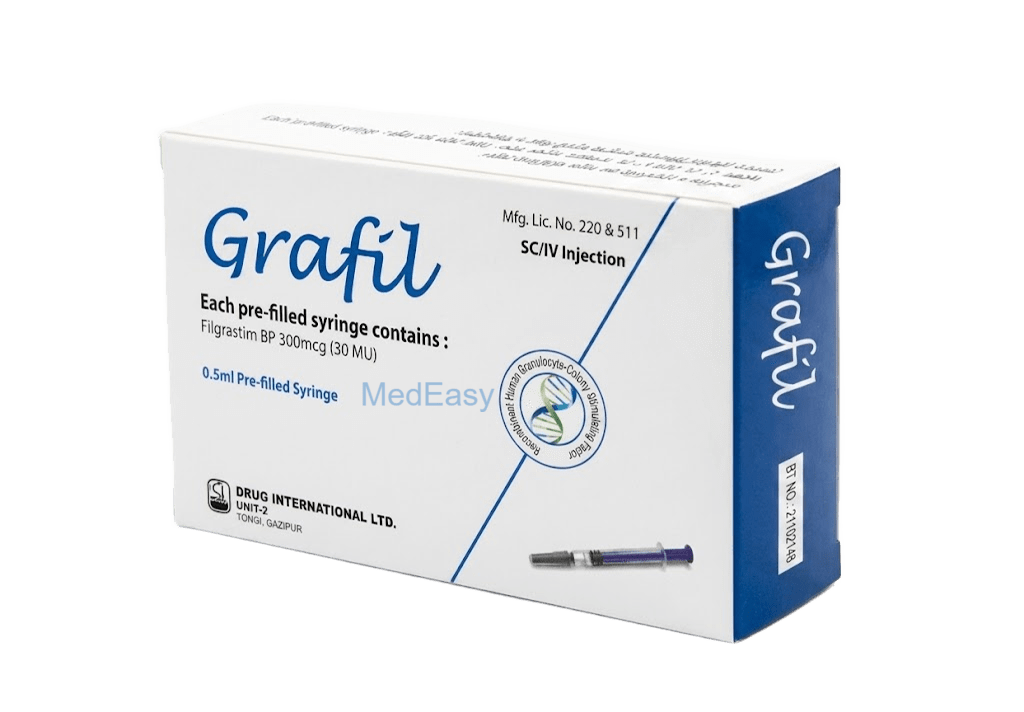
Filgrastim is a recombinant human granulocyte colony-stimulating factor (G-CSF) used to stimulate the production of neutrophils (a type of white blood cell) in patients at risk of infection due to…

Forms:IV/SC Injection

About Filgrastim

Indications of Filgrastim

Filgrastim is a recombinant human granulocyte colony-stimulating factor (G-CSF) used to stimulate the production of neutrophils (a type of white blood cell) in patients at risk of infection due to low neutrophil counts (neutropenia).

Established/FDA-approved indications

  • Chemotherapy-induced neutropenia: To decrease the incidence of infection, as manifested by febrile neutropenia, in patients with non-myeloid malignancies receiving myelosuppressive anti-cancer chemotherapy.
  • Acute myeloid leukemia (AML): To reduce the time to neutrophil recovery and the duration of fever following induction or consolidation chemotherapy.
  • Bone marrow transplantation (BMT): To reduce the duration of neutropenia and neutropenia-related clinical sequelae in patients with non-myeloid malignancies undergoing myeloablative chemotherapy followed by bone marrow transplant.
  • Peripheral blood progenitor cell (PBPC) mobilization: To mobilize hematopoietic progenitor cells into the peripheral blood for collection by leukapheresis.
  • Severe chronic neutropenia (SCN): For chronic administration to reduce the incidence and duration of infection-related sequelae (fever, infections, oral ulcers) in symptomatic patients with congenital neutropenia, cyclic neutropenia, or idiopathic neutropenia.
  • Acute radiation syndrome: To increase survival in patients acutely exposed to myelosuppressive doses of radiation (hematopoietic subsyndrome of acute radiation syndrome).

Filgrastim is not indicated for mobilizing peripheral blood progenitor cells in patients with cancer whose malignancy has bone marrow involvement, and its safety and efficacy have not been established for use in chronic myeloid leukemia or myelodysplastic syndrome.

Dosage & Administration of Filgrastim

IndicationTypical Adult Dose of Filgrastim
Myelosuppressive chemotherapy (non-myeloid malignancy)5 mcg/kg/day subcutaneously or intravenously, starting no earlier than 24 hours after chemotherapy; continue until expected neutrophil nadir has passed and count has recovered to normal range (up to about 2 weeks)
Acute myeloid leukemia (post-induction/consolidation)5 mcg/kg/day beginning at least 24 hours after chemotherapy, continued until neutrophil recovery
Bone marrow transplantation10 mcg/kg/day as an intravenous infusion, starting at least 24 hours after chemotherapy and after marrow infusion; dose titrated based on neutrophil response
Peripheral blood progenitor cell mobilization10 mcg/kg/day subcutaneously for at least 4 days before the first leukapheresis, continued until the last collection
Severe chronic neutropenia (congenital)6 mcg/kg subcutaneously twice daily
Severe chronic neutropenia (cyclic/idiopathic)5 mcg/kg subcutaneously once daily

Doses are individualized based on absolute neutrophil count (ANC) response, and complete blood counts should be monitored regularly during therapy. Filgrastim must not be given in the period from 24 hours before to 24 hours after cytotoxic chemotherapy (see Precautions). See Pediatric Uses for weight-based dosing in children.

Side Effects of Filgrastim

Very common

  • Bone pain (a characteristic, dose-related effect of increased bone marrow activity)
  • Musculoskeletal/back pain
  • Injection site reactions (redness, swelling, pain)
  • Headache
  • Fever, fatigue
  • Nausea

Common

  • Elevated alkaline phosphatase, uric acid, and lactate dehydrogenase (usually mild and reversible)
  • Transient decreases in blood pressure
  • Epistaxis (nosebleed), rash

Rare but serious (seek prompt medical attention)

  • Splenic rupture: including fatal cases; presents as left upper abdominal or shoulder-tip pain — requires urgent evaluation.
  • Acute respiratory distress syndrome (ARDS): presents as fever, lung infiltrates, and respiratory distress.
  • Serious allergic reactions/anaphylaxis: rash, urticaria, facial swelling, breathing difficulty, hypotension.
  • Sickle cell crises: in patients with sickle cell disorders, sometimes fatal.
  • Capillary leak syndrome: characterized by hypotension, low serum albumin, edema, and hemoconcentration, which can be life-threatening if not promptly treated.
  • Glomerulonephritis, cutaneous vasculitis, and (rarely) aortitis.

Contraindications of Filgrastim

Filgrastim is contraindicated in patients with a known history of serious allergic reactions (e.g., anaphylaxis) to Filgrastim, pegfilgrastim, or any other E. coli-derived recombinant protein product.

Frequently Asked Questions about Filgrastim

What is Filgrastim used for?

Filgrastim is used to reduce the risk of infection in patients whose white blood cell (neutrophil) count is low, most often due to chemotherapy, bone marrow transplantation, or certain chronic neutropenia conditions. It is also used to mobilize stem cells into the blood before collection for transplant.

How is Filgrastim given?

Filgrastim is given as an injection under the skin (subcutaneous) or into a vein (intravenous), usually once daily, at a dose calculated based on body weight. Your doctor or nurse will determine the correct dose and schedule for your specific condition.

What are the most common side effects of Filgrastim?

The most common side effect of Filgrastim is bone pain, along with headache, fatigue, and mild injection site reactions. These are usually manageable with over-the-counter pain relief as advised by your doctor.

Are there any serious risks with Filgrastim?

Yes. Rare but serious risks include splenic rupture (sudden left-sided abdominal or shoulder pain requires urgent medical attention), acute respiratory distress syndrome, serious allergic reactions, sickle cell crises in patients with sickle cell disease, and capillary leak syndrome. Contact your doctor or emergency services immediately if you notice unusual pain, swelling, breathing difficulty, or rash while using Filgrastim.

Can Filgrastim be used during pregnancy or breastfeeding?

Filgrastim should be used during pregnancy only if clearly needed, since data remain limited; discuss the potential risks and benefits with your physician. For breastfeeding, available data have not shown harm to the infant, but use should still be guided by your doctor.

How should Filgrastim be stored?

Filgrastim must be kept refrigerated at 2-8°C, protected from light, and never frozen. If it has been out of the refrigerator, check the product labeling for the maximum allowed time at room temperature before use, and keep it out of reach of children.

Disclaimer

The information provided is accurate to the best of our knowledge, but it does not replace professional medical advice. We cannot guarantee its completeness or accuracy, and the absence of specific information about a drug should not be taken as an endorsement. We are not responsible for any consequences arising from this information, so please consult a healthcare professional for any concerns or questions.
DoctorBlogArticles