10% Off
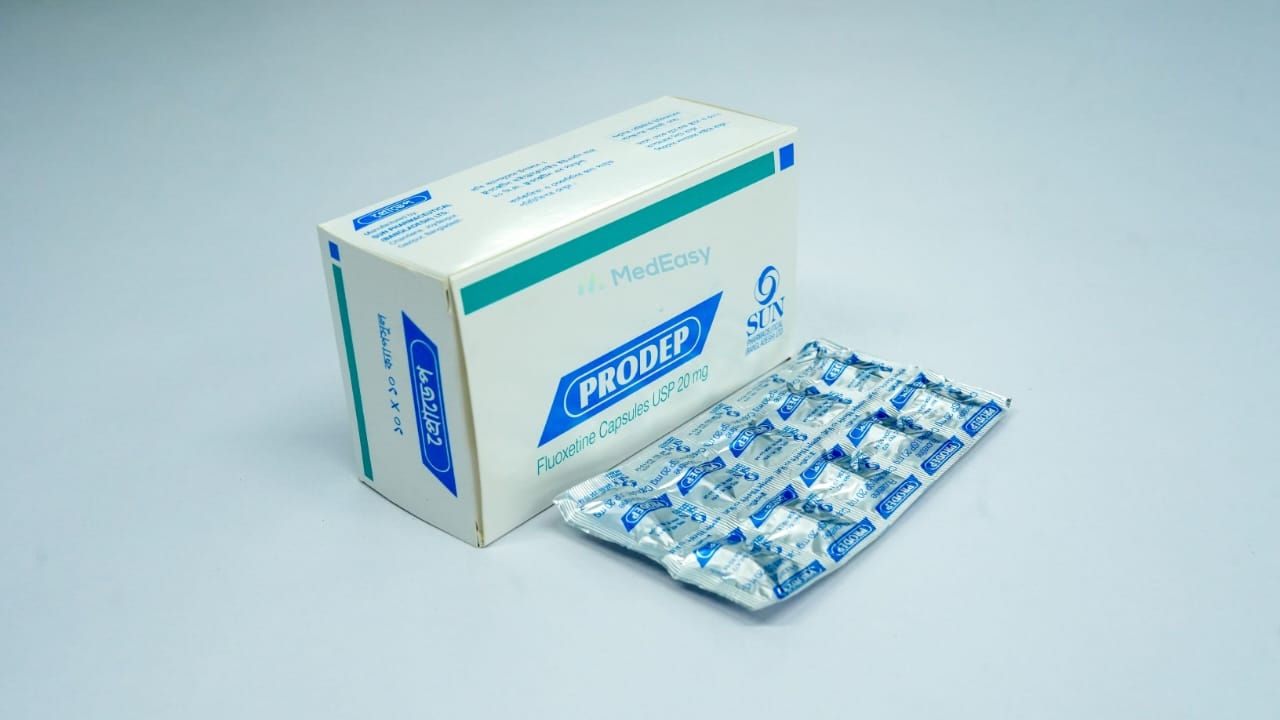
Prodep20 mg
Sun Pharmaceutical Ltd.
৳27.09
Add to cart
Fluoxetine Hydrochloride is a selective serotonin reuptake inhibitor (SSRI) indicated for the treatment of the following conditions and more.
Fluoxetine Hydrochloride is a selective serotonin reuptake inhibitor (SSRI) indicated for the treatment of the following conditions, with evidence strength varying by indication:
Fluoxetine Hydrochloride should only be used for these indications under the supervision of a qualified physician, who will confirm the diagnosis and select the appropriate regimen.
Dosage of Fluoxetine Hydrochloride must be individualized by a physician based on the indication, patient response, and tolerability. Representative adult dosing by indication is summarized below.
| Indication | Usual Adult Starting Dose | Usual Adult Dose Range |
|---|---|---|
| Major Depressive Disorder | 20 mg once daily (morning) | 20-80 mg/day |
| Obsessive-Compulsive Disorder | 20 mg once daily | 20-80 mg/day |
| Bulimia Nervosa | 60 mg once daily (may need gradual titration from a lower dose) | Typically 60 mg/day |
| Panic Disorder | 10 mg once daily | 10-60 mg/day |
| Premenstrual Dysphoric Disorder | 20 mg once daily, continuously or during the luteal phase only | 20 mg/day |
For MDD (age 8 and above) and OCD (age 7 and above), treatment is usually initiated at a low dose (e.g., 10 mg/day) with gradual titration by the physician based on weight, response, and tolerability. Pediatric use for other indications is not established.
A lower dose or less frequent dosing schedule should be used in patients with hepatic impairment, as clearance of Fluoxetine Hydrochloride and its active metabolite is reduced.
Fluoxetine Hydrochloride may be taken with or without food. Doses above 20 mg/day may be divided (morning and noon) to reduce nausea and insomnia. Capsules/tablets should be swallowed whole; the oral solution should be measured with an accurate measuring device.
Do not stop, increase, decrease, or share this medicine with others without consulting your physician. Abrupt discontinuation after prolonged use should be avoided; if discontinuation is necessary, the dose should be tapered gradually under medical supervision.
Common and clinically important side effects of Fluoxetine Hydrochloride include:
Because Fluoxetine Hydrochloride and its active metabolite have a long half-life, side effects and interactions may take longer to appear or resolve compared with other SSRIs.
Fluoxetine Hydrochloride is contraindicated in the following situations:
Disclaimer
The information provided is accurate to the best of our knowledge, but it does not replace professional medical advice. We cannot guarantee its completeness or accuracy, and the absence of specific information about a drug should not be taken as an endorsement. We are not responsible for any consequences arising from this information, so please consult a healthcare professional for any concerns or questions.