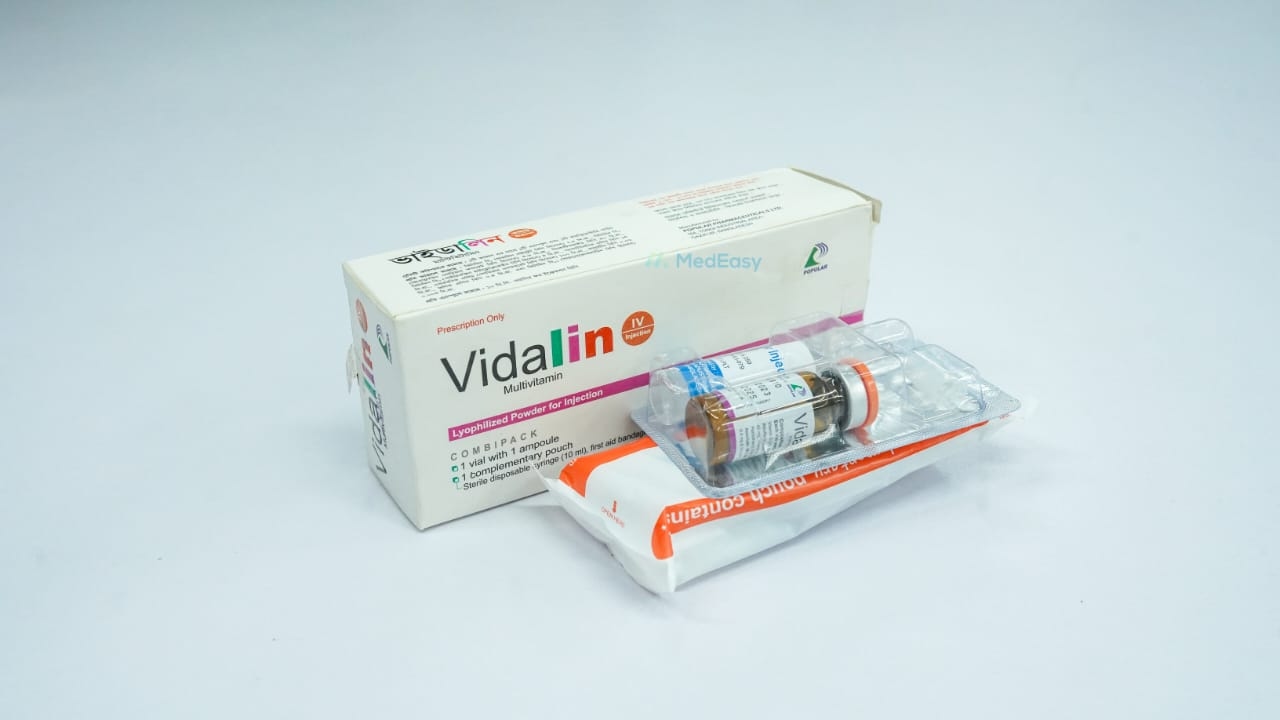
Generic medicine

Multivitamin [Injection]: Brands, Price & Uses in Bangladesh

Multivitamin [Injection] is a parenteral (injectable) multivitamin preparation combining several water-soluble and, in many formulations, fat-soluble vitamins.

Forms:IV Infusion

About Multivitamin [Injection]

Indications of Multivitamin [Injection]

Multivitamin [Injection] is a parenteral (injectable) multivitamin preparation combining several water-soluble and, in many formulations, fat-soluble vitamins. It is indicated for the following uses, classified by strength of evidence:

  • Established/guideline-supported use: Prevention and treatment of vitamin deficiency in patients who are unable to take, or cannot adequately absorb, oral vitamin supplements - for example, hospitalized patients who are nil-by-mouth, patients with severe gastrointestinal disease or malabsorption, and patients receiving total or partial parenteral nutrition (TPN/PPN), where Multivitamin [Injection] is added to the nutrition admixture as a source of daily vitamin requirements.
  • Adjunct use: Adjunctive nutritional support in critically ill, post-surgical, or severely malnourished patients as part of an overall parenteral nutrition or fluid-replacement plan, used together with appropriate caloric, protein, electrolyte, and trace-element repletion under medical supervision.
  • Combination-therapy use: As a component of compounded parenteral nutrition solutions, where Multivitamin [Injection] is combined with amino acids, dextrose, lipids, electrolytes, and trace elements by a pharmacist or trained clinician; it is not intended to be given as the sole nutritional intervention.

Multivitamin [Injection] is intended for use by, or under the direct supervision of, a physician or other qualified healthcare professional in a hospital or clinical setting; it is not typically a self-administered outpatient product.

Dosage & Administration of Multivitamin [Injection]

Dosage of Multivitamin [Injection] depends on the specific product formulation (adult vs. pediatric, IV additive vs. IM), the clinical indication, and institutional protocol. The figures below are general guidance; the specific product's labeling and the prescriber's instructions take precedence.

Indication/PopulationTypical Dose
Adults - daily additive to parenteral nutrition (IV)One standard adult vial (per product labeling) added to the parenteral nutrition admixture or IV fluid once daily
Adults - general nutritional supplementation (IM, where a product is labeled for this route)As directed by the physician, typically administered on a scheduled basis (e.g., a few times weekly) rather than daily; not for continuous self-administration
Pediatric patientsA pediatric-specific, lower-dose Multivitamin [Injection] formulation must be used if available; dosing is weight/age-based and must be individualized by the treating physician (see Pediatric Uses)
Renal/hepatic impairmentNo specific validated dose adjustment is established for most components; use with caution and monitor for accumulation of fat-soluble vitamins (see Precautions and Use in Special Populations)

Multivitamin [Injection] must be administered by, or under the direct supervision of, a trained healthcare professional. Do not exceed the recommended frequency of administration, given the risk of cumulative toxicity with fat-soluble vitamins on repeated dosing.

Side Effects of Multivitamin [Injection]

Multivitamin [Injection] is generally well tolerated when administered as directed. Reported side effects include:

  • Common: Pain, redness, or induration at the intramuscular injection site; mild flushing or a transient warm sensation during IV administration.
  • Uncommon: Nausea, headache, and mild pruritus or rash.
  • Rare but serious: Hypersensitivity or anaphylactoid reactions (including bronchospasm, hypotension, and angioedema), particularly with rapid IV administration; symptoms of hypervitaminosis with excessive or prolonged dosing (see Overdose).

Contraindications of Multivitamin [Injection]

Multivitamin [Injection] is contraindicated in:

  • Known hypersensitivity to any vitamin component of the specific formulation or to any excipient of the product.
  • Pre-existing hypervitaminosis A or hypervitaminosis D (in formulations containing these vitamins).

Frequently Asked Questions about Multivitamin [Injection]

What is Multivitamin [Injection] used for?

Multivitamin [Injection] is used to prevent or treat vitamin deficiency in patients who cannot take or absorb oral vitamins adequately, such as hospitalized patients on parenteral nutrition, those who are nil-by-mouth, or patients with severe malabsorption. It is given by a healthcare professional as an additive to intravenous fluids/parenteral nutrition or, for some formulations, by intramuscular injection.

Can I inject Multivitamin [Injection] myself at home?

No. Multivitamin [Injection] is intended to be administered by, or under the direct supervision of, a trained healthcare professional in a hospital or clinical setting. It is generally not a self-administered outpatient product, and the intravenous route in particular requires proper aseptic technique and controlled infusion rate.

Is Multivitamin [Injection] safe during pregnancy or breastfeeding?

Multivitamin [Injection] should be used in pregnancy and breastfeeding only if clearly needed - for example, when a patient cannot meet vitamin needs orally - and after your physician weighs the potential benefit against any potential risk. Doses should not exceed those recommended, particularly for vitamins A and D, which can be harmful to the fetus in excess.

What are the side effects of Multivitamin [Injection]?

Most patients tolerate Multivitamin [Injection] well. Injection-site pain or redness (with intramuscular use) and mild flushing or nausea (with intravenous use) can occur. Rarely, hypersensitivity or anaphylactoid reactions can occur, especially with rapid intravenous administration - report any difficulty breathing, swelling, or rash to the healthcare team immediately.

Can Multivitamin [Injection] be given with blood thinners like warfarin?

Some Multivitamin [Injection] formulations contain vitamin K, which can reduce the effect of warfarin and other vitamin K antagonists and destabilize INR control, while formulations without vitamin K do not carry this risk. Your healthcare team will check the specific product's composition and may monitor your INR more closely if needed.

What happens if too much Multivitamin [Injection] is given?

Giving Multivitamin [Injection] too frequently or in excessive amounts, especially of its fat-soluble vitamin components, can cause hypervitaminosis, with symptoms such as nausea, vomiting, headache, or (with excess vitamin D) confusion and excessive thirst. If an overdose or a reaction during administration is suspected, the infusion/injection should be stopped immediately and emergency medical attention sought.

Disclaimer

The information provided is accurate to the best of our knowledge, but it does not replace professional medical advice. We cannot guarantee its completeness or accuracy, and the absence of specific information about a drug should not be taken as an endorsement. We are not responsible for any consequences arising from this information, so please consult a healthcare professional for any concerns or questions.

DoctorBlogArticles