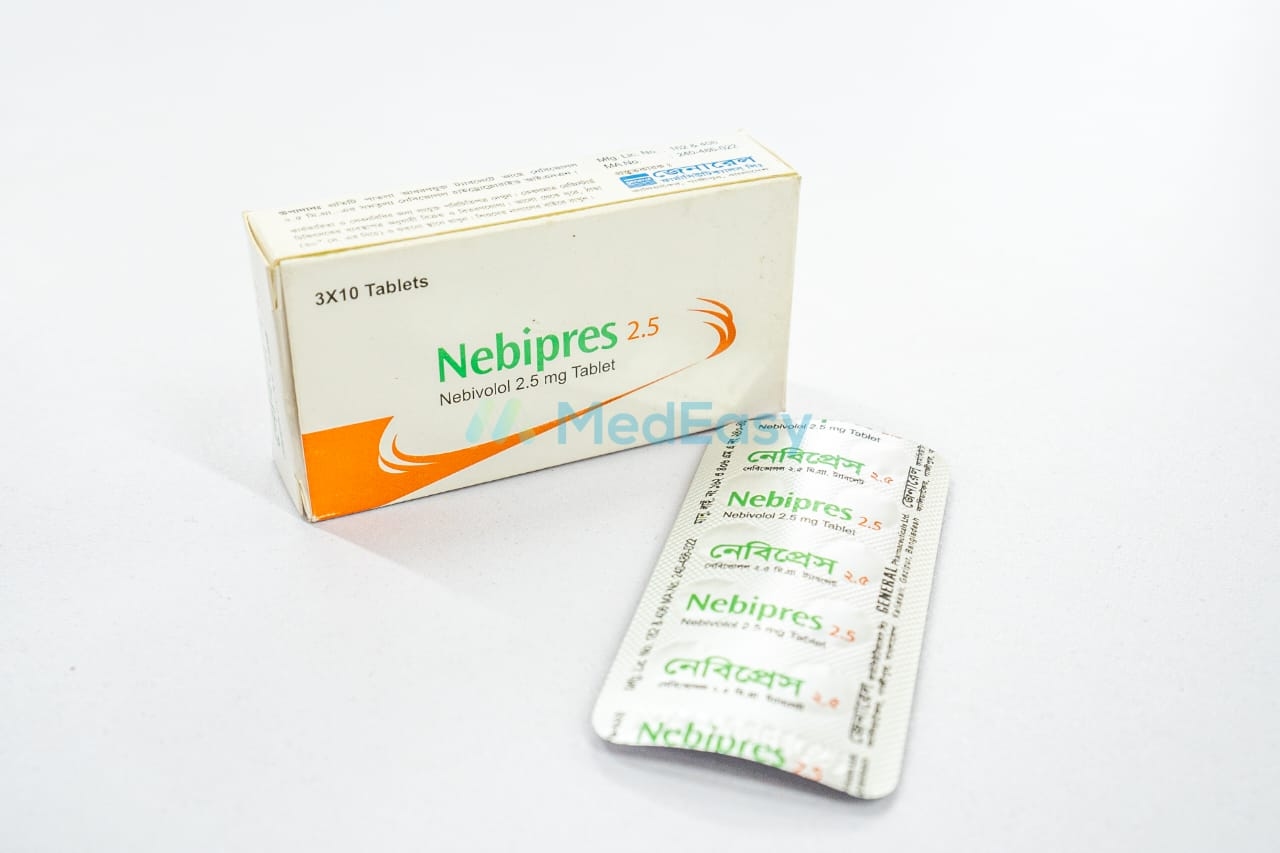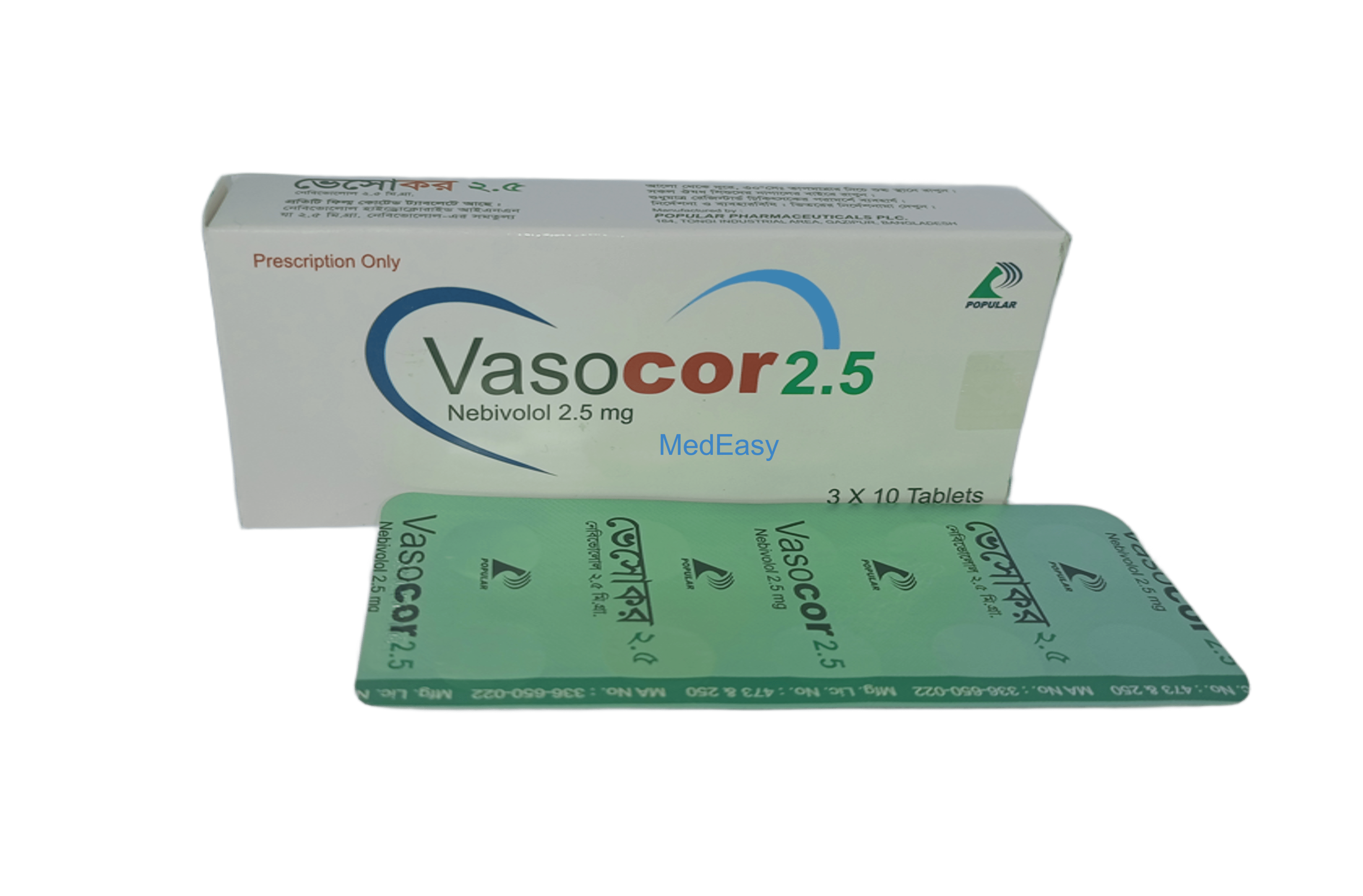
8% Off
Vasocor2.5 mg
Popular Pharmaceuticals Ltd.
৳6.44
Add to cart
Nebivolol is indicated for the treatment of hypertension (high blood pressure) in adults, either alone or in combination with other antihypertensive agents, to lower blood pressure.
Nebivolol is indicated for the treatment of hypertension (high blood pressure) in adults, either alone or in combination with other antihypertensive agents, to lower blood pressure. Lowering blood pressure reduces the risk of fatal and non-fatal cardiovascular events, primarily strokes and myocardial infarctions.
Nebivolol is also used off-label, based on clinical evidence and specialist practice, as an adjunct in the management of stable, mild-to-moderate chronic heart failure in appropriately selected patients (this is an approved indication in some countries outside the US, but not an FDA-approved indication in the United States). Such use should only be initiated and supervised by a physician experienced in heart failure management.
| Step | Dose | Notes |
|---|---|---|
| Starting dose | 5 mg once daily | With or without food, taken at the same time each day |
| Titration | Increase at 2-week intervals | Based on blood pressure response |
| Maximum dose | 40 mg once daily | Higher doses have not shown additional antihypertensive benefit in trials |
Mild-to-moderate renal impairment: no dose adjustment generally required. Severe renal impairment (creatinine clearance <30 mL/min) or patients on dialysis: initiate at 2.5 mg once daily; titrate cautiously and monitor closely, as data are limited.
Mild hepatic impairment: no dose adjustment generally needed. Moderate hepatic impairment: initiate at 2.5 mg once daily and titrate cautiously. Severe hepatic impairment is a contraindication (see Contraindications).
No overall dose adjustment is routinely required based on age alone, but titration should be cautious given a higher likelihood of reduced renal/hepatic function.
If a dose of Nebivolol is missed, it should be taken as soon as remembered unless it is nearly time for the next dose, in which case the missed dose should be skipped. Do not double the dose.
Nebivolol must never be stopped abruptly; see Precautions and Warnings.
Most patients tolerate Nebivolol well. Common side effects (occurring in clinical trials at rates greater than placebo) include:
Less common but serious effects can include marked bradycardia, hypotension, heart block, bronchospasm (especially in patients with asthma/COPD), and worsening of peripheral circulation problems. Patients should seek medical attention for fainting, very slow pulse, severe dizziness, or difficulty breathing.
Nebivolol is contraindicated in patients with:
Disclaimer
The information provided is accurate to the best of our knowledge, but it does not replace professional medical advice. We cannot guarantee its completeness or accuracy, and the absence of specific information about a drug should not be taken as an endorsement. We are not responsible for any consequences arising from this information, so please consult a healthcare professional for any concerns or questions.