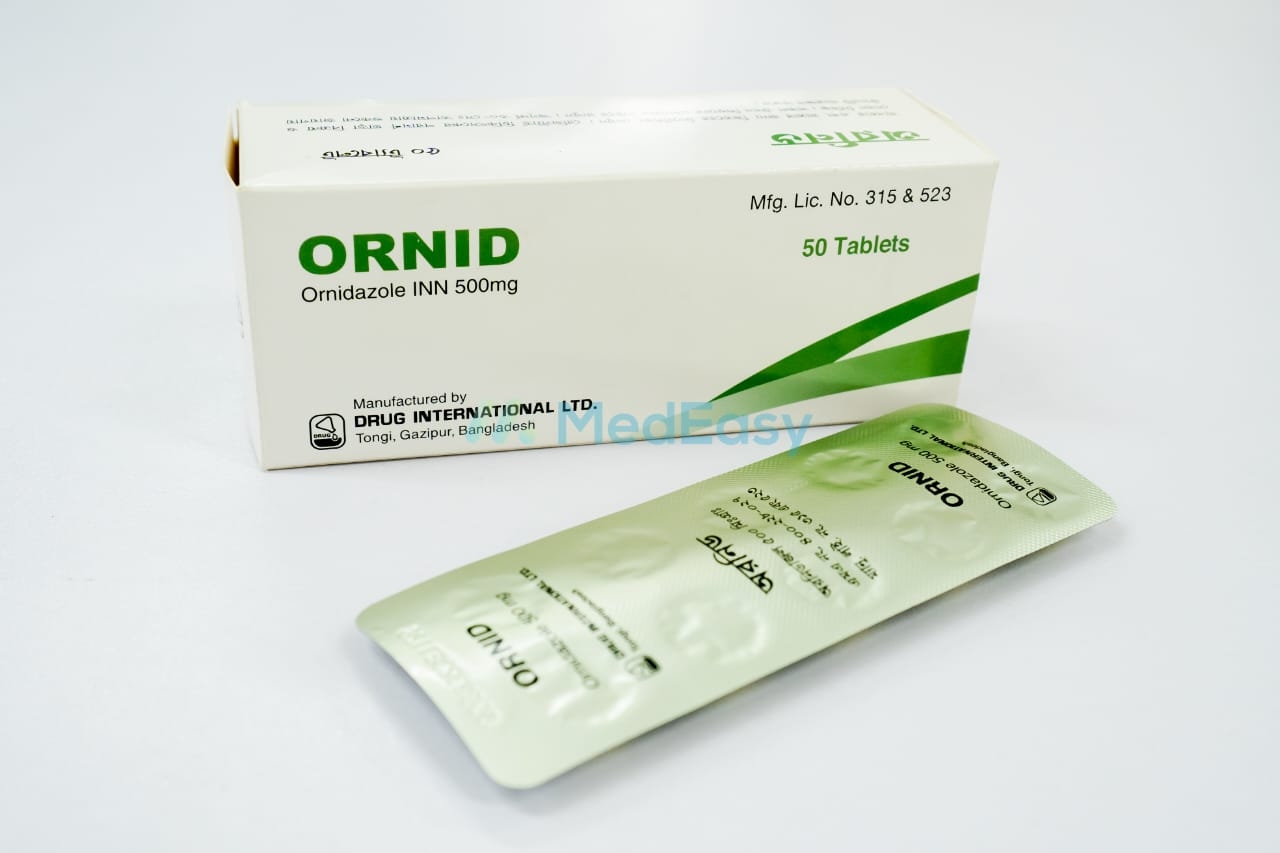
Generic medicine

Ornidazole: Brands, Price & Uses in Bangladesh

Ornidazole is a nitroimidazole derivative with antiprotozoal and antibacterial (anti-anaerobic) activity.

Forms:Tablet

About Ornidazole

Indications of Ornidazole

Ornidazole is a nitroimidazole derivative with antiprotozoal and antibacterial (anti-anaerobic) activity. Its uses can be classified by strength of evidence as follows:

Established / Widely Approved Uses

  • Intestinal amoebiasis (amoebic dysentery) caused by Entamoeba histolytica
  • Amoebic liver abscess
  • Giardiasis (intestinal infection caused by Giardia lamblia/intestinalis)
  • Trichomoniasis, a sexually transmitted infection caused by Trichomonas vaginalis (both symptomatic patients and their sexual partners are typically treated)
  • Bacterial vaginosis associated with anaerobic organisms
  • Treatment of infections caused by susceptible anaerobic bacteria, including intra-abdominal, pelvic, and post-surgical anaerobic infections, usually as part of combination therapy when mixed aerobic-anaerobic infection is suspected

Adjunct / Prophylactic Use

  • Perioperative antibiotic prophylaxis to prevent postoperative anaerobic infection in colorectal, gynaecological, and other surgery with a risk of anaerobic contamination (given as a single pre-operative dose, usually alongside an agent covering aerobic organisms)

Ornidazole is not approved or marketed in the United States, so it does not carry a US FDA label; the uses above reflect established international prescribing practice and guideline-supported indications, including use in South Asian countries such as Bangladesh.

Dosage & Administration of Ornidazole

Dosage of Ornidazole should always be individualised by the prescribing physician based on the indication, severity of infection, patient age, weight, and renal/hepatic function. The following is general dosing guidance:

IndicationAdult DosePaediatric DoseTypical Duration
Intestinal amoebiasis (amoebic dysentery)500 mg twice daily25-40 mg/kg/day in divided doses5-7 days
Amoebic liver abscess500 mg twice daily25-40 mg/kg/day in divided doses5-10 days
GiardiasisSingle dose of 1.5 g, or 500 mg twice daily40 mg/kg as a single dose (max as per adult dose)1-2 days
Trichomoniasis / Bacterial vaginosisSingle dose of 1.5 g, or 500 mg twice daily; treat sexual partner concurrentlyNot routinely indicated1-5 days
Anaerobic bacterial infections500-1000 mg every 12 hours (oral or IV), usually with an agent active against aerobesIndividualised by weight; specialist guidance advised5-10 days depending on response
Surgical prophylaxis (anaerobic coverage)500-1000 mg IV as a single dose, 30-60 minutes before surgeryNot routinely usedSingle dose (occasionally 1-2 further doses post-op)

Antimicrobial stewardship: Take Ornidazole exactly as prescribed by your physician; do not stop, extend, skip doses, or share this medicine with others without medical advice, even if symptoms improve before the course is finished.

See Precautions & Warnings for hepatic dose adjustment, and Use in Special Populations for renal impairment and elderly dosing considerations.

Side Effects of Ornidazole

Most adverse effects of Ornidazole are mild and transient. Reported side effects include:

Common

  • Nausea, vomiting, epigastric discomfort
  • Metallic or bitter taste in the mouth
  • Headache, dizziness, drowsiness

Less Common

  • Diarrhoea, dry mouth
  • Peripheral neuropathy (tingling, numbness) with prolonged or high-dose therapy — see Precautions
  • Skin rash, pruritus

Rare but Serious

  • Hypersensitivity reactions, including angioedema
  • Leukopenia (usually reversible on stopping the drug)
  • Seizures or transient central nervous system disturbances (mainly with high-dose or prolonged therapy)

Seek medical attention promptly if severe rash, breathing difficulty, unusual bleeding/bruising, or persistent numbness/tingling occurs.

Contraindications of Ornidazole

Ornidazole is contraindicated in the following situations:

  • Known hypersensitivity to Ornidazole or to other nitroimidazole derivatives (e.g., metronidazole, tinidazole), due to cross-sensitivity
  • First trimester of pregnancy
  • Patients with a history of blood dyscrasia (e.g., significant leukopenia)
  • Active organic disease of the central nervous system (e.g., epilepsy) when prolonged or high-dose therapy is being considered

Frequently Asked Questions about Ornidazole

What is Ornidazole used for?

Ornidazole is used to treat protozoal infections such as intestinal amoebiasis (amoebic dysentery), amoebic liver abscess, giardiasis, and trichomoniasis, as well as infections caused by anaerobic bacteria. It is also used as a single pre-operative dose to prevent anaerobic infection during certain surgeries.

Can I drink alcohol while taking Ornidazole?

No. Alcohol should be avoided during treatment with Ornidazole and for at least 3 days after finishing the course, because it can cause a disulfiram-like reaction with symptoms such as flushing, headache, nausea, vomiting, and a fast heartbeat.

Is Ornidazole safe during pregnancy?

Ornidazole is contraindicated in the first trimester of pregnancy. In later trimesters it should be used only if a physician judges it clearly necessary and the potential benefit outweighs potential risk to the baby. Always consult your physician before taking Ornidazole if you are pregnant or planning pregnancy.

Can I stop taking Ornidazole once I feel better?

No. You should complete the full course of Ornidazole exactly as prescribed by your physician, even if your symptoms improve earlier. Stopping early, skipping doses, or sharing the medicine with others can allow the infection to persist or recur, so always finish the course and follow medical advice.

What are the common side effects of Ornidazole?

Common side effects include nausea, vomiting, a metallic or bitter taste, headache, dizziness, and drowsiness. These are usually mild and temporary. Seek medical attention if you experience severe rash, breathing difficulty, unusual bleeding, persistent numbness/tingling, or other severe symptoms.

Is Ornidazole safe for children?

Ornidazole can be used in children for amoebiasis and giardiasis with dosing calculated by body weight under a paediatrician's supervision. Safety in very young infants and neonates has not been well established, so use in this age group should only occur when clearly necessary and under close medical supervision.

Disclaimer

The information provided is accurate to the best of our knowledge, but it does not replace professional medical advice. We cannot guarantee its completeness or accuracy, and the absence of specific information about a drug should not be taken as an endorsement. We are not responsible for any consequences arising from this information, so please consult a healthcare professional for any concerns or questions.


DoctorBlogArticles