8% Off
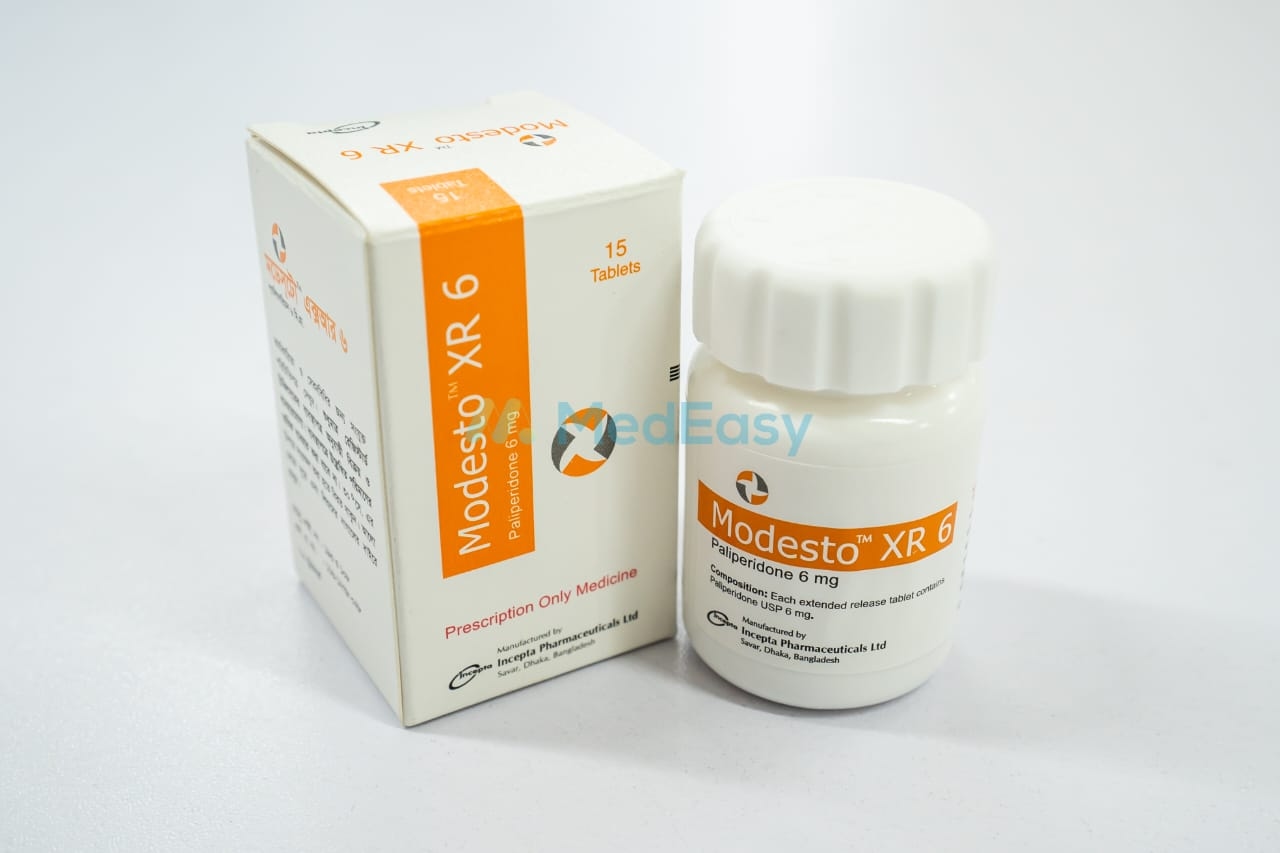
Modesto XR3 mg
Incepta Pharmaceuticals Ltd.
৳151.80
Add to cart
Paliperidone is an atypical (second-generation) antipsychotic, the major active metabolite of risperidone.
Paliperidone is an atypical (second-generation) antipsychotic, the major active metabolite of risperidone. Its evidence-based uses include:
Paliperidone is not approved for treatment of dementia-related psychosis in elderly patients (see Precautions and Warnings for the boxed warning).
| Parameter | Dose |
|---|---|
| Initial dose | 6 mg once daily, in the morning |
| Recommended range | 3–12 mg once daily |
| Titration | Increase by 3 mg increments; allow at least 5 days between dose increases |
| Maximum dose | 12 mg once daily |
| Parameter | Dose |
|---|---|
| Initial dose | 6 mg once daily, in the morning |
| Recommended range | 3–12 mg once daily |
| Titration | Increase by 3 mg increments; allow at least 4 days between dose increases |
| Body weight | Dose |
|---|---|
| Initial dose (all weights) | 3 mg once daily |
| Less than 51 kg | Maximum 6 mg once daily |
| 51 kg or more | Maximum 12 mg once daily |
Paliperidone is not established as safe and effective for schizoaffective disorder in patients under 18 years of age.
| Renal function | Dose |
|---|---|
| Mild impairment (CrCl 50 to <80 mL/min) | Initial 3 mg once daily; maximum 6 mg once daily |
| Moderate to severe impairment (CrCl 10 to <50 mL/min) | Initial 1.5 mg once daily; maximum 3 mg once daily |
Tablets must be swallowed whole with the aid of liquid and must not be chewed, divided, or crushed. Paliperidone extended-release tablets may be taken with or without food, at approximately the same time each day. Patients should be counselled that the tablet shell is non-deformable and may occasionally be seen intact in the stool — this is expected with the OROS delivery system and does not indicate the dose was not absorbed.
| Category | Effects |
|---|---|
| Very common / common | Akathisia, somnolence/sedation, tremor, dystonia, cogwheel rigidity (extrapyramidal symptoms), tachycardia, weight gain, dyspepsia, constipation, anxiety, headache |
| Hyperprolactinemia-related | Menstrual irregularities, galactorrhea, gynecomastia, decreased libido, erectile dysfunction |
| Less common but clinically important (see Precautions and Warnings) | Neuroleptic malignant syndrome, tardive dyskinesia, QT prolongation, orthostatic hypotension and syncope, significant weight gain and metabolic changes (hyperglycemia, dyslipidemia), leukopenia/neutropenia (rare) |
Paliperidone is contraindicated in patients with known hypersensitivity to Paliperidone or to risperidone, or to any component of the formulation. Hypersensitivity reactions, including anaphylaxis and angioedema, have been reported.
Disclaimer
The information provided is accurate to the best of our knowledge, but it does not replace professional medical advice. We cannot guarantee its completeness or accuracy, and the absence of specific information about a drug should not be taken as an endorsement. We are not responsible for any consequences arising from this information, so please consult a healthcare professional for any concerns or questions.