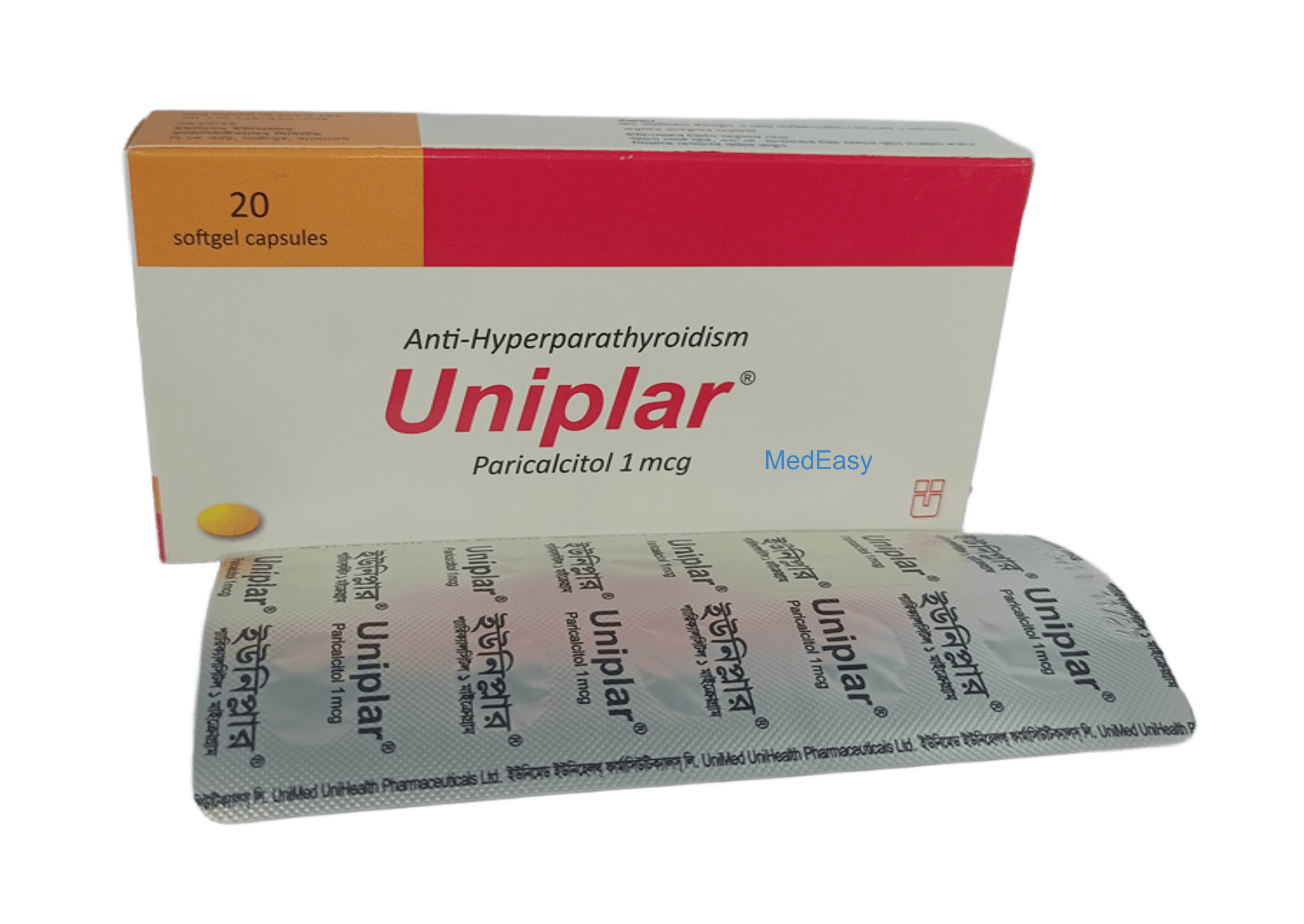
Generic medicine

Paricalcitol: Brands, Price & Uses in Bangladesh

Paricalcitol is a synthetic vitamin D analog (a selective vitamin D receptor activator) used for the prevention and treatment of secondary hyperparathyroidism (SHPT) associated with chronic kidney…

Forms:Capsule

About Paricalcitol

Indications of Paricalcitol

Paricalcitol is a synthetic vitamin D analog (a selective vitamin D receptor activator) used for the prevention and treatment of secondary hyperparathyroidism (SHPT) associated with chronic kidney disease (CKD).

  • Established, FDA-approved use (CKD Stage 3-4, not on dialysis): Prevention and treatment of secondary hyperparathyroidism in patients with CKD Stage 3 or 4, using the oral formulation.
  • Established, FDA-approved use (CKD Stage 5, dialysis-dependent): Prevention and treatment of secondary hyperparathyroidism in patients with CKD Stage 5 who are on hemodialysis or peritoneal dialysis, using either the oral or intravenous (injectable) formulation.

Paricalcitol works by activating vitamin D receptors, primarily in the parathyroid gland, to suppress excess parathyroid hormone (PTH) production, with a comparatively lower tendency to raise intestinal calcium and phosphorus absorption than older, non-selective vitamin D compounds. It does not treat the underlying kidney disease itself and is not indicated for general vitamin D deficiency or for hyperparathyroidism unrelated to chronic kidney disease.

Dosage & Administration of Paricalcitol

CKD Stage 5 (Dialysis-Dependent) — Intravenous

The initial dose is based on baseline intact PTH (iPTH):

Baseline iPTHInitial IV Dose
≤500 pg/mL0.04–0.1 mcg/kg (approximately 2.8–7 mcg) as a bolus, no more often than every other day during dialysis
>500 pg/mL0.1–0.24 mcg/kg (approximately 7–17 mcg) as a bolus, no more often than every other day during dialysis

The dose is subsequently titrated by the treating physician based on iPTH, corrected serum calcium, and phosphorus, typically re-assessed every 2–4 weeks.

CKD Stage 5 (Dialysis-Dependent) — Oral

The initial oral dose is calculated from baseline iPTH (in pg/mL) divided by 80, given once daily, or iPTH divided by 60, given three times weekly (no more often than every other day). The physician individualizes and titrates the dose based on repeat iPTH, calcium, and phosphorus levels.

CKD Stage 3–4 (Not on Dialysis) — Oral

Baseline iPTHInitial Oral Dose
≤500 pg/mL1 mcg once daily, or 2 mcg three times weekly (no more often than every other day)
>500 pg/mL2 mcg once daily, or 4 mcg three times weekly (no more often than every other day)

The dose is adjusted by the physician based on periodic monitoring of iPTH, serum calcium, and phosphorus; if hypercalcemia, an elevated calcium-phosphorus product, or over-suppression of iPTH occurs, the dose is reduced or therapy is temporarily interrupted.

Missed Dose

If a dose is missed, resume the regular schedule at the next scheduled time; do not take a double dose. Only the prescribing physician should change the dose or dosing frequency.

Side Effects of Paricalcitol

Common

  • Nausea, vomiting, diarrhea, or dyspepsia
  • Headache, dizziness
  • Edema
  • Chills or feeling feverish (particularly with intravenous administration)
  • Elevated liver enzymes

Less Common but Serious

  • Hypercalcemia — can present as fatigue, weakness, drowsiness, headache, nausea/vomiting, constipation, muscle or bone pain, metallic taste, or, if severe, cardiac arrhythmia; see Precautions and Overdose
  • Hyperphosphatemia, which together with elevated calcium can contribute to vascular or soft-tissue calcification
  • Hypersensitivity reactions (rash, pruritus)
  • Over-suppression of parathyroid hormone, which with prolonged over-treatment can contribute to adynamic bone disease

Report symptoms suggestive of hypercalcemia, persistent gastrointestinal symptoms, or any unusual heart rhythm to your physician promptly while taking Paricalcitol.

Contraindications of Paricalcitol

Paricalcitol is contraindicated in patients with evidence of vitamin D toxicity, hypercalcemia, or known hypersensitivity to paricalcitol or any component of the formulation. There are no other well-established absolute contraindications; situations requiring caution, such as concurrent use with other calcium- or vitamin D-containing products or use with digoxin, are addressed under Precautions and Interactions rather than as absolute contraindications.

Frequently Asked Questions about Paricalcitol

What is Paricalcitol used for?

Paricalcitol is used to prevent and treat secondary hyperparathyroidism (elevated parathyroid hormone) that develops in chronic kidney disease, in both patients not yet on dialysis (CKD Stage 3–4) and patients on dialysis (CKD Stage 5). It is prescribed and monitored by a physician, usually a nephrologist.

Why do I need regular blood tests while taking Paricalcitol?

Paricalcitol can raise blood calcium and phosphorus levels (hypercalcemia and hyperphosphatemia), and the dose must be adjusted based on your intact PTH, calcium, and phosphorus results. Regular laboratory monitoring allows your physician to increase, decrease, or pause the dose safely.

Can I take calcium or other vitamin D supplements while on Paricalcitol?

Only if your physician specifically directs you to. Taking extra calcium-containing phosphate binders, calcium supplements, or other vitamin D products together with Paricalcitol increases the risk of hypercalcemia. Always check with your physician before starting any new supplement.

Is Paricalcitol safe during pregnancy or breastfeeding?

Data on Paricalcitol in pregnancy are limited, so it should be used only if clearly needed and if the potential benefit outweighs the potential risk to the fetus, under close physician supervision. It is not known whether Paricalcitol passes into breast milk, so your physician will decide whether breastfeeding or Paricalcitol should be continued based on your individual situation.

What are the signs of too much calcium (hypercalcemia) while taking Paricalcitol?

Symptoms of hypercalcemia while on Paricalcitol can include weakness, fatigue, drowsiness, headache, nausea, vomiting, constipation, muscle or bone pain, and a metallic taste in the mouth. Severe hypercalcemia can affect heart rhythm. Contact your physician promptly if you notice these symptoms.

What should I do if I miss a dose of Paricalcitol?

If you miss a dose of Paricalcitol, simply resume your regular dosing schedule at the next scheduled time; do not take a double dose to make up for the one you missed. Contact your physician if you are unsure about your schedule.

Disclaimer

The information provided is accurate to the best of our knowledge, but it does not replace professional medical advice. We cannot guarantee its completeness or accuracy, and the absence of specific information about a drug should not be taken as an endorsement. We are not responsible for any consequences arising from this information, so please consult a healthcare professional for any concerns or questions.

DoctorBlogArticles