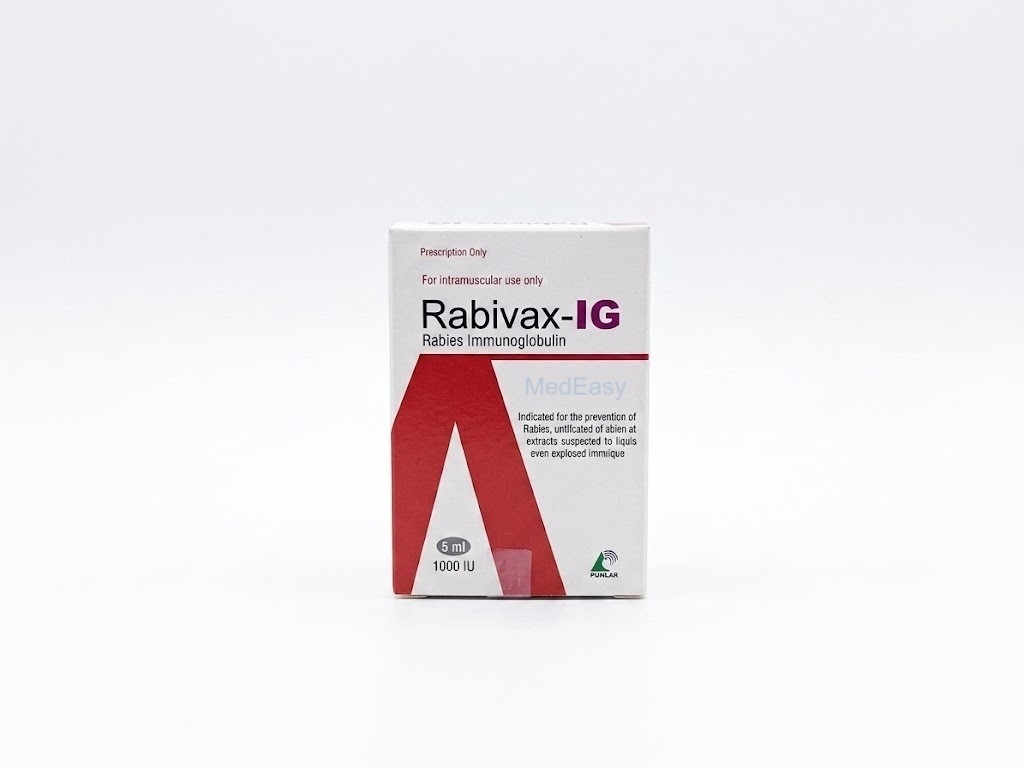
Generic medicine

Rabies Immunoglobulin: Brands, Price & Uses in Bangladesh

Rabies Immunoglobulin is indicated as part of post-exposure prophylaxis (PEP) for rabies in persons of all ages who have been bitten, scratched and more.

Forms:IM Injection

About Rabies Immunoglobulin

Indications of Rabies Immunoglobulin

Rabies Immunoglobulin is indicated as part of post-exposure prophylaxis (PEP) for rabies in persons of all ages who have been bitten, scratched, or otherwise exposed to saliva or neural tissue from an animal suspected or confirmed to be rabid, and who have not previously received a complete pre-exposure or post-exposure rabies vaccination series.

Established Use

  • Rabies post-exposure prophylaxis: Given once, as soon as possible after exposure, together with the first dose of rabies vaccine, to provide immediate passive (preformed) antibody protection while the patient's own active immune response to the vaccine develops.

Important Limitations

  • Rabies Immunoglobulin must always be used in conjunction with a complete rabies vaccine series and is never a substitute for the vaccine.
  • Not indicated in persons with a documented history of complete pre-exposure or post-exposure rabies vaccination, since an anamnestic (booster) antibody response to vaccine alone is expected to be adequate in that setting.
  • Should generally not be administered beyond the 7th day after the first dose of rabies vaccine, since an active antibody response is presumed to have started by then and immunoglobulin could suppress it.

Dosage & Administration of Rabies Immunoglobulin

Dosing by Product Type

Product TypeRecommended Dose
Human Rabies Immunoglobulin (HRIG)20 IU/kg body weight, given once
Equine/Purified Equine Rabies Immunoglobulin (ERIG)40 IU/kg body weight, given once

Administration Technique

  • Give the full calculated dose of Rabies Immunoglobulin once, ideally on the same day as the first dose of rabies vaccine (Day 0), or as soon as possible thereafter (up to Day 7 after the first vaccine dose).
  • As much of the dose as is anatomically feasible should be carefully infiltrated into and around all wound(s); any remainder is given by intramuscular injection at a site distant from the vaccine injection site.
  • Rabies Immunoglobulin must never be drawn into the same syringe as, mixed with, or injected into the same anatomical site as the rabies vaccine.
  • The calculated dose must not be exceeded, as excess immunoglobulin can suppress the patient's own active antibody response to the vaccine.
  • Not for intravenous administration.

Side Effects of Rabies Immunoglobulin

  • Common: Pain, tenderness, redness, or swelling at the injection/infiltration site; low-grade fever; headache; mild malaise.
  • Less common: Urticaria (hives), mild allergic skin reactions.
  • Rare but serious: Serum sickness (more frequent with equine-derived product; typically 7-14 days after administration, presenting with fever, rash, joint pain, lymphadenopathy); anaphylaxis/severe hypersensitivity reaction; angioedema.

Patients should be observed for an appropriate period after administration of Rabies Immunoglobulin, and any signs of a serious allergic reaction require immediate medical attention.

Contraindications of Rabies Immunoglobulin

Rabies Immunoglobulin is contraindicated in patients with a known history of severe hypersensitivity (e.g., anaphylaxis) to Rabies Immunoglobulin or to any component of the specific product (including, for equine-derived products, prior reaction to equine serum/protein).

Because rabies is almost universally fatal once symptoms develop, no absolute contraindication should be allowed to prevent life-saving post-exposure prophylaxis in a genuinely exposed individual; in a patient with a prior severe reaction, this should be managed by a specialist (for example, using the alternative human- or equine-derived product where available, premedication, and administration under close medical supervision) rather than withholding therapy outright.

Frequently Asked Questions about Rabies Immunoglobulin

What is Rabies Immunoglobulin used for?

Rabies Immunoglobulin is given as part of post-exposure prophylaxis (PEP) after a bite, scratch, or other exposure to saliva from an animal suspected or confirmed to have rabies. It provides immediate, ready-made antibodies that neutralize the rabies virus at the wound site while the rabies vaccine series stimulates the body's own long-term protection. It is always given together with the rabies vaccine, never as a replacement for it.

How is Rabies Immunoglobulin given?

Rabies Immunoglobulin is given once, ideally on the same day as the first rabies vaccine dose. The dose (20 IU/kg for human-derived product, or 40 IU/kg for equine-derived product) is calculated by body weight; as much as possible is carefully injected into and around the wound(s), and any remaining amount is given as an intramuscular injection at a different site from the vaccine. It must never be given in the same syringe or same spot as the rabies vaccine, and the calculated dose must never be exceeded.

Is Rabies Immunoglobulin safe during pregnancy or breastfeeding?

Yes. Pregnancy and breastfeeding do not prevent the use of Rabies Immunoglobulin when there has been a genuine rabies exposure. Because rabies is almost always fatal once symptoms start, the benefit of receiving Rabies Immunoglobulin and the rabies vaccine clearly outweighs any theoretical risk to the pregnancy or nursing infant. Always inform the treating physician of the pregnancy or breastfeeding status so care can be individualized.

What are the side effects of Rabies Immunoglobulin?

Most people experience only mild reactions such as pain, tenderness, redness, or swelling at the injection site, along with occasional low-grade fever or headache. Less commonly, hives or mild allergic skin reactions can occur. Rarely, serum sickness (fever, rash, joint pain appearing 7-14 days after the injection, more common with equine-derived product) or a severe allergic reaction (anaphylaxis) can occur, which requires immediate medical attention.

Who should not receive Rabies Immunoglobulin?

The only true contraindication to Rabies Immunoglobulin is a known history of a severe allergic reaction (such as anaphylaxis) to Rabies Immunoglobulin itself or to a component of the specific product used, including prior reactions to equine serum for equine-derived products. Because rabies is almost universally fatal if untreated, even patients with such a history should still be evaluated urgently by a specialist, since alternative products or supervised administration with precautions may still be possible rather than withholding life-saving treatment entirely.

Can Rabies Immunoglobulin be given to children?

Yes. Rabies Immunoglobulin is given to infants and children of any age who have a genuine rabies exposure, using the same weight-based dosing as adults. Because rabies is almost always fatal without treatment, doctors do not withhold or delay Rabies Immunoglobulin in children based on age.

Disclaimer

The information provided is accurate to the best of our knowledge, but it does not replace professional medical advice. We cannot guarantee its completeness or accuracy, and the absence of specific information about a drug should not be taken as an endorsement. We are not responsible for any consequences arising from this information, so please consult a healthcare professional for any concerns or questions.

DoctorBlogArticles