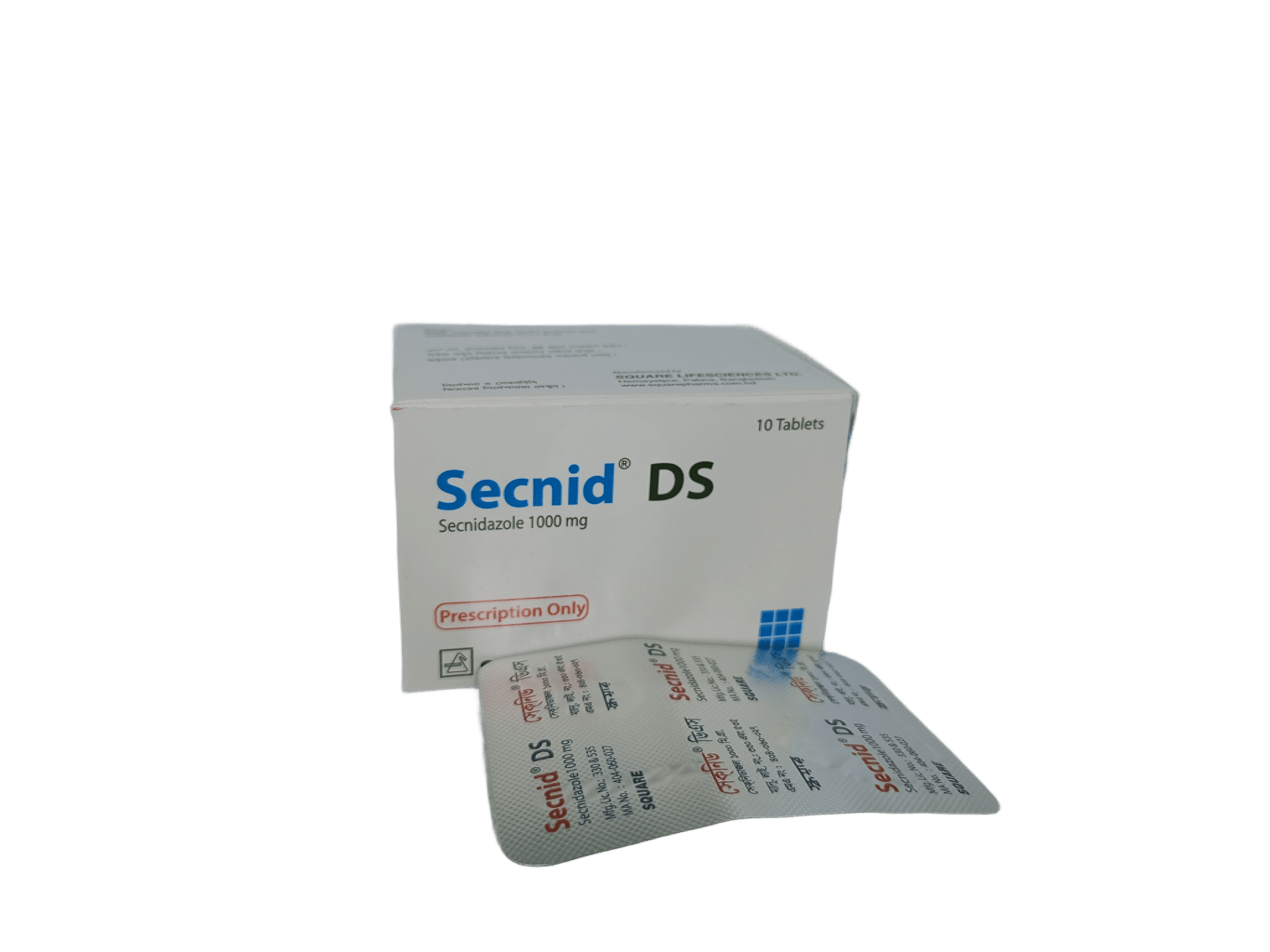
Generic medicine

Secnidazole: Brands, Price & Uses in Bangladesh

Secnidazole is a nitroimidazole antimicrobial with antiprotozoal and antibacterial activity.

Forms:Tablet

About Secnidazole

Indications of Secnidazole

Secnidazole is a nitroimidazole antimicrobial with antiprotozoal and antibacterial activity. Its indications differ somewhat by regulatory approval, but Secnidazole is used for the following:

Established / Approved Uses

  • Bacterial vaginosis in patients 12 years of age and older — treated with a single oral dose of Secnidazole.
  • Trichomoniasis (infection with Trichomonas vaginalis) in patients 12 years and older — treated with a single oral dose of Secnidazole; sexual partners should be treated at the same time to prevent reinfection.
  • Intestinal amoebiasis (acute and asymptomatic/cyst-passer forms caused by Entamoeba histolytica) — a long-standing, guideline-supported use of Secnidazole in many countries, including Bangladesh.
  • Hepatic (extra-intestinal) amoebiasis — Secnidazole is used as part of the overall management, generally alongside supportive care and, where indicated, drainage of an amoebic liver abscess.
  • Giardiasis (infection with Giardia lamblia/duodenalis) — an established indication for Secnidazole outside the United States.

Secnidazole is particularly valued because its long half-life allows effective single-dose regimens in several of these infections, which can improve patient adherence compared with multi-day nitroimidazole courses.

Dosage & Administration of Secnidazole

Dosing of Secnidazole is indication-specific. Take Secnidazole exactly as prescribed by your physician; do not stop, extend, skip doses, or share this medicine with others without medical advice.

IndicationAdult DosePediatric Dose
Bacterial vaginosisSingle 2 g oral doseNot established under 12 years; 2 g single dose in patients 12–17 years
TrichomoniasisSingle 2 g oral dose (treat sexual partner simultaneously)Not established under 12 years; 2 g single dose in patients 12–17 years
Acute intestinal amoebiasisSingle 2 g oral doseApproximately 30 mg/kg as a single dose (maximum per adult dose)
Asymptomatic (cyst-passer) amoebiasis2 g once daily for 3 daysApproximately 30 mg/kg once daily for 3 days
Hepatic amoebiasis1.5 g once daily for 5 daysApproximately 30 mg/kg once daily for 5 days
GiardiasisSingle 2 g oral doseApproximately 30–50 mg/kg as a single dose

Administration: Secnidazole tablets are taken orally, generally with food to minimize gastrointestinal upset. Where Secnidazole is supplied as oral granules, the entire contents of the packet should be sprinkled onto a spoonful of soft food such as applesauce, yogurt, or pudding and consumed within 30 minutes without chewing the granules; the granules should not be dissolved directly in liquid.

Hepatic impairment: Because Secnidazole undergoes hepatic metabolism, dose reduction or extended dosing intervals should be considered in patients with significant hepatic impairment, under physician supervision.

Side Effects of Secnidazole

Most adverse effects of Secnidazole are mild and self-limiting.

  • Common: nausea, altered/metallic taste (dysgeusia), headache, abdominal pain, diarrhea or vomiting, and vulvovaginal candidiasis (yeast infection) when used for bacterial vaginosis or trichomoniasis.
  • Less common: urticaria (hives) and other hypersensitivity skin reactions, reversible leukopenia, dizziness, and vulvovaginal pruritus.
  • Rare (typically with prolonged or high-dose use): vertigo, ataxia, and peripheral neuropathy (numbness or tingling in extremities).

Patients should seek medical attention if severe skin reactions, persistent neurological symptoms, or signs of blood dyscrasia (unusual bruising, bleeding, infection) occur while taking Secnidazole.

Contraindications of Secnidazole

Secnidazole is contraindicated in:

  • Patients with known hypersensitivity to Secnidazole or to other nitroimidazole derivatives (e.g., metronidazole, tinidazole), due to cross-sensitivity within this drug class.
  • The first trimester of pregnancy.
  • Patients with Cockayne syndrome, in whom severe hepatotoxicity and acute liver failure have been reported with related nitroimidazole agents.

Frequently Asked Questions about Secnidazole

What is Secnidazole used for?

Secnidazole is a nitroimidazole antimicrobial used to treat bacterial vaginosis and trichomoniasis (both usually as a single dose), as well as intestinal and hepatic amoebiasis and giardiasis, depending on local approval and medical advice.

How is Secnidazole taken?

Secnidazole is usually given as a single oral dose, though some indications (such as hepatic or asymptomatic amoebiasis) require dosing once daily for 3 to 5 days. Tablets are typically taken with food, and any granule formulation should be sprinkled on soft food and eaten within 30 minutes, without chewing. Always follow your physician's specific instructions and complete the full course as directed.

Can I drink alcohol while taking Secnidazole?

No. Alcohol should be avoided during treatment with Secnidazole and for at least 3 days after the last dose, because combining them can cause a disulfiram-like reaction with flushing, nausea, vomiting, and headache.

Is Secnidazole safe during pregnancy or breastfeeding?

Secnidazole is contraindicated in the first trimester of pregnancy. In later trimesters it should be used only if clearly needed, as advised by a physician, since human safety data are limited. Breastfeeding is generally not recommended during treatment, and many guidelines advise interrupting breastfeeding for about 96 hours after a single dose of Secnidazole; always consult your physician first.

What are the common side effects of Secnidazole?

Common side effects of Secnidazole include nausea, a metallic or altered taste, headache, abdominal discomfort, and vulvovaginal yeast infection. Less common effects include hives, dizziness, and reversible reductions in white blood cell counts. Rare effects with prolonged or high-dose use include vertigo, unsteady gait, and nerve tingling/numbness.

Who should not take Secnidazole?

Secnidazole should not be used by anyone with a known allergy to secnidazole or other nitroimidazole drugs (such as metronidazole or tinidazole), by anyone with Cockayne syndrome, or during the first trimester of pregnancy. Discuss your full medical history with your physician before starting Secnidazole.

Disclaimer

The information provided is accurate to the best of our knowledge, but it does not replace professional medical advice. We cannot guarantee its completeness or accuracy, and the absence of specific information about a drug should not be taken as an endorsement. We are not responsible for any consequences arising from this information, so please consult a healthcare professional for any concerns or questions.

DoctorBlogArticles