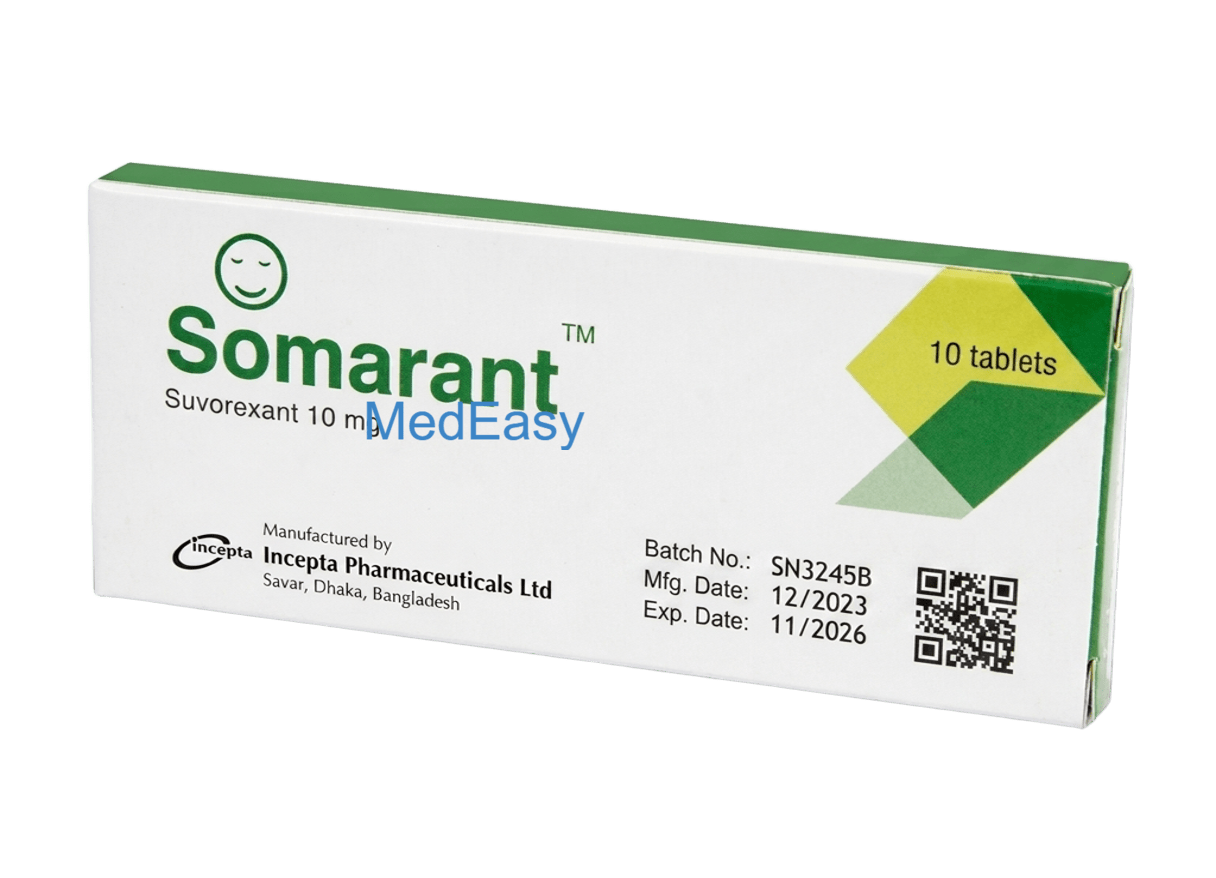
Generic medicine

Suvorexant: Brands, Price & Uses in Bangladesh

Suvorexant is indicated for the treatment of insomnia in adults, characterized by difficulty with sleep onset and/or sleep maintenance.

Forms:Tablet

About Suvorexant

Indications of Suvorexant

Suvorexant is indicated for the treatment of insomnia in adults, characterized by difficulty with sleep onset and/or sleep maintenance.

Evidence-based classification

  • Established/FDA-approved use: Short- to medium-term treatment of insomnia (difficulty falling asleep and/or staying asleep) in adult patients, based on randomized controlled trials showing improvement in sleep onset latency and sleep maintenance versus placebo.
  • Not established: Suvorexant has not been shown to be effective, and is not approved, for pediatric insomnia or for insomnia associated with other primary sleep disorders (e.g., obstructive sleep apnea, restless legs syndrome) that have not been separately diagnosed and managed.
  • Off-label: Occasional off-label use has been reported for insomnia in patients with mild cognitive impairment or early Alzheimer's disease under specialist supervision; this is not an FDA-approved indication and should only be considered by a physician on a case-by-case basis.

Dosage & Administration of Suvorexant

Adults (younger than 65 years)

ParameterRecommendation
Starting dose10 mg once nightly, taken within 30 minutes of going to bed
Maximum dose20 mg once nightly if the lower dose is well tolerated but not effective
Timing requirementOnly when at least 7 hours are available before the planned time of waking

Elderly patients (65 years and older)

Recommended dose is 15 mg once nightly (may be increased to a maximum of 20 mg if needed and tolerated), using the same timing precautions as in younger adults.

Hepatic impairment

  • Mild to moderate impairment: no dose adjustment required.
  • Severe impairment: use of Suvorexant is not recommended.

Renal impairment

No dose adjustment is required in patients with renal impairment, including those with severe renal impairment.

Dose adjustment with CYP3A4 interacting drugs

See Drug Interactions section for required dose modifications with concomitant CYP3A4 inhibitors.

Pediatric use

Not established; see Pediatric Uses section.

Side Effects of Suvorexant

Common side effects

  • Somnolence (next-day drowsiness)
  • Headache
  • Dizziness
  • Dry mouth
  • Upper respiratory tract infection
  • Diarrhea
  • Cough
  • Abnormal dreams

Less common but important effects

  • Complex sleep behaviors (sleep-walking, sleep-driving, preparing and eating food while not fully awake) — discontinue Suvorexant immediately if these occur.
  • Mild worsening of depressive symptoms or, rarely, emergence of suicidal ideation in patients with underlying depression.
  • Sleep paralysis, hypnagogic/hypnopompic hallucinations, and mild cataplexy-like symptoms have been reported, related to the orexin-blocking mechanism.

Contraindications of Suvorexant

Suvorexant is contraindicated in:

  • Patients with narcolepsy.
  • Patients with known hypersensitivity to Suvorexant or any component of the formulation.

Frequently Asked Questions about Suvorexant

What is Suvorexant used for?

Suvorexant is used to treat insomnia in adults who have trouble falling asleep, staying asleep, or both.

How and when should I take Suvorexant?

Take Suvorexant once nightly, within 30 minutes of going to bed, and only if you can devote at least 7 hours to sleep before you need to be active again. Avoid taking it with or right after a heavy or fatty meal.

Can I drive the morning after taking Suvorexant?

Suvorexant can impair alertness and driving skills the next morning, especially at higher doses. If you feel drowsy or impaired, avoid driving or other activities that require full mental alertness.

Is Suvorexant safe during pregnancy or breastfeeding?

Data on Suvorexant use in pregnancy are limited, and it passes into breast milk in small amounts. It should be used during pregnancy or breastfeeding only if clearly needed and a physician has confirmed the benefits outweigh the potential risks to the baby.

What are the serious risks of taking Suvorexant?

Suvorexant can rarely cause complex sleep behaviors such as sleep-walking or sleep-driving while not fully awake; stop the medicine and contact your doctor immediately if this happens. It should not be used by people with narcolepsy, and caution is needed in people with severe breathing problems such as COPD or sleep apnea.

Can I take Suvorexant with other sleep medicines or alcohol?

No. Combining Suvorexant with alcohol or other central nervous system depressants (such as opioids, benzodiazepines, or other sleep aids) increases the risk of excessive sedation and impaired coordination, and should be avoided.

Disclaimer

The information provided is accurate to the best of our knowledge, but it does not replace professional medical advice. We cannot guarantee its completeness or accuracy, and the absence of specific information about a drug should not be taken as an endorsement. We are not responsible for any consequences arising from this information, so please consult a healthcare professional for any concerns or questions.

DoctorBlogArticles