10% Off
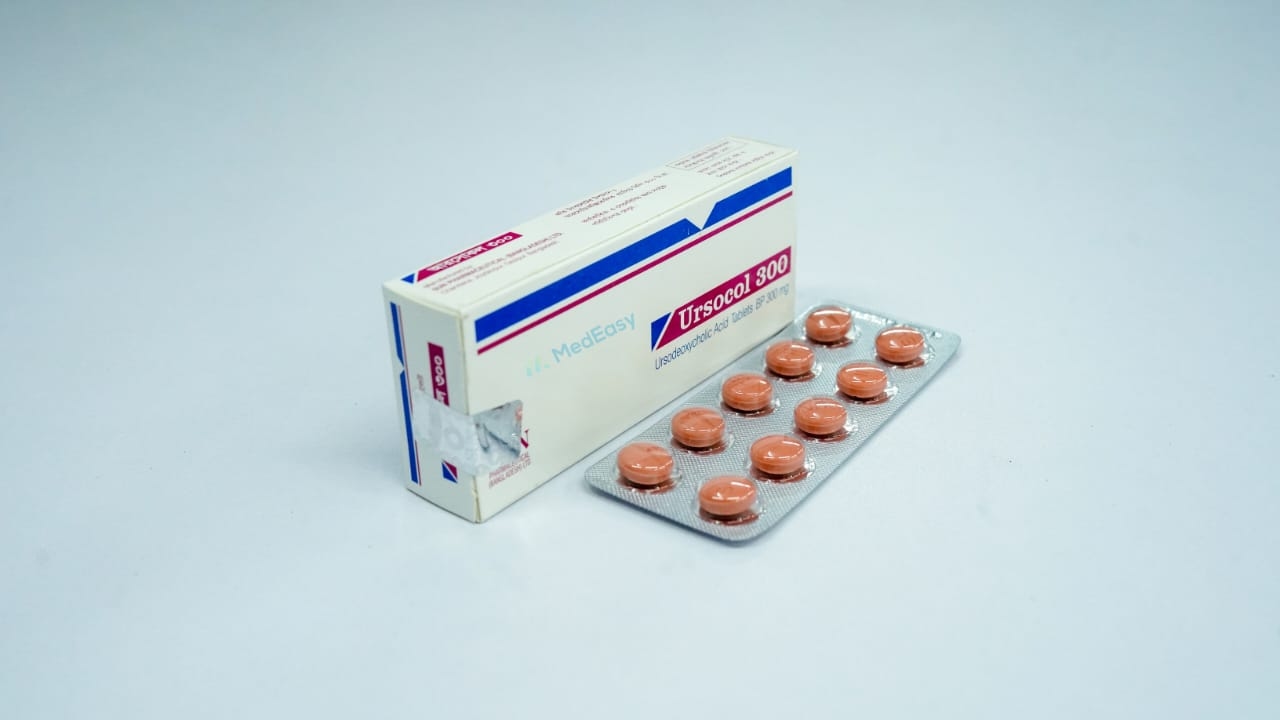
Ursocol300 mg
Sun Pharmaceutical Ltd.
৳225.00
Add to cart

Dexochol 300 mg Tablet is available on MedEasy for ৳334.80 per 10's Strip, with home delivery anywhere in Bangladesh. It is manufactured by Radiant Pharmaceuticals Ltd. Its generic name is Ursodeoxycholic Acid.

Dexochol is a naturally occurring bile acid used for the following established indications:
Dexochol is also used, under specialist guidance, in certain other cholestatic liver conditions (e.g., intrahepatic cholestasis), though such use should be individualized by the treating physician.
Dexochol is not a substitute for cholecystectomy when surgery is clinically indicated.
Ursodeoxycholic Acid is available as oral tablets and capsules, commonly in strengths of 150 mg, 200 mg, 250 mg, and 300 mg. Each tablet/capsule contains Ursodeoxycholic Acid as the active ingredient along with standard pharmaceutical excipients such as binders, fillers, and coating agents. Exact strengths and formulations vary by manufacturer; refer to the specific product label for details.
Dexochol (also known as ursodiol) is a hydrophilic bile acid that occurs naturally in small quantities in human bile. As a medicine, Dexochol is used to dissolve certain types of gallstones and to treat chronic cholestatic liver diseases such as primary biliary cholangitis. Dexochol works by altering the composition of bile, reducing cholesterol saturation, and exerting cytoprotective and choleretic effects on liver cells.
Bile acid preparation / Hepatobiliary and gallstone-dissolving agent
Ursodeoxycholic Acid is a naturally occurring, hydrophilic bile acid that alters bile composition and exerts hepatoprotective effects through several mechanisms:
Onset of gallstone dissolution with Ursodeoxycholic Acid is gradual, typically requiring months of continuous therapy, with response monitored by periodic ultrasound.
Dosing of Dexochol is individualized by indication and is generally weight-based. The following are typical adult dosing ranges; the treating physician should determine the exact dose and duration for each patient.
Gallstone dissolution (radiolucent, non-calcified stones):
Prevention of gallstones during rapid weight loss:
Primary biliary cholangitis (PBC):
Doses of Dexochol should be spaced at least 2 hours apart from aluminum-based antacids or bile acid-binding resins such as cholestyramine or colestipol (see Drug Interactions). Do not change the dose or stop Dexochol without consulting the prescribing physician.
Dexochol tablets/capsules should be swallowed whole with a full glass of water. Taking Dexochol with food may help reduce stomach upset and improve absorption. Doses are usually divided through the day as directed by the physician (see "Dosage and Administration"). If a dose of Dexochol is missed, it should be taken as soon as remembered unless it is close to the next scheduled dose, in which case the missed dose should be skipped — do not double the dose.
The following interactions with Dexochol are clinically significant:
Inform the physician of all medications, including over-the-counter antacids and supplements, before starting Dexochol.
Ursodeoxycholic Acid is not indicated in certain chronic liver diseases where its use has not been established as beneficial; use should be limited to labeled/established indications under physician supervision.
Dexochol is generally well tolerated. Reported side effects include:
Patients should seek medical attention if they notice worsening abdominal pain, jaundice (yellowing of skin/eyes), dark urine, or signs of an allergic reaction while taking Dexochol.
Data on the use of Dexochol during pregnancy are limited. Dexochol should be used in pregnancy only if the potential benefit justifies the potential risk to the fetus, and only under direct physician supervision; it is generally not recommended for routine use during pregnancy given the limited safety data, although inadvertent exposure in reported cases has not shown clear fetal harm.
It is not fully established whether Dexochol passes into breast milk in clinically significant amounts. Because bile acids are naturally present in breast milk and no adverse effects have been documented in nursing infants in available reports, use during breastfeeding may be considered by the physician when clearly needed, weighing benefits and risks. Consult a physician before using Dexochol during pregnancy or breastfeeding.
Before and during treatment with Dexochol:
There is limited clinical experience with overdose of Dexochol. Based on its pharmacology, an overdose of Dexochol may be expected to cause watery diarrhea, which would generally resolve once the drug is stopped or eliminated. There is no specific antidote. In case of a suspected overdose of Dexochol, seek immediate medical attention or contact a poison control center; management is supportive and symptomatic, guided by the treating physician.
Store at room temperature (below 30°C), away from light and moisture. Keep out of reach of children.
Hepatic impairment: Dexochol is used specifically to treat certain cholestatic and gallstone conditions of the liver and biliary tract, but is not indicated for all types of liver disease; use should be guided by a specialist, with periodic liver function monitoring (see Precautions and Warnings).
Renal impairment: No specific dose adjustment is established; Dexochol should be used with caution and physician oversight in patients with significant renal impairment.
Elderly: No overall differences in safety or efficacy of Dexochol have been consistently reported in elderly patients compared with younger adults, but dosing should be individualized, and comorbidities and concomitant medications should be considered.
Pediatric use: See "Pediatric Uses" section.
Pregnancy and breastfeeding: See "Pregnancy and Lactation" section.
Duration of treatment with Dexochol depends on the indication:
Do not stop Dexochol without consulting the prescribing physician, as premature discontinuation may reduce treatment benefit or allow disease/gallstone recurrence.
Bile acids and derivatives; Gallstone-dissolving agent (cholelitholytic); Hepatoprotective agent
Ursodeoxycholic Acid works mainly by reducing the cholesterol saturation of bile — it decreases cholesterol secretion into bile and reduces intestinal cholesterol absorption, which promotes gradual dissolution of cholesterol-based gallstones. In cholestatic liver disease, Ursodeoxycholic Acid replaces more toxic, hydrophobic bile acids in the bile acid pool, protects liver and bile duct cells from bile-acid-induced injury, and has additional cytoprotective, anti-inflammatory, and immunomodulatory effects that help preserve liver function.
Category B (historical FDA pregnancy letter classification reported for ursodiol-containing products; current labeling uses narrative risk information rather than letter categories — consult the physician; see Pregnancy and Lactation).
Dexochol is not FDA-approved for general pediatric use for the labeled adult indications (gallstone dissolution/prevention). However, Dexochol has been used off-label, under specialist (pediatric hepatology/gastroenterology) guidance, in some pediatric cholestatic liver conditions, with dosing individualized by body weight and closely monitored. Use of Dexochol in children should only occur under the direct supervision of a pediatric specialist, with attention to liver function monitoring.
Q: 1. What is Dexochol 300 mg Tablet used for?
A: Dexochol 300 mg Tablet is used to dissolve certain small to medium-sized cholesterol (radiolucent, non-calcified) gallstones in patients who cannot or do not wish to have gallbladder surgery, to prevent gallstones from forming during rapid weight loss, and to treat primary biliary cholangitis (PBC), a chronic liver disease.
Q: 2. How long does it take for Dexochol 300 mg Tablet to dissolve gallstones?
A: Gallstone dissolution with Dexochol 300 mg Tablet is gradual and can take several months to about 2 years of continuous treatment. Your physician will typically order periodic ultrasound scans (often every 6 months) to check how well the stones are dissolving.
Q: 3. Can I take Dexochol 300 mg Tablet with antacids?
A: Aluminum-based antacids can reduce absorption of Dexochol 300 mg Tablet. If your physician has prescribed both, take them at least 2 hours apart to avoid reduced effectiveness of Dexochol 300 mg Tablet.
Q: 4. Is Dexochol 300 mg Tablet safe during pregnancy?
A: Data on Dexochol 300 mg Tablet in pregnancy are limited, and it is generally not recommended for routine use in pregnancy. If you are pregnant, planning pregnancy, or breastfeeding, discuss the risks and benefits of Dexochol 300 mg Tablet with your physician before starting or continuing treatment.
Q: 5. What are the common side effects of Dexochol 300 mg Tablet?
A: The most common side effect of Dexochol 300 mg Tablet is diarrhea. Other reported effects include abdominal pain, indigestion, nausea, and headache. Most side effects are mild; contact your physician if you develop worsening abdominal pain, jaundice, or dark urine.
Q: 6. Will my gallstones come back after stopping Dexochol 300 mg Tablet?
A: Yes, gallstones can recur in some patients after Dexochol 300 mg Tablet is stopped. Your physician may recommend periodic follow-up ultrasounds or, in some cases, continued low-dose therapy to reduce the chance of recurrence.
Disclaimer
The information provided is accurate to the best of our knowledge, but it does not replace professional medical advice. We cannot guarantee its completeness or accuracy, and the absence of specific information about a drug should not be taken as an endorsement. We are not responsible for any consequences arising from this information, so please consult a healthcare professional for any concerns or questions.