
8% Off
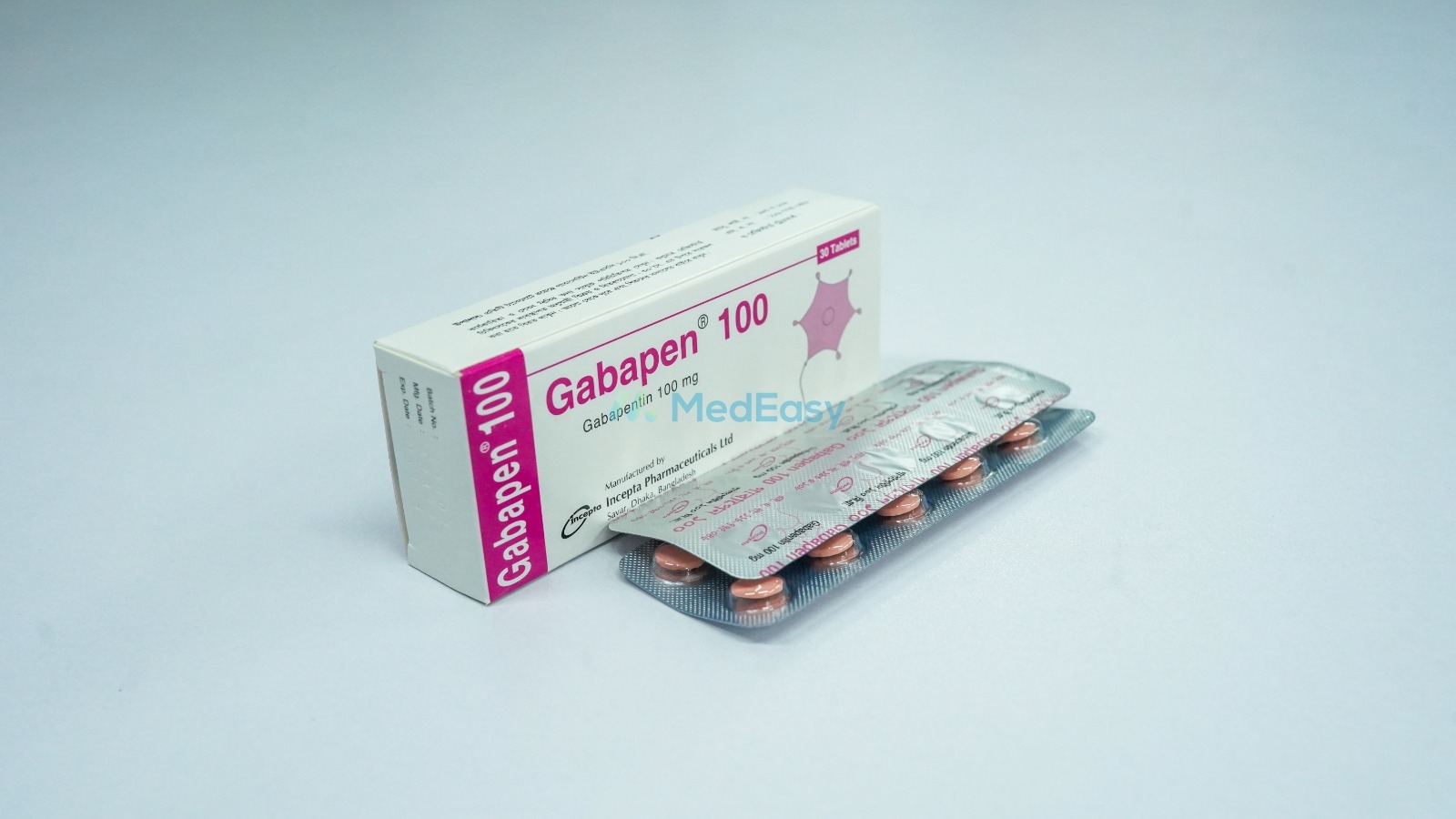
Gabapen100 mg
Incepta Pharmaceuticals Ltd.
৳55.20
Add to cart
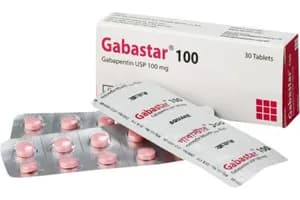
Gabastar 100 mg Tablet is available on MedEasy for ৳54.36 per 10's Strip, with home delivery anywhere in Bangladesh. It is manufactured by Square Pharmaceuticals PLC. Its generic name is Gabapentin.

Gabastar is indicated for the following uses, based on strength of evidence:
Gabastar is not effective as monotherapy for seizure control and must always be combined with other antiepileptic drugs when used for epilepsy. It should only be used for other off-label indications under a physician's direction.
Each capsule/tablet of Gabapentin contains Gabapentin as the active pharmaceutical ingredient, commonly available in strengths of 100 mg, 300 mg, and 400 mg capsules, and 600 mg and 800 mg tablets. An oral solution (250 mg/5 mL) is also available. Inactive ingredients (fillers, binders, coating agents) vary by manufacturer and formulation; refer to the specific product label for full excipient details.
Gabastar is an anticonvulsant and neuropathic pain agent that is structurally related to the neurotransmitter gamma-aminobutyric acid (GABA), although it does not act directly on GABA receptors. It is chemically classified as a GABA analog.
Gabastar was originally developed as an anti-seizure medicine and is now also widely used to manage certain types of nerve (neuropathic) pain. It is available in immediate-release and extended-release oral formulations, as well as an oral solution.
Gabastar belongs to the anticonvulsant (antiepileptic) drug class and is also classified as a neuropathic pain agent (GABA analog).
Although structurally related to GABA, Gabapentin does not bind to GABA-A or GABA-B receptors and does not affect GABA uptake or degradation. Its precise mechanism of action is not fully understood.
Gabapentin binds with high affinity to the alpha-2-delta (α2δ) subunit of voltage-gated calcium channels in the central nervous system. This binding is thought to reduce calcium influx at nerve terminals, thereby decreasing the release of excitatory neurotransmitters (such as glutamate) and reducing neuronal excitability. This mechanism is believed to underlie both its anticonvulsant and analgesic (nerve pain-relieving) effects.
Pharmacokinetics: Gabapentin is absorbed from the small intestine via a saturable transport system, meaning bioavailability decreases as dose increases (nonlinear absorption). It is not metabolized in the body and is not bound to plasma proteins. Gabapentin is eliminated unchanged almost entirely by renal excretion, with an elimination half-life of approximately 5 to 7 hours in patients with normal renal function. Dose adjustment is required in renal impairment.
| Indication | Typical Dosing |
|---|---|
| Epilepsy (adjunctive, partial-onset seizures) | Initiate at 300 mg on Day 1, 300 mg twice daily on Day 2, then 300 mg three times daily on Day 3; titrate as needed. Effective maintenance dose is usually 900-1800 mg/day in three divided doses (some patients may require up to 3600 mg/day under specialist supervision). |
| Postherpetic neuralgia | Day 1: 300 mg once daily; Day 2: 300 mg twice daily; Day 3: 300 mg three times daily. May be titrated up to 1800 mg/day in three divided doses as needed and tolerated. |
| Neuropathic pain (off-label, e.g. diabetic neuropathy) | Usually started at 300 mg once daily and gradually titrated to an effective dose, commonly 900-1800 mg/day in divided doses, per physician's advice. |
Children 3 to 11 years: initiated at 10-15 mg/kg/day in three divided doses, titrated over approximately 3 days to an effective dose, usually 25-40 mg/kg/day in three divided doses, based on physician assessment. Not established for pediatric neuropathic pain.
Because Gabastar is eliminated renally, dose reduction is required based on creatinine clearance (CrCl); patients on hemodialysis require a supplemental dose after each dialysis session. Renal dosing must be individualized by the prescribing physician using creatinine clearance calculations.
Gabastar may be taken with or without food. If using antacids containing aluminum or magnesium, take Gabastar at least 2 hours afterward, as antacids can reduce its absorption. Swallow capsules/tablets whole with water; do not crush chew extended-release tablets. Doses should be spaced evenly and the first dose of the day should not be more than 12 hours apart from the last dose of the previous day when on a three-times-daily schedule.
Do not stop taking Gabastar abruptly, as this can precipitate withdrawal seizures, even in patients without a history of epilepsy. If discontinuation is needed, the physician will taper the dose gradually over a minimum of one week.
Gabastar can be taken with or without food. Separate dosing from aluminum/magnesium-containing antacids by at least 2 hours. Swallow whole with water. Do not discontinue abruptly - see Dosage and Administration and Precautions sections for tapering guidance.
Gabastar has relatively few pharmacokinetic drug interactions since it is not metabolized by the liver, but clinically significant interactions include:
Gabapentin is contraindicated in patients with a known history of hypersensitivity to Gabapentin or any component of the formulation.
Side effects associated with Gabastar are generally dose-related and most common during the initial titration period.
Pregnancy: Data on Gabastar use in human pregnancy are limited. Gabastar should be used during pregnancy only if the potential benefit justifies the potential risk to the fetus, and only under a physician's guidance. Patients should not stop taking Gabastar without consulting their doctor, as uncontrolled seizures pose their own risk to mother and fetus.
Lactation: Gabastar is excreted in human breast milk. Because the effects on a nursing infant are not fully established, Gabastar should be used during breastfeeding only if clearly needed, with the infant monitored for drowsiness or poor feeding, and only after consulting a physician.
Abrupt discontinuation: Gabastar should not be stopped suddenly, as this can precipitate withdrawal seizures even in patients without epilepsy. Discontinuation should be tapered gradually over at least one week under medical supervision.
Suicidal thoughts/behavior: Antiepileptic drugs, including Gabastar, carry an increased risk of suicidal thoughts or behavior. Patients and caregivers should be alert to mood changes, anxiety, agitation, or emerging suicidal ideation and report these promptly.
Respiratory depression: Gabastar can cause serious breathing difficulty, especially in patients with pre-existing respiratory impairment (e.g. COPD), elderly patients, or when combined with opioids or other CNS depressants (see Drug Interactions).
Renal impairment: Dose reduction is necessary in patients with reduced kidney function; see Dosage and Administration.
CNS effects: Gabastar may cause dizziness and somnolence that can impair the ability to drive or operate machinery; patients should avoid such activities until they know how Gabastar affects them.
Misuse and dependence: Although not classified as a controlled substance in most jurisdictions, there is a recognized potential for misuse of Gabastar, particularly among individuals with a history of substance use disorder or when combined with opioids. Use only as prescribed.
Symptoms of Gabastar overdose may include double vision, slurred speech, drowsiness, lethargy, and diarrhea. In case of a suspected overdose, seek immediate medical attention or contact the nearest emergency department or a poison control center. Do not attempt to treat overdose at home. Gabastar can be removed from the body by hemodialysis in patients with significantly impaired renal function; treatment is generally supportive, provided under medical supervision.
Store at room temperature (below 30°C), away from light and moisture. Keep out of reach of children.
Elderly patients are more likely to have reduced renal function and may require lower doses of Gabastar; they are also more susceptible to dizziness, somnolence, and peripheral edema. Dose should be individualized based on renal function.
Dose adjustment based on creatinine clearance is required; see Dosage and Administration.
Gabastar is not metabolized by the liver, so specific dose adjustment for hepatic impairment is generally not required; however, caution is still advised.
See Pediatric Uses section.
Duration of treatment with Gabastar depends on the indication and clinical response and should be determined by the prescribing physician. For epilepsy, treatment is typically long-term/ongoing. For postherpetic neuralgia and neuropathic pain, treatment duration is individualized based on symptom control and re-evaluated periodically. Gabastar should never be stopped abruptly without medical guidance (see Precautions).
Gabapentin belongs to the drug classes: Anticonvulsant; Neuropathic pain agent (GABA analog).
Gabapentin binds to the alpha-2-delta (α2δ) subunit of voltage-gated calcium channels in the central nervous system, reducing calcium influx at nerve terminals and decreasing the release of excitatory neurotransmitters. This reduces abnormal neuronal excitability, which is believed to be responsible for both its anticonvulsant and neuropathic pain-relieving effects. Gabapentin does not act directly on GABA receptors despite its structural similarity to GABA.
Gabastar is approved as adjunctive therapy for partial-onset seizures in children 3 years of age and older, in combination with other antiepileptic medicines. Dosing in children 3 to 11 years is weight-based (see Dosage and Administration); for children 12 years and older, adult dosing generally applies.
Safety and efficacy of Gabastar for indications other than epilepsy (such as neuropathic pain) have not been established in pediatric patients below 18 years of age. Use in these settings should only occur under specialist pediatric or neurology guidance.
Behavioral changes (emotional lability, hostility, thought disorder, hyperkinesia) have been reported more frequently in pediatric patients than in adults; caregivers should monitor closely.
Q: What is Gabastar 100 mg Tablet used for?
A: Gabastar 100 mg Tablet is primarily used as an add-on treatment for partial-onset seizures in epilepsy and to relieve nerve pain after shingles (postherpetic neuralgia). It is also commonly used, under a doctor's guidance, for other types of nerve pain such as diabetic neuropathy.
Q: Can I stop taking Gabastar 100 mg Tablet suddenly if I feel better?
A: No. Stopping Gabastar 100 mg Tablet abruptly can cause withdrawal seizures, even in people who do not have epilepsy. Always consult your physician, who will taper the dose gradually over at least a week if discontinuation is needed.
Q: Is it safe to take Gabastar 100 mg Tablet with opioid painkillers?
A: Combining Gabastar 100 mg Tablet with opioids increases the risk of severe drowsiness, slowed or difficult breathing, and can be life-threatening. This combination should only be used if specifically prescribed and closely monitored by a physician.
Q: Can I take Gabastar 100 mg Tablet during pregnancy or while breastfeeding?
A: Gabastar 100 mg Tablet should be used during pregnancy or breastfeeding only if your physician determines the benefit outweighs the potential risk, as safety data in humans are limited. Do not stop or start Gabastar 100 mg Tablet during pregnancy without medical advice, since uncontrolled seizures also carry risks.
Q: What should I do if I miss a dose of Gabastar 100 mg Tablet?
A: Take the missed dose as soon as you remember, unless it is almost time for your next dose, in which case skip the missed dose. Do not double the dose. Maintain a consistent dosing schedule as prescribed, and never skip doses of Gabastar 100 mg Tablet for a prolonged period without medical advice.
Q: What are the most common side effects of Gabastar 100 mg Tablet?
A: The most common side effects of Gabastar 100 mg Tablet include dizziness, drowsiness, swelling in the hands or feet, unsteady walking, and fatigue. These are often more noticeable when starting treatment or increasing the dose. Contact your doctor if side effects are severe or persistent, or if you notice mood changes or thoughts of self-harm.
Disclaimer
The information provided is accurate to the best of our knowledge, but it does not replace professional medical advice. We cannot guarantee its completeness or accuracy, and the absence of specific information about a drug should not be taken as an endorsement. We are not responsible for any consequences arising from this information, so please consult a healthcare professional for any concerns or questions.
