
10% Off
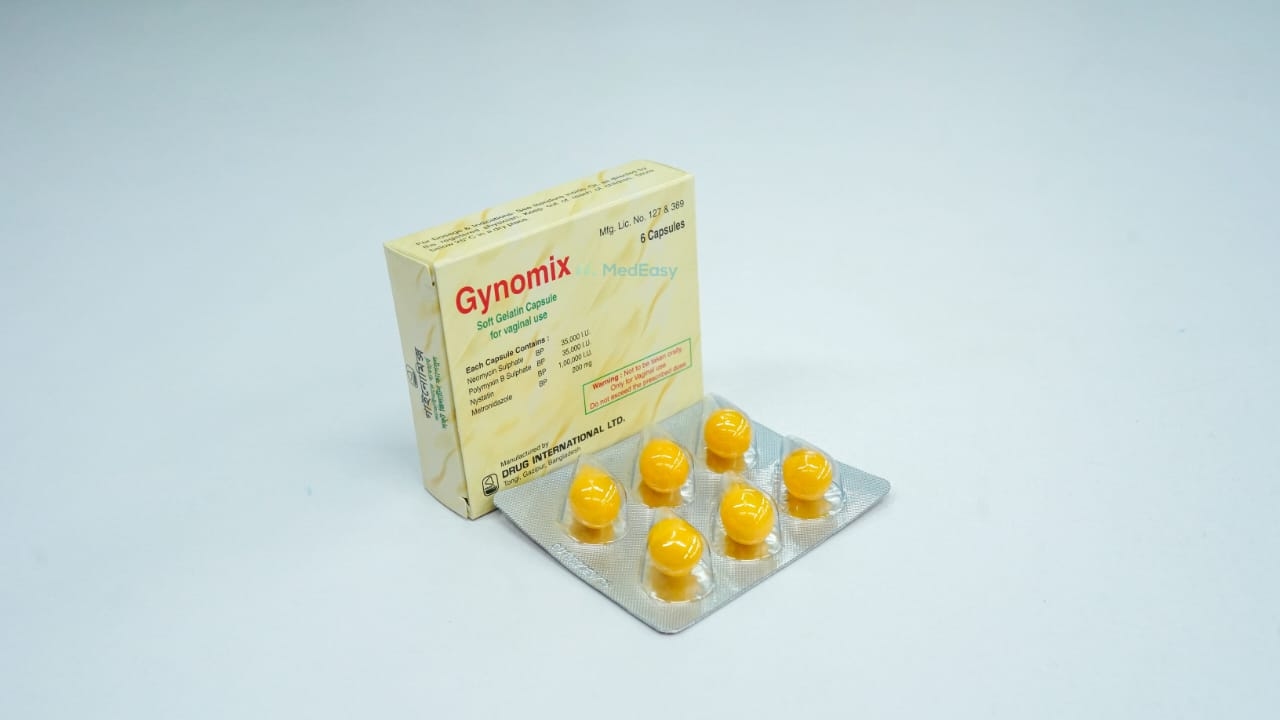
Gynomix
Drug International Ltd.
৳140.40
Add to cart
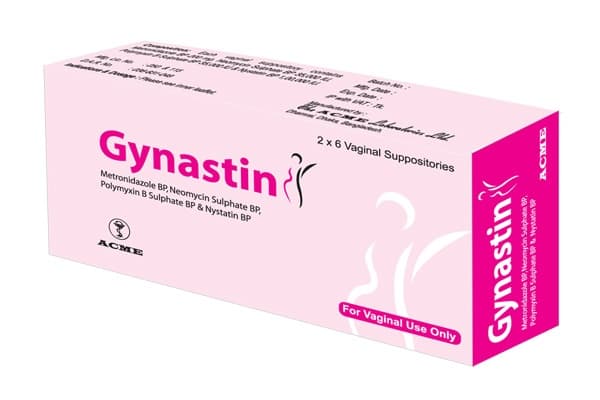

Gynastin is a combination vaginal anti-infective product indicated for the local (intravaginal) treatment of mixed vaginal infections, where more than one type of organism is responsible for the infection.
Gynastin is intended for cases where a mixed or polymicrobial vaginal infection is suspected or confirmed by clinical examination and/or microscopy; it is not intended to replace pathogen-specific therapy when a single organism has been clearly identified and a narrower-spectrum agent is preferred by treatment guidelines. Use should be guided by a physician's assessment.
Each vaginal tablet/pessary of Metronidazole + Neomycin Sulphate + Nystatin + Polymyxin B typically contains:
Exact strengths of each component may vary slightly between manufacturers/brands; the printed pack insert should always be checked for the precise composition of the specific product dispensed.
Gynastin is a fixed-dose combination vaginal tablet (pessary) that brings together four anti-infective agents with complementary spectra of activity: metronidazole (an antiprotozoal/antibacterial active against anaerobes and Trichomonas vaginalis), neomycin sulphate (an aminoglycoside antibiotic active mainly against gram-negative bacteria), nystatin (a polyene antifungal active against Candida species), and polymyxin B (a polypeptide antibiotic active against gram-negative organisms including Pseudomonas).
By combining these four agents in one locally-applied product, Gynastin provides broad-spectrum coverage suitable for vaginal infections in which bacterial, protozoal, and fungal organisms may coexist, reducing the need to identify the exact causative organism before starting local treatment.
Gynastin belongs to the therapeutic class of combination gynecological/vaginal anti-infectives, bringing together an antiprotozoal/nitroimidazole antibacterial (metronidazole), an aminoglycoside antibiotic (neomycin sulphate), a polyene antifungal (nystatin), and a polypeptide antibiotic (polymyxin B) in a single vaginal dosage form.
Metronidazole + Neomycin Sulphate + Nystatin + Polymyxin B acts locally within the vaginal mucosa through the combined mechanisms of its four components:
Systemic absorption of each component from the vaginal mucosa is generally low, though not negligible, particularly if the vaginal epithelium is inflamed or eroded; this is the basis for the precautions described elsewhere regarding alcohol, anticoagulants, and renal function.
Gynastin is for intravaginal use only and must be used exactly as prescribed by a physician.
| Indication | Typical adult dose | Typical duration |
|---|---|---|
| Mixed vaginal infection (bacterial vaginosis / trichomoniasis / candidiasis) | One vaginal tablet inserted deep into the vagina, usually at bedtime | 7 to 10 consecutive nights, or as directed by the prescribing physician |
Important: Take/use Gynastin exactly as prescribed by your physician; do not stop, extend, skip doses, or share this medicine with others without medical advice, even if symptoms improve before the course is finished. Stopping early can allow the infection to persist or recur.
Metronidazole + Neomycin Sulphate + Nystatin + Polymyxin B should not be used by patients with a known hypersensitivity as above. Other cautions (such as renal impairment) are relative precautions rather than absolute contraindications and are described under Precautions and Warnings.
Most side effects of Gynastin are local and mild, related to the site of application:
Patients should stop use and consult a physician promptly if signs of a significant allergic reaction (rash, swelling, difficulty breathing) occur.
Pregnancy: Gynastin is generally contraindicated during the first trimester of pregnancy, largely as a precaution related to the metronidazole component, even though systemic absorption from vaginal use is considerably lower than with oral metronidazole. In later trimesters, Gynastin should be used only if clearly needed and if the potential benefit justifies the potential risk to the fetus, and only under the direct advice and supervision of a physician.
Lactation: Metronidazole is excreted into breast milk. Because of this, a breastfeeding mother should use Gynastin only on a physician's advice; the physician may recommend temporarily interrupting breastfeeding or expressing and discarding milk for a period after use, weighed against the benefit of treatment.
Overdose is unlikely with correctly used intravaginal Gynastin, since systemic absorption from this route is limited. If a vaginal tablet is accidentally swallowed, or if excessive amounts are used, symptoms such as nausea, vomiting, metallic taste, abdominal discomfort, or dizziness may occur due to the metronidazole and aminoglycoside/polypeptide components.
In case of accidental ingestion or suspected overdose, seek immediate medical attention or contact a poison control center/emergency services rather than attempting home treatment. Bring the medicine pack/leaflet with you if seeking care.
Store at room temperature (below 30°C), away from light and moisture. Keep out of reach of children.
The typical course of Gynastin is 7 to 10 consecutive nights of vaginal tablet insertion, or as specifically directed by the prescribing physician based on the severity and type of infection. The full prescribed duration should always be completed, even if symptoms improve earlier, to reduce the risk of relapse or incomplete eradication of the infection.
Metronidazole + Neomycin Sulphate + Nystatin + Polymyxin B combines agents from four distinct drug classes: a nitroimidazole antiprotozoal/antibacterial (metronidazole), an aminoglycoside antibiotic (neomycin sulphate), a polyene antifungal antibiotic (nystatin), and a polypeptide (cyclic lipopeptide) antibiotic (polymyxin B), formulated together as a combination vaginal anti-infective.
Metronidazole + Neomycin Sulphate + Nystatin + Polymyxin B works through the combined, complementary actions of its four components applied locally in the vagina: metronidazole damages the DNA of anaerobic bacteria and protozoa; neomycin sulphate inhibits bacterial protein synthesis in susceptible gram-negative organisms; nystatin disrupts the fungal cell membrane of Candida species; and polymyxin B disrupts the outer membrane of gram-negative bacteria. Together, these actions provide broad local coverage against the mixed organisms often responsible for polymicrobial vaginal infections.
Gynastin is formulated and indicated for use in adult women for intravaginal infections. It is not indicated for use in children or adolescents, and the safety and efficacy of Gynastin in the pediatric population have not been established. This product should not be used in pre-pubertal girls or children under any circumstances without specific specialist gynecological/pediatric advice.
Q: What is Gynastin Vaginal Suppository used for?
A: Gynastin Vaginal Suppository is a vaginal tablet used to treat mixed vaginal infections, where bacterial vaginosis, trichomoniasis, and/or a yeast (candida) infection may be present together. It provides broad local coverage against bacteria, protozoa, and fungi in one product.
Q: How long should I use Gynastin Vaginal Suppository for?
A: Gynastin Vaginal Suppository is usually inserted into the vagina once daily, generally at bedtime, for about 7 to 10 consecutive nights, or for the exact duration your physician prescribes. It is important to complete the full course even if your symptoms improve earlier, to fully clear the infection and reduce the chance of it coming back.
Q: Can I drink alcohol while using Gynastin Vaginal Suppository?
A: No. Alcohol should be avoided during treatment with Gynastin Vaginal Suppository and for at least 24 to 72 hours after finishing the course, because the metronidazole component can cause a disulfiram-like reaction with alcohol, leading to flushing, headache, nausea, vomiting, and palpitations.
Q: Is Gynastin Vaginal Suppository safe to use during pregnancy?
A: Gynastin Vaginal Suppository is generally not recommended during the first trimester of pregnancy. In later pregnancy, it should only be used if your physician judges it clearly necessary and the benefits outweigh the potential risks. Always consult your physician before using Gynastin Vaginal Suppository if you are pregnant or think you may be pregnant.
Q: Can I have sex or use condoms while using Gynastin Vaginal Suppository?
A: It is best to avoid intercourse during treatment with Gynastin Vaginal Suppository. If you rely on latex condoms or diaphragms for contraception, be aware that the tablet's base may weaken latex, reducing its effectiveness; use an alternative method of contraception during treatment and for a short period afterward.
Q: What should I do if I accidentally swallow a tablet of Gynastin Vaginal Suppository or use too much?
A: If a tablet of Gynastin Vaginal Suppository is accidentally swallowed, or if you think you have used more than prescribed, seek immediate medical attention or contact your local poison control center/emergency services rather than trying to manage it at home.
Disclaimer
The information provided is accurate to the best of our knowledge, but it does not replace professional medical advice. We cannot guarantee its completeness or accuracy, and the absence of specific information about a drug should not be taken as an endorsement. We are not responsible for any consequences arising from this information, so please consult a healthcare professional for any concerns or questions.

