10% Off
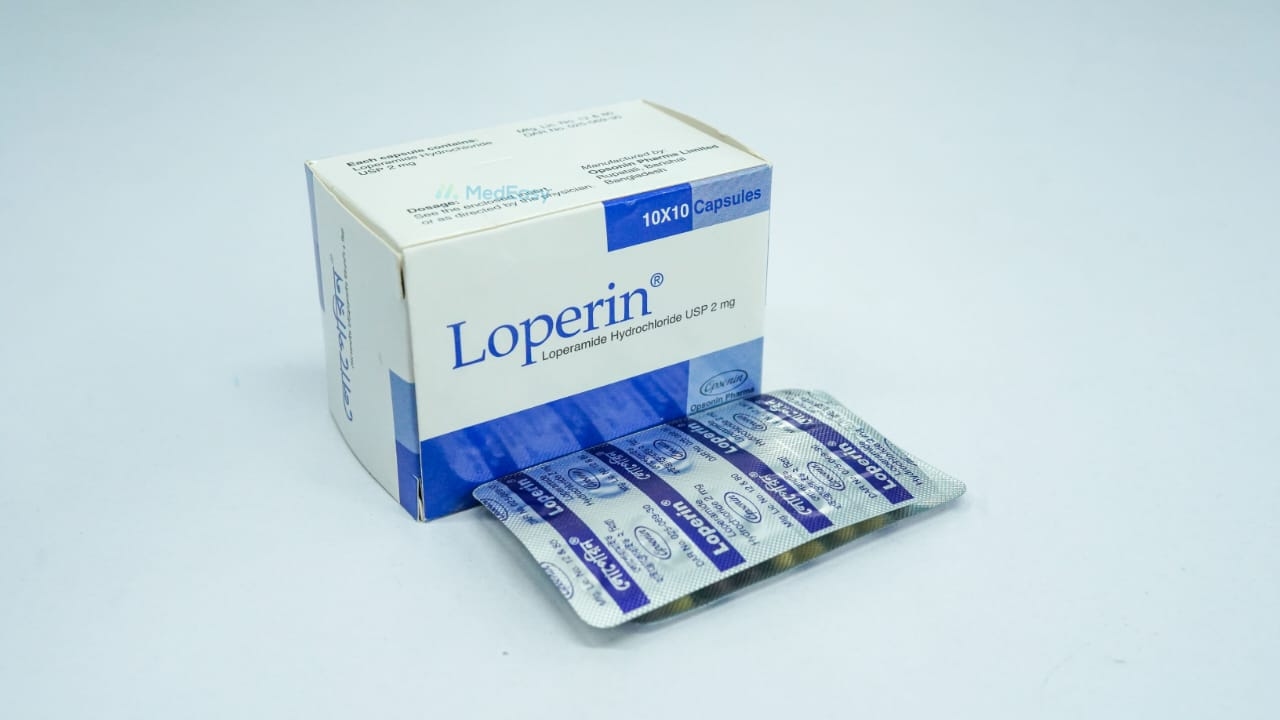
Imotil2 mg
Square Pharmaceuticals PLC.
৳9.00
Add to cart


Lopamid is an antidiarrheal agent with the following evidence-based indications:
Lopamid is not indicated for conditions where inhibition of intestinal motility should be avoided (see Contraindications).
Each dosage form of Loperamide contains Loperamide Hydrochloride as the active ingredient. It is commonly available as:
Excipients vary by manufacturer and formulation.
Lopamid is a synthetic antidiarrheal agent chemically related to the opioid class but formulated to act primarily on peripheral opioid receptors in the gut wall, with minimal clinically significant central nervous system penetration at recommended doses. It is widely used for symptomatic control of acute and chronic diarrhea.
Lopamid is available in Bangladesh in capsule, tablet, and oral solution forms and is marketed under various brand names.
Taking more than the recommended dose of Lopamid can cause serious heart problems, including QT interval prolongation, Torsades de Pointes, other ventricular arrhythmias, cardiac arrest, and death. Cases have been reported in individuals intentionally taking higher-than-recommended doses of Lopamid in attempts to self-treat opioid withdrawal symptoms or to achieve euphoria. Patients and caregivers should be counseled to take only the recommended dose.
Lopamid belongs to the therapeutic class of antidiarrheal agents, specifically the peripherally-acting opioid-receptor agonist antidiarrheals.
Loperamide acts as an agonist at peripheral mu-opioid receptors located in the myenteric plexus of the intestinal wall. This action:
Because Loperamide undergoes extensive first-pass hepatic metabolism and is a substrate of P-glycoprotein at the blood-brain barrier, it has minimal CNS opioid effects at recommended doses. However, at supratherapeutic doses, P-glycoprotein efflux can be saturated/overwhelmed, allowing CNS penetration and cardiac toxicity via hERG potassium channel blockade, which underlies the boxed warning for Loperamide. Onset of action is typically within 1 hour; the elimination half-life is approximately 9-14 hours, and it is primarily eliminated in feces with a smaller fraction excreted in urine as metabolites.
Lopamid should be taken exactly as directed and not exceeded, due to the risk of serious cardiac events described in the Boxed Warning.
| Indication | Population | Dose |
|---|---|---|
| Acute diarrhea | Adults and children ≥13 years | Initial: 4 mg, then 2 mg after each unformed stool. Maximum 16 mg/day. |
| Children 2-12 years | Weight/age-based first-day dosing (see Pediatric Uses); do not exceed labeled maximums. | |
| Chronic diarrhea (IBD) | Adults | Initial: 4 mg, then 2 mg after each unformed stool until diarrhea is controlled, then reduce to the lowest effective maintenance dose (typically 4-8 mg/day). Maximum 16 mg/day. |
If there is no clinical improvement with Lopamid within 48 hours, treatment should be discontinued and the patient reassessed by a physician. Discontinue Lopamid immediately if constipation, abdominal distension, or ileus develops, and seek prompt medical attention if fever or blood in the stool occurs.
Lopamid is administered orally, with or without food. Capsules/tablets should be swallowed whole with water; oral solution should be measured accurately using a calibrated measuring device. Adequate oral rehydration (fluids and electrolytes) should be maintained alongside Lopamid therapy, especially in children and the elderly.
Lopamid has the following clinically significant interactions:
Loperamide is contraindicated in:
Side effects of Lopamid are generally uncommon at recommended doses but may include:
Serious but rare adverse effects, generally associated with doses exceeding the recommended amount, include QT/QRS prolongation, Torsades de Pointes, other ventricular arrhythmias, syncope, cardiac arrest, and paralytic ileus (see Boxed Warning and Overdose Effects).
Pregnancy: Animal reproduction studies have not shown evidence of harm to the fetus at recommended human doses; however, adequate and well-controlled studies in pregnant women are lacking. Lopamid should be used during pregnancy only if the potential benefit justifies the potential risk to the fetus; a physician should be consulted before use.
Lactation: Small amounts of Lopamid may be excreted into human breast milk. Use during breastfeeding is generally not recommended unless a physician determines that the benefit outweighs the potential risk to the infant.
The following precautions apply to the use of Lopamid:
Overdose of Lopamid can cause serious or life-threatening cardiac toxicity, including QT/QRS interval prolongation, Torsades de Pointes, other ventricular arrhythmias, syncope, and cardiac arrest, as well as CNS depression (drowsiness, stupor, miosis, respiratory depression) and paralytic ileus, particularly with doses well above the recommended maximum.
If overdose of Lopamid is suspected, seek immediate emergency medical attention or contact a poison control center right away. Do not attempt home treatment. Prolonged cardiac monitoring (at least 24 hours) is generally required in a hospital setting because of delayed gastrointestinal absorption; management is supportive and directed by medical professionals.
Store at room temperature (below 30°C), away from light and moisture. Keep out of reach of children.
Pediatric: Lopamid is contraindicated in children under 2 years of age due to risk of serious, potentially fatal, adverse effects including respiratory depression and cardiac toxicity. Use in children 2 years and older should follow weight/age-based dosing under medical guidance (see Pediatric Uses).
Elderly: No specific dose adjustment is generally required, but elderly patients should be monitored for constipation and dehydration.
Hepatic impairment: Use with caution; reduced first-pass metabolism may increase plasma concentrations of Lopamid and the risk of CNS/cardiac toxicity. Monitor closely for signs of toxicity.
Renal impairment: No well-established dose adjustment is required, as renal elimination is a minor pathway; use with usual caution.
For acute diarrhea, Lopamid should generally be used for no more than 48 hours; if diarrhea persists beyond this period or worsens, treatment should be stopped and a physician consulted. For chronic diarrhea associated with inflammatory bowel disease, duration of Lopamid therapy is determined by the treating physician based on ongoing clinical need, using the lowest effective dose.
Loperamide is classified as an antidiarrheal agent within the peripherally-acting opioid-receptor agonist class.
Loperamide works by binding to opioid receptors on the smooth muscle of the intestinal wall, which inhibits the release of acetylcholine and prostaglandins. This reduces propulsive peristalsis, prolongs intestinal transit time, and increases the absorption of water and electrolytes from the gut lumen, thereby reducing stool frequency and volume. Loperamide also increases resting anal sphincter tone.
Category C
Lopamid is contraindicated in children under 2 years of age due to the risk of serious, potentially fatal adverse effects, including respiratory depression and cardiac toxicity.
For children 2 years and older with acute diarrhea, first-day dosing of Lopamid is weight/age-based and should not exceed labeled maximums:
| Age | First-day dose |
|---|---|
| 2-5 years (approx. 13-20 kg) | 1 mg three times daily |
| 6-8 years (approx. 20-30 kg) | 2 mg twice daily |
| 8-12 years | 2 mg three times daily |
Subsequent doses of Lopamid should only be given after a loose stool, and total daily dose should not exceed the first-day amount. Safety and efficacy of Lopamid for chronic diarrhea in children have not been established.
Q: What is Lopamid 2 mg Capsule used for?
A: Lopamid 2 mg Capsule is used for the symptomatic relief of acute nonspecific diarrhea in adults and children 2 years and older, chronic diarrhea associated with inflammatory bowel disease in adults, and to reduce the volume of discharge from ileostomies.
Q: Can I take more than the recommended dose of Lopamid 2 mg Capsule if my diarrhea is severe?
A: No. Taking more than the recommended dose of Lopamid 2 mg Capsule can cause serious heart problems, including dangerous heart rhythm disturbances, cardiac arrest, and death. Never exceed the labeled or physician-prescribed dose of Lopamid 2 mg Capsule, even if diarrhea seems severe. If diarrhea persists beyond 48 hours or worsens, stop taking Lopamid 2 mg Capsule and see a doctor.
Q: Is Lopamid 2 mg Capsule safe during pregnancy?
A: Lopamid 2 mg Capsule should be used during pregnancy only if the potential benefit clearly justifies the potential risk to the fetus, as adequate human safety data are limited. Always consult a physician before using Lopamid 2 mg Capsule during pregnancy.
Q: Can children take Lopamid 2 mg Capsule?
A: Lopamid 2 mg Capsule is contraindicated in children under 2 years of age due to the risk of serious, potentially fatal side effects. For children 2 years and older, dosing must follow weight/age-based guidelines and medical advice.
Q: What should I do if I miss a dose of Lopamid 2 mg Capsule?
A: Lopamid 2 mg Capsule is typically taken after loose stools rather than on a fixed schedule, so a "missed dose" concept generally does not apply. Take the next dose of Lopamid 2 mg Capsule only after your next unformed stool, without exceeding the maximum daily dose.
Q: What should I do if I suspect an overdose of Lopamid 2 mg Capsule?
A: An overdose of Lopamid 2 mg Capsule can cause life-threatening heart rhythm problems. Seek immediate emergency medical attention or contact a poison control center right away; do not attempt to treat an overdose of Lopamid 2 mg Capsule at home.
Disclaimer
The information provided is accurate to the best of our knowledge, but it does not replace professional medical advice. We cannot guarantee its completeness or accuracy, and the absence of specific information about a drug should not be taken as an endorsement. We are not responsible for any consequences arising from this information, so please consult a healthcare professional for any concerns or questions.