10% Off
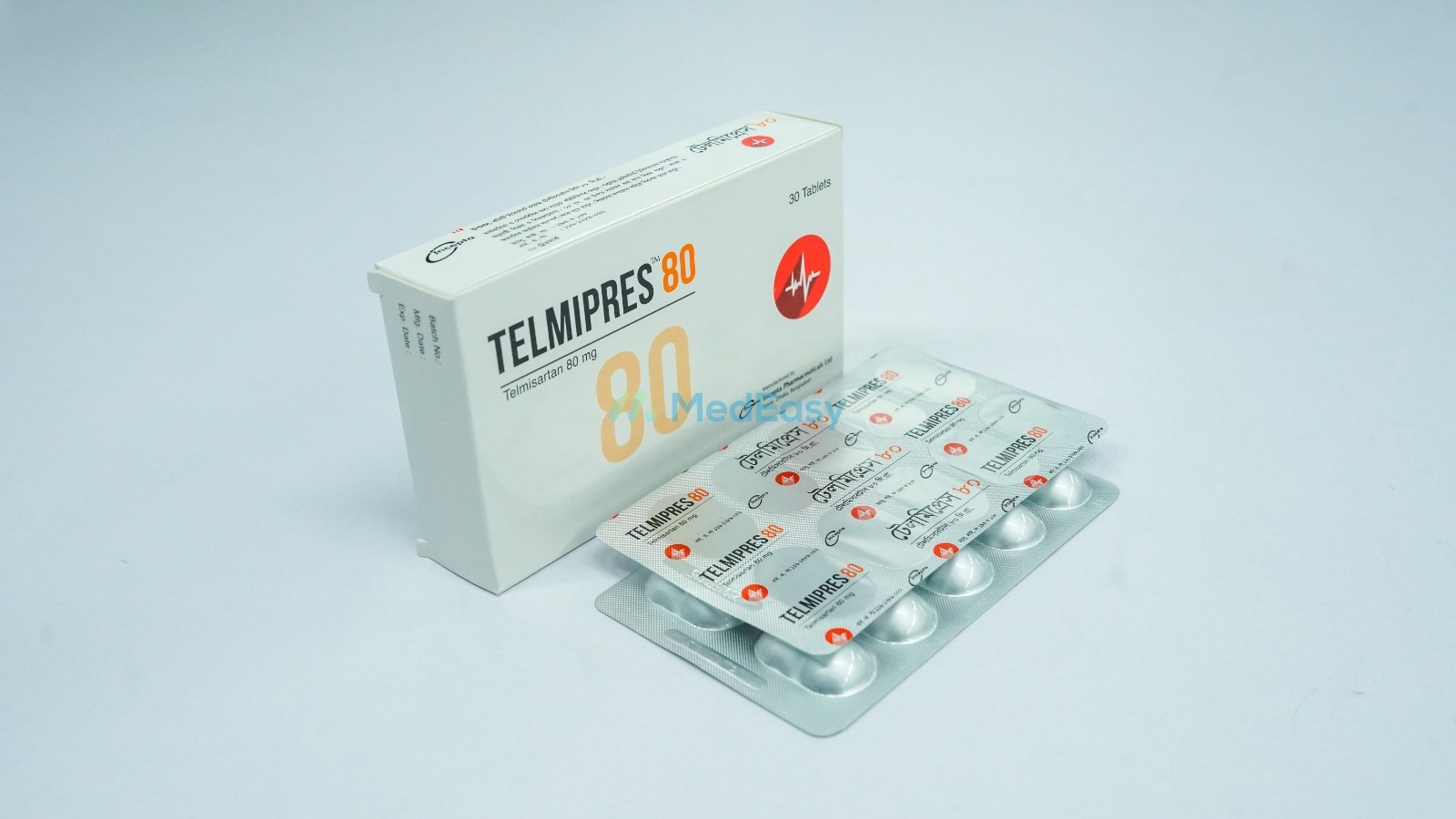
Telmipres80 mg
Incepta Pharmaceuticals Ltd.
৳99.00
Add to cart
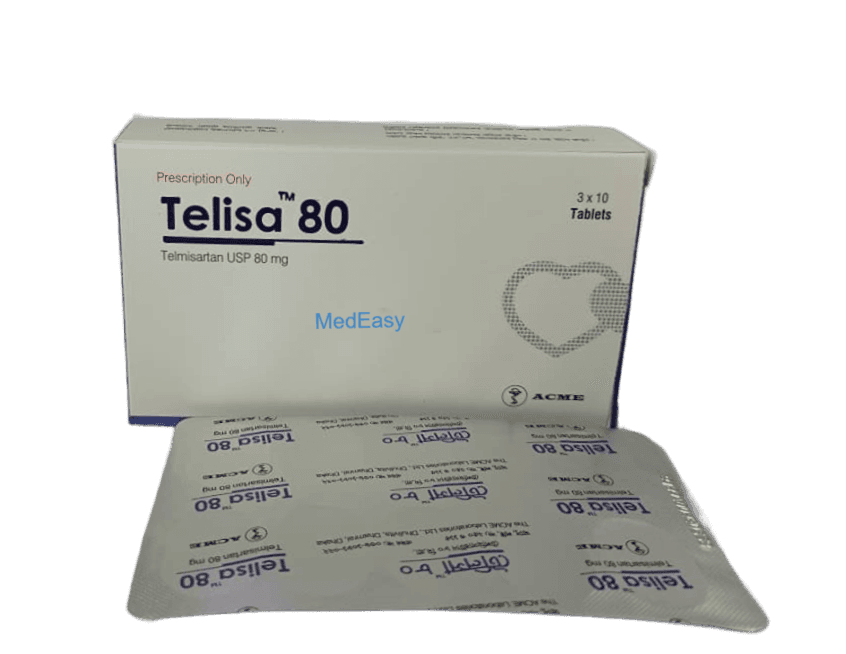

Telisa is indicated for the treatment of essential hypertension in adults. Telisa may be used alone or in combination with other antihypertensive medicines when blood pressure is not adequately controlled on Telisa alone. This is an established, guideline-supported use of Telisa.
Telisa is also indicated to reduce the risk of myocardial infarction, stroke, or death from cardiovascular causes in patients 55 years of age or older who are at high risk of cardiovascular events (for example, due to coronary artery disease, peripheral arterial disease, stroke, transient ischaemic attack, or high-risk diabetes with evidence of end-organ damage) and who are unable to take ACE inhibitors. This use of Telisa is guideline-supported and specialist-directed, and is not a routine first-line use of Telisa in the general hypertensive population.
After oral administration, Telmisartan is absorbed with peak plasma concentrations of Telmisartan reached within about 0.5 to 1 hour. The absolute bioavailability of Telmisartan is dose-dependent, ranging from approximately 42% at a 40 mg dose to 58% at a 160 mg dose, and food modestly reduces the absorption of Telmisartan. Telmisartan is more than 99.5% bound to plasma proteins and has a large volume of distribution. Telmisartan is metabolized by conjugation to a pharmacologically inactive acyl glucuronide and is not significantly metabolized by the cytochrome P450 enzyme system. Telmisartan is eliminated primarily unchanged via biliary excretion into the feces (over 97%), with less than 1% excreted in urine; the terminal elimination half-life of Telmisartan is approximately 24 hours, which supports once-daily dosing of Telmisartan.
Telisa is administered orally, once daily, and the specific dose of Telisa depends on the indication being treated. Dosing of Telisa must be individualized by a healthcare professional and is not the same across all conditions Telisa is used for; the table below outlines dosing of Telisa by indication.
Telisa is contraindicated during pregnancy. Drugs that act directly on the renin-angiotensin system, including Telisa, can cause injury and even death to the developing fetus. When Telisa is used in the second and third trimesters, Telisa has been associated with oligohydramnios (low amniotic fluid), fetal lung hypoplasia, skeletal deformations, skull hypoplasia, fetal kidney failure (anuria), and neonatal death. Data on first-trimester exposure to Telisa are more limited, and available epidemiologic studies have not clearly distinguished a specific pattern of malformation from other antihypertensive medicines; however, because Telisa carries no established safe window during pregnancy, Telisa should be discontinued as soon as pregnancy is confirmed and should not be restarted. Women who are pregnant or planning pregnancy should discuss alternative antihypertensive options with their doctor instead of continuing Telisa. If continued exposure to Telisa has occurred, serial ultrasound examinations are recommended, and newborns exposed to Telisa in utero should be monitored for low blood pressure, low urine output, and high potassium.
There is no published human data on whether Telisa passes into breast milk or on the effects of Telisa on a breastfed infant. Because this information is not available, and because alternative antihypertensive medicines with more breastfeeding safety data exist, breastfeeding is generally not recommended during Telisa therapy, particularly while nursing a newborn or preterm infant. Mothers who need an antihypertensive medicine while breastfeeding should discuss alternatives to Telisa with their doctor.
Limited data are available on Telisa overdose in humans. The most likely effects of a Telisa overdose are related to the blood-pressure-lowering action of Telisa and include hypotension (low blood pressure) and dizziness; a fast, or less commonly slow, heart rate may also occur. If an overdose of Telisa is suspected, contact a doctor, hospital emergency department, or a poison control service immediately. Do not induce vomiting unless specifically directed to do so by a healthcare professional or poison control service. Treatment of Telisa overdose is supportive, based on the symptoms present; Telisa is not removed from the body by hemodialysis.
Store Telisa tablets at room temperature (around 25°C/77°F; brief excursions between 15-30°C/59-86°F are permitted), protected from moisture and light. Keep Telisa tablets in their original blister pack and remove a Telisa tablet only immediately before it is taken, since Telisa tablets are sensitive to moisture. Keep Telisa out of the reach of children. Always check the product label for the specific storage instructions applicable to the marketed brand or pack of Telisa.
The safety and effectiveness of Telisa have not been established in patients under 18 years of age, and no pediatric dose of Telisa has been defined. See Pediatric Uses for further detail.
No overall differences in the effectiveness or safety of Telisa were observed between elderly and younger adult patients in clinical trials, and no initial dose adjustment of Telisa is required based on age alone; however, individual sensitivity to the blood-pressure-lowering effects of Telisa may be greater in some older patients.
No dosage adjustment of Telisa is required for patients with mild to moderate renal impairment. Telisa is not removed by hemodialysis. Patients with severe renal impairment or those on dialysis should be monitored closely during Telisa therapy, as changes in renal function may occur, particularly if renal function depends on the renin-angiotensin system.
Telisa is eliminated mainly through biliary excretion, so plasma levels of Telisa increase substantially in patients with hepatic impairment or obstructive biliary disease. Telisa should be used with caution and started at a lower dose in these patients, with close monitoring.
Telisa is contraindicated in pregnancy and is generally not recommended during breastfeeding; see Pregnancy and Lactation for full detail.
Telisa is generally used long-term for the ongoing control of high blood pressure, since hypertension usually requires continuous treatment rather than a short course of Telisa. The full blood-pressure-lowering effect of Telisa typically develops within about 4 weeks of starting or adjusting the dose of Telisa. When Telisa is used for cardiovascular risk reduction in high-risk patients, Telisa is intended for long-term use as directed by a specialist. The duration of Telisa therapy should be determined by a healthcare professional based on blood pressure response, tolerability, and overall cardiovascular risk, and Telisa should not be stopped abruptly without medical advice.
Telmisartan selectively blocks the binding of angiotensin II to the AT1 receptor found in vascular smooth muscle and the adrenal gland. By blocking this receptor, Telmisartan prevents the vasoconstriction and aldosterone-secreting effects of angiotensin II, resulting in relaxation of blood vessels and a lowering of blood pressure. Telmisartan has more than 3,000-fold greater affinity for the AT1 receptor than the AT2 receptor, and Telmisartan does not inhibit the angiotensin-converting enzyme (ACE) or affect bradykinin breakdown.
The safety and effectiveness of Telisa have not been established in children and adolescents under 18 years of age, and the FDA label for Telisa states this explicitly; no pediatric dose of Telisa has been defined. Current guideline-level pediatric hypertension recommendations (e.g., from the American Academy of Pediatrics) list angiotensin II receptor blockers as one of several acceptable classes of initial antihypertensive medicine in children and adolescents, alongside ACE inhibitors, long-acting calcium channel blockers, and thiazide diuretics. However, this class-level guideline support does not equate to established pediatric labeling for Telisa specifically, and any pediatric use of Telisa would be off-label and should only be undertaken by a pediatric specialist with individualized dosing of Telisa and close monitoring. Infants exposed to Telisa in utero require monitoring after birth for hypotension, oliguria (reduced urine output), and hyperkalemia, as noted in Pregnancy and Lactation.
Telisa 80 mg Tablet is used to treat high blood pressure (hypertension) in adults, either alone or together with other antihypertensive medicines. Telisa 80 mg Tablet is also used in certain high-risk adults aged 55 and older to reduce the risk of heart attack, stroke, or cardiovascular death when they cannot take an ACE inhibitor.
For high blood pressure, Telisa 80 mg Tablet is usually started at 40 mg once daily and may be adjusted between 20 mg and 80 mg once daily based on response. For cardiovascular risk reduction, Telisa 80 mg Tablet is used at 80 mg once daily. The exact dose of Telisa 80 mg Tablet should always be determined by a healthcare professional, since dosing of Telisa 80 mg Tablet is not the same for every indication or every patient.
Telisa 80 mg Tablet may be taken with or without food, and there is no specific restriction against taking Telisa 80 mg Tablet with milk. Food has only a small effect on how much Telisa 80 mg Tablet is absorbed, so Telisa 80 mg Tablet can be taken with a meal, with milk, or on an empty stomach, based on what is most convenient, unless a doctor advises otherwise.
Telisa 80 mg Tablet can interact with ACE inhibitors and aliskiren (increasing the risk of low blood pressure, high potassium, and kidney problems), potassium-sparing diuretics and potassium supplements (risk of hyperkalemia), NSAIDs like ibuprofen (reduced blood-pressure-lowering effect of Telisa 80 mg Tablet and possible kidney strain), lithium (increased lithium levels), and digoxin (increased digoxin levels). Always tell the prescriber about all medicines being taken before starting Telisa 80 mg Tablet; see Interactions for full details.
No. Telisa 80 mg Tablet is contraindicated during pregnancy because Telisa 80 mg Tablet can cause serious injury or death to the developing fetus, especially when used in the second and third trimesters. Telisa 80 mg Tablet should be stopped as soon as pregnancy is confirmed, and women who are pregnant or planning pregnancy should discuss safer alternative medicines with their doctor; see Pregnancy and Lactation for full details.
There isn't enough human data to confirm whether Telisa 80 mg Tablet is safe during breastfeeding, so breastfeeding is generally not recommended while taking Telisa 80 mg Tablet, particularly for mothers of newborn or premature infants. A doctor can suggest an alternative antihypertensive medicine with more breastfeeding safety data than Telisa 80 mg Tablet.
Telisa 80 mg Tablet has not been proven safe and effective for children and adolescents under 18, and no pediatric dose of Telisa 80 mg Tablet has been established. While some pediatric hypertension guidelines support the ARB class in general as an option for children, this does not apply specifically to Telisa 80 mg Tablet, and any pediatric use of Telisa 80 mg Tablet would need to be decided and closely supervised by a pediatric specialist.
Common side effects of Telisa 80 mg Tablet include upper respiratory symptoms, back pain, sinusitis, diarrhea, dizziness, headache, and fatigue. Most people tolerate Telisa 80 mg Tablet well, but anyone experiencing swelling of the face or throat, fainting, signs of high potassium, or reduced urination while taking Telisa 80 mg Tablet should seek medical attention promptly; see Side Effects for the full list.
If a dose of Telisa 80 mg Tablet is missed, take Telisa 80 mg Tablet as soon as remembered unless it is almost time for the next dose, in which case the missed dose of Telisa 80 mg Tablet should be skipped rather than doubled. If too much Telisa 80 mg Tablet has been taken, or an overdose of Telisa 80 mg Tablet is suspected, contact a doctor, hospital, or poison control service right away, since a Telisa 80 mg Tablet overdose can cause low blood pressure and dizziness; see Overdose Effects for more information.
Disclaimer
The information provided is accurate to the best of our knowledge, but it does not replace professional medical advice. We cannot guarantee its completeness or accuracy, and the absence of specific information about a drug should not be taken as an endorsement. We are not responsible for any consequences arising from this information, so please consult a healthcare professional for any concerns or questions.