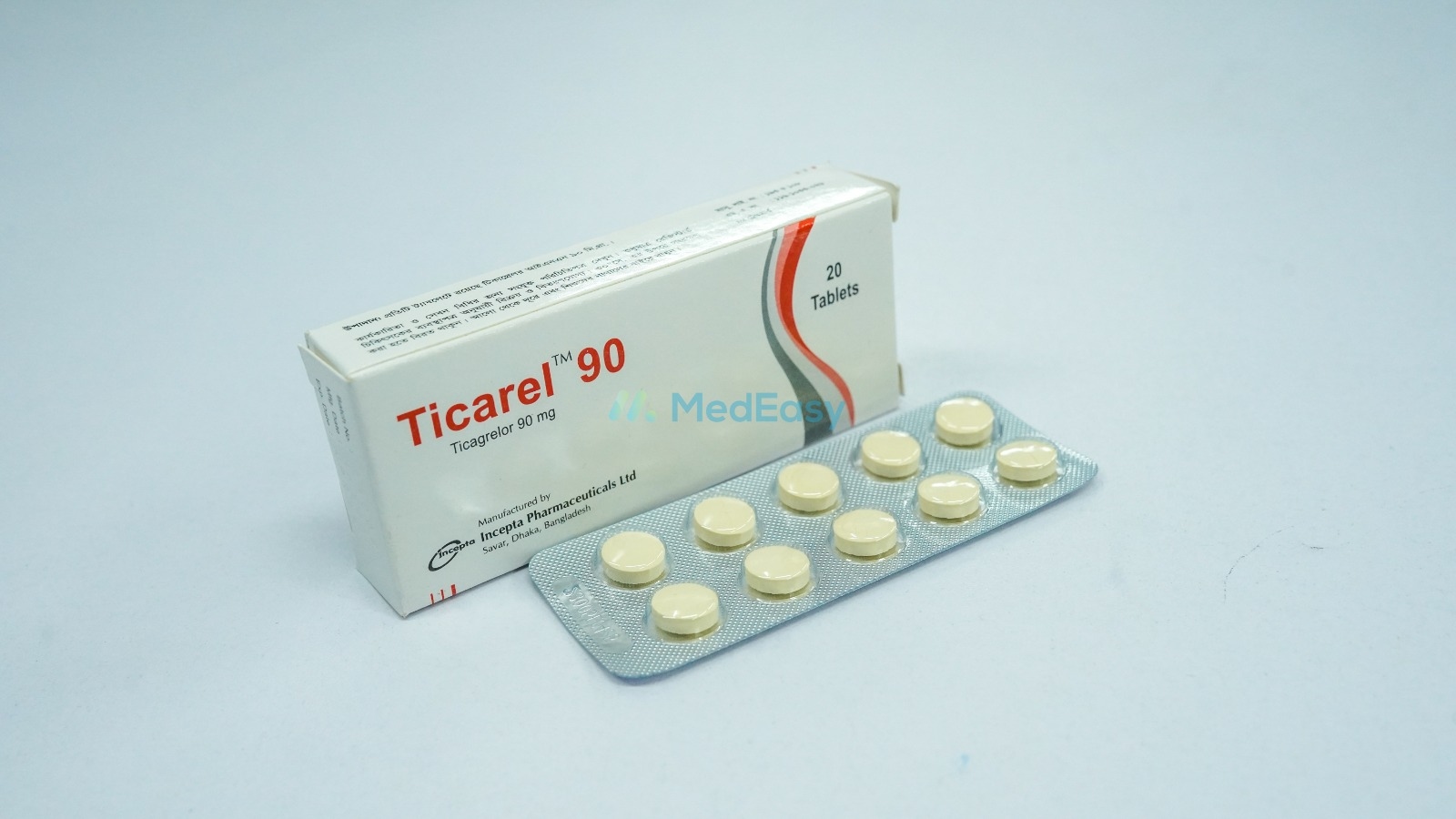
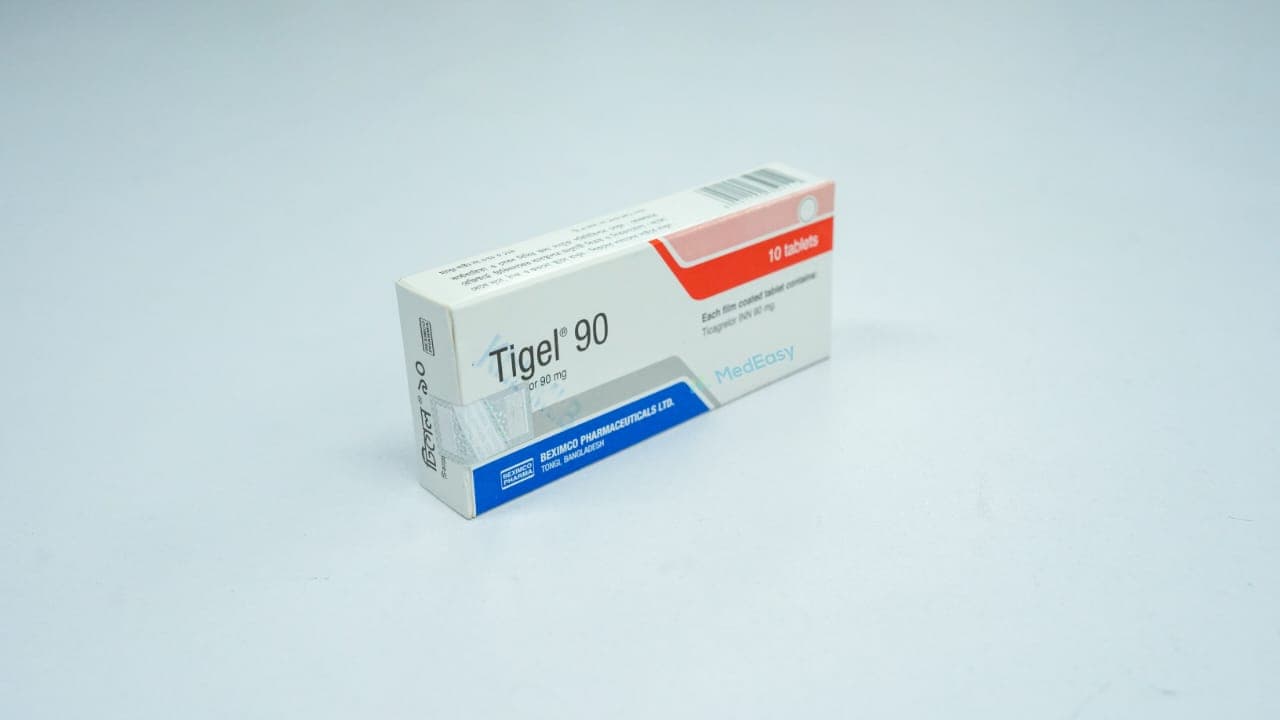
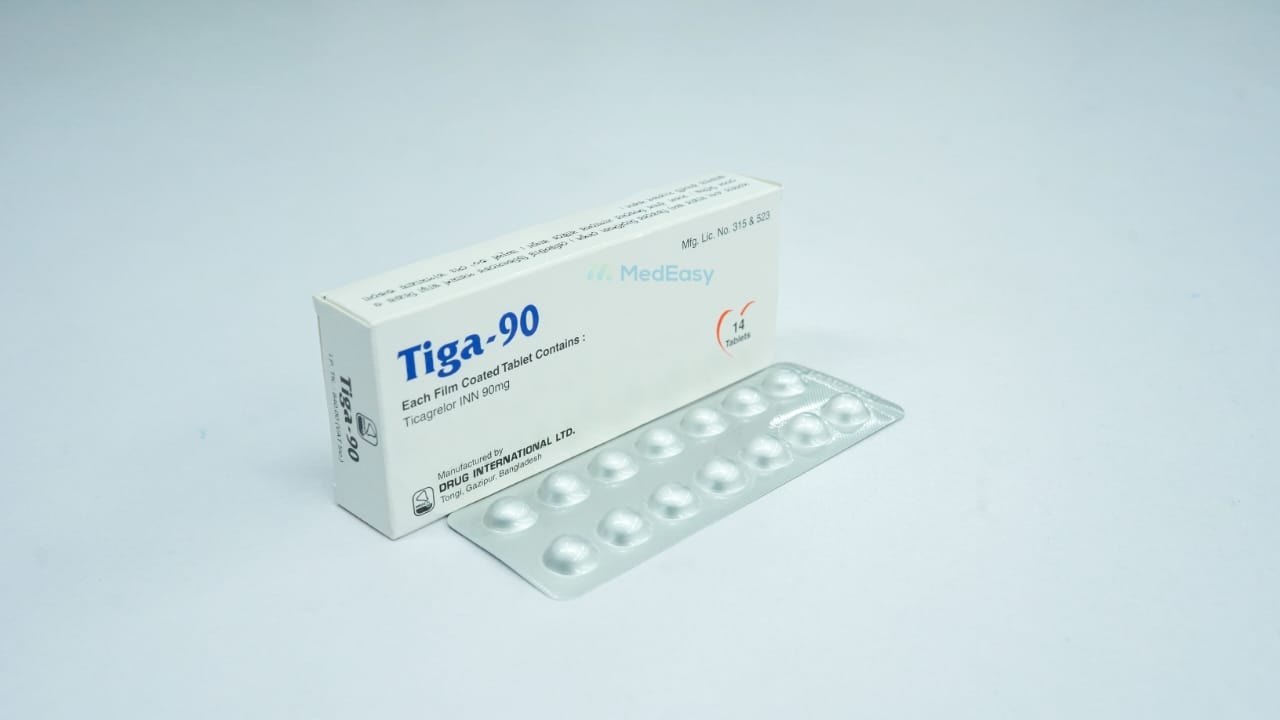
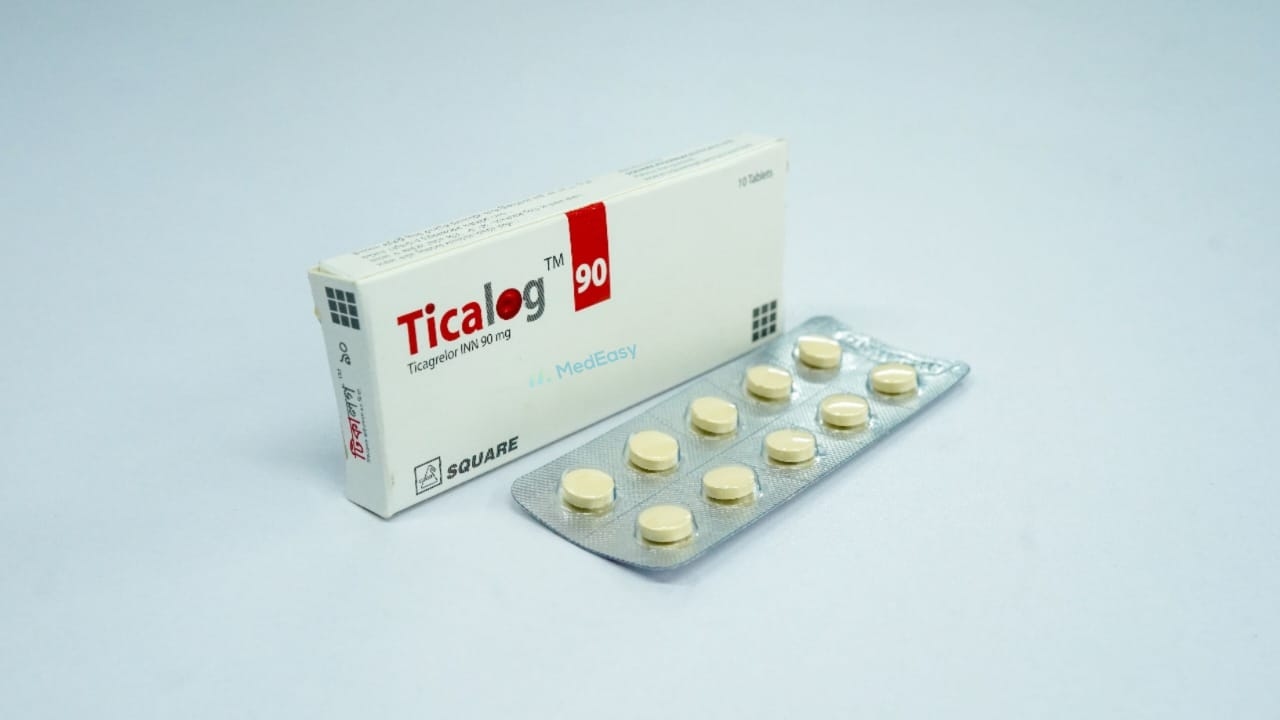
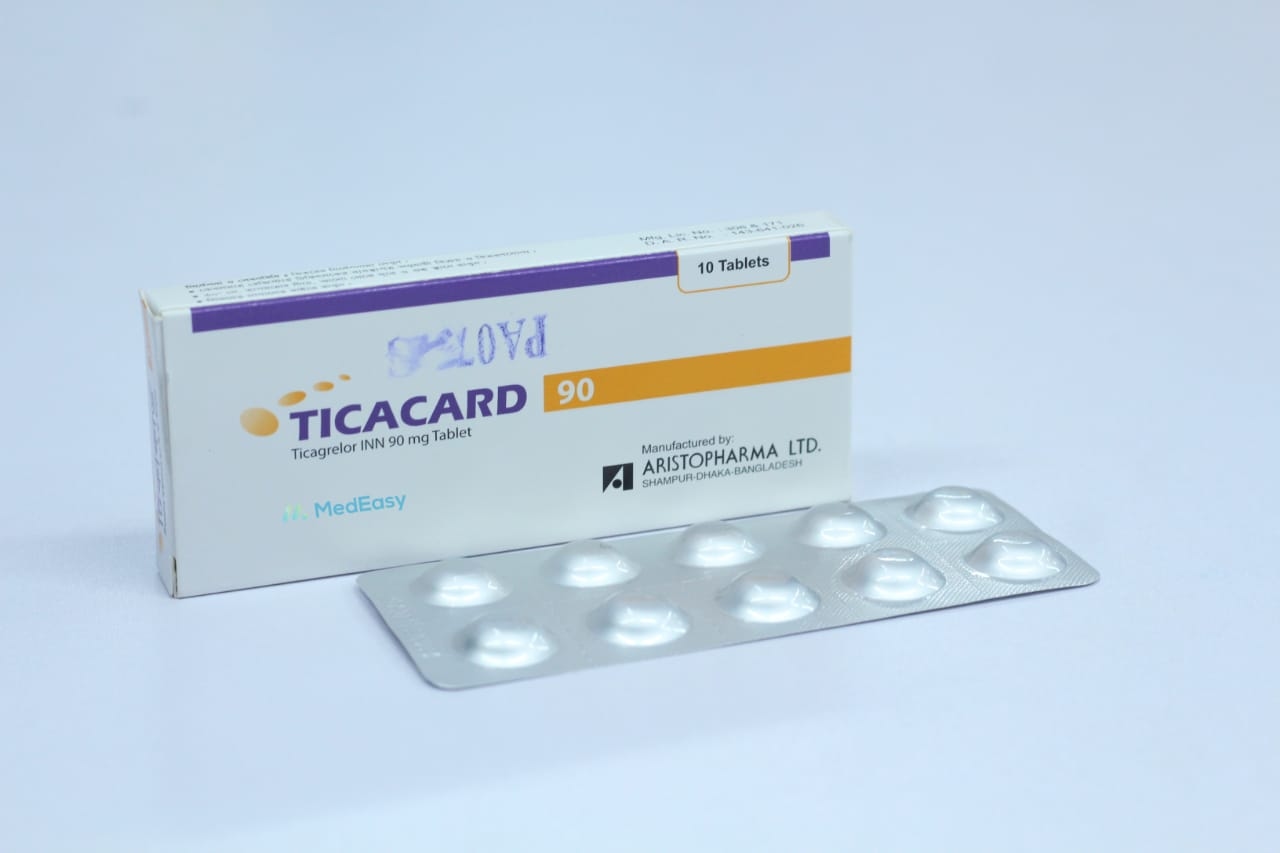
Tigel 90 mg is indicated for the prevention of atherothrombotic events in adult patients with Acute Coronary Syndromes (unstable angina, non ST elevation Myocardial Infarction [NSTEMI] or ST elevation Myocardial Infarction [STEMI]); including patients managed medically, and those who are managed with percutaneous coronary intervention (PCI) or coronary artery by-pass grafting (CABG).
Theropeutic Class
Anti-platelet drugs
Pharmacology
Tigel 90 mg is a selective adenosine diphosphate (ADP) receptor antagonist acting on the P2Y12 ADP-receptor that can prevent ADP-mediated platelet activation and aggregation. Tigel 90 mg reversibly interacts with the platelet P2Y12 ADP-receptor.Tigel 90 mg does not interact with the ADP binding site itself, but interacts with platelet P2Y12 ADP-receptor to prevent signal transduction.Thus it prevents platelet activation & aggregation.
Dosage & Administration of Tigel 90 mg
Tigel 90 mg treatment should be initiated with a single 180 mg loading dose (two tablets of 90 mg) and then continued at 90 mg twice daily. Patients taking Tigel 90 mg should also take aspirin daily, unless specifically contraindicated. Following an initial dose of aspirin (usually 325 mg), Tigel 90 mg should be used with a maintenance dose of aspirin of 75-100 mg. Maintenance dose of Aspirin above 100 mg decreased the efficacy of Tigel 90 mg. So, maintenance dose of aspirin above 100 mg should be avoided.A patient who misses a dose of Tigel 90 mg should take only one 90 mg tablet (the next dose) at its scheduled time. Patients treated with Clopidogrel can be directly switched to Tigel 90 mg if needed. Switching from prasugrel to Tigel 90 mg has not been investigated.Treatment is recommended for up to 12 months unless discontinuation of Tigel 90 mg is clinically indicated. Tigel 90 mg can be administered with or without food.
Dosage of Tigel 90 mg
Tigel 90 mg treatment should be initiated with a single 180 mg loading dose (two tablets of 90 mg) and then continued at 90 mg twice daily. Patients taking Tigel 90 mg should also take aspirin daily, unless specifically contraindicated. Following an initial dose of aspirin (usually 325 mg), Tigel 90 mg should be used with a maintenance dose of aspirin of 75-100 mg. Maintenance dose of Aspirin above 100 mg decreased the efficacy of Tigel 90 mg. So, maintenance dose of aspirin above 100 mg should be avoided.A patient who misses a dose of Tigel 90 mg should take only one 90 mg tablet (the next dose) at its scheduled time. Patients treated with Clopidogrel can be directly switched to Tigel 90 mg if needed. Switching from prasugrel to Tigel 90 mg has not been investigated.Treatment is recommended for up to 12 months unless discontinuation of Tigel 90 mg is clinically indicated. Tigel 90 mg can be administered with or without food.
Interaction of Tigel 90 mg
CYP3A inhibitors: Avoid use of strong inhibitors of CYP3A (e.g., ketoconazole, itraconazole, voriconazole, clarithromycin, nefazodone, ritonavir, saquinavir, nelfinavir, indinavir, atazanavir and telithromycin).CYP3A inducers: Avoid use with potent inducers of CYP3A (e.g., rifampin, dexamethasone, phenytoin,carbamazepine and phenobarbital).Aspirin: Use of Tigel 90 mg with aspirin maintenance doses above 100 mg reduced the effectiveness ofTigel 90 mg.Simvastatin, Lovastatin: Tigel 90 mg will result in higher serum concentrations of simvastatin and lovastatin because these drugs are metabolized by CYP3A4. Avoid simvastatin and lovastatin doses greater than 40 mg.Digoxin: Because of inhibition of the P-glycoprotein transporter, monitor digoxin levels with initiation of or any change in Tigel 90 mg therapy.Other Concomitant Therapy: Tigel 90 mg can be administered with unfractionated or low-molecular-weight heparin, GPIIb/llla inhibitors, proton pump inhibitors, beta-blockers, angiotensin converting enzyme inhibitors, and angiotensin receptor blockers.
Contraindications
Tigel 90 mg is contraindicated in case of-
Hypersensitivity to Tigel 90 mg or to any of the excipients
Active pathological bleeding (peptic ulcer)
History of intracranial haemorrhage
Moderate to severe hepatic impairment
Co-administration of Tigel 90 mg with strong CYP3A4 inhibitors (e.g., ketoconazole, clarithromycin, nefazodone, ritonavir, and atazanavir)
Pregnancy category C. There are no or limited amount of data from the use of Tigel 90 mg in pregnant women.Tigel 90 mg is not recommended during pregnancy.Nursing mothers: Available pharmacodynamic/toxicological data in animals have shown excretion of Tigel 90 mg and its active metabolites in milk. A risk to newborns/infants cannot be excluded. A decision must be made whether to discontinue breastfeeding or to discontinue/abstain from Tigel 90 mg therapy taking into account the benefit of breastfeeding for the child and the benefit of therapy for the women.
Precautions & Warnings
General Risk of Bleeding: Drugs that inhibit platelet function including Tigel 90 mg increase the risk of bleeding. Concomitant Aspirin Maintenance Dose: Use of Tigel 90 mg with maintenance doses of aspirin above 100 mg decreased the effectiveness of Tigel 90 mg. Therefore, after the initial loading dose of aspirin (usually 325 mg), use Tigel 90 mg with a maintenance dose of aspirin of 75-100 mg.Moderate Hepatic Impairment: Tigel 90 mg has not been studied in patients with moderate hepatic impairment. Discontinuation of Tigel 90 mg: Discontinuation of Tigel 90 mg will increase the risk of myocardial infarction, stent thrombosis, and death.
Overdose Effects of Tigel 90 mg
There is currently no known antidote to reverse the effects ofTigel 90 mg and it is not expected to be dialysable.Treatment of overdose should follow local standard medical practice.The expected effect of excessive Tigel 90 mg dosing is prolonged duration of bleeding risk associated with platelet inhibition. If bleeding occurs appropriate supportive measures should be taken.
Storage Conditions
Protect from light & moisture. Store below 25° C. Keep out of reach of children.
Use In Special Populations
Pediatric Use: The safety and effectiveness of Tigel 90 mg in pediatric patients have not been established. Geriatric Use: No overall differences in safety or effectiveness were observed in geriatric patients.Hepatic Impairment: Tigel 90 mg has not been studied in the patients with moderate or severe hepatic impairment. Tigel 90 mg is metabolized by the liver and impaired hepatic function can increase risks for bleeding and other adverse events. Hence, Renal Impairment: No dosage adjustment is needed in patients with renal impairment. Patients receiving dialysis have not been studied.
Drug Classes
Anti-platelet drugs
Mode Of Action
Tigel 90 mg is a selective adenosine diphosphate (ADP) receptor antagonist acting on the P2Y12 ADP-receptor that can prevent ADP-mediated platelet activation and aggregation. Tigel 90 mg reversibly interacts with the platelet P2Y12 ADP-receptor.Tigel 90 mg does not interact with the ADP binding site itself, but interacts with platelet P2Y12 ADP-receptor to prevent signal transduction.Thus it prevents platelet activation & aggregation.
Pregnancy
Pregnancy category C. There are no or limited amount of data from the use of Tigel 90 mg in pregnant women.Tigel 90 mg is not recommended during pregnancy.Nursing mothers: Available pharmacodynamic/toxicological data in animals have shown excretion of Tigel 90 mg and its active metabolites in milk. A risk to newborns/infants cannot be excluded. A decision must be made whether to discontinue breastfeeding or to discontinue/abstain from Tigel 90 mg therapy taking into account the benefit of breastfeeding for the child and the benefit of therapy for the women.
Pediatric Uses
Pediatric Use: The safety and effectiveness of Tigel 90 mg in pediatric patients have not been established. Geriatric Use: No overall differences in safety or effectiveness were observed in geriatric patients.Hepatic Impairment: Tigel 90 mg has not been studied in the patients with moderate or severe hepatic impairment. Tigel 90 mg is metabolized by the liver and impaired hepatic function can increase risks for bleeding and other adverse events. Hence, Renal Impairment: No dosage adjustment is needed in patients with renal impairment. Patients receiving dialysis have not been studied.
Frequently Asked Questions
What is Tigel 90 mg used for?
Tigel 90 mg is indicated for the prevention of atherothrombotic events in adult patients with Acute Coronary Syndromes (unstable angina, non ST elevation Myocardial Infarction [NSTEMI] or ST elevation Myocardial Infarction [STEMI]); including patients managed medically, and those who are managed with percutaneous coronary intervention (PCI) or coronary artery by-pass grafting (CABG).
What is the dosage of Tigel 90 mg?
Tigel 90 mg treatment should be initiated with a single 180 mg loading dose (two tablets of 90 mg) and then continued at 90 mg twice daily. Patients taking Tigel 90 mg should also take aspirin daily, unless specifically contraindicated. Following an initial dose of aspirin (usually 325 mg), Tigel 90 mg should be used with a maintenance dose of aspirin of 75-100 mg. Maintenance dose of Aspirin abov…
Tigel 90 mg is contraindicated in case of- Hypersensitivity to Tigel 90 mg or to any of the excipients Active pathological bleeding (peptic ulcer) History of intracranial haemorrhage Moderate to severe hepatic impairment Co-administration of Tigel 90 mg with strong CYP3A4 inhibitors (e.g., ketoconazole, clarithromycin, nefazodone, ritonavir, and atazanavir)
What precautions should be taken with Tigel 90 mg?
General Risk of Bleeding: Drugs that inhibit platelet function including Tigel 90 mg increase the risk of bleeding. Concomitant Aspirin Maintenance Dose: Use of Tigel 90 mg with maintenance doses of aspirin above 100 mg decreased the effectiveness of Tigel 90 mg. Therefore, after the initial loading dose of aspirin (usually 325 mg), use Tigel 90 mg with a maintenance dose of aspirin of 75-100 mg.M…
Is Tigel 90 mg safe during pregnancy and breastfeeding?
Pregnancy category C. There are no or limited amount of data from the use of Tigel 90 mg in pregnant women.Tigel 90 mg is not recommended during pregnancy.Nursing mothers: Available pharmacodynamic/toxicological data in animals have shown excretion of Tigel 90 mg and its active metabolites in milk. A risk to newborns/infants cannot be excluded. A decision must be made whether to discontinue breast…
Disclaimer
The information provided is accurate to our best practices, but it does not replace professional medical advice. We cannot guarantee its completeness or accuracy. The absence of specific information about a drug should not be seen as an endorsement. We are not responsible for any consequences resulting from this information, so consult a healthcare professional for any concerns or questions.